
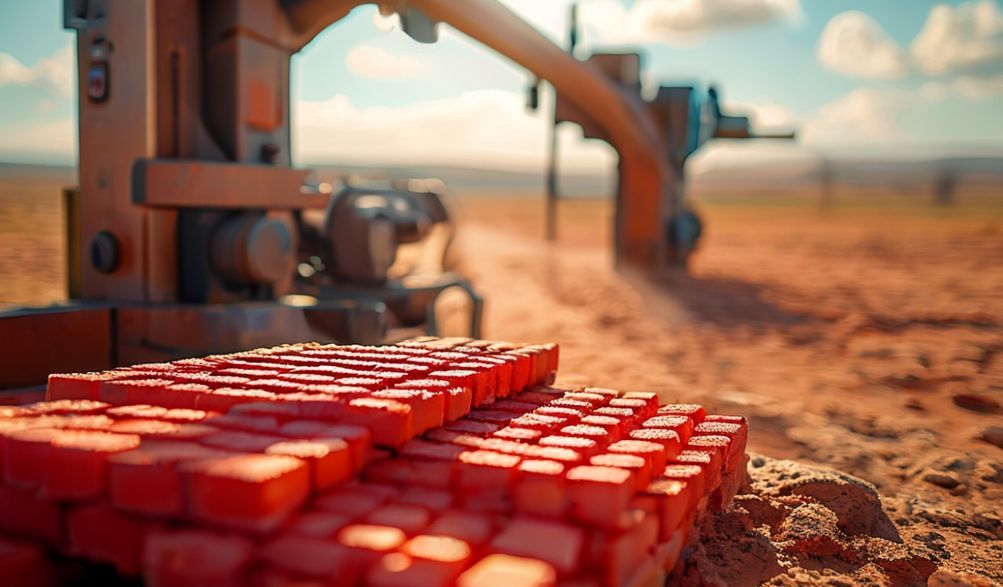
Your Complete Guide to Buying a Brick Making Machine in Namibia (2026)
Introduction
Namibia is building its future. With a national housing deficit estimated in the hundreds of thousands and significant infrastructure projects outlined in frameworks like the Harambee Prosperity Plan II, the demand for quality, affordable building materials has never been higher. For builders, contractors, and entrepreneurs, this presents both a pressing challenge and a profound opportunity.
The core problem is familiar: reliance on traditional brick supply chains often leads to volatile costs, frustrating project delays, and concerns over material consistency. These bottlenecks can derail budgets and timelines, especially for projects outside major urban centers. But what if the solution wasn’t just about finding a better supplier, but about becoming your own?
This guide introduces on-site brick production using a brick making machine as a strategic, powerful solution for the Namibian context. It’s a pathway to taking control of your costs, guaranteeing your quality, and unlocking a serious business opportunity. Built on an understanding of both the machinery and the unique Namibian market—from Windhoek to the rural regions—this guide aims to provide trustworthy, actionable advice.
By the end, you will have a clear roadmap: how to assess your needs, choose the right type of machine, navigate costs and logistics, and implement best practices for successful, profitable production right here in Namibia.
Why Invest in a Brick Making Machine in Namibia?
Investing in brick production machinery is more than a simple equipment purchase; it’s a strategic decision aligned with local economic and developmental currents.
Addressing Local Market Needs & Opportunities
Namibia’s construction landscape is diverse, spanning urban housing developments, rural community projects, and national infrastructure. This variety creates a consistent, multi-faceted demand for building materials. However, transporting finished bricks over Namibia’s vast distances is a major cost driver.
Localized brick production directly tackles this by:
* Slashing Transport Costs: Producing bricks on-site or within a community eliminates long-haul freight expenses, which can constitute a significant portion of the final brick price.
* Empowering SMEs: It creates a scalable business model for entrepreneurs. A single machine can serve as the foundation for a small block yard, supplying local contractors and homeowners.
* Supporting Development Goals: By enabling faster, more affordable construction of homes and community buildings, brick production contributes directly to national goals for housing and infrastructure.
Tangible Benefits for Your Project or Business
The advantages move from the macroeconomic to the directly practical:
* Cost Efficiency: By controlling raw material input (soil, sand, cement), you can reduce material costs by 30-50% compared to purchasing finished, delivered bricks, depending on your scale and location.
* Uncompromised Quality Control: You decide the mix, the compaction, and the curing process. This allows for the production of consistent, high-strength bricks that meet or exceed local standards, tailored for your specific project requirements.
* Speed and Operational Independence: Eliminate supply chain delays. Your production schedule is in your hands, allowing you to meet tight deadlines and take on more projects with confidence.
* Remarkable Versatility: Modern machines are not limited to standard bricks. Many can produce interlocking bricks (which require less mortar and speed up construction), paving slabs, and hollow blocks, letting you diversify your product offering for different projects and revenue streams.
Types of Brick Making Machines Available in Namibia
Understanding the categories of machines is your first critical step. The right choice balances your budget, desired output, and labor availability.
Manual Brick Making Machines
These are operated entirely by human power, using a lever system to compress the soil-cement mix into a mold.
* Operation & Output: Labor-intensive, with an output typically ranging from 300 to 800 bricks per 8-hour day, depending on the crew’s size and stamina.
* Ideal Use Case: Perfect for very small-scale projects, community self-build initiatives, or entrepreneurs starting with minimal capital. Their low cost and simplicity make them a viable entry point, especially in areas with limited electricity.
* Pros & Cons (Namibian Context):
* Pros: Very low initial investment, no power needed, simple maintenance, easy to transport.
* Cons: High physical labor requirement, lower and inconsistent output, brick quality heavily dependent on operator skill.
Semi-Automatic Brick Making Machines
This category strikes a key balance. They use an electric or diesel motor to provide the compression force (via a hydraulic or mechanical system), but the feeding of raw material and removal of finished bricks is manual.
* Operation & Output: Significantly increases production and improves brick consistency. Output can range from 1,000 to 3,000+ bricks per 8-hour shift.
* Ideal Use Case: The sweet spot for growing construction businesses, medium-scale housing projects, and dedicated small block yards. They offer a substantial productivity leap from manual machines without the capital outlay of a full automatic system.
* Pros & Cons:
* Pros: Good balance of cost and output, produces high-strength, uniform bricks, less physically demanding than manual machines.
* Cons: Requires a power source, higher initial cost than manual, still requires a small crew for operation.
Fully Automatic Brick Making Machines
These are complete production lines. They automate the feeding, mixing, compaction, molding, and stacking processes, requiring minimal human intervention.
* Operation & Output: Designed for high-volume, commercial production. Output can easily exceed 5,000 bricks per shift and can go much higher with larger models.
* Ideal Use Case: For large contractors undertaking major developments, established block manufacturing businesses supplying entire regions, or serious industrial operations.
* Investment Analysis: The capital requirement is significant. Justification requires a solid business plan with confirmed high-volume demand. The ROI comes from massive scale, low per-unit labor cost, and exceptional consistency.
Mobile vs. Static Brick Plants
This is a crucial consideration given Namibia’s geography.
* Mobile Brick Plants: These are machines mounted on a trailer. The primary advantage is the ability to move production directly to a remote construction site, eliminating all brick transport costs for that project. This is a game-changer for infrastructure or rural housing projects.
* Static Plants: These are fixed installations, typically for semi- or fully-automatic machines. They are suited for establishing a permanent block yard in a strategic location to supply a town or region. They allow for more permanent infrastructure like covered curing areas.
Key Considerations Before You Buy in Namibia
A successful purchase is defined by careful self-assessment and technical scrutiny.
Assessing Your Needs: Output, Brick Type, and Raw Materials
Don’t buy a machine first. Define your needs first.
* Calculate Your Requirement: Are you supplying a single 50-house project? Or starting a yard to sell 5,000 bricks per week? Project your average daily and weekly brick needs realistically.
* The Non-Negotiable Soil Test: This is perhaps the most critical step for success in Namibia. Different regions have different soil compositions (sandy, clay-rich, gravelly). A professional soil test will tell you the exact cement-to-soil ratio needed to produce strong, durable bricks. It prevents costly waste and failed production.
* Brick Type Decision: What does your target market need? Standard bricks for conventional masonry? Faster-building interlocking bricks? Or paving bricks for hard landscaping? Ensure the machine you choose can produce your desired product type.
Machine Specifications to Scrutinize
Look beyond the sales brochure. Key technical specs determine performance.
* Compaction Pressure (Tonnage): This directly correlates to brick density and compressive strength. A machine with 15-20 tons of force is typical for strong, load-bearing bricks. Higher tonnage generally means stronger, more durable bricks.
* Production Cycle Time: How many seconds does it take to produce one brick or one mold of bricks? Combined with the number of bricks per mold, this defines your hourly output. A faster cycle time means higher productivity.
* Build Quality and Durability: Namibia’s environment can be harsh. Look for robust steel frames, quality hydraulic systems (if applicable), and protected electrics. A powerful motor (e.g., 7.5kW or higher for semi-automatics) ensures it can work consistently under load.
The Total Cost of Ownership
The purchase price is just the beginning. A holistic financial view is essential.
1. Machine Purchase Price: Get itemized quotes.
2. Shipping, Customs, and Logistics: This is a major cost component for machines imported into Namibia. You must factor in:
* Sea freight to Walvis Bay.
* Port handling charges.
* Customs duties and VAT (Value Added Tax). Consult with the Namibia Revenue Agency (NamRA) for current rates on industrial machinery.
* Inland transportation to your site.
3. Installation & Training: Does the price include an engineer to commission the machine and train your operators? If not, budget for it.
4. Ongoing Costs: Regular maintenance, spare parts (wear items like molds, liners, seals), and electricity/diesel consumption.
Navigating the Namibian Market: Suppliers & Logistics
Your choice of supplier is as important as your choice of machine.
Local Dealers vs. International Manufacturers
- Local Dealers/Agents:
- Pros: Local knowledge, easier communication, potentially quicker access to spare parts and technical support. They understand the Namibian context.
- Cons: May have a limited range of models. Pricing may include a markup for their services.
- E-E-A-T Advice: Verify their track record. Ask for references from past clients in Namibia. Visit an existing installation if possible. Check their physical workshop and ask to see their inventory of common spare parts.
- International Manufacturers:
- Pros: Often a wider selection of models and potentially lower FOB (Free on Board) prices.
- Cons: Logistics are your responsibility. Time zone differences can complicate support. Warranties can be difficult to enforce remotely.
- E-E-A-T Advice: Research the manufacturer’s reputation globally. Do they have a history of exporting to Southern Africa? Insist on a comprehensive after-sales service agreement that details remote support and spare parts supply channels.
Import Process and Logistics Checklist
If importing directly, be prepared. Key steps include:
* Proforma Invoice: Obtain a detailed one from the supplier.
* Freight Forwarder: Engage a reliable agent experienced in clearing machinery through Walvis Bay port.
* Customs Documentation: Work with your forwarder to prepare the Bill of Lading, Commercial Invoice, Packing List, and any certificates of origin.
* Clearance & Payment: Budget for and pay applicable duties and VAT to NamRA to clear your machine.
Installation, Training, and After-Sales Support
This is where many projects fail. Never underestimate it.
* Installation: A poorly leveled or incorrectly assembled machine will not function properly. Professional installation is crucial.
* Training: Comprehensive operator training is non-negotiable for safety, efficiency, and brick quality. It should cover operation, basic troubleshooting, and daily maintenance.
* After-Sales: Before signing, ask: What is the warranty period and what does it cover? How is technical support provided (phone, WhatsApp, video call)? What is the lead time for critical spare parts, and are they stocked in South Africa or the region?
Maximizing Success: Operation, Maintenance & Business Tips
Owning the machine is the start. Operating it profitably is the goal.
Sourcing and Preparing Raw Materials in Namibia
- Soil Types: While soil testing is mandatory, generally, soils with some clay content (not pure sand) are ideal. Crusher dust (from local quarries) is an excellent, consistent additive to improve the mix.
- Mix Ratios: A common starting point is a ratio of 1 part cement to 6-8 parts soil/sand mixture. Your soil test result is the final authority.
- The Art of Curing: After molding, bricks must be kept damp for 7-14 days to allow the cement to hydrate fully and achieve maximum strength. In Namibia’s dry climate, this requires diligent watering or covering with plastic sheeting. Proper curing is free strength—don’t skip it.
Essential Maintenance for Longevity
Treat your machine like the asset it is.
* Daily: Clean the machine thoroughly at the end of each shift, especially the mold and feeding hopper. Check for loose bolts.
* Weekly: Lubricate all moving parts as per the manual. Check hydraulic oil levels (if applicable).
* Monthly: Inspect wear parts like mold liners, compression feet, and seals. Plan for their replacement before they fail and damage other components.
From Production to Profit: Basic Business Considerations
If you’re selling bricks, think like a business owner.
* Cost Per Brick: Calculate all-in costs: (Cost of Raw Materials + Labor + Power + Machine Depreciation + Overhead) / Number of Bricks Produced. This is your break-even point.
* Market Pricing: Research what standard, interlocking, and paving bricks sell for in your area. Your on-site production advantage should allow for competitive pricing while maintaining a healthy margin.
* Marketing: Start locally. Offer samples to builders. Use social media to showcase your products and projects. Network with local contractors and hardware stores.
Frequently Asked Questions (FAQ) About Brick Making Machines in Namibia
Q1: What is the average price range for a brick making machine in Namibia?
A: Prices vary dramatically. A basic manual machine can start from NAD 15,000. A quality semi-automatic machine may range from NAD 80,000 to NAD 250,000 landed in Namibia. Fully automatic plants start from NAD 500,000 and go upwards. Remember, these are machine-only estimates; final cost must include shipping, duties, VAT, and installation.
Q2: Can I use local Namibian soil, or do I need special materials?
A: The machines are designed for local soils. However, “local soil” is not one thing. A professional soil test is absolutely essential. It will determine the exact blend of your local soil, sand, and cement required to produce strong, durable bricks, saving you from costly trial and error.
Q3: How do I handle maintenance and find spare parts in Namibia?
A: This underscores the importance of your supplier choice. Prioritize suppliers who have an established spare parts network in Southern Africa. Before buying, ask for a list of common wear parts and their availability. Developing basic mechanical skills and keeping a small inventory of critical spares (like seals and pins) is highly recommended.
Q4: Is there training provided for operating the machine?
A: Any reputable supplier, local or international, should include comprehensive training in the purchase package or as a clearly stated add-on. This training must cover safe operation, daily maintenance, basic troubleshooting, and brick mix preparation.
Q5: What is the potential ROI (Return on Investment) for a brick making business?
A: It is impossible to give a universal figure. ROI depends entirely on your scale, operational efficiency, local market demand, and business acumen. A framework for calculation is: (Annual Net Profit / Total Investment Cost) x 100. Your net profit is driven by your sales volume, price per brick, and your controlled cost per brick. A well-run semi-automatic operation supplying a steady local demand can often see a full return on investment within 12-24 months.
Conclusion
Investing in a brick making machine in Namibia is a decision that merges practical business sense with tangible nation-building. The journey begins with a clear assessment of your own needs and a commitment to due diligence—from soil testing to supplier vetting. Understanding the types of machines, the true total cost of ownership, and the critical importance of after-sales support will protect your investment.
This path leads to more than just bricks; it leads to construction autonomy, significant cost savings, and the pride of contributing to Namibia’s physical landscape with quality, locally-made materials. It is a strategic move towards resilience and growth.
Ready to Take the Next Step? Download our free, detailed checklist: ’10 Essential Questions to Ask Before Buying a Brick Making Machine in Namibia.’
For personalized advice based on your specific project location and scale, consult with a reputable local construction equipment specialist. The goal of this guide has been to arm you with expert, experience-based information, empowering you to make a confident and informed decision for success in the Namibian market.