
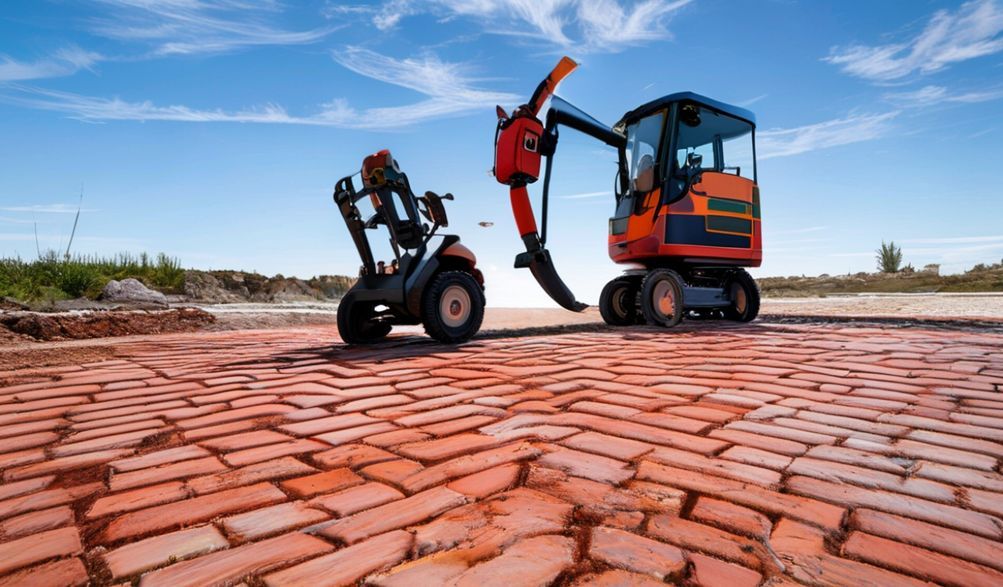
The Complete Guide to Paving Brick Laying Machines: Efficiency, Types & Best Practices
If you’re a contractor, landscaper, municipal project manager, or a serious DIYer tackling a large hardscape project, you know the reality all too well. The back-breaking labor of manual brick paving—the endless bending, the meticulous alignment, the sheer time it consumes—can turn a profitable project into a logistical headache. Inconsistent joints, pattern drift, and crew fatigue aren’t just minor annoyances; they’re threats to your timeline, budget, and reputation.
Enter the paving brick laying machine: a transformative piece of equipment that is revolutionizing hardscape installation. This guide is written from an industry perspective, drawing on years of field experience and technical knowledge. Our goal is to cut through the marketing hype and provide you with the practical insights needed to make an informed decision, improve your project outcomes, and ensure a strong return on investment. We’ll cover everything from how these machines work to selecting the perfect model for your specific needs.
What is a Paving Brick Laying Machine? Revolutionizing Hardscape Installation
At its core, a paving brick laying machine is a mechanized solution designed to automate the most labor-intensive part of a paving project: the precise placement and alignment of individual pavers, bricks, or slabs onto a prepared bedding layer.
Core Function and Basic Mechanics
The fundamental principle is elegant in its efficiency. Instead of a crew manually placing each unit, the machine takes over with consistent, robotic precision. Here’s a simplified look at the typical process:
- Hopper: The machine is loaded with pavers, either manually by a small crew or via a conveyor/loader for larger models.
- Feeding System: An internal mechanism, often a conveyor belt or vibrating plate, feeds the pavers in an organized, single-file manner toward the laying head.
- Laying Head: This is the heart of the machine. It picks up individual pavers and places them onto the prepared sand or gravel bed. Crucially, it spaces them with exact, pre-set joint widths.
- Alignment & Placement: As the machine moves forward (either pushed or under its own power), the laying head deposits the pavers in a perfect, uninterrupted pattern. The operator’s primary role becomes steering and monitoring, not manual placement.
The Evolution from Manual Labor to Mechanization
The journey to today’s machines is a story of innovation driven by necessity. For centuries, paving was purely manual—a skilled but incredibly slow craft. The 20th century saw the introduction of mechanical aids like vibratory plate compactors, which sped up the final settling process. The real breakthrough, however, came with the development of dedicated laying machines. Initially simple push-carts, they have evolved into sophisticated, computer-aided systems that can lay thousands of square feet per day with millimeter precision. This shift from pure manpower to mechanization has unlocked the ability to execute large-scale commercial projects, intricate public spaces, and expansive residential developments with unprecedented speed and quality.
Key Benefits of Using a Brick Laying Machine for Your Projects
Understanding the tangible advantages of this technology is key to justifying the investment. The benefits extend far beyond just “saving time.”
Dramatic Increase in Installation Speed and Productivity
This is the most immediate and impactful benefit. While a highly skilled 4-person crew might manually lay 150-250 square feet per hour, a ride-on paving machine can consistently lay 800 to 1,500+ square feet per hour, depending on the model and conditions.
- Impact: Projects that would take weeks can be completed in days. This acceleration allows you to take on more projects per season, reduce weather-related risks, and free up your crew for other critical tasks like site prep and finishing.
Unmatched Consistency, Precision, and Pattern Accuracy
Human fatigue leads to inconsistency. A machine does not tire. It places every paver with the same exacting standard.
- Perfect Joints: It maintains uniform joint width across the entire installation, which is critical for structural integrity and aesthetic appeal.
- Flawless Alignment: It eliminates pattern drift, ensuring perfectly straight lines for running bond or flawless, uninterrupted repeats of complex patterns like 45° or 90° herringbone and basket weave.
- Result: A superior, professional finish that enhances your reputation and minimizes callbacks for repairs or adjustments.
Significant Reduction in Physical Strain and Labor Costs
Manual paver laying is one of the most physically demanding tasks in landscaping. Repetitive strain injuries, back problems, and general fatigue are common.
- Ergonomic Benefit: Mechanization removes the constant bending, lifting, and kneeling, creating a safer and more sustainable work environment.
- Labor Optimization: You can achieve higher output with a smaller, less fatigued crew. This translates directly into lower labor costs—typically your largest project expense. One operator on a machine can replace several manual layers.
Enhanced Project Profitability and Competitive Bidding
When you synthesize speed, labor savings, and precision, the financial case becomes clear.
- Lower Per-Unit Cost: The reduced time and labor directly decrease your cost per square foot installed.
- Higher Profit Margins: You can maintain your bid price while enjoying healthier margins, or…
- More Competitive Bids: You can submit sharper, more aggressive bids to win more work, knowing your efficient process protects your profitability. The machine becomes a strategic tool for business growth.
Types of Paving Brick Laying Machines: Choosing the Right Tool
Not all paving machines are created equal. Selecting the right type is crucial for matching the tool to your project scope and business model.
Manual/Push-Type Paver Layers
Think of these as the entry point into mechanization. They are pedestrian-operated, non-powered units.
- Operation: Pavers are loaded into a hopper. As the operator pushes the machine forward, a mechanism places and spaces the pavers onto the bed.
- Ideal For: Smaller commercial projects, large residential driveways, patios, and walkways. They are excellent for contractors looking to step up from purely manual work.
- Limitations: Output is lower than automated machines and still requires significant physical pushing. Best for relatively flat, accessible sites.
Ride-On/Track-Based Automatic Machines
These are the industry workhorses for serious volume. They represent the full realization of paving automation.
- Features: Powered by diesel or electric motors, they feature large hoppers (often holding a pallet of pavers or more), fully automated laying heads, and a track system for exceptional stability and minimal ground pressure.
- Ideal For: Large-scale commercial projects, municipal works, parking lots, and plaza installations where thousands of square feet are the norm.
- Advantages: Highest possible output, reduced operator fatigue, ability to handle complex patterns with ease, and superior performance on uneven or soft ground due to tracks.
Specialized Attachments for Skid-Steers and Excavators
This category offers flexibility for contractors who already own a fleet of base machines.
- Concept: These are modular paver-laying heads that attach to the auxiliary hydraulic circuits of a skid-steer loader or mini-excavator.
- Pros: Leverages existing equipment investment. Offers good maneuverability and the ability to use the base machine for other site tasks (loading, excavation).
- Cons: Output is generally lower than dedicated ride-on machines. Requires a compatible base machine with sufficient hydraulic flow.
Key Specifications to Compare
Use this matrix to evaluate different models:
| Specification | What to Look For | Why It Matters |
| :— | :— | :— |
| Laying Width | The width of pavement laid in one pass. | Determines how quickly you can cover area. Wider = faster for large open spaces. |
| Hopper Capacity | Volume of pavers held (in sq. ft. or # of pavers). | Dictates how often you need to stop and reload. Larger capacity improves uptime. |
| Power Source | Diesel (common) vs. Electric (growing). | Diesel offers power and range; electric provides quiet, zero-emission operation ideal for indoor or noise-sensitive sites. |
| Mobility | Rubber Tracks vs. Wheels. | Tracks offer superior traction and ground protection on soft or uneven subgrades. Wheels may be faster on very firm, flat surfaces. |
| Control Systems | Simplicity and adjustability of pattern/depth controls. | Ease of use reduces setup time and operator error. Look for easy pattern changeovers. |
Critical Considerations Before You Buy or Rent
A paving machine is a significant commitment. This balanced, practical advice will help you make a trustworthy decision.
Project Scope Analysis: Volume, Frequency, and Site Access
Be brutally honest with your assessment.
- Annual Volume: Do you install 50,000 sq. ft. annually or 500,000? High volume justifies a purchase.
- Project Frequency: Are you laying pavers weekly or just a few times a season? Infrequent use leans toward rental.
- Site Constraints: Consider gate widths, slopes, tight corners, and ground conditions. A massive ride-on machine is useless if it can’t access a backyard.
Total Cost of Ownership vs. Rental Economics
Run the numbers carefully.
- Purchase (TCO): Include the purchase price, financing, insurance, routine maintenance, repairs, storage, and depreciation. Calculate your cost per square foot over the machine’s expected lifespan.
- Rental: Ideal for one-off large projects, testing a machine before buying, or supplementing your fleet during peak season. Calculate the rental cost against the labor savings for that specific project to see if it pencils out.
Operator Training and Safety Protocols
This is non-negotiable. These are powerful professional tools.
- Training: Insist on formal training from the dealer or manufacturer. The operator must understand not just controls, but also calibration, basic troubleshooting, and safety shut-offs.
- Safety: Always follow the manual. Key protocols include keeping clear of moving parts, using lock-out/tag-out during maintenance, and ensuring all guards are in place.
Site and Paver Preparation is Still Key
The golden rule: A paving machine is only as good as the base it works on. The machine cannot fix poor preparation.
- Non-Negotiable Steps: Proper excavation, a well-compacted and stable sub-base (crushed stone), and a perfectly screeded sand bedding layer are absolutely critical. Any dips, waves, or soft spots in the base will be perfectly translated into the finished pavement by the machine.
Step-by-Step Guide to Operating a Paving Brick Laying Machine
Here’s a field-tested, actionable overview of the process. Always defer to your specific machine’s operator manual.
Pre-Operation Checklist and Machine Setup
- Inspect: Walk around the machine. Check for fluid leaks, damaged tracks/wheels, and ensure all safety features are functional.
- Clean the Hopper: Remove any sand, debris, or old paver fragments from previous jobs.
- Calibrate: Install the correct laying head or adjust the guides for your specific paver size and chosen pattern (e.g., herringbone kit). Set the joint width and laying depth.
- Verify Bedding: Do a final check of your screeded sand bed for level and consistency.
The Laying Process in Action
- Positioning: Start the machine and carefully position it at the beginning of your prepared area, aligned with your string lines.
- Loading: Load pavers into the hopper. For large machines, a skid-steer with a hopper attachment is most efficient.
- Initiate Laying: Engage the laying mechanism and begin driving forward at a steady, recommended pace. The machine will place and space pavers automatically.
- Monitor: The operator’s main jobs are steering a straight line and monitoring the hopper level and paver flow to prevent jams.
Post-Laying Procedures: Compaction and Joint Sand
- Initial Compaction: Once a section is laid, run a low-amplitude plate compactor over the pavers. This settles them uniformly into the sand bed. The machine’s consistent placement makes compaction faster and more effective.
- Apply Joint Sand: Sweep dry, fine polymeric sand over the entire surface, filling the uniform joints completely.
- Final Compaction: Make another pass with the plate compactor to vibrate the sand deep into the joints.
- Clean & Lock: Sweep off excess sand. If using polymeric sand, mist with water to activate the binding agent and lock the pavers in place.
Common Troubleshooting Tips
- Pavers Jamming in Hopper: Often caused by misshapen pavers, debris, or overloading. Stop, reverse the feed mechanism slightly to clear the jam, and remove the problem paver.
- Pattern Drift: Usually indicates the machine is not being steered straight or the starting alignment was off. Stop, check alignment against string lines, and correct course.
- Inconsistent Laying Depth: Likely due to an uneven sand bed or incorrect machine calibration. Check the bed preparation first, then recalibrate the laying head depth.
Frequently Asked Questions (FAQ) About Brick Laying Machines
Q: What is the average cost to rent or buy a paving brick laying machine?
A: Prices vary dramatically. Rental rates can range from $300 to $1,200+ per day for a ride-on machine, depending on size and region. Purchase prices start around $15,000-$25,000 for a robust push-type model and can exceed $100,000 for a high-capacity, fully automated track machine. Always get detailed quotes from multiple reputable dealers and factor in any freight or delivery costs.
Q: Can these machines handle different paver patterns and sizes?
A: Yes, versatility is a key feature. Most machines use interchangeable laying heads or adjustable guide kits to switch between common patterns like 90° herringbone, 45° herringbone, running bond, and basket weave. They are designed to accommodate standard paver sizes (e.g., 4×8, 6×9, etc.). Always confirm the specific compatibility of any machine with the pavers and patterns you most commonly use.
Q: Are they suitable for residential driveway projects, or just commercial?
A: Absolutely suitable for residential. While large ride-on machines are overkill for a small patio, push-type paver layers are perfectly viable and cost-effective for standard to large residential driveways. They allow a contractor to complete a driveway in a day or two with a flawless finish, making them a smart investment for residential specialists.
Q: What kind of maintenance do these machines require?
A: Regular maintenance is simple but critical for longevity:
* Daily: Thoroughly clean out sand, dust, and paver chips from the hopper, conveyor, and laying head.
* Weekly/Per 50 hrs: Lubricate all moving parts (pins, bearings, chains) as specified in the manual.
* Regularly: Check hydraulic fluid levels and hoses for wear (on powered models). Inspect tracks or wheels for damage.
* Seasonal: Follow proper storage and winterization procedures if the machine will be idle.
Conclusion
The paving brick laying machine is more than just a tool; it’s a transformative force in the hardscape industry. By delivering unmatched speed, robotic precision, and significant labor savings, it directly addresses the core challenges of profitability, scalability, and quality control. For growing businesses, it represents a strategic investment in capability, competitiveness, and reputation.
The next steps are clear. If you’re serious about elevating your operations, contact reputable dealers to arrange live demonstrations. Consider renting a model for a trial project to experience the benefits firsthand. Most importantly, commit to the foundational principles of excellent site preparation and operator training. By pairing this powerful technology with skilled craftsmanship, you can build a stronger, more efficient, and more profitable business, one perfectly laid square foot at a time. The future of paving is mechanized, and it’s here to work for you.