
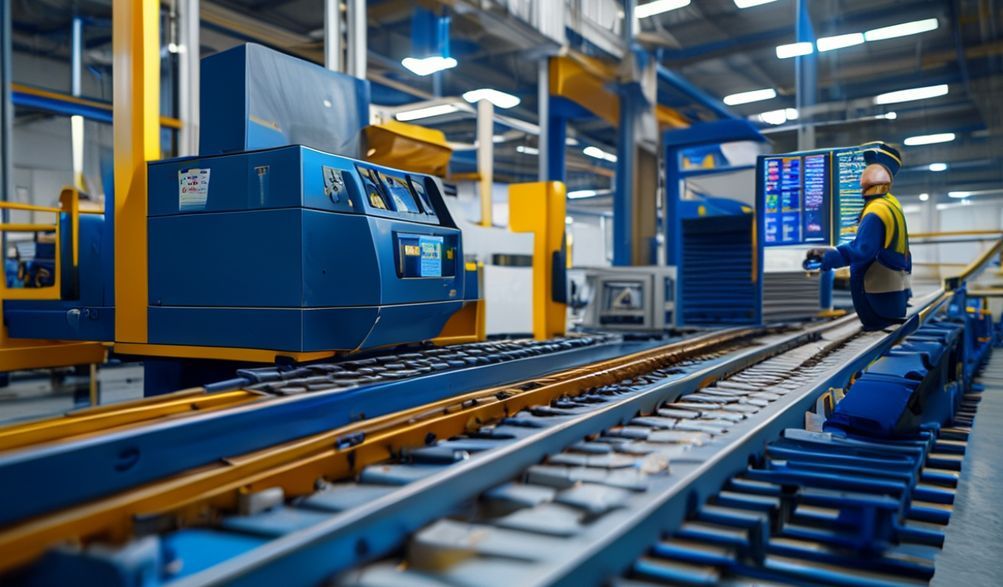
Building Blocks Machine Price: Your 2026 Investment Guide from FUDA Brick Making Factory
Welcome to the definitive guide on building blocks machine prices, authored by the engineering team at FUDA Brick Making Factory. With over 25 years of hands-on experience manufacturing, operating, and servicing block making machinery across 80+ countries, we don’t just sell machines—we build the expertise that shapes the construction industry.
This guide is crafted to cut through the confusion of online price lists. We provide transparent, expert insights to demystify cost factors. You’ll learn what truly impacts price. We’ll equip you with the knowledge to make a smart, high-ROI investment for your specific project needs. This applies whether you’re a startup or a large-scale contractor.
Our goal is to build trust by providing the clarity you deserve before making a significant capital purchase. Let’s begin.
Understanding Building Blocks Machines: Types and Applications
Before discussing price, it’s crucial to understand the machine that fits your production goals. The wrong choice can cripple your profitability. At FUDA, we categorize machines by their operation mode, output, and the type of blocks they produce.
1.1 Fully Automatic Block Making Machines
- Description & Typical Output: These are high-speed, computer-controlled systems. They integrate automatic material feeding, pressing, curing, and pallet return into one seamless line. They are engineered for large-scale, consistent production, often exceeding 10,000+ blocks per shift.
- Key Applications: Major infrastructure projects, large commercial housing developments, and established block supply businesses aiming for market dominance.
- FUDA Insight: “Our fully automatic QGM series reduces labor costs by up to 70% but requires a higher initial investment and a stable, industrial-grade power supply. It’s for those ready to scale massively.”
1.2 Semi-Automatic Block Making Machines
- Description & Typical Output: This category offers the optimal balance. The core pressing and vibration are powered, but operations like block ejection and pallet placement are manual. This design offers a robust output range, typically between 2,000 – 8,000 blocks per shift, at a more accessible price point.
- Key Applications: Medium-sized construction firms, regional block suppliers, and savvy entrepreneurs entering the manufacturing market.
- FUDA Insight: “This is our most popular category for growing businesses. It delivers excellent productivity without the complexity and cost of full automation. The ROI timeline is often very attractive.”
1.3 Manual/Egg Laying Block Making Machines
- Description & Typical Output: These are portable, hand-operated or simple hydraulic machines. Production is labor-intensive but the capital cost is very low, with outputs ranging from 500 to 1,500 blocks per day. They are called “egg layers” because they produce blocks directly on the ground.
- Key Applications: Small community projects, rural building initiatives, and on-site production for a specific, limited-scale build.
- FUDA Insight: “We often recommend these for testing market demand with minimal risk or for projects with severe budget or power constraints. They are a tool for specific situations, not for building a supply business.”
The Real Factors That Determine Building Blocks Machine Price
The price tag is a sum of its parts and capabilities. Two machines may look similar online but have vastly different price tags. Here’s what you’re actually paying for.
2.1 Core Machine Specifications & Capacity
- Production Output (Blocks/Hour): This is the single biggest price driver. A machine engineered to produce 5,000 blocks/hour has a heavier frame, a more powerful hydraulic system, and a larger vibratory mechanism than one rated for 1,000 blocks/hour. You pay for capacity.
- Block Type & Mold Complexity: The price for a standard hollow block mold is a baseline. Complexity increases cost. Producing interlocking pavers, garden kerbstones, or custom-designed architectural blocks requires specialized, precision-engineered molds, which add to the investment.
- Automation Level & Control System: The “brain” of the machine costs money. A sophisticated PLC (Programmable Logic Controller), a user-friendly touchscreen interface, and integrated sensor systems for fault detection add cost. This investment pays back in precision, reduced material waste, and easier operation.
2.2 Quality of Components & Build
- Frame & Structure: The skeleton of the machine must withstand constant, powerful vibration. Heavy-duty, reinforced steel frames (standard in all FUDA machines) ensure longevity and consistent block quality. Cheaper machines use lighter gauge steel, leading to frame fatigue and misalignment over time.
- Hydraulic System: This is the heart. Premium brands like Rexroth or Yuken offer reliability, consistent pressure for uniform block density, and lower long-term maintenance costs. Generic systems are cheaper upfront but are a common point of failure.
- Electrical Components: This is a critical area where cost-cutting happens. Components from Siemens or Schneider Electric enhance safety, durability, and resistance to power fluctuations. Inferior components fail faster and pose operational risks.
2.3 “Hidden” Costs Beyond the Sticker Price
- Shipping & Logistics: Understand the Incoterms. An FOB (Free On Board) price means the cost is only to the port of origin. A CIF (Cost, Insurance, Freight) price includes delivery to your nearest port. Shipping a 20-ton machine requires significant budgeting for freight, insurance, and port clearance.
- Installation, Commissioning & Training: A machine is not a plug-and-play appliance. Professional setup by factory engineers (a standard inclusion with FUDA purchases) is non-negotiable for optimal performance. This ensures your machine produces saleable blocks from day one.
- Spare Parts Kit & Initial Maintenance: Budget for an initial inventory of critical spare parts (seals, filters, wear plates). Having these on-site prevents weeks of downtime waiting for an international shipment when a minor part fails.
FUDA Brick Making Factory Price Ranges: A Transparent Breakdown
Note: The following prices are indicative for 2026 and subject to final configuration based on your specific needs. Contact us for a precise, no-obligation quote.
3.1 Entry-Level & Manual Machines
- Price Range: $3,000 – $15,000
- What You Get: A robust, no-frills machine designed for essential production. It’s a tool for proof-of-concept, very specific small-scale projects, or markets where labor cost is exceptionally low.
- A Real FUDA Model: QTJ4-40 Manual Block Machine – A proven workhorse for starting businesses, known for its simplicity and durability in harsh conditions.
3.2 Mid-Range Semi-Automatic & Automatic Plants
- Price Range: $25,000 – $120,000
- What You Get: The sweet spot for serious, profitable businesses. This range includes features like automatic mixing, conveyor systems, and reliable hydraulic presses. It’s designed for steady, profitable output with manageable labor input.
- A Real FUDA Model: QFT5-15 Semi-Automatic Plant – Our best-selling model globally, celebrated for its versatility, reliability, and fast return on investment.
3.3 High-Capacity Fully Automatic Production Lines
- Price Range: $150,000 – $500,000+
- What You Get: This is a turnkey factory in a line. It includes robotic pallet handling, high-pressure curing chambers, and centralized computer control. Designed for maximum efficiency, minimal labor, and dominating the market with unmatched volume and consistency.
- A Real FUDA Model: QGM Zenith 1500 Fully Automatic Line – For industrial-scale production, this line sets the standard for output and technological integration in block manufacturing.
Maximizing Your Investment: ROI and Smart Purchasing Tips
Buying a machine is an investment, not an expense. The goal is to generate profit. Here’s how to ensure you do.
4.1 Calculating Your Potential Return on Investment (ROI)
- Simple ROI Formula: (Annual Net Profit from Machine / Total Machine Investment Cost) x 100.
- Factors in Your Calculation:
- Local selling price per block.
- Machine’s daily production capacity (at 80% efficiency for realism).
- Operational days per year.
- Cost of raw materials (cement, aggregate, sand).
- Labor, power, and maintenance costs.
- Case Study Snapshot: “A client in Kenya using our QFT5-15 recouped their total investment in 14 months. They achieved this by securing a contract to supply blocks for a local housing development, demonstrating the power of matching the right machine to a clear market opportunity.”
4.2 Key Questions to Ask Any Supplier Before Buying
- References: Can you provide contact details for 2-3 clients in my region or continent?
- Warranty: What is the warranty period, and what does it specifically cover (parts, labor, shipping)?
- Support: Is on-site technical training included? Are operation and maintenance manuals available in my language?
- Parts: What is the typical lead time for critical spare parts, and do you have a local depot or agent?
- Quote Clarity: Can you provide a line-item breakdown of the quotation (machine, molds, spare parts kit, shipping costs)?
4.3 The FUDA Advantage: Beyond the Machine Price
- In-House Engineering & Customization: We don’t just sell catalog machines. Our engineers design and build custom molds for your local market specifications and unique materials.
- Global Service Network: We have trained technicians and spare parts depots in strategic locations to support you post-purchase.
- Comprehensive Training: We provide on-site training for your operators and maintenance staff, ensuring you gain the knowledge to run and care for your plant efficiently.
Frequently Asked Questions (FAQ) on Building Blocks Machine Prices
Q1: What is the cheapest building blocks machine I can buy?
A: Manual or small mobile machines can start as low as $3,000-$5,000. However, we advise businesses to calculate the cost-per-block over 3 years, not just the purchase price. The “cheapest” machine often has the highest long-term cost due to low output, high labor needs, and potential reliability issues.
Q2: Why are prices from different suppliers for a “similar” machine so different?
A: This almost always reflects differences in core component quality, steel thickness, engineering design, and after-sales service inclusion. A cheaper machine may use lower-grade hydraulics or electronics, leading to frequent breakdowns and costly downtime. Always compare detailed specification sheets, not just marketing photos.
Q3: Does the price include molds?
A: This varies significantly by supplier. At FUDA, our base quotation typically includes one standard mold (e.g., for a 6″ hollow block). Additional or custom molds are quoted separately. Always clarify this point explicitly with your supplier to avoid surprises.
Q4: How much should I budget for installation and foundation?
A: For semi- and fully-automatic plants, we recommend budgeting an additional 5-15% of the machine cost. This covers the concrete foundation, local electrical hookup, and potential crane hire for placement. We provide detailed foundation and layout drawings in advance for accurate local contractor quotes.
Q5: Can I get a precise online quote?
A: For a meaningful and accurate quote, we need to understand your project specifics. Please contact our sales team with your target block types, daily production goal, and local voltage/power situation. We will then provide a tailored, detailed proposal with a firm price.
Conclusion
Investing in a building blocks machine is a significant decision that goes far beyond comparing online price lists. The true cost encompasses long-term performance, reliability, and the quality of support that stands behind the machine.
As a factory with decades of direct manufacturing Experience, we’ve built our Expertise by solving real production challenges for thousands of clients worldwide. Our Authoritativeness is reflected in our global installations and industry certifications, while our Trustworthiness is proven through long-term partnerships and transparent dealings.
The right machine is an investment that pays for itself. By focusing on your specific production needs, understanding the true factors of cost, and partnering with a reputable manufacturer like FUDA, you’re not just buying equipment—you’re building the foundation for a profitable and sustainable business.
Ready to Move Beyond a Generic Price List?
Contact the FUDA Engineering Team Today for a personalized consultation and a detailed, no-obligation quotation tailored to your project’s exact specifications and local market conditions. Let’s build your success together.