
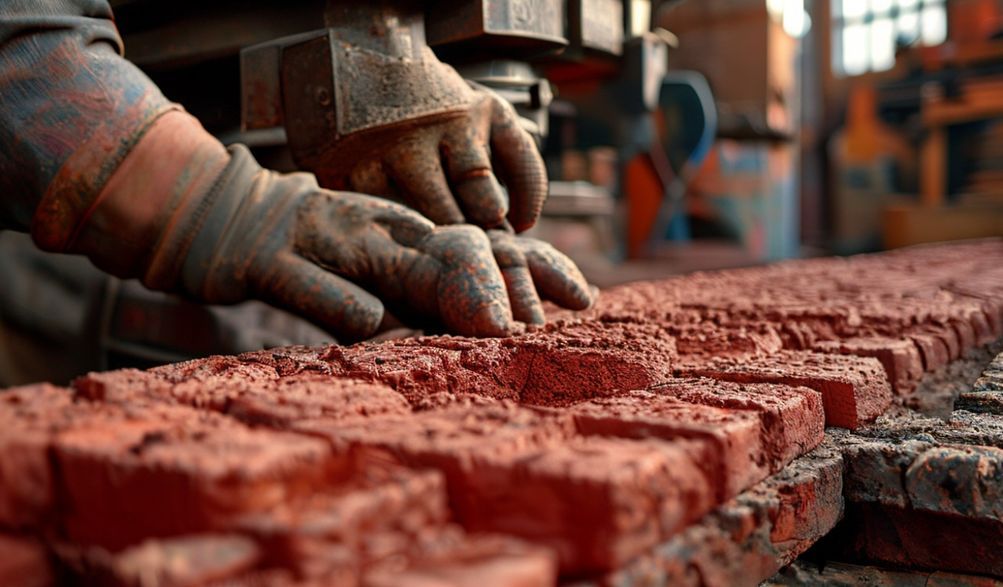
The Complete Guide to Manual Brick Moulding Machines at FUDA Brick Making Factory
Introduction
In an era dominated by automation, the enduring value of simple, robust technology is often overlooked. This guide is written from the trenches of brick manufacturing, drawing on extensive industry experience and direct knowledge of production processes at facilities like the FUDA brick making factory. We will provide a clear, trustworthy overview of manual brick moulding machines, explaining their operation, benefits, and their surprisingly vital role in modern, efficient brick production.
Whether you’re a small-scale builder, a contractor exploring on-site production, or an entrepreneur setting up a brick-making operation, this expert guide offers practical, authoritative insights. Our goal is to move beyond theory and give you the actionable knowledge needed to make informed decisions, ensuring your project is built on a solid foundation—literally and figuratively.
What is a Manual Brick Moulding Machine?
At its heart, a manual brick moulding machine is a tool of elegant simplicity. It is a mechanical device designed to form raw, damp material—typically a mix of soil, clay, sand, or stabilized earth—into a solid, uniformly shaped brick using human-powered force. Unlike its fully automatic cousins, it requires no electricity, diesel, or complex hydraulics. Its power source is the operator.
This simplicity is its superpower, making it an indispensable asset in contexts ranging from remote construction sites to sophisticated factory floors.
Core Function and Design Principle
The core function is compaction through pressure. A manual machine uses a lever or screw-press system to multiply the force applied by the operator, compacting the raw material into a rigid mold cavity.
Key components include:
- Frame: The heavy-duty steel skeleton that provides stability and withstands the pressing force.
- Mold Box: The removable or fixed cavity that defines the brick’s shape and size (e.g., standard rectangular, interlocking).
- Lever/Press Mechanism: The heart of the machine. A long lever provides mechanical advantage, or a screw press offers high, direct compression.
- Tamper: Often part of the mechanism, it compresses the material into the mold.
- Ejector: A crucial plate or system that cleanly pushes the finished “green” brick out of the mold after compaction.
The Role in Semi-Automated Factories like FUDA
You might wonder what place a hand-operated machine has in a facility like the FUDA brick making factory. The answer is: a critical one. Manual machines are not relics here; they are strategic tools for flexibility.
- Specialty & Custom Batches: For producing limited runs of custom brick sizes, shapes, or colors that don’t justify retooling a major automated line.
- Prototyping & Testing: Quickly testing new raw material mixes or mold designs before committing to full-scale production.
- Backup and Overflow: Acting as a reliable backup during maintenance on primary automated systems or handling overflow orders.
- Training: Serving as an excellent training tool for new staff to understand the fundamental principles of brick compaction without the complexity of automated systems.
In this environment, the manual machine is a symbol of adaptable, resilient manufacturing.
Key Advantages of Using a Manual Brick Moulding Machine
The advantages of this technology are rooted in practical, real-world economics and logistics. Here’s why it remains a cornerstone of small-scale and supplementary production.
Cost-Effectiveness and Low Investment
- Low Capital Outlay: The initial purchase price is a fraction of that for automatic machines. This dramatically lowers the barrier to entry for startups and small businesses.
- Minimal Operating Costs: It requires no fuel or electricity to run, eliminating a significant variable cost. Your “energy source” is operational labor.
- Affordable Maintenance: Repair costs are low, and parts are typically simple to fabricate locally.
Simplicity, Durability, and Ease of Maintenance
- Robust Construction: Built with heavy steel and few moving parts, these machines are incredibly durable and can last for decades with basic care.
- Easy Repairs: Breakdowns are rare, but when they occur, they can usually be fixed with basic tools and mechanical knowledge, without needing a specialist engineer or imported parts.
Operational Flexibility and Portability
- Multiple Brick Types: By simply swapping out the mold box, one machine can produce standard bricks, interlocking bricks, paving blocks, and more.
- On-Site Production: Its portability allows for bricks to be made directly at the construction site, saving tremendously on transportation costs for heavy materials.
- Off-Grid Capability: It is the perfect solution for projects in areas with unreliable or no electrical infrastructure.
Ideal for Small-Scale and Startup Production
For an entrepreneur, a community-led housing project, or a contractor looking to vertically integrate, a manual machine offers a low-risk, high-reward starting point. It allows you to validate your market, perfect your brick quality, and generate revenue without a massive upfront investment.
How a Manual Brick Moulder Works: A Step-by-Step Breakdown
Understanding the process is key to achieving quality results. Here is a detailed, technical breakdown of the operation cycle.
Stage 1: Preparation of Raw Material
The quality of the final brick is determined here. The raw material must be correctly formulated and conditioned.
- The Mix: A typical mix involves soil (with adequate clay content), sand (for reducing shrinkage), and a stabilizer like cement or lime (for strength and water resistance). The exact ratios depend on your local soil properties.
- Moisture Content: This is critical. The mix must be damp enough to bind under pressure but not so wet that the brick slumps after ejection. The “drop test” (a ball of mix should hold its shape when dropped from waist height) is a reliable field check.
Stage 2: Filling and Compacting the Mold
- Filling: The clean, lubricated mold box is placed on the machine’s base. The prepared mix is shoveled in, often slightly overfilled.
- First Compaction: The operator may use a hand tamper to pre-compact the material into the corners of the mold.
- Main Pressing: The lever is pulled down (or the screw press turned), driving the tamper head into the mold with significant force. This pressure compresses the particles together, eliminating air pockets and forming a dense, coherent brick.
Stage 3: Ejection and Curing
- Ejection: After compression, the mold box is aligned with the ejection mechanism. A further pull on the lever or turn of the press activates the ejector plate, cleanly pushing the solid, “green” brick out onto a pallet or rack.
- Curing: The machine’s job is done, but the brick’s journey isn’t. The green bricks must be carefully stacked in a shaded, ventilated area to dry slowly for several days to prevent cracking. If using cement stabilization, they should be kept moist for a week to cure properly, gaining strength. Improper curing is a primary cause of weak bricks.
Choosing the Right Manual Brick Machine for Your Needs
Not all manual machines are created equal. Informed selection, informed by factory-level standards, is crucial.
Critical Specifications to Consider
- Bricks Per Hour Output: Be realistic. A skilled operator can produce 40-70 bricks per hour. Promises of 500+ per day often depend on perfect workflow and multiple operators.
- Brick Size and Type: Ensure the machine and available molds match your target product (e.g., standard 4″x8″x12″, interlocking, hollow blocks).
- Build Quality: Inspect the steel thickness (minimum 5mm frame), the quality of welds (smooth, continuous), and the finish. Rust-prone, thin metal will fail.
- Mechanical Advantage: Test the lever action. It should be smooth and require manageable effort to generate high pressure. A poorly designed lever will be exhausting to use.
Why Design Matters: Insights from Factory Practices
Factories like FUDA prioritize designs that enhance productivity and product consistency over the long term.
- Ergonomics: The machine’s height and lever angle should allow for efficient operation without causing operator fatigue or strain.
- Reliable Ejection: A sticky, unreliable ejection mechanism is a major bottleneck. Look for a system that delivers a clean, consistent push every time.
- Mold Precision: The mold box itself must be machined from high-quality steel to exact dimensions to ensure every brick is identical.
Sourcing and Supplier Evaluation Tips
- Ask About Support: What is the warranty? Are spare parts (like mold liners, pins, levers) readily available?
- Probe Their Experience: “Do you supply to brick factories?” Suppliers who understand industrial needs often build more robust machines.
- Request References: A trustworthy manufacturer will connect you with existing customers.
Maximizing Output and Brick Quality with Your Manual Machine
Owning the machine is step one. Mastering it is where the real success lies.
Optimizing the Raw Material Mix
- Test Your Soil: Simple field tests are invaluable. The “ribbon test” (rolling moist soil into a thin ribbon) indicates clay content. The “sedimentation test” (shaking soil in a jar of water) shows the sand/silt/clay ratio.
- Stabilize for Strength: For permanent structures, adding 5-10% cement by volume to your soil-sand mix will create a strong, weather-resistant stabilized earth block (SEB).
Operational Techniques for Efficiency
- Create a Workstation: Organize a U-shaped flow: raw material pile -> mixing area -> machine -> drying racks. Minimize wasted movement.
- Form a Team: A two-person team can dramatically increase output—one fills and pre-tamps, the other operates the press and handles ejection.
- Develop a Rhythm: Consistent, rhythmic motions are faster and less tiring than sporadic, forceful ones.
Essential Maintenance for Longevity
- Daily: Thoroughly clean the mold box, tamper head, and ejection plate after each work session. Caked-on material increases friction and wear.
- Weekly: Lubricate all pivot points and moving parts with grease to ensure smooth operation.
- Monthly: Inspect for stress cracks in the frame or welds. Check for wear on the mold box interior and the ejector mechanism.
Frequently Asked Questions (FAQ)
Q: How many bricks can I make per day with a manual machine?
A: A realistic output for a single skilled operator is 300-500 high-quality bricks per 8-hour day, depending on the machine model, brick type, and workflow efficiency. Teamwork can increase this number.
Q: Can I make interlocking bricks with a manual moulding machine?
A: Yes, absolutely. Many manual machines offer interlocking brick molds, which are excellent for dry-stack (mortarless) construction. Ensure the machine can generate sufficient, even pressure to fully form the interlocking knobs and grooves cleanly.
Q: Is the brick strength from a manual machine comparable to machine-made bricks?
A: With the correct raw material mix (especially using cement stabilization), proper compaction technique, and adequate curing, manually molded bricks can achieve compressive strengths well suited for residential and low-rise buildings. Consistency in the process is the key to matching machine-made quality.
Q: What are the main limitations of a manual brick moulder?
A: The primary limitations are production speed (it cannot match the output of automatic machines) and the physical labor required. It is not designed for very large-scale, high-volume industrial production but excels in small-to-medium scale and specialized applications.
Q: Where can I find reliable manual brick machine manufacturers?
A: Look for manufacturers with a strong reputation, transparent customer reviews, and those who provide clear technical documentation and support. Companies that supply equipment to established factories often have the most robust and well-designed models.
Conclusion
The manual brick moulding machine is far from obsolete. It remains a cornerstone of practical, accessible, and resilient brick production, even within the context of a modern, semi-automated factory like FUDA. It embodies a perfect blend of simplicity, reliability, and cost-effectiveness that high technology cannot replace for certain applications.
For small to medium-scale projects, startups, or specialized production needs, it offers an authoritative and trustworthy solution built on decades of proven engineering experience. By choosing the right machine, mastering the material mix, and adhering to operational best practices, you are not just making bricks—you are building the durable, high-quality foundation for any construction project, with your own hands.