
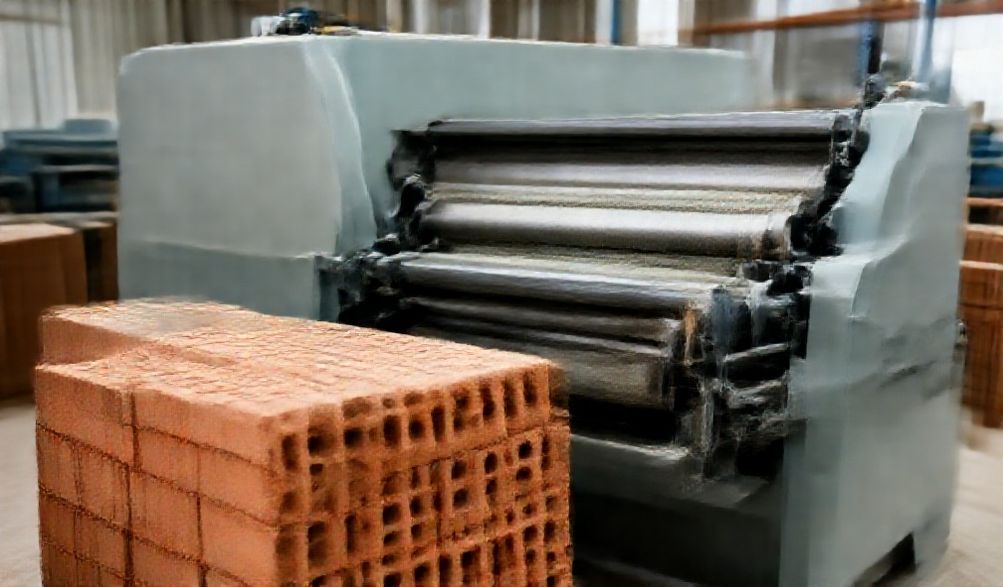
Cement Brick Making Machine Price in Delhi 2026: A Complete Buyer’s Guide
Introduction
Imagine you’re a contractor in Rohini or an entrepreneur in Faridabad. You’ve secured a few projects, and the constant fluctuation in brick prices is eating into your margins. The idea of producing your own cement bricks is compelling—it promises control, quality assurance, and better profitability. But as you start searching for a “cement brick making machine price in Delhi,” you’re met with a dizzying array of options. Quotes range from a few lakhs to several crores, and every supplier claims to offer the “best deal.” The feeling of being overwhelmed is real.
This guide is designed to cut through that noise. Our purpose is to provide you with transparent, detailed, and actionable information on cement brick making machine prices specifically for the Delhi/NCR market. This analysis isn’t based on speculation; it’s built on current market trends, direct manufacturer specifications, and a deep understanding of the region’s unique construction demands, climate challenges, and operational realities.
By the end of this guide, you will have a clear understanding of the price landscape, the key factors that drive costs, and the operational economics. More importantly, you’ll know the exact questions to ask suppliers to ensure your investment builds your business, not just a pile of bricks.
Understanding the Cement Brick Making Machine Market in Delhi
Delhi isn’t just a market for construction machinery; it’s a vibrant, demanding hub. Understanding this context is crucial to making a smart purchase.
Why Delhi/NCR is a Hub for Construction Machinery
The Delhi National Capital Region is perpetually under construction. From large-scale infrastructure projects like the Delhi-Mumbai Expressway corridors to the relentless demand for affordable housing and commercial spaces in burgeoning areas like Noida and Gurugram, the need for construction materials is insatiable. This constant demand creates a thriving market for machinery that can produce these materials locally and efficiently.
Furthermore, Delhi’s geographical position is strategic. It sits at the doorstep of major manufacturing clusters in neighboring states—the industrial belts of Faridabad and Ghaziabad in Haryana and Uttar Pradesh, respectively. This proximity means easier access to suppliers, potentially lower logistics costs for machine transportation, and often quicker service response times.
Types of Machines Available: From Manual to Fully Automatic
The level of automation is the single most significant factor shaping your investment. Here’s a quick overview:
- Manual Machines: Operated primarily by hand levers and human labor for mixing, feeding, and brick ejection. They are the most basic entry point.
- Semi-Automatic Machines: These incorporate mechanical or hydraulic systems to compress the brick. Operators feed the mixture and remove finished bricks, but the core compaction process is powered. They offer a vital balance.
- Fully Automatic Machines: These are production lines. With automated material feeding, mixing, compaction, stacking, and sometimes even palletizing, they require minimal human intervention, often just for supervision and maintenance.
As you move from manual to fully automatic, the price increases significantly, but so does output, consistency, and operational efficiency.
Key Factors Determining Cement Brick Making Machine Prices
The price tag on a machine is a sum of its parts, capabilities, and support. Let’s break down what you’re really paying for.
1. Level of Automation & Production Capacity
This is the primary price determinant. Production capacity, measured in bricks per hour (BPH) or blocks per shift, directly correlates with cost.
- Manual Machines (Lowest Price Bracket): Ideal for very small-scale or niche production. Output is limited by labor.
- Semi-Automatic Machines (Mid-Range Price Bracket): The workhorse for most small-to-medium enterprises (SMEs). Capacities can range from 800 to 2,500 BPH, with prices scaling accordingly.
- Fully Automatic Machines (Premium Price Bracket): Designed for large-scale commercial production, with outputs starting from 4,000 BPH and going far beyond. The investment is substantial but justified by volume.
2. Machine Type & Brick Output Variety
What kind of bricks do you want to make? The machine type is specialized for this.
- Solid Block Machines: For standard construction bricks.
- Hollow Block Machines: For lighter, insulating bricks used in partitions and load-bearing walls.
- Paver Block & Interlocking Block Machines: For landscaping, pavements, and modern construction techniques.
- Multi-Purpose Machines: These can produce different types by changing molds. They offer flexibility but may command a higher price than a single-purpose unit of similar capacity.
3. Brand, Build Quality & After-Sales Service
In Delhi’s demanding environment—with its dust, summer heat, and expectation of continuous operation—build quality is non-negotiable.
- Build Quality: Look for robust frames, high-quality vibration motors, and durable hydraulic systems. A cheaper machine with thin metal plates will vibrate excessively and break down frequently, costing you more in downtime and repairs.
- Brand & Service: A reputable brand with a strong, responsive after-sales service network in Delhi NCR is invaluable. When a machine halts, your production and income stop. A local service team that can be on-site within hours is a critical part of the value proposition.
4. Additional Costs Beyond the Sticker Price
The machine’s invoice is rarely the final cost. Factor in these often-overlooked expenses:
- Installation & Commissioning: Some suppliers include this, others charge extra.
- Molds: The mold defines the brick’s shape and size. A standard mold may come with the machine, but additional designs (for different brick types or patterns) are an added cost.
- Training: Proper training for your operators is essential for safety, efficiency, and brick quality.
- Logistics: Transportation from the supplier’s yard to your site in Delhi. This can be significant for larger machines.
- Spare Parts Kit: Purchasing a basic kit of commonly needed spares (like springs, seals, bolts) upfront can prevent future downtime.
Detailed Price Breakdown for Delhi Buyers (2026)
Disclaimer: The following price ranges are estimates for 2026 based on current trends, inflation, and market analysis. They are intended to provide a realistic budgetary framework. Always get detailed quotations from multiple suppliers.
Price Range of Manual Cement Brick Machines
- Estimated Range: ₹1.5 Lakhs – ₹4 Lakhs
- Ideal For: Micro-enterprises, startups with very low capital, NGOs, or for producing bricks for personal use on a farmhouse project.
- Pros:
- Lowest upfront investment.
- Simple to operate with minimal technical knowledge.
- Low power consumption.
- Cons:
- Very low output (200-500 BPH).
- Labor-intensive and physically demanding.
- Inconsistent brick quality due to human effort variance.
- Operational Cost: Primarily labor (2-3 persons) and raw materials. Electricity cost is negligible.
Price Range of Semi-Automatic Cement Brick Machines
- Estimated Range: ₹4 Lakhs – ₹15 Lakhs
- Ideal For: The “sweet spot” for most small and medium brick-making businesses, contractors looking to supply their own sites, and entrepreneurs targeting local housing projects.
- Pros:
- Excellent balance of automation and cost.
- Good production capacity (800 – 2,500+ BPH).
- Consistent brick quality due to mechanical/hydraulic pressure.
- Can be operated with 2-4 personnel.
- Cons:
- Higher initial investment than manual machines.
- Requires reliable 3-phase power connection.
- Needs basic maintenance understanding.
- Operational Cost: Includes power for the motor (typically 5-15 HP), labor for feeding and stacking, and routine maintenance.
Price Range of Fully Automatic Cement Brick Machines
- Estimated Range: ₹15 Lakhs – ₹75+ Lakhs
- Ideal For: Large-scale commercial plants, B2B suppliers to major construction companies, and businesses aiming for high-volume production with minimal manual labor.
- Pros:
- Very high, consistent output (4,000 – 10,000+ BPH).
- Minimal manual labor required (mostly supervision).
- Superior brick density and uniformity.
- Often include features like auto mixing, conveyor systems, and stackers.
- Cons:
- Very high capital investment.
- Significant space requirement.
- Complex maintenance requiring trained technicians.
- High power consumption.
- Operational Cost: Significant electricity costs, skilled supervisor salary, and planned maintenance schedules are key components.
How to Get the Best Value for Your Investment in Delhi
Getting the right machine is a process, not an impulse buy. Follow this actionable advice.
Evaluating Suppliers & Manufacturers in Delhi NCR
Don’t just buy from a brochure. Your due diligence should include:
- Factory Visit: Insist on visiting the manufacturing unit, preferably in the NCR industrial belt. Assess their workshop quality and processes.
- Live Demonstration: See the machine running. Test it with a raw material mix similar to what you’ll use (ask if you can bring your own sand/aggregate).
- Client References: Ask for a list of 3-4 customers in or around Delhi. Call them. Ask about machine performance, brick quality, and most importantly, the responsiveness of the after-sales service.
- Service Team Verification: Ask where their service engineers are based and what their typical response time is for a call in South Delhi or West Delhi.
Must-Ask Questions Before Purchasing
Arm yourself with this checklist when talking to suppliers:
- “What is the exact warranty period, and what components does it cover (e.g., motor, frame, hydraulics, electrical panel)?”
- “Where is your spare parts warehouse located for Delhi/NCR? What is the availability guarantee for critical spares?”
- “Can you provide guidance on the raw material mix ratio optimized for the locally available sand and aggregates in my area?”
- “Do you provide on-site installation and training? Is it included in the price?”
- “What is the power requirement (in KW/HP) for this model, and how will Delhi’s voltage fluctuations affect it?”
Calculating Your Return on Investment (ROI)
A simple ROI analysis brings clarity. Here’s a basic framework for a semi-automatic machine:
- Machine Cost: ₹8,00,000
- Daily Production (1 shift): 2,000 bricks
- Selling Price per Brick (Delhi Market): ₹8 (estimate)
- Daily Revenue: 2,000 x ₹8 = ₹16,000
- Daily Operational Cost (Power, Labor, Raw Materials): ~ ₹9,000 (estimate)
- Daily Profit: ₹16,000 – ₹9,000 = ₹7,000
- Monthly Profit (26 days): ₹1,82,000
- Simple Payback Period: ₹8,00,000 / ₹1,82,000 ≈ 4.4 months.
Note: This is a simplified example. Your actual raw material cost, selling price, and operational efficiency will vary. It also excludes fixed costs like land rent.
Common Pitfalls to Avoid When Buying in Delhi
Learning from others’ mistakes is cheaper than making your own.
Choosing Price Over Quality and Service
The cheapest machine often becomes the most expensive. Frequent breakdowns lead to:
* Lost production days.
* Costly emergency repairs.
* Missed project deadlines and loss of customer trust.
Invest in reliability from a supplier known for service.
Overestimating or Underestimating Production Needs
- Overestimating: You tie up excessive capital in a machine that sits underutilized.
- Underestimating: You buy a small machine and quickly outgrow it, facing the hassle of selling and upgrading.
Analyze your current orders and realistic 2-3 year growth projection. Choose a machine that can grow with you, perhaps by opting for a semi-automatic model with a higher capacity buffer.
Neglecting Operational Costs (Power, Labor, Maintenance)
The machine’s price is a one-time cost. Running it is continuous. Create a realistic monthly budget for:
* Power: Delhi’s industrial electricity rates apply. A 10 HP motor running 8 hours daily consumes significant units.
* Labor: Even semi-automatic machines need skilled, reliable operators.
* Preventive Maintenance: Regular greasing, part inspections, and minor repairs are essential to avoid major breakdowns. Budget for this.
Frequently Asked Questions (FAQ)
Q1: What is the cheapest cement brick making machine available in Delhi?
A: Manual machines are the entry point, with prices starting around ₹1.5 lakhs. However, be cautious. Their low output and high labor intensity make them unsuitable for any commercial-scale operation. They are best for very limited, personal-use projects.
Q2: Can I get a subsidy or financing for a brick machine in Delhi?
A: Yes, there are possibilities. Explore MSME (Micro, Small & Medium Enterprises) schemes offered by the Delhi government or central ministries. Many nationalized and private banks offer machinery loans under the CGTMSE scheme. It’s advisable to check with the Delhi State Industrial and Infrastructure Development Corporation (DSIIDC) or a local industry association for the most current information.
Q3: How much space is required to install and operate a semi-automatic machine in Delhi?
A: For a smooth operation, you should plan for approximately 2,000 to 3,000 square feet. This covers the machine’s footprint, raw material storage (sand, aggregate, cement), a mixing area, space for fresh bricks to be stacked for initial setting, and a dedicated curing area. Space constraints in urban Delhi make this a critical planning factor.
Q4: Which areas in Delhi/NCR have the highest concentration of machinery suppliers?
A: Key industrial hubs include Mayapuri, Lawrence Road, and Kirti Nagar in Delhi. For a wider variety and often better pricing, visit the major manufacturing clusters in Faridabad (Haryana) and Ghaziabad/Meerut Road (Uttar Pradesh). Always prefer a personal visit over phone negotiations.
Q5: What is the typical payback period for a mid-range machine?
A: For a well-utilized semi-automatic machine with good market demand for its bricks, a typical payback period ranges from 12 to 24 months. This depends heavily on your operational efficiency, local brick selling prices, and your ability to manage raw material costs effectively.
Conclusion
Navigating the “cement brick making machine price in Delhi” landscape reveals a core truth: the right price isn’t the lowest price; it’s the one that aligns with your specific production needs, business scale, and long-term growth goals. A machine is a productivity engine, and its value is measured in the quality and quantity of bricks it reliably produces over its lifetime.
For most entrepreneurs and contractors in the Delhi NCR region, a robust semi-automatic machine from a reputable supplier with proven after-sales support offers the optimal balance. It provides the automation needed for quality and efficiency without the daunting capital outlay of a fully automatic plant.
Use this guide as your checklist. Shortlist 3-4 suppliers from the Delhi NCR industrial belt. Schedule live demonstrations. Calculate your ROI based on your numbers. And remember the most powerful due diligence tool: always ask for customer references in Delhi and speak to them directly about their real-world experience. Your informed decision today will lay a solid foundation for your business for years to come.