
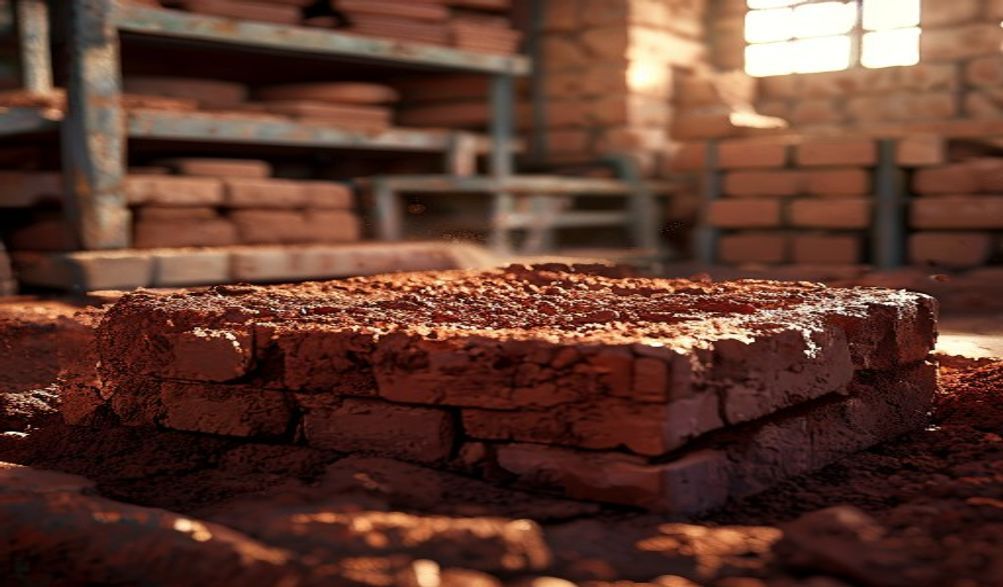
How to Choose an Earth Brick Making Machine: A Comprehensive Buyer’s Guide
Introduction
In an era where sustainable, durable, and cost-effective building solutions are more sought after than ever, compressed earth blocks (CEBs) and adobe bricks are experiencing a well-deserved renaissance. These timeless materials offer remarkable thermal mass, a low carbon footprint, and a unique aesthetic beauty. However, the bridge between raw earth and a finished wall is the machine that presses it into form.
Choosing the right earth brick making machine is a pivotal decision that directly impacts your project’s budget, timeline, and ultimate success. The market presents a dizzying array of options, from simple hand-operated presses to sophisticated hydraulic behemoths. This complexity can leave aspiring builders, architects, and entrepreneurs feeling overwhelmed.
This definitive guide is designed to cut through the confusion. We will break down the selection process into clear, actionable steps, transforming you from an uncertain buyer into an informed decision-maker. The advice herein is synthesized from industry best practices, direct manufacturer specifications, and field experience to ensure you make a trustworthy and sound investment.
Our goal is simple: to provide you with a comprehensive checklist covering everything from analyzing your soil to vetting suppliers. By the end of this post, you will have a clear roadmap for how to choose an earth brick making machine that aligns perfectly with your vision, capacity, and resources.
Understanding Your Project & Soil Requirements
Before you even look at a machine, you must look inward—at your project’s specifics—and downward—at the soil beneath your feet. This foundational step prevents costly mismatches.
Defining Your Project Scope
Clarity here narrows your machine choices dramatically. Ask yourself:
- Volume & Scale: Are you building a garden shed (a few hundred bricks) or a housing development (tens of thousands)? Distinguish between a DIY/hobby project, a community initiative, and a commercial enterprise.
- Production Rate & Timeline: How many bricks do you need per day or week to meet your construction schedule? A machine’s “cycles per hour” spec must translate to a realistic output for your team.
- End-Use Application: Are the bricks for structural, load-bearing walls? For non-load-bearing interior walls or decorative elements? For landscaping features? Structural blocks require higher compression and potentially stabilization.
The Critical Role of Soil Testing
Consider this the golden rule: Your machine is only 50% of the equation; your soil is the other 50%. Ignoring soil compatibility is the most common reason for project failure.
- Ideal Composition: The best soil for CEBs is a “loam” containing a balanced mix of clay (the binder), silt, and sand (the aggregate). Too much clay leads to cracking; too little results in weak, crumbly blocks.
- Simple Field Tests: The “jar test” (shaking soil and water in a clear jar to see layer separation) and the “ribbon test” (rolling moist soil to gauge clay content) provide excellent initial clues.
- Professional Lab Analysis: For any serious project, a professional soil test is non-negotiable. It provides precise percentages of clay, silt, and sand, and can recommend stabilization agents.
- Soil Dictates Machine Choice: A sandy soil may require a high-pressure hydraulic press to achieve strength, while a clay-rich soil might work in a manual press but will need precise moisture control.
Brick Size and Shape Specifications
The brick is the final product; its design influences your machine choice.
- Standard Sizes: Common CEB sizes include 300mm x 150mm x 100mm, but many machines offer flexibility. Know what dimensions suit your design and local building conventions.
- Interlocking Designs: Many modern presses produce interlocking bricks. These allow for mortar-less construction, saving time and material, and often provide better seismic resistance.
- Building Codes: Always check local regulations. Some areas have specific standards for earth block dimensions or compressive strength that your machine must be able to achieve.
Types of Earth Brick Making Machines Explained
Earth brick machines fall into broad categories defined by their power source and level of automation. Understanding these types is key to matching technology with your project scale.
Manual Presses (e.g., Cinva Ram style)
- Best For: Ultra low-budget projects, small-scale DIY builds, community workshops in off-grid locations, and educational purposes.
- Pros:
- Very low initial investment.
- Completely portable; no electricity or fuel required.
- Simple mechanics mean easy maintenance and repair.
- Cons:
- Highly labor-intensive and physically demanding.
- Slow production rate (typically 60-100 bricks per person per day).
- Lower, less consistent compression pressure, which can limit block strength.
Mechanical / Lever-Action Presses
- Best For: Medium-scale projects, social housing enterprises, NGOs, and owner-builders seeking higher quality and output than a manual press without a huge capital outlay.
- Pros:
- Good balance of cost and production capacity.
- Leverage provides significantly higher and more consistent pressure than pure manual force.
- Produces dense, high-quality blocks suitable for structural use.
- Cons:
- Still requires considerable physical effort to operate.
- Requires more skill and training to achieve consistent results.
- Output is still limited by human stamina.
Hydraulic Presses (Electric or Diesel)
- Best For: Commercial production, large-scale construction projects, and any application requiring high, consistent output of maximum-strength bricks.
- Pros:
- High production capacity (hundreds to thousands of bricks per day).
- Consistent, adjustable high pressure ensures uniform brick quality and strength.
- Dramatically reduces manual labor; the machine does the heavy work.
- Cons:
- High initial purchase price.
- Requires a reliable power source (3-phase electricity or diesel fuel).
- More complex mechanics necessitate more sophisticated maintenance and repair knowledge.
Mobile vs. Stationary Units
- Mobile Trailers: Ideal for on-site production, eliminating brick transport costs. Perfect for building in remote locations or where you move from site to site.
- Stationary Units: Typically higher-capacity systems set up in a central “brick yard.” You transport soil to the machine and bricks to the site. Allows for optimized, assembly-line production.
Key Machine Features & Specifications to Compare
Once you’ve narrowed the type, dive into the specs. These details separate adequate machines from exceptional ones.
Compression Force and Pressure
This is the most critical technical specification. Pressure is measured in PSI (pounds per square inch) or MPa (Megapascals).
- What it Means: Higher pressure compacts the soil particles more densely, resulting in a stronger, more durable, and more water-resistant brick.
- The Soil Link: A sandy soil requires higher pressure (often 1000+ PSI) to achieve structural strength. A clay-rich soil might achieve good results at lower pressures, but precise control is needed to avoid laminations.
Production Capacity
Don’t just look at “cycles per hour.” A “cycle” is one press, but how many bricks does it produce per cycle? Some machines make one brick, others two or more.
- Practical vs. Theoretical: A spec sheet may say “200 cycles/hour,” but in practice, with loading and handling, 150 cycles/hour is more realistic. Always ask for real-world output estimates.
- Calculate for Your Needs: If you need 5,000 bricks and your machine produces 200 bricks/day, your production time is 25 days. Does that fit your timeline?
Power Source and Requirements
This affects your operational flexibility and running costs.
- Human-Powered: Maximum flexibility, zero energy cost, but limited output.
- Electric Motors: Clean, quiet, and efficient operation. Crucially, check if it requires single-phase (common household) or three-phase (industrial) power, as the latter may not be available on all sites.
- Diesel Engines: Offer complete independence from the electrical grid, essential for remote locations. However, they involve fuel costs, noise, and emissions.
Build Quality and Durability
A machine is a long-term asset. Look beyond the paint.
- Materials: The frame should be made of high-grade, thick steel. Critical wear parts like molds and compression heads should be hardened steel.
- Construction: Welds should be clean, even, and robust. Moving parts should align perfectly.
- Component Brands: For hydraulic machines, the quality of the pump, hoses, and valves is paramount. Recognizable brand names often indicate better reliability and easier part sourcing.
Operational Ease and Safety
A well-designed machine is efficient and safe to use.
- Ergonomics: Is the soil hopper easy to load? Is the brick ejection smooth and effortless? Complicated processes slow down production and tire workers.
- Safety Features: Look for proper guarding on pinch points, hydraulic lines, and moving parts. Emergency stop buttons are essential on powered machines.
- Training: How intuitive is the operation? Will the supplier provide clear manuals or even on-site training?
The Total Cost of Ownership Analysis
The purchase price is just the entry ticket. Consider the full financial picture over the machine’s lifespan.
Initial Purchase Price vs. Long-Term Value
Beware of the false economy of a cheap, poorly made machine. It may break down frequently, produce inconsistent bricks, and lack supplier support, costing you far more in delays and repairs than a slightly more expensive, robust model from a reputable brand.
Operating Costs
Factor in the ongoing expenses:
* Energy/Fuel: The cost of electricity or diesel to run the machine.
* Labor: The number of people required and their wages. A more automated machine may have a higher price but lower per-brick labor cost.
* Stabilizer: The cost of cement, lime, or other additives if your soil requires stabilization.
Maintenance and Spare Parts
This is where supplier choice becomes critical.
* Part Availability: Are wear parts (like mold liners, seals, or hydraulic filters) readily available? Can they be sourced locally, or must they be shipped internationally with long lead times?
* Support Network: Does the manufacturer or distributor offer reliable technical support? Can they guide you through repairs via phone or video? A machine is useless if it’s down and you can’t fix it.
Vetting Suppliers and Making the Final Decision
Your relationship with the supplier is as important as the machine itself.
Researching Manufacturers and Brands
- Track Record: How long has the company been in business? Do they specialize in earth brick equipment?
- Proof of Performance: Actively seek out user reviews, independent case studies, and video demonstrations of their machines in action. A credible company will showcase their projects.
The Importance of Warranties and Support
- Warranty Coverage: A good warranty (1-2 years on major components) is a sign of confidence. Read the fine print to understand what is and isn’t covered.
- Post-Purchase Support: Will they provide assembly instructions, operational manuals, and troubleshooting guides? Are they responsive to pre-sales inquiries?
Asking the Right Questions Before You Buy
Prepare a list. Here are some essential questions:
* “Can you provide contact information for 2-3 clients in my region who use this model?”
* “What is the most common wear part, and what is its cost and lead time?”
* “Do you offer any training resources or on-site setup assistance?”
* “What is the recommended soil composition for optimal performance with this press?”
Considering a Trial or Small Batch Test
If at all possible, this is the ultimate due diligence. Testing the exact machine with a batch of your own soil will reveal more than any brochure. Some suppliers may offer this, or you may find a local owner willing to demonstrate.
Frequently Asked Questions (FAQ)
Q: What is the average cost of a good earth brick machine?
A: Prices vary enormously. A basic manual press can start around $500-$1,500. A quality mechanical lever press may range from $3,000 to $8,000. Commercial-grade hydraulic presses typically begin around $15,000 and can exceed $50,000 for high-capacity, automated systems. The “right” machine is the one that matches your project scale and quality requirements.
Q: Can I make bricks without adding cement?
A: Yes, these are called “unstabilized” compressed earth blocks. Their durability depends almost entirely on soil composition and compression pressure. For long-term exposure to heavy rain or freeze-thaw cycles, stabilization (with 5-10% cement or lime) is highly recommended to ensure water resistance and longevity.
Q: How many people are needed to operate a hydraulic press?
A: Efficient operation usually requires a small team of 2-3 people: one person preparing and loading the soil mix, one operating the press controls, and one handling and stacking the freshly pressed bricks for curing.
Q: Where can I get my soil tested?
A: Start with local agricultural extension offices, universities with civil engineering or geology departments, or private construction materials testing laboratories. They can perform a full sieve and proctor analysis.
Q: What are the most common problems with these machines?
A: The top issues are often preventable: 1) Soil Prep: Incorrect moisture content or large debris causing jams. 2) Hydraulic Systems: Leaks or pump failures due to lack of maintenance. 3) Mold Wear: Gradual wear of the mold leading to slightly oversized bricks. Consistent maintenance and proper soil screening mitigate most of these.
Conclusion
Choosing an earth brick making machine is a significant investment in a sustainable building future. The journey can be summarized in a logical flow: start by meticulously defining your Project Needs, then rigorously analyze your Soil. Use that information to select the appropriate Machine Type (Manual, Mechanical, or Hydraulic), and then compare models based on key Features & Specifications. Finally, anchor your decision in the Trust and Support offered by the supplier.
Remember, the time and resources you invest in this upfront research are non-negotiable for long-term success. A quality machine from a reputable partner is not an expense; it’s a durable asset that will produce the very building blocks of your vision.
Use this guide as your checklist. Write down your project requirements, get your soil tested, and compare your shortlisted options against the criteria we’ve discussed. By making an informed choice, you’re not just purchasing a piece of equipment—you’re unlocking the potential to build beautiful, resilient, and deeply sustainable structures from the earth itself.