
1. Introduction
Whether you are a distributor expanding your product portfolio to serve diverse client needs, a purchaser sourcing equipment for manufacturers targeting multiple market segments, or an investor evaluating opportunities in the construction materials sector, this guide equips you with the insights to thrive. By emphasizing the dual functionality (bricks + blocks), adaptability to raw materials, and alignment with sustainable construction mandates, this article positions making bricks block machines as a high-value, future-proof investment in a dynamic industry.
2. Body
2.1 The Versatility of Making Bricks Block Machines: Core Functionality & Market Value
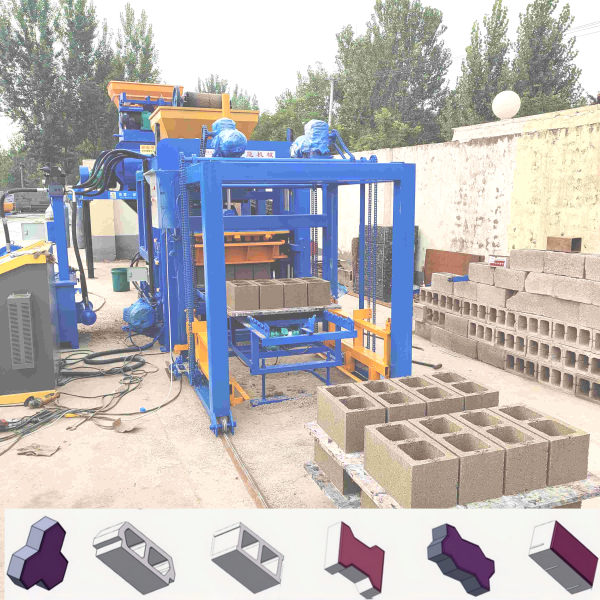
Making bricks block machines are engineered to produce both bricks (solid, hollow, interlocking) and blocks (concrete, fly ash, retaining wall) through a single, integrated production line. This dual functionality is their defining advantage, addressing the need for manufacturers to diversify product offerings without investing in multiple specialized machines. For distributors, this versatility is a powerful selling point—enabling clients to serve multiple market segments (residential, commercial, infrastructure) and adapt to fluctuating demand.
2.1.1 Key Production Capabilities
Making bricks block machines combine the core functionalities of brick-making and block-making equipment, with four critical capabilities that drive their market value:
- Dual Product Compatibility: Produce a wide range of bricks (clay, fly ash, concrete, interlocking) and blocks (hollow concrete, solid concrete, retaining wall, paving blocks) by switching molds. This eliminates the need for separate machines, reducing capital expenditure for manufacturers.
- Adjustable Production Parameters: Allow customization of dimensions (e.g., 200x100x60mm bricks, 200x200x200mm blocks), density, and strength (10–40 MPa) to meet diverse construction requirements.
- Raw Material Flexibility: Process multiple raw materials (clay, sand, cement, fly ash, slag, recycled aggregates) to adapt to local resource availability and sustainability goals.
- Scalable Automation: Range from semi-automatic (manual feeding, automatic molding) to fully automatic (integrated raw material handling, mixing, molding, curing, stacking) to match production volume needs.
These capabilities make making bricks block machines ideal for a broad spectrum of manufacturers: small-scale local producers serving rural construction, medium-scale regional manufacturers catering to residential and commercial projects, and large-scale industrial producers supplying infrastructure and export markets. The ability to switch between bricks and blocks in minutes—via interchangeable molds—enables manufacturers to maximize production efficiency and respond to urgent orders.
2.1.2 Market Drivers for Dual-Function Machines
Three global trends are fueling demand for making bricks block machines, directly enhancing their value proposition for distributors and purchasers:
- Product Diversification as a Competitive Advantage: In a saturated construction materials market, manufacturers that offer a diverse product portfolio (bricks + blocks) gain a competitive edge. Making bricks block machines enable this diversification at a fraction of the cost of purchasing separate machines, making them attractive to small and medium-scale manufacturers.
- Sustainable Construction Mandates: Governments worldwide are enforcing regulations to reduce carbon emissions and promote recycled materials. Making bricks block machines support sustainability by minimizing waste (3–5% vs. 15–20% for manual production) and enabling the use of recycled aggregates and industrial byproducts (fly ash, slag). This compliance opens access to government projects and green building certifications.
- Cost Optimization in Volatile Markets: Fluctuations in raw material prices and labor costs drive manufacturers to seek efficient, multi-purpose equipment. Making bricks block machines reduce operational costs by consolidating production lines, lowering labor requirements, and maximizing raw material utilization.
For distributors, these trends translate to strong demand across all regions—with particular growth in emerging economies where manufacturers are seeking cost-effective ways to expand their product offerings.
2.2 Technical Classification of Making Bricks Block Machines
Making bricks block machines are categorized by three key parameters: automation level, production capacity, and molding technology. Each classification impacts the machine’s price, performance, and suitability for different market segments. Distributors must understand these classifications to match the right machine to their clients’ needs.
2.2.1 Classification by Automation Level
Automation level determines the machine’s labor requirements, production efficiency, and price point. Three primary automation tiers exist:
- Semi-Automatic Machines:
- Price Range: $8,000–$30,000.
- Key Features: Automatic molding and compaction; manual raw material feeding, stacking, and curing. Basic PLC control for parameter adjustment.
- Production Capacity: 1,000–4,000 units/hour (bricks or blocks).
- Power Consumption: 10–25 kW.
- Ideal For: Small-scale manufacturers, startups, and rural producers with limited capital and technical expertise.
- Advantages: Low upfront cost, easy operation, and minimal maintenance.
- Limitations: Lower production efficiency, higher labor costs compared to fully automatic machines.
- Fully Automatic Machines:
- Price Range: $30,000–$80,000.
- Key Features: Integrated raw material handling (conveyors, silos), automatic mixing, molding, curing, and stacking. Advanced PLC control with touchscreen interface.
- Production Capacity: 4,000–10,000 units/hour.
- Power Consumption: 25–50 kW.
- Ideal For: Medium-scale manufacturers, regional distributors, and exporters serving national markets.
- Advantages: High production efficiency, consistent product quality, and reduced labor costs (1–2 operators per line).
- Limitations: Higher upfront cost, requires trained operators for maintenance.
- Industrial-Grade Automatic Machines:
- Price Range: $80,000–$180,000+.
- Key Features: Multi-station molding, robotic stacking, IoT integration for remote monitoring, custom curing systems, and quality control sensors. Modular design for scalability.
- Production Capacity: 10,000–20,000 units/hour.
- Power Consumption: 50–100 kW.
- Ideal For: Large-scale industrial producers, global exporters, and government contractors.
- Advantages: Maximum efficiency, minimal downtime, compliance with international standards (ASTM, ISO, EN), and ability to handle high-volume orders.
- Limitations: Significant upfront investment, requires dedicated technical support.
2.2.2 Classification by Production Capacity
Production capacity aligns the machine with the manufacturer’s output requirements and market reach:
- Small-Scale Machines (1,000–4,000 units/hour):
- Price Range: $8,000–$30,000 (semi-automatic).
- Suitable For: Local manufacturers serving rural or small urban markets.
- Product Focus: Standard bricks and basic concrete blocks.
- Key Considerations: Compact design (requires 50–100 square meters), low power consumption, and compatibility with local raw materials.
- Medium-Scale Machines (4,000–10,000 units/hour):
- Price Range: $30,000–$80,000 (fully automatic).
- Suitable For: Regional manufacturers serving multiple cities or states.
- Product Focus: Diverse range (standard bricks, interlocking bricks, hollow blocks, paving blocks).
- Key Considerations: Mold compatibility, production speed, and integration with curing systems.
- Large-Scale Machines (10,000–20,000 units/hour):
- Price Range: $80,000–$180,000+ (industrial-grade automatic).
- Suitable For: National distributors, exporters, and industrial producers.
- Product Focus: High-volume, high-quality products (load-bearing blocks, export-grade bricks, specialized blocks).
- Key Considerations: Scalability, compliance with international standards, and advanced quality control.
2.2.3 Classification by Molding Technology
Molding technology determines the machine’s ability to produce different product types, strength levels, and finishes:
- Vibration Molding Technology:
- Price Range: $8,000–$50,000 (semi-automatic to medium-scale fully automatic).
- Operation: Uses high-frequency vibration (3,000–5,000 vibrations/minute) to compact raw materials into molds. Suitable for standard bricks, hollow blocks, and paving blocks.
- Pros: Lower cost, energy efficiency, and ability to handle low-density raw materials (e.g., fly ash).
- Cons: Limited to basic product designs; lower strength output (10–20 MPa) compared to hydraulic molding.
- Hydraulic Molding Technology:
- Price Range: $30,000–$180,000+ (fully automatic to industrial-grade).
- Operation: Uses high-pressure hydraulic systems (100–300 tons) to compress raw materials, ensuring uniform density and precise dimensions. Suitable for high-strength bricks, load-bearing blocks, and interlocking products.
- Pros: High strength output (20–40 MPa), supports complex product designs, and ensures consistent quality for export.
- Cons: Higher upfront cost and energy consumption.
- Extrusion Molding Technology:
- Price Range: $15,000–$60,000 (semi-automatic to fully automatic).
- Operation: Extrudes raw material mixture (clay, fly ash) through a die to form continuous columns, which are cut into bricks/blocks. Ideal for clay bricks and fly ash bricks.
- Pros: High production capacity (up to 8,000 units/hour), low material waste, and suitability for mass production of standard bricks.
- Cons: Limited to brick production (less versatile for blocks); requires specific raw material consistency.
2.3 Regional Market Dynamics and Machine Adaptability
Making bricks block machines must be adapted to regional needs—including raw material availability, construction standards, climate conditions, and purchasing power. Distributors who understand these regional dynamics can tailor their offerings to maximize market penetration.
2.3.1 Asia-Pacific Market
- Key Countries: China, India, Vietnam, Indonesia, Bangladesh.
- Market Drivers: Rapid urbanization, affordable housing projects, and government infrastructure investment.
- Dominant Machine Types: Medium-scale fully automatic machines ($30,000–$60,000) with hydraulic or vibration molding.
- Adaptability Requirements:
- Compatibility with local raw materials (fly ash in India, clay in Vietnam, recycled aggregates in China).
- Compliance with regional standards (IS 3495 for fly ash bricks in India, GB/T 8239 for concrete blocks in China).
- Energy efficiency (low power consumption to address frequent power outages in rural areas).
- Price Sensitivity: Medium (manufacturers prioritize value over premium features).
- Distribution Strategy: Partner with local suppliers for spare parts and after-sales support; offer flexible payment terms.
2.3.2 European Market
- Key Countries: Germany, Italy, Poland, Spain, France.
- Market Drivers: Sustainable construction mandates, renovation of aging infrastructure, and high-quality building standards.
- Dominant Machine Types: Industrial-grade automatic machines ($80,000–$150,000) with hydraulic molding and IoT integration.
- Adaptability Requirements:
- Compliance with EU standards (EN 771-3 for bricks, EN 771-4 for blocks) and LEED/BREEAM certifications.
- Energy efficiency (EU EcoDesign Directive) and low carbon emissions.
- Ability to produce specialized products (permeable blocks, thermal insulation bricks).
- Price Sensitivity: Low (manufacturers prioritize quality and compliance over cost).
- Distribution Strategy: Emphasize sustainability and technical innovation; provide comprehensive after-sales support and training.
2.3.3 North American Market
- Key Countries: U.S., Canada.
- Market Drivers: Commercial construction growth, green building trends, and infrastructure renewal.
- Dominant Machine Types: Medium to large-scale fully automatic machines ($50,000–$120,000) with hydraulic molding and advanced quality control.
- Adaptability Requirements:
- Compliance with ASTM standards (ASTM C618 for fly ash, ASTM C90 for concrete blocks).
- Integration with digital inventory systems (barcode/RFID).
- Energy efficiency (compliance with EPA regulations) and use of recycled materials.
- Price Sensitivity: Medium (manufacturers balance cost with performance).
- Distribution Strategy: Highlight TCO savings and compliance with green building standards; offer localized technical support.
2.3.4 African Market
- Key Countries: Nigeria, South Africa, Kenya, Ethiopia.
- Market Drivers: Urbanization, affordable housing shortages, and foreign infrastructure investment.
- Dominant Machine Types: Small to medium-scale semi-automatic/fully automatic machines ($10,000–$40,000) with vibration molding.
- Adaptability Requirements:
- Compatibility with local raw materials (clay, laterite, recycled construction waste).
- Durability in dusty, hot climates (dust-proof components, heat-resistant motors).
- Low maintenance and easy access to spare parts.
- Price Sensitivity: High (manufacturers prioritize low upfront cost).
- Distribution Strategy: Offer entry-level machines with flexible payment terms; partner with local workshops for maintenance.
2.3.5 South American Market
- Key Countries: Brazil, Argentina, Colombia, Peru.
- Market Drivers: Residential construction boom, government infrastructure projects, and sustainable development initiatives.
- Dominant Machine Types: Medium-scale fully automatic machines ($30,000–$70,000) with hydraulic or vibration molding.
- Adaptability Requirements:
- Compliance with regional standards (ABNT in Brazil, INEN in Peru).
- Ability to handle diverse raw materials (clay, fly ash, slag).
- Energy efficiency (addressing high electricity costs in some countries).
- Price Sensitivity: Medium (manufacturers seek balance of cost and performance).
- Distribution Strategy: Leverage free trade agreements to reduce import costs; provide training in local languages.
2.4 ROI Analysis and Profitability Projection
For distributors and purchasers, the primary measure of a machine’s value is return on investment (ROI). Below is a detailed ROI analysis for different machine types, based on global average costs, operational savings, and market conditions:
2.4.1 Semi-Automatic Machine (2,000 units/hour)
- Initial Investment: $15,000 (machine cost) + $3,000 (installation, training, spare parts) = $18,000.
- Operational Costs (Annual):
- Labor: 3 operators × $9,000/year = $27,000.
- Energy: 15 kW × 8 hours/day × 25 days/month × 12 months × $0.10/kWh = $3,600.
- Raw Materials: $0.12/unit × 2,000 × 8 × 25 × 12 = $576,000.
- Maintenance: 6% of initial investment = $1,080.
- Revenue (Annual): 2,000 units/hour × 8 hours/day × 25 days/month × 12 months × $0.30/unit = $1,440,000.
- Annual Profit: $1,440,000 – ($27,000+$3,600+$576,000+$1,080) = $832,320.
- ROI Calculation: $18,000 ÷ $832,320 × 12 = 0.26 months (≈1 week).
2.4.2 Fully Automatic Machine (6,000 units/hour)
- Initial Investment: $50,000 (machine cost) + $8,000 (installation, training, spare parts) = $58,000.
- Operational Costs (Annual):
- Labor: 2 operators × $14,000/year = $28,000.
- Energy: 35 kW × 8 hours/day × 25 days/month × 12 months × $0.09/kWh = $7,560.
- Raw Materials: $0.10/unit (bulk discount) × 6,000 × 8 × 25 × 12 = $1,728,000.
- Maintenance: 4% of initial investment = $2,320.
- Revenue (Annual): 6,000 units/hour × 8 × 25 × 12 × $0.28/unit = $4,032,000.
- Annual Profit: $4,032,000 – ($28,000+$7,560+$1,728,000+$2,320) = $2,266,120.
- ROI Calculation: $58,000 ÷ $2,266,120 × 12 = 0.30 months (≈1.5 weeks).
2.4.3 Industrial-Grade Automatic Machine (12,000 units/hour)
- Initial Investment: $120,000 (machine cost) + $20,000 (installation, training, spare parts) = $140,000.
- Operational Costs (Annual):
- Labor: 3 operators × $18,000/year = $54,000.
- Energy: 70 kW × 8 hours/day × 25 days/month × 12 months × $0.08/kWh = $16,128.
- Raw Materials: $0.08/unit (bulk discount) × 12,000 × 8 × 25 × 12 = $2,764,800.
- Maintenance: 3% of initial investment = $4,200.
- Revenue (Annual): 12,000 units/hour × 8 × 25 × 12 × $0.25/unit = $7,200,000.
- Annual Profit: $7,200,000 – ($54,000+$16,128+$2,764,800+$4,200) = $4,360,872.
- ROI Calculation: $140,000 ÷ $4,360,872 × 12 = 0.38 months (≈2.5 weeks).
Key ROI Insights:
- Exceptionally Fast ROI: Making bricks block machines deliver rapid ROI (1 week to 3 months) due to high demand for bricks and blocks, low operational costs, and dual-product revenue streams.
- Scale Drives Profit Margins: Larger machines have higher upfront costs but generate significantly higher annual profits due to economies of scale (lower raw material and labor costs per unit).
- Semi-Automatic Machines Offer Low-Risk Entry: For small-scale manufacturers, semi-automatic machines provide quick ROI with minimal upfront investment, making them an ideal starting point.
For distributors, these ROI projections are a powerful sales tool—demonstrating to clients that making bricks block machines are a low-risk, high-reward investment.
2.5 Procurement and Distribution Strategies for Distributors
To succeed in marketing making bricks block machines, distributors must adopt strategies tailored to regional market needs, client segments, and competitive dynamics:
2.5.1 Product Portfolio Optimization
- Offer a Range of Machine Types: Cater to all client segments by offering semi-automatic, fully automatic, and industrial-grade machines. This allows distributors to serve small-scale startups, medium-scale regional manufacturers, and large-scale exporters.
- Highlight Customization Options: Emphasize mold interchangeability, raw material flexibility, and adjustable production parameters. Offer custom molds for specialized products (interlocking bricks, retaining wall blocks) to meet niche market needs.
- Bundle Value-Added Services: Package machines with complementary services such as installation, training, maintenance contracts, and spare parts supply. This differentiates offerings and increases customer loyalty.
2.5.2 Targeted Marketing and Sales
- Segmented Marketing: Tailor marketing messages to regional needs:
- Emerging Economies: Emphasize low upfront cost, dual-product capability, and quick ROI.
- Developed Economies: Highlight sustainability, compliance with standards, and technical innovation.
- Digital and Offline Channels: Use local SEO (targeting keywords like “making bricks block machine [country]”), social media (WhatsApp, LinkedIn), and industry trade shows to reach potential clients. For rural markets, partner with local construction associations and government agencies.
- Case Studies and Testimonials: Showcase success stories of manufacturers who have increased revenue and reduced costs with making bricks block machines. Include data on ROI, product diversification, and market expansion.
2.5.3 Supplier Partnerships and Risk Mitigation
- Vet Suppliers Thoroughly: Partner with manufacturers that have 5+ years of experience, ISO certification, and a track record of delivering reliable machines. Request product samples and client references to verify quality.
- Negotiate Favorable Terms: Secure bulk purchase discounts, flexible payment terms, and extended warranties. For international suppliers, negotiate Incoterms to minimize logistics risks and costs.
- Localize After-Sales Support: Establish service centers in key regions, train local technicians, and stock spare parts locally. This reduces downtime for clients and builds trust in your brand.
2.5.4 Leveraging Government Incentives
- Research Regional Subsidies: Many governments offer subsidies for construction equipment that supports sustainability or job creation. For example:
- India: 20–30% subsidy under MNRE for machines using fly ash or recycled materials.
- Brazil: Tax incentives for equipment manufactured locally or using renewable energy.
- EU: Grants under Horizon Europe for sustainable manufacturing equipment.
- Assist Clients in Applying for Subsidies: Provide documentation and support to help clients access subsidies, reducing their effective investment cost and increasing the likelihood of purchase.
2.6 Emerging Trends Shaping the Future of Making Bricks Block Machines
The making bricks block machine market is evolving rapidly, driven by technological advancements, sustainability trends, and changing construction needs. Distributors who stay ahead of these trends can gain a competitive edge:
2.6.1 Technological Advancements
- IoT and AI Integration: Future machines will feature IoT sensors and AI-powered control systems for real-time monitoring, predictive maintenance, and process optimization. This will reduce downtime by 30–40% and improve production efficiency.
- 3D Printing for Molds: Custom molds can be 3D-printed in days, reducing lead times and enabling manufacturers to produce specialized products at lower cost. This will expand the range of customizable products, opening new market segments.
- Energy-Efficient Designs: Next-generation machines will use solar power, heat recovery systems, and low-power motors to reduce energy consumption by 25–35%. This aligns with global sustainability goals and reduces operational costs for manufacturers.
2.6.2 Sustainable Materials and Circular Economy
- Waste-to-Resource Processing: Machines will increasingly process industrial waste (e.g., plastic waste, agricultural waste) and construction debris into bricks and blocks. This will tap into the circular economy trend and create new revenue streams for manufacturers.
- Biodegradable Binders: Research into biodegradable binders (replacing cement) will drive demand for machines that can process these materials. This emerging segment offers high-margin opportunities for distributors targeting eco-conscious markets.
2.6.3 Modular and Portable Designs
- Modular Machines: Modular designs will allow manufacturers to expand production capacity by adding components (e.g., extra molds, curing chambers) without purchasing a new machine. This flexibility will appeal to medium-scale manufacturers looking to scale gradually.
- Portable Machines: Compact, portable making bricks block machines will gain popularity for on-site construction projects (e.g., remote infrastructure, disaster relief housing). These machines will be lightweight, easy to transport, and capable of producing bricks/blocks on demand.
3. Conclusion
Making bricks block machines represent a transformative investment for manufacturers seeking to diversify product offerings, reduce costs, and comply with sustainable construction mandates. Their dual functionality (bricks + blocks), technical versatility, and rapid ROI make them a high-value proposition for distributors, distributors, and purchasers operating in the global construction materials industry.
This guide has provided a comprehensive framework for understanding making bricks block machines—from their core capabilities and technical classifications to regional market dynamics, ROI analysis, and procurement strategies. By aligning machine offerings with regional needs, emphasizing dual-product value, and leveraging sustainability trends, distributors can capitalize on strong market demand and build long-term, profitable client relationships.
As the industry evolves, technological advancements (IoT, AI, 3D printing) and sustainable material processing will drive innovation in making bricks block machines. Distributors who adapt to these trends—by offering advanced, eco-friendly machines, providing localized support, and assisting clients in accessing government incentives—will be well-positioned to thrive in a dynamic and growing market.
Ultimately, making bricks block machines are more than just production equipment—they are a catalyst for business growth, sustainability, and resilience in the construction industry. By navigating the market strategically, distributors and purchasers can unlock significant opportunities while contributing to a more efficient, sustainable built environment.
4. FAQ
4.1 What is the difference between making bricks block machines and single-purpose machines?
Making bricks block machines produce both bricks (solid, hollow, interlocking) and blocks (concrete, fly ash, retaining wall) via interchangeable molds, eliminating the need for separate machines. Single-purpose machines only produce one product type (bricks or blocks), requiring manufacturers to invest in multiple systems for diversification. Making bricks block machines offer cost savings of 30–50% compared to purchasing two single-purpose machines.
4.2 What product types can a making bricks block machine produce?
These machines can produce a wide range of products, including:
- Bricks: Clay bricks, fly ash bricks, concrete bricks, interlocking bricks, decorative bricks.
- Blocks: Hollow concrete blocks, solid concrete blocks, retaining wall blocks, paving blocks, permeable blocks.Product type is determined by mold design, which can be easily swapped (15–30 minutes per changeover).
4.3 What is the typical production capacity of making bricks block machines?
Production capacity varies by machine type:
- Semi-automatic: 1,000–4,000 units/hour (bricks or blocks).
- Fully automatic: 4,000–10,000 units/hour.
- Industrial-grade: 10,000–20,000 units/hour.Capacity can be adjusted by changing mold cavity count (e.g., 4-bricks-per-mold vs. 8-bricks-per-mold).
4.4 What raw materials can be used in making bricks block machines?
These machines support multiple raw materials, including:
- Traditional materials: Clay, sand, cement, aggregates.
- Sustainable materials: Fly ash, slag, recycled construction waste, rice husk ash.
- The machine’s material compatibility depends on its molding technology (vibration vs. hydraulic) and can be customized to local resource availability.
4.5 What is the ROI for a making bricks block machine?
ROI is exceptionally fast due to dual-product revenue streams and low operational costs:
- Semi-automatic: 1 week to 1 month.
- Fully automatic: 1–2 months.
- Industrial-grade: 2–3 months.ROI is faster in regions with high demand for bricks/blocks and low labor costs.
4.6 Are there government subsidies available for making bricks block machines?
Yes, many governments offer subsidies for sustainable or job-creating equipment:
- India: 20–30% subsidy under MNRE for machines using fly ash/recycled materials.
- EU: Grants up to €60,000 under Horizon Europe for sustainable manufacturing.
- Brazil: Tax incentives for locally manufactured or energy-efficient machines.
- U.S.: Tax credits for equipment reducing carbon emissions.
4.7 How long does it take to install and commission a making bricks block machine?
Installation time varies by machine type:
- Semi-automatic: 1–3 days.
- Fully automatic: 3–7 days.
- Industrial-grade: 7–14 days.Commissioning includes machine assembly, calibration, test runs, and operator training. Suppliers typically provide on-site installation and training as part of the purchase package.
4.8 What after-sales support should I expect from suppliers?
Reliable suppliers offer comprehensive after-sales support:
- 1–3 year warranty (parts and labor).
- On-site installation and operator training.
- 24/7 technical support via phone, email, or video call.
- Spare parts supply (fast delivery for critical components).
- Optional maintenance contracts (annual or biennial).Always confirm support availability in your target region before purchasing.
