
The Ultimate Guide to Single Brick Machines: Types, Benefits & How to Choose
Introduction
Starting a small brick-making business or managing a self-build project can be daunting, especially when large, industrial equipment is out of reach. The initial investment, technical complexity, and sheer scale of industrial plants can stop a great idea in its tracks. But what if there was a tool that bridged the gap between handmade bricks and million-dollar factories? There is.
This comprehensive guide is dedicated to the single brick machine—a versatile, accessible, and empowering piece of equipment. Our purpose is to provide you with an expert overview, transforming you from a curious researcher into an informed buyer. The information here is compiled from detailed industry specifications, direct manufacturer data, and, most importantly, practical insights from users in the field. We focus on delivering reliable, actionable advice you can trust.
Whether you’re evaluating cost, understanding operation, or comparing types of machines, this guide will walk you through it all. You will learn about the different types of single brick machines, how they work, the key advantages they offer, and the critical factors to consider before making a purchase. We’ll also provide practical, step-by-step operational tips to ensure your success from the very first brick.
What is a Single Brick Machine? Core Function and Design
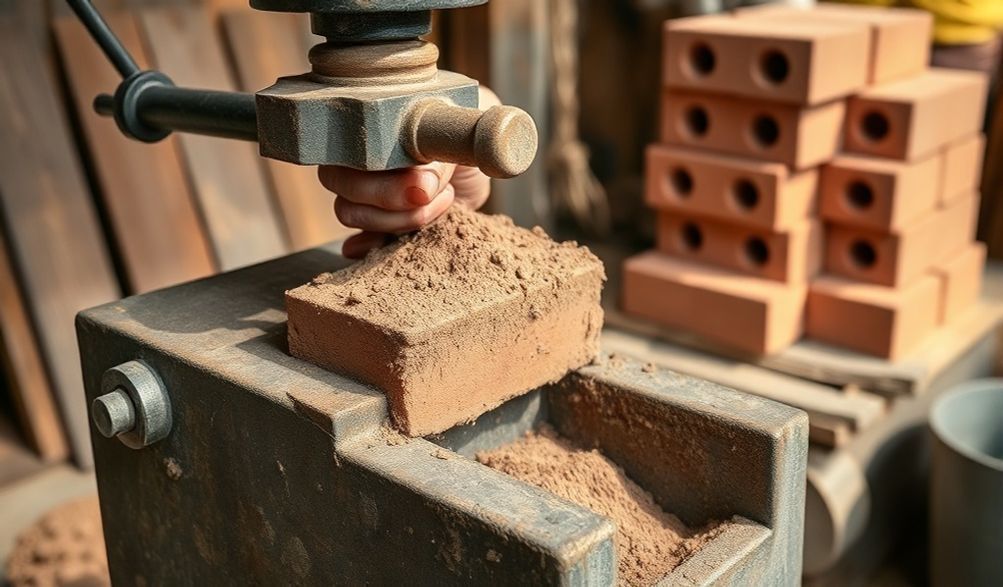
At its heart, a single brick machine is exactly what the name suggests: a manually operated or semi-automatic press designed to produce one brick or block at a time. It is the epitome of focused, small-scale production.
- Key Differentiator: The primary distinction lies in its scale and automation level. Unlike fully automatic brick plants that produce hundreds of bricks per hour on conveyor systems, a single brick machine is a standalone unit. It is built for precision per cycle, not mass volume. This defines its perfect niche: low-investment startups, DIY construction projects, community initiatives, and remote locations where simplicity and portability are paramount.
- Basic Working Principle: The operation is elegantly simple and based on mechanical compression, a process that has been refined for over a century. The core cycle involves three stages:
- Fill: A mold or box is filled with a prepared mixture of soil, sand, and a stabilizer like cement.
- Compress: A lever or electrically powered ram applies intense pressure to the mixture, compacting it into a dense, solid form.
- Eject: The freshly formed, “green” brick is ejected from the mold onto a pallet or the ground, ready for curing.
This straightforward process turns raw, local materials into durable, standardized building blocks.
Types of Single Brick Machines: Finding the Right Fit
Not all single brick machines are the same. Choosing the right type is the first critical step, and it depends entirely on your production goals, budget, and available resources.
Manual Press Brick Machines
These are the most fundamental and affordable type of single brick machine, relying entirely on human power.
- Operation: They typically use a lever-based system (like a large press) or a screw-based system (where a handle is turned to drive a plate down). The operator provides the force needed for compression.
- Ideal For: The ultimate low-budget startup, the dedicated DIY enthusiast, or projects in remote locations with no access to electricity. They are also excellent for training and demonstration purposes.
- Pros & Cons:
- Pros: Lowest capital cost, zero operating energy costs, extremely simple mechanics, highly portable.
- Cons: Higher labor intensity and physical strain, lower and less consistent output (highly dependent on the operator’s stamina), generally slower production cycle.
Semi-Automatic/Electric Single Brick Machines
This category represents a significant upgrade in efficiency and consistency, making it a favorite for small businesses.
- Operation: An electric motor drives the compression mechanism, usually via a hydraulic or mechanical system. The operator’s role shifts from providing force to managing the cycle: filling the mold and removing the finished brick. The machine handles the heavy pressing.
- Ideal For: Small businesses and entrepreneurs who need higher, more consistent daily output than a manual machine can provide. It’s perfect for someone serious about supplying bricks for local construction or scaling up a personal project.
- Pros & Cons:
- Pros: Significantly higher and more consistent output, reduced physical strain on the operator, produces more uniformly dense and strong bricks, faster cycle time.
- Cons: Higher initial purchase cost, requires a reliable power source (grid or generator), slightly more complex maintenance.
Mobile vs. Stationary Models
Beyond the power source, consider mobility.
- Stationary models are often more robust and may have higher capacity, designed to be set up in a dedicated workspace.
- Mobile models are mounted on wheels or a trailer. This is a game-changer for on-site production, allowing you to make bricks directly where they will be used, eliminating transport costs for both raw materials and finished products. For contractors or builders working across multiple sites, this flexibility is invaluable.
Key Advantages of Using a Single Brick Machine
Why choose a single brick machine over other methods? The benefits are compelling, especially for target users.
- Low Capital Investment & Operating Cost: This is the most significant advantage. It dramatically lowers the barrier to entry for entrepreneurship or project commencement compared to automated plants. Operating costs are minimal, especially for manual models.
- Ease of Operation and Maintenance: These machines are designed for simplicity. You don’t need an engineering degree to operate or maintain one. Basic mechanical understanding is sufficient, and spare parts are usually simple and affordable.
- Portability and Flexibility: The ability to move your production facility is powerful. You can follow the sun, move to a new job site, or simply reorganize your yard with ease.
- Reduced Waste & Local Material Use: These machines promote a circular, sustainable model. You can often use on-site soil (after testing and preparation), drastically reducing material transport. This minimizes the environmental footprint and cost.
- Empowerment for Small Business & Self-Build Projects: Ultimately, a single brick machine is a tool of empowerment. It enables individuals and small groups to create their own building materials, fostering local entrepreneurship, supporting self-reliance in construction, and making community projects financially viable.
Critical Factors to Consider Before Buying
Making an informed purchase decision is crucial for long-term satisfaction and success. Use this checklist to evaluate your options.
Production Capacity & Your Project Scale
Be brutally realistic. Don’t buy a machine based on a theoretical maximum output.
- Manual machines might produce 300-800 solid bricks in an 8-hour day, depending heavily on the operator.
- Electric semi-automatic machines can range from 500-1500+ bricks per day.
- Key Question: Match this daily output to your business plan or project timeline. How many bricks do you actually need per week or month?
Brick Type, Size, and Mold Compatibility
Your machine’s mold defines your product.
- Standard Sizes: Most machines produce standard solid or hollow blocks (e.g., 4″x8″x16″ or metric equivalents).
- Interchangeable Molds: This is a critical feature. Can you purchase additional molds for different brick types (e.g., paving stones, decorative blocks)? Verify the cost and ease of changing molds.
- Custom Molds: Some suppliers offer custom mold fabrication, which is essential if you need a unique design.
Raw Material Requirements
The machine compresses; the mixture determines strength.
- Optimal Mix: A common, strong mix is approximately 70% sand, 20% clay/silt, and 10% cement as a stabilizer. The exact ratio depends on your local soil composition.
- Material Preparation: This is 50% of the job. Materials must be sieved to remove stones and organic matter, and mixed thoroughly with the correct amount of water. Poor preparation leads to weak, crumbling bricks.
Build Quality and Durability
Inspect beyond the paint. A sturdy machine is a long-term asset.
- Look For: Thick, reinforced steel in the frame and compression chamber. Clean, strong welds. High-quality bearings and moving parts. A reputable brand with a history in the industry.
- Spare Parts: Ask about the availability of common wear parts (like seals, liners, or handles). A machine with no parts support is a future paperweight.
Supplier Reputation and Support
This is perhaps the most critical factor for establishing trust.
- Verify Credentials: How long have they been in business? Can they provide references or customer testimonials?
- Warranty & After-Sales: A clear warranty is a sign of confidence. What does it cover? Does the supplier offer technical support via phone or email?
- Documentation & Training: A good supplier provides a clear user manual, instructional videos, and guidance on mix ratios. This support is invaluable for first-time users.
Operating Your Machine: A Step-by-Step Guide
Success with your single brick machine hinges on a consistent, careful process. Here’s a practical guide based on field experience.
Site and Material Preparation
- Workspace: Choose a level, solid ground. You’ll need space for the machine, material storage, mixing, and a curing area.
- Material Sieving & Mixing: Sieve your soil/sand to a fine, consistent grade. Use a concrete mixer or a clean, flat surface for manual mixing. Achieve a uniform color and texture before adding water. The mixture should hold its shape when squeezed but not be soggy.
The Brick-Making Cycle: Fill, Press, Eject
- Fill: Consistently fill the mold to the brim. Use a striker to level off excess material for a uniform fill every time. Inconsistent filling leads to bricks of varying height and density.
- Press: Engage the press mechanism smoothly. On a manual machine, apply steady, full pressure. On an electric machine, ensure the cycle completes fully.
- Eject: Gently eject the green brick onto a flat, stable pallet or a prepared bed of sand. Handle with care, as it is fragile before curing.
Curing and Drying Best Practices
Curing is not optional; it is the process that gives the brick its strength.
- Initial Setting: Let bricks sit undisturbed on their pallets for 24-48 hours.
- Stacking: Stack them in a criss-cross pattern to allow air circulation.
- Covering: Cover the stack with plastic sheeting or damp burlap sacks. This slows moisture loss, which is critical for the cement to fully hydrate and gain strength.
- Duration: Keep bricks moist-cured for a minimum of 7 days, and ideally 14-28 days for maximum strength before use in construction.
Essential Maintenance for Longevity
Treat your machine well, and it will serve you for years.
- Daily: Clean all excess material from the mold, ram, and frame after use. Check for loose bolts.
- Weekly: Lubricate all moving parts (pivots, bearings, guides) as per the manual. Inspect for signs of wear or cracking, especially in high-stress areas.
- Storage: If storing, clean thoroughly, lubricate, and cover the machine to protect it from the elements.
Frequently Asked Questions (FAQ)
Q: How many bricks can I make in a day with a single brick machine?
A: For a manual press, a skilled, diligent operator can produce between 300 and 800 bricks in an 8-hour day. A semi-automatic electric machine can produce between 500 and 1,500+, depending on model efficiency, operator speed, and workflow organization.
Q: What is the cost of a single brick machine?
A: Prices vary widely based on type, quality, and location. A basic manual press can start from a few hundred dollars. A quality semi-automatic electric machine typically ranges from $1,500 to $5,000+. Always factor in potential shipping costs and import duties.
Q: Can I make different types of bricks with one machine?
A: Yes, absolutely—if you purchase additional, compatible molds. Most reputable suppliers offer a range of mold options. The changeover process is usually simple, involving unbolting one mold and bolting on another.
Q: Do the bricks meet construction standards?
A: This is a vital point. The machine provides the compression force, but the final brick’s compressive strength depends on three key factors: 1) Correct material mix ratios, 2) Adequate compression force, and 3) Proper curing. For structural projects (load-bearing walls), it is highly recommended to have sample bricks tested at a local materials lab to verify they meet relevant national or regional building standards.
Q: Is training required to operate it?
A: Formal training is not typically required. However, the value of carefully reading the supplied manual and watching tutorial videos from your supplier cannot be overstated. A short, hands-on practice session to master the fill-press-eject rhythm will save time and materials.
Conclusion
A single brick machine is far more than a simple tool; it is a powerful, cost-effective catalyst for small-scale enterprise and self-reliant construction. It democratizes the production of building materials, putting control back into the hands of individuals, entrepreneurs, and communities.
As we’ve outlined, success hinges on a balanced approach: choosing a robust machine from a reputable supplier, meticulously preparing your raw materials, and following proper curing techniques with religious consistency. This guide serves as your foundational checklist.
We encourage you to use this information to ask informed questions, evaluate suppliers critically, and consult directly with equipment experts to match the perfect machine to your specific vision and needs. Your first brick is waiting to be made.