
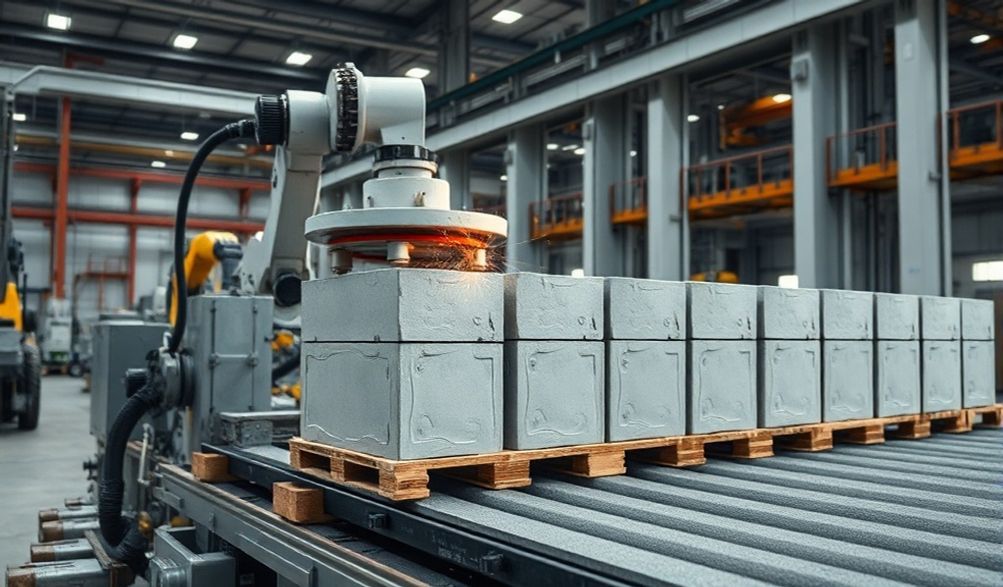
The Ultimate Guide to the QT15-15 Automatic Block Machine: Efficiency & Quality Redefined
Introduction
In the demanding world of construction, a constant tension exists between speed and quality. How do you scale up production to meet tight deadlines without compromising the integrity of the fundamental building blocks—quite literally—of your project? For decades, manufacturers of concrete blocks, pavers, and other precast elements have grappled with this challenge, often finding that manual or semi-automatic methods create bottlenecks, inconsistencies, and unpredictable costs.
Enter the modern solution: the fully automatic block-making machine. And among these, the QT15-15 automatic block machine has established itself as an industry-standard workhorse. Designed for medium to large-scale production, it represents a significant leap in manufacturing technology, redefining what’s possible in terms of output, consistency, and return on investment.
This comprehensive guide is crafted from industry experience and technical analysis. Our purpose is to move beyond basic sales brochures and provide you with a detailed, expert-level understanding of the QT15-15. Whether you’re a factory owner looking to upgrade, a construction firm aiming for self-sufficiency, or an entrepreneur entering the precast market, this resource will equip you with the knowledge to make a strategic, informed decision. We’ll explore its mechanics, quantify its benefits, and outline the practical considerations for successful integration into your operation.
What is a QT15-15 Automatic Block Machine?
At its core, the QT15-15 is a fully automatic, stationary concrete block-making machine. The “QT” nomenclature typically refers to the machine series, while the numbers “15-15” often denote key performance metrics, commonly relating to its production capacity per cycle. It is engineered to transform raw concrete mix into precisely formed, high-density blocks with minimal human intervention.
Core Definition and Operational Principle
The QT15-15 is designed for efficiency. It operates on a fixed production cycle, producing a specific number of blocks—for instance, 15 units of a standard 400x200x200mm hollow block—every time it completes its sequence. This cycle is fully automated, controlled by a programmable logic controller (PLC).
The operational principle is a sophisticated dance of force and precision:
1. Feeding: A prepared, semi-dry concrete mix is fed into the machine’s hopper.
2. Metering & Molding: The mix is conveyed and metered into a mold box positioned on a high-strength vibration table.
3. Compaction: The mold is filled, and simultaneous hydraulic pressure from above and intense vibration from below densely compacts the concrete, removing air pockets.
4. Ejection: The hydraulic system lifts the mold, leaving the freshly formed blocks on a pallet underneath.
5. Pallet Cycling: The block-laden pallet is pushed out onto a conveyor, and a new, clean pallet is fed into position, ready for the next cycle.
Key Components and Their Functions
Understanding the major components demystifies the automation:
* Hopper & Feeder System: Stores and regulates the flow of concrete mix into the molding area.
* Mold System: The heart of product variety. Interchangeable mold boxes define the shape and size of the final block (hollow, solid, paver, etc.).
* Vibration Table & System: A heavy-duty platform that subjects the mold to high-frequency, high-amplitude vibrations. This is critical for achieving block density and strength.
* Hydraulic Power Unit: Provides the immense, controlled pressure needed for compaction and the mechanical force for all moving parts (mold lifting, pallet pushing). Its reliability is paramount.
* Pallet Feeder & Conveyor: Automates the supply of empty pallets and the removal of blocks for curing.
* PLC Control Panel: The machine’s brain. It automates the entire cycle, allows for adjustments, and can monitor performance. Operators interact primarily through this user-friendly interface.
Technical Specifications and Features of the QT15-15
While specifications can vary slightly by manufacturer, the QT15-15 class of machine adheres to a high-performance profile.
Detailed Performance Metrics
- Production Capacity: Approximately 1200-1500 standard hollow blocks (400x200x200mm) per 8-hour shift, depending on cycle time and operational efficiency.
- Power Requirements: Total installed power typically ranges from 30-40 kW, requiring a robust three-phase electrical connection.
- Machine Dimensions & Weight: A substantial industrial machine, often measuring around 6m (L) x 2.5m (W) x 3.5m (H) and weighing several tons, requiring a solid foundation.
- Pallet Size & Cycle Time: Standard pallet size is usually 1100x550mm. Cycle time can be as fast as 15-20 seconds, demonstrating its rapid production capability.
Advanced Features That Set It Apart
What transforms these specs into a competitive advantage are the engineered features:
* Full PLC Automation: This is the defining feature. Once configured, the machine runs the entire production cycle—mixing feed, vibration, compaction, ejection, and pallet transfer—automatically. It ensures consistent timing and pressure on every single block, eliminating human error and fatigue.
* High-Pressure Vibration System: Not all vibration is equal. The QT15-15 employs a powerful, vertically-directed vibration system under high hydraulic pressure. This dual-force action is what produces blocks with exceptionally low water absorption, high compressive strength (often exceeding industry standards), and a smooth, market-ready surface finish.
* Robust Hydraulic System: Built with quality pumps, valves, and cylinders, the system ensures smooth, powerful, and repeatable movements. A well-designed hydraulic system means fewer breakdowns and more consistent product quality over years of service.
* Versatile Mold System: The machine’s value is multiplied by its flexibility. By simply changing the mold box, the same QT15-15 can produce a wide range of products:
* Hollow blocks (of various thicknesses)
* Solid blocks
* Interlocking paving stones
* Curbstones
* Garden and landscaping blocks
Primary Benefits and ROI of Investing in a QT15-15
The investment in a QT15-15 is justified by a compelling array of tangible benefits that directly impact your bottom line.
Unmatched Productivity and Consistency
Automation translates to relentless, predictable output. Unlike manual operations, the machine does not slow down, take breaks, or have an “off day.” This allows for accurate production planning, reliable fulfillment of large orders, and the ability to scale your business confidently.
Significant Labor and Cost Savings
While a manual setup might require 6-8 workers for similar output, a well-organized QT15-15 automatic block machine line typically needs only 1-2 operators to monitor the process, feed pallets, and handle cured blocks. This drastic reduction in direct labor costs, coupled with lower long-term costs from reduced waste and rework, creates a powerful cost-per-block advantage.
Superior Product Quality and Strength
The machine’s precision engineering directly creates a superior product:
* High Compressive Strength: Essential for structural integrity.
* Dimensional Accuracy: Ensures blocks fit together perfectly, speeding up masonry work and reducing mortar use.
* Excellent Surface Finish: Provides a visually appealing product that commands better prices in the market.
* Low Water Absorption: Increases durability and frost resistance, a key selling point in many climates.
Durability and Low Maintenance Design
Constructed from heavy-duty steel and quality components, the QT15-15 is built for a long service life. Strategic design, such as centralized lubrication points and accessible service panels, makes routine maintenance straightforward, minimizing downtime.
Ideal Applications and Production Setup
Who Should Use the QT15-15?
This machine is not a starter unit. It’s designed for serious production:
* Established Block Making Factories: Looking to upgrade from semi-automatic machines to boost capacity and quality.
* Large Construction Companies: Seeking vertical integration by producing their own blocks for housing projects, commercial complexes, or infrastructure.
* Ambitious Entrepreneurs: Entering the precast concrete market with a scalable, competitive foundation aimed at supplying retailers, contractors, and developers.
Required Ancillary Equipment and Space
The QT15-15 is the centerpiece of a production line. To operate effectively, you will need:
* Raw Material Handling: A batching system to proportion cement, aggregate, and sand.
* Mixing: A pan mixer or planetary mixer to produce a consistent, semi-dry concrete mix.
* Curing Infrastructure: Pallets, racks or stackers, and a covered curing area where blocks can gain strength in a controlled, humid environment.
* Material Handling: A forklift for moving raw materials and stacks of cured blocks.
* Space: A minimum of 500-1000 square meters of covered factory space is recommended to house the machine, raw materials, mixing area, and curing racks efficiently.
Key Considerations Before Purchase
Evaluating Your Production Needs
Conduct a realistic analysis:
* What is your current monthly demand?
* What is your projected growth for the next 3-5 years?
* Do you need the versatility to switch between product types?
Your answers will confirm if the QT15-15’s capacity aligns with your business plan.
Supplier Selection and Machine Quality
This is the most critical decision. Price should not be the sole factor.
* Reputation & Experience: Choose a manufacturer with a proven track record and verifiable customer references.
* Quality Certifications: Look for ISO or other international quality management certifications.
* After-Sales Service: This is non-negotiable. Ensure they provide:
* On-site installation and commissioning.
* Comprehensive operator training.
* A clear warranty (12 months or more on core parts).
* Readily available inventory of genuine spare parts.
* Access to technical support.
Cost Analysis and Financing
Consider the Total Cost of Ownership, not just the invoice price. Factor in shipping, installation, initial spare parts, and training. Compare the ROI from increased production and lower operating costs against this total. Many reputable suppliers offer financing or leasing plans to ease the capital expenditure.
Operational Best Practices and Maintenance
Daily and Weekly Maintenance Checklist
Proactive care prevents major failures:
* Daily: Lubricate all guide rails and moving points as per the manual. Clean excess concrete from the mold, table, and conveyor. Check hydraulic oil levels and for any visible leaks. Inspect electrical connections.
* Weekly: Tighten all bolts and nuts, especially on the vibration table and mold frame. Clean the hydraulic oil filter. Perform a more thorough inspection of wear parts like mold liners and pallet feeder chains.
Troubleshooting Common Issues
- Block Sticking in Mold: Likely caused by insufficient mold release agent, worn mold liners, or improper concrete mix (too wet).
- Surface Imperfections: Can result from a worn mold, incorrect vibration time, or an inconsistent mix.
- Weak Block Strength: Usually points to an issue with the concrete mix design, insufficient vibration pressure, or inadequate curing—not typically a direct machine fault.
Crucial Note: Always refer to the official operation and maintenance manual first. For any complex electrical or hydraulic issue, contact your supplier’s trained technicians. DIY repairs on critical systems can void warranties and cause costly damage.
FAQ Section
Q1: What is the exact production output of the QT15-15 per 8-hour shift?
A: Assuming a 20-second cycle time and accounting for minor stoppages, a well-run QT15-15 can produce approximately 1200-1500 pieces of standard 400x200x200mm hollow blocks in an 8-hour shift. Output for solid blocks or pavers will be higher due to shorter cycle times.
Q2: Can the QT15-15 produce interlocking paving blocks?
A: Absolutely. This is one of its key strengths. By installing the appropriate mold, you can seamlessly switch production to various styles and sizes of interlocking pavers, kerbstones, or garden slabs.
Q3: What is the lead time for delivery and installation?
A: Lead times vary significantly based on the manufacturer’s location, production schedule, and your destination. It can range from 30 to 90 days after order confirmation. Always get a written delivery and installation timeline from your supplier.
Q4: How many operators are needed to run this machine?
A: Typically, only 1-2 operators are required. One person can manage the control panel and monitor the machine, while another handles the feeding of empty pallets and the transfer of fresh blocks to the curing area. This highlights its labor-efficient design.
Q5: What kind of after-sales support should I expect from a reliable supplier?
A: You should expect and demand: supervised installation and commissioning, hands-on training for your operators, a comprehensive English manual, a minimum one-year warranty on major components, and a reliable channel for ordering spare parts and accessing remote or on-site technical support.
Conclusion
The QT15-15 automatic block machine stands as a testament to how industrial automation can transform a traditional sector. It is far more than just a piece of machinery; it is a strategic asset for any business serious about competing in the modern construction materials market. By delivering an unmatched combination of high-volume output, unwavering quality consistency, and remarkable operational efficiency, it pays for itself through growth and profitability.
Our expert analysis leads to a clear recommendation: for medium and large-scale producers focused on long-term competitiveness, the investment in a high-quality QT15-15 from a reputable manufacturer is a decisive step forward. It future-proofs your production capability and redefines your standard of quality.
Final Call-to-Action: Take the next step with confidence. Use the insights from this guide to engage with certified suppliers. Request detailed quotations, ask for customer references you can contact, and, if possible, arrange to see a live demonstration. Seeing the machine in action is the best way to appreciate its potential for your business.