
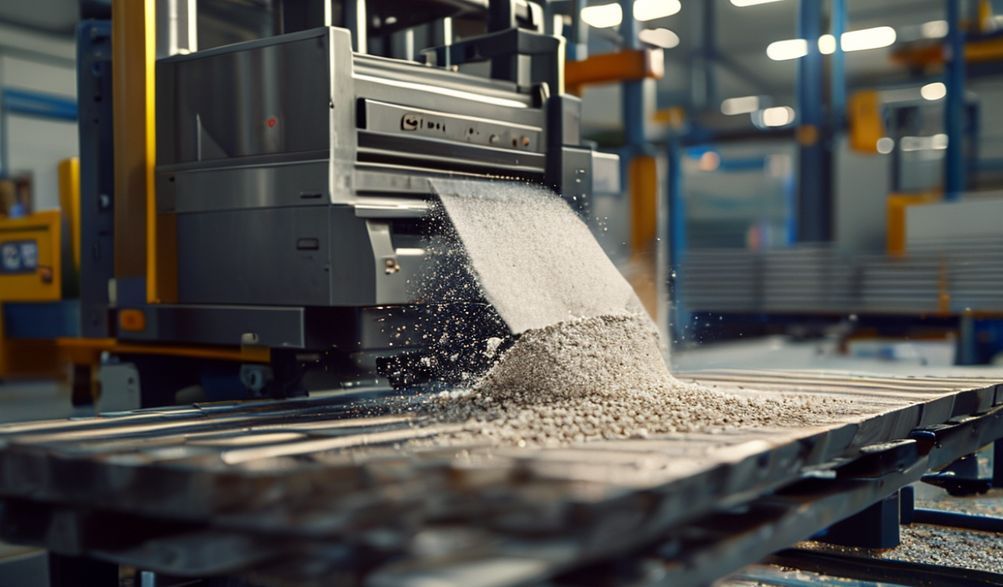
The Ultimate Guide to Block Making Machines: From Selection to Production
Inleiding
In the world of construction, the humble concrete block is a fundamental building block of modern society. Behind every sturdy wall, durable pavement, and resilient structure lies a critical piece of technology: the blokmasjien. These powerful devices are the unsung heroes of the industry, transforming raw materials like cement, sand, and aggregate into the precise, uniform components that form our infrastructure.
Whether you’re a contractor aiming to streamline on-site material production, an entrepreneur looking to capitalize on the booming construction materials market, or a project manager seeking cost-effective solutions, understanding this equipment is paramount. This comprehensive guide cuts through the noise to deliver an authoritative, experience-driven look at block making machines. We’ll dissect their mechanics, explore the diverse types available, and provide actionable, trustworthy advice to help you make an investment that boosts productivity, ensures quality, and maximizes your return.
Verstaan Blokmaakmasjiene
Wat is 'n Blokvervaardigingsmasjien?
At its core, a block making machine is a precision engineering device designed to compress a semi-dry concrete mixture into molds, creating solid, hollow, or interlocking blocks of specific shapes and dimensions. Through a combination of high-frequency vibration and immense hydraulic pressure, it achieves what manual labor cannot: consistent density, superior strength, and uniform size in every single unit. This process of mechanized compaction is what allows for the rapid, large-scale production essential for today’s construction timelines.
The Evolution of Block Production
The journey from hand-packed mud bricks to today’s automated behemoths is a story of innovation.
* Manual Molds: The earliest method involved filling wooden or steel molds by hand and tamping the mixture down—a labor-intensive and inconsistent process.
* Mechanical Leverage: The introduction of simple mechanical presses improved compaction force, increasing block density.
* Vibrasietegnologie: A revolutionary step, using motors to vibrate the mold, which consolidates the mix by removing air pockets for stronger blocks.
* Hydraulic Power & Automation: Modern machines integrate computer-controlled hydraulic systems for precise pressure application, automated material handling, and programmable production cycles, enabling unmatched output and quality control.
Kernkomponente en Hoe Hulle Werk
Om die sleutel dele te verstaan, ontmystifiseer dit die masjien se werking:
* Hopper: Holds the raw concrete mix before it’s fed into the mold.
* Vorm of Sterf: The heart of the machine. This interchangeable steel component defines the block’s shape (hollow, solid, paving, etc.).
* Vibrasie Stelsel: Typically high-frequency vibrators mounted on the mold table or head. This critical step ensures the mix flows into every corner and begins compaction.
* Hidrouliese Pers: A system of cylinders and pumps that applies tremendous downward force on the mix within the mold, creating the final density and surface finish.
* Beheerpaneel: Ranges from simple switches to advanced PLC (Programmable Logic Controller) touchscreens for setting parameters like vibration time, pressure, and cycle count.
* Pallet Toevoer/Paleitoervoerder Automatically supplies the pallets (flat boards) on which blocks are formed and later cured. In advanced systems, conveyors move blocks to stacking areas.
The Production Cycle: Mix is loaded into the hopper > A measured amount is fed into the mold > Vibration consolidates the mix > The hydraulic press applies final compaction > The mold lifts, and the freshly formed block is ejected onto a pallet > The cycle repeats.
Tipes Blokmaakmasjiene
Choosing the right type is the first critical decision. They are categorized by operation, mobility, and output.
Volgens Bedryfsmetode
-
Handblokmaakmasjiene:
- Operasie: Entirely human-powered. Operators manually fill the mold, engage a lever for compaction, and remove the finished block.
- Beste Vir: Very small-scale projects, DIY enthusiasts, NGOs in remote areas, or producing specialty artistic blocks. Output is low (typically 100-500 blocks per day).
- Voordele: Extremely low cost, no power required, simple maintenance.
- Nadele: Labor-intensive, low output, inconsistent quality dependent on operator.
-
Semi-Automatiese Blokmaakmasjiene:
- Operasie: A balance. Key processes like vibration and compaction are powered (electric or diesel), but material feeding and block removal often require operator assistance.
- Beste Vir: Small to medium-sized businesses, block yards supplying local builders, and contractors with steady demand. Output ranges widely (1,000 to 5,000+ blocks per 8-hour shift).
- Voordele: Good balance of affordability and productivity, more consistent quality than manual machines, offers some versatility.
- Nadele: Still requires a small crew, output limited by human-paced steps.
-
Ten vol outomatiese Blokvervaardigingsmasjiene:
- Operasie: Complete, computer-controlled automation. From material feeding and mixing to molding, curing, and stacking, the entire process is managed by PLCs.
- Beste Vir: Large-scale manufacturing plants, government infrastructure projects, and businesses aiming for high-volume commercial supply. Output can exceed 10,000 blocks per shift.
- Voordele: Maximum output and efficiency, unparalleled consistency, minimal labor costs, often includes integrated curing systems.
- Nadele: High capital investment, requires significant space and stable power, needs skilled technicians for maintenance.
By Mobility and Setup
- Stilstaande Blokmaakmasjiene: These are fixed installations, often part of a full production line with conveyors and stackers. They require a solid concrete foundation and are designed for permanent, high-volume plant operations.
- Mobile or “Egg-Laying” Block Machines: These self-contained units produce blocks and deposit them directly onto a level ground surface (like an egg-laying chicken). They are towed to different locations on a site, offering fantastic flexibility for on-site production, reducing transport costs for large projects like road construction in remote areas.
By Block Output Type
- Holblokmasjienvervaardiging: Produce blocks with cavities, reducing weight and material use while maintaining strength. Ideal for load-bearing and non-load-bearing walls.
- Solid/Paving Block Machines: Produce dense, solid blocks used for pavements, flooring, and heavy-duty applications requiring high compressive strength.
- Interlocking Block Machines: Produce blocks with designed ridges and grooves that lock together without mortar, enabling rapid, dry-stack construction for walls and retaining structures.
- Specialty Shape Machines: Dedicated or multi-use machines with custom molds for curbstones, grass pavers, landscaping blocks, and architectural shapes.
Key Factors to Consider When Choosing a Machine
Selecting a machine is an investment analysis. Here are the critical parameters to evaluate:
-
Assess Your Production Needs: Be realistic. Calculate your required blocks per hour or day based on project contracts or market demand. Always factor in a buffer (e.g., 20% extra capacity) for growth and peak periods. Buying an oversized machine drains capital; an undersized one loses you contracts.
-
Block Type and Size Versatility: Does your market demand hollow blocks today but paving stones tomorrow? Invest in a machine that allows for quick mold changes. Check the manufacturer’s catalog of available mold options and the ease of the changeover process.
-
Machine Power Source and Consumption:
- Elektries Clean, quiet, and efficient for fixed locations with reliable grid power. Operational cost is predictable.
- Diesel: Offers complete independence from the power grid, essential for remote sites or areas with frequent outages. Higher fuel and maintenance costs.
- Hibried: Offers the flexibility to switch between power sources, providing valuable backup.
-
Build Quality and Durability: This is non-negotiable. Inspect:
- Raam: Look for heavy-duty, welded steel construction.
- Kritiese Komponente: Hydraulic cylinders should be from reputable brands (e.g., Bosch Rexroth, Parker). Vibrator motors should be high-frequency and industrially rated.
- Finish: Powder coating or other anti-corrosion treatments are vital for longevity, especially in humid climates.
-
Automation Level and Ease of Use: Match the machine’s complexity to your team’s skill level. A fully automatic PLC machine is useless without someone who can program and troubleshoot it. Consider the learning curve and available training from the supplier.
-
Supplier Reputation and After-Sales Service: This is perhaps the most crucial factor. A machine is a long-term asset.
- Research the manufacturer’s history and client testimonials.
- Waarborg: What is covered and for how long?
- Onderdele: Is there a local depot or guaranteed shipping time for critical spares?
- Tegniese Ondersteuning: Do they offer installation supervision, operator training, and remote troubleshooting?
The Block Production Process: A Step-by-Step Guide
Quality blocks are made through a controlled process, not just by a machine.
-
Stage 1: Raw Material Preparation: Strength starts here. Use clean, well-graded aggregates and sand. The cement must be fresh and stored properly. The water-to-cement ratio is critical; a semi-dry mix (just enough water for hydration) is required for immediate demolding.
-
Stage 2: Mixing: Use a forced-action pan mixer or similar to achieve a homogeneous, consistent mix. Every block must have the same material composition.
-
Stage 3: Molding and Compaction: The mix is fed into the machine. Here, vibrasieenhidrouliese druk work in tandem. Vibration gets the mix into all parts of the mold and starts consolidation. The subsequent hydraulic pressure (often 100+ tons) compresses it into a dense, strong matrix, defining the final surface texture and dimensional accuracy.
-
Stage 4: Curing: Freshly molded blocks are only “green” and have minimal strength. Proper curing involves maintaining heat and moisture for 7-28 days to allow the cement to fully hydrate and gain strength. Methods include:
- Steam Curing: In kilns or chambers for rapid strength gain (within 24 hours).
- Water Sprinkling: Regularly soaking stacked blocks.
- Air Curing: Covering blocks with plastic sheets to retain moisture.
-
Stage 5: Storage and Palletizing: Once cured, blocks are stacked on pallets or in organized piles using forklifts. Storage areas should be level and clean to prevent chipping or cracking. Allow blocks to fully dry before use in construction.
Maintenance and Safety Best Practices
Routine Maintenance is Key:
* Daily: Clean the mold, hopper, and feed system thoroughly after each shift. Check hydraulic oil levels and for leaks. Inspect pallets for damage.
* Weekly: Grease all moving parts and bearings. Check vibrator motor mounts and electrical connections. Tighten any loose bolts on the frame.
* Monthly: Change hydraulic oil and filters as per the manual. Inspect mold liners for wear and replace if needed.
Troubleshooting Common Issues:
* Poor Block Strength: Usually a raw material or mix design issue (too much water, poor aggregate). Can also be insufficient vibration/pressure time.
* Surface Cracks: Often caused by improper curing (drying too fast) or excessive vibration.
* Sticking in Mold: Mold may need cleaning, lubrication, or be damaged. The mix may be too wet.
Essential Safety Protocols:
* PPE is Mandatory: Safety glasses, steel-toe boots, hearing protection (for loud machines), and gloves.
* Lock-Out/Tag-Out: Always disconnect power before performing any maintenance or clearing a jam.
* Opleiding: Never allow untrained personnel to operate the machine. Understand all emergency stop procedures.
FAQ: Your Block Making Machine Questions Answered
Q1: What is the average cost range for a block making machine?
A: There’s no single “average.” Small manual machines start around $1,000-$3,000. Robust semi-automatic machines range from $15,000 to $50,000. Fully automatic production lines begin around $70,000 and can exceed $300,000 for large, sophisticated systems with integrated curing.
Q2: Can I use a block making machine for a one-time home project?
A: Purchasing an industrial machine for a single project is rarely economical. For a garden wall or small patio, consider renting a small machine, hiring a block supplier, or using simple manual molds from a hardware store.
Q3: What is the difference between hydraulic and vibration pressure?
A: They serve different purposes. Vibraasie is about consolidation—it makes the concrete mix flow and settle, removing air voids. Hidrouliese druk is about compaction—it applies massive static force to fuse the particles together, creating ultimate density and strength. A quality block requires both.
Q4: How much space do I need to set up a block manufacturing plant?
A: For a serious operation, plan for:
* Production Shed: Minimum 200 sq. m.
* Curing Area: 500-1000 sq. m. (blocks need to sit for weeks).
* Raw Material Storage: 200-500 sq. m. for sand, aggregate, and cement silos.
* Finished Goods Storage: 500+ sq. m.
Total land area of 1,500-2,500 sq. meters is a common starting point for a small-to-medium plant.
Q5: Are there eco-friendly options for block production?
A: Absolutely. Modern block technology is a leader in sustainable construction:
* Material Use: Machines can produce blocks using industrial by-products like fly ash or slag, reducing cement content.
* Recycled Aggregates: Crushed construction waste can often be incorporated.
* Hulpbron-doeltreffendheid: Interlocking blocks eliminate mortar use, and the production process itself is relatively low-waste compared to other building materials.
Q6: How do I ensure the blocks I produce meet quality standards?
A: Implement a Quality Control (QC) system:
1. Strictly follow proven mix designs.
2. Regularly test raw materials (especially cement).
3. Perform slump tests on your mix to ensure consistency.
4. Most importantly: Periodically take sample blocks to a certified civil engineering lab for compressive strength testing (e.g., ASTM C90). This is the only way to objectively verify your product meets building code requirements.
Conclusion
Navigating the world of block making machines requires a blend of technical understanding and practical business acumen. It’s an investment that, when made correctly, pays dividends in efficiency, product quality, and competitive advantage. From the flexible mobile unit on a remote job site to the humming automatic line in an urban plant, the right machine becomes the engine of your growth.
Remember, the machine itself is only one part of the equation. Your success hinges on the triad of quality equipment, reliable supplier support, and disciplined operational practices. Use this guide as your foundation. Consult with multiple reputable manufacturers, request live demonstrations, and if possible, visit existing customer plants. With thorough due diligence, you can confidently select a block making machine that will build the foundation for your projects—and your business—for years to come.
<