
Block Making Machine Price List 2024: A Comprehensive Buyer’s Guide
Navigating the market for a block making machine can feel like deciphering a secret code. You see a wide range of prices online—from shockingly low to eye-wateringly high—with little explanation for the disparity. This inconsistency leaves many contractors and entrepreneurs feeling uncertain, worried about overpaying or, worse, investing in a machine that fails to deliver. If you’re trying to pin down a reliable block making machine price list, you’ve likely encountered this very frustration.
This guide is designed to cut through the confusion. Our purpose is to provide a transparent, expert-driven framework that moves beyond simple price tags. We’ll analyze the core factors that determine cost, from machine type and automation to hidden operational expenses, drawing on industry standards and practical buying considerations. You will learn not just what machines cost, but why they cost what they do, empowering you to evaluate true value and budget effectively for your specific project.
Whether you’re a small contractor, a startup block manufacturer, or a construction company looking to bring production in-house, this comprehensive resource will equip you with the knowledge to make a confident, informed investment.
Understanding Block Making Machine Types & Their Price Ranges
The first step to understanding price is categorizing the machines themselves. The level of automation and intended production scale are the primary differentiators, creating distinct market segments with corresponding price brackets.
Manual & Semi-Automatic Block Machines (Entry-Level Investment)
These machines represent the most accessible entry point into block production. Operation involves significant manual labor: feeding the concrete mix, activating the machine (often via a lever or button), and manually removing the cured blocks.
- Ideal Use Case: Perfect for very small-scale projects, rural construction, startups with limited capital, or producing blocks for personal use. Their output is measured in hundreds of blocks per shift, not per hour.
- Price Range: $1,000 – $15,000
- What Drives the Variance? The price span here is wide. A basic, single-block manual press can be under $2,000. As you move into semi-automatic models with a larger mold capacity (e.g., 4-6 blocks per cycle), mechanical vibration systems, and slightly more streamlined operation, prices climb toward the $10,000-$15,000 mark.
Fully Automatic Stationary Block Making Machines (Mid-Range Workhorses)
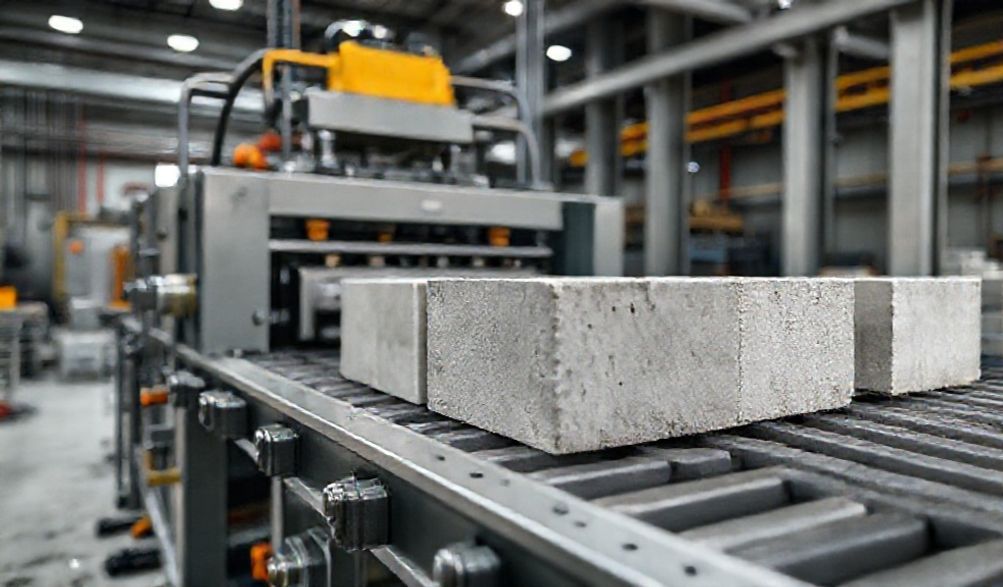
This category is the backbone of small to medium-scale commercial block yards. These machines are electrically powered, integrate conveyor belts for automatic product discharge, and often feature programmable logic controller (PLC) systems for consistent operation.
- Ideal Use Case: Designed for established businesses supplying local construction markets. They offer a strong balance between output (typically 1,000 to 5,000 blocks per 8-hour shift) and automation, requiring minimal manual intervention beyond monitoring and raw material feeding.
- Price Range: $25,000 – $100,000
- What Drives the Variance? Key factors include hourly production capacity, the sophistication of the PLC and hydraulic systems, the number of mold stations, and the brand reputation. A machine producing 1,500 blocks per hour will sit at the lower end, while a high-capacity model with advanced vibration technology and premium components will command a price near the top of this range.
Fully Automatic Mobile Block Making Machines (Premium High-Output Solutions)
Also known as block making plants, these are the premium solutions for large-scale or on-site production. Mounted on a trailer, they can be transported directly to a construction site, eliminating transport costs for finished blocks. They are highly automated, often featuring robotic pallet handling, continuous mixing systems, and sophisticated control panels.
- Ideal Use Case: Large infrastructure projects, very high-volume commercial block manufacturers, and government contracts where on-site production is a strategic advantage. Output can exceed 10,000 blocks per day.
- Price Range: $80,000 – $300,000+
- What Drives the Variance? The upper limit is essentially “sky’s the limit.” Price scales dramatically with output capacity, the inclusion of an integrated mixer, the level of robotic automation, and the quality of the chassis and components. Custom configurations for specific block types also add cost.
Specialized Machines: Hollow Block, Paver, Interlocking Block Makers
The end product directly influences machine design. While many machines are versatile with interchangeable molds, some are engineered for optimal production of a specific product.
- Hollow Block Machines: Require precise mold and vibration design to form consistent cavities. Standard machines can often produce them, but dedicated high-output hollow block machines exist.
- Paver & Interlocking Block Makers: These demand higher compaction pressure and more intricate mold designs to create the detailed, locking faces and textured surfaces. This specialization often carries a 10-25% price premium over a standard block machine of similar capacity due to the more complex engineering and hardened steel molds required.
Key Factors That Determine Block Machine Pricing
Two machines with similar “blocks per hour” claims can have wildly different prices. Here’s a breakdown of the core engineering and commercial factors that explain why.
Production Capacity (Blocks Per Hour)
This is the single most significant cost driver. Industry practice shows that price does not scale linearly with output; doubling the capacity often more than doubles the price. This is due to the need for a more powerful motor, a larger and more robust frame, higher-capacity hydraulic systems, and more sophisticated vibration tables.
| Approximate Capacity (Blocks/Hour)* | Typical Machine Type | General Price Implication |
| :— | :— | :— |
| 200 – 800 | Manual / Semi-Auto | Entry-Level ($1K – $15K) |
| 1,000 – 2,500 | Stationary Automatic | Mid-Range ($25K – $60K) |
| 3,000 – 6,000 | Stationary Automatic | High Mid-Range ($60K – $100K) |
| 8,000+ | Mobile Plant | Premium ($80K+) |
*Based on standard 8″ hollow block. Output varies by block type.
Level of Automation & Technology
The journey from manual operation to full automation involves layers of technology, each adding cost but also efficiency and consistency.
* Manual Feed vs. Automatic Feed: An automated conveyor feeding the hopper reduces labor and improves mix consistency.
* Control Systems: A basic relay system is cheaper than a PLC (Programmable Logic Controller), but a PLC allows for precise control over vibration time, pressure, and cycle sequence, leading to higher quality blocks and easier troubleshooting.
* Vibration Technology: The heart of compaction. Machines with multiple high-frequency vibrators (often mounted on the mold head and the table) ensure denser, stronger blocks but are more expensive to manufacture.
Machine Build Quality & Component Branding
The adage “you get what you pay for” is profoundly true here. The quality of materials and components dictates longevity and reliability.
* Steel Frame & Structure: Heavy-duty, reinforced steel withstands the constant stress of vibration and pressure far better than lighter-gauge materials.
* Hydraulic Systems: A machine using imported pumps and valves from brands like Bosch Rexroth or Kawasaki will be more expensive than one using generic or local hydraulic parts. The premium buys smoother operation, precise pressure control, and much greater durability.
* Motors & Electricals: Reputable brands (e.g., Siemens, ABB) for motors and electrical components reduce the risk of failure and are often more energy-efficient.
Brand Reputation & After-Sales Support
An established brand with a global or strong regional presence commands a higher price. This premium is not just for the name; it’s for risk mitigation. It covers:
* Proven Engineering: A track record of reliable machines.
* Warranty: A meaningful, enforceable warranty.
* Spare Parts Availability: Quick access to genuine parts, minimizing downtime.
* Technical Support: Access to engineers who can help with setup, maintenance, and troubleshooting.
Investing in a reputable brand is essentially buying insurance for your business’s productivity.
Beyond the Sticker Price: Calculating Your Total Investment
The invoice from the manufacturer is just the beginning. A realistic budget accounts for the total cost of ownership (TCO). Based on buyer reports and industry experience, failing to plan for these expenses is a common pitfall.
Hidden Costs to Budget For
These are one-time or initial costs that can add 15-40% to your base machine price.
* Shipping, Customs, and Insurance: For international purchases, freight (FOB vs. CIF), import duties, taxes, and insurance can be substantial. Always get a clear “landed cost” quote.
* Foundation & Installation: Most stationary machines require a solid, level concrete foundation. Mobile plants need a prepared, stable site. Factor in civil work costs.
* Power Setup: Most automatic machines require a robust, three-phase electrical supply. Upgrading your facility’s electrical panel or running new lines is a significant cost.
* Initial Raw Material Stock: You’ll need to purchase cement, aggregates, and pigments to begin production.
Operational Costs & ROI Considerations
Your ongoing expenses directly impact profitability.
* Labor: Even automatic machines require operators, maintenance personnel, and material handlers.
* Maintenance & Spare Parts: Regular servicing and a budget for wear items (mold liners, hydraulic seals, vibrator motors) are essential.
* Mold Changes: Additional molds for different block types are a capital expense.
* Calculating ROI: A simple framework: Estimate your monthly production volume. Subtract your total monthly costs (raw materials, labor, power, machine depreciation, maintenance). Compare the net profit to your total initial investment. A quality machine for a stable market should typically aim for an ROI period of 1.5 to 3 years.
The True Cost of a “Cheap” Machine
The allure of a low upfront price is strong, but the long-term economics are often poor. The true cost of a cheap machine may include:
* Frequent Breakdowns: Low-quality components fail, leading to costly production halts.
* Poor After-Sales Service: Getting support or spare parts becomes a nightmare.
* Low-Quality Blocks: Inconsistent vibration or pressure produces weak or misshapen blocks you cannot sell.
* Safety Hazards: Compromised build quality can pose risks to operators.
* Higher Long-Term Cost: When you factor in lost production, repair bills, and early replacement, the “cheap” machine often becomes the most expensive option.
How to Get an Accurate Quote & Negotiate Effectively
Approaching suppliers with clarity puts you in a position of strength and ensures you get comparable, meaningful quotes.
Preparing Your Requirements for Suppliers
Create a brief specification sheet to send to potential suppliers:
* Desired block type(s) and dimensions.
* Target daily or monthly output (in blocks).
* Available factory space and ceiling height.
* Available power supply (Voltage, Phase).
* Preferred level of automation.
* Your overall budget range (be realistic).
Evaluating Quotes: A Comparison Checklist
Don’t just compare the bottom-line price. Create a spreadsheet to compare:
* Technical Specifications: Capacity (verify block type), motor power, vibration frequency.
* Inclusions: How many molds are included? Is the control panel in your language? Are spare parts kits offered?
* Warranty: Duration and what it covers (parts, labor, travel?).
* Delivery & Payment Terms: FOB Port? CIF Your Port? Payment schedule?
* After-Sales Support: Is installation supervision or operator training included?
Smart Questions to Ask Before You Buy
- “Can you provide contact information for 2-3 customers in my region who have purchased a similar model in the last 2 years?”
- “What is the guaranteed lead time for critical spare parts (like a hydraulic pump or main vibrator motor)?”
- “Do you have a service technician who can travel to my country if needed, and what are those terms?”
- “Can the machine be easily upgraded in the future (e.g., adding an automatic feeder)?”
FAQ: Block Making Machine Price List
Q1: What is the cheapest block making machine available?
A: Small, manual block presses can be found for as low as $1,000 to $3,000. However, it’s critical to understand their severe limitations in output and labor requirement. They are only “cheap” if your production needs are extremely minimal. Always prioritize a machine that is “fit for purpose” over the absolute lowest price.
Q2: How much does a fully automatic block making machine cost?
A: As detailed in the guide, “fully automatic” covers a broad spectrum. A stationary model for a small business can start around $25,000, while high-output mobile plants begin around $80,000 and can exceed $300,000. The final price is entirely dependent on your required production capacity and feature set.
Q3: Are used block making machines a good option to save money?
A: They can be, but caution is paramount. A used machine is only a good deal if it comes from a known brand, has a verifiable service history, and you can confirm the ongoing availability of spare parts. Factor in the cost of a thorough inspection by a mechanic and potential refurbishment. The risk of buying someone else’s problem is high.
Q4: Does the price include molds and installation?
A: This varies drastically by supplier. Some quotes are for the base machine only; others include a set of standard molds. Installation is rarely included for international sales but may be offered as a paid service. Always, always clarify what is included in the quoted price (FOB, EXW, CIF) and request a detailed breakdown in writing.
Q5: Which brand offers the best value for money?
A: Rather than naming one brand, we advise a strategic approach. The best value comes from a supplier that demonstrates transparency, has verifiable customer testimonials for your region, and offers a strong balance of three things: 1) Machine specifications that meet (not vastly exceed) your needs, 2) A fair price for those specs, and 3) Reliable after-sales support accessible to you. Focus on finding that balance.
Conclusion
Navigating the block making machine price list requires looking beyond the initial number. As we’ve explored, the final price is a direct reflection of machine type, production capacity, level of automation, and the quality of its components and support network. Remember, you are not just purchasing a piece of equipment; you are making a capital investment in the productivity and future of your business.
Therefore, the most trustworthy advice we can offer is this: shift your focus from seeking the lowest price to understanding the lowest total cost of ownership. A slightly higher initial investment in a reliable machine from a reputable supplier will almost always yield greater profitability and less stress over its lifespan.
Use this guide as your framework. Prepare your project specifications, consult with multiple suppliers using the checklist provided, and ask the hard questions about support and service. By doing so, you’ll move forward with the confidence needed to make an informed decision that fuels your business growth for years to come.