
The Ultimate Guide to Automatic Clay Brick Machines: Revolutionizing Modern Construction
In the evolving landscape of construction and manufacturing, the shift from manual labor to automated precision is undeniable. At the forefront of this transformation in brick production is the automatic clay brick machine.
This technology represents a significant leap in efficiency, consistency, and sustainability for brick manufacturers, construction companies, and large-scale infrastructure projects. It moves brick-making from an artisanal craft, reliant on skilled labor and variable outcomes, to a high-volume, precision engineering process.
This definitive guide is crafted from deep industry expertise to provide a thorough, trustworthy, and actionable overview. We will demystify the technology, explore its tangible benefits, and offer authoritative advice on selecting the right system for your operational needs. Our goal is to ensure you can make an informed investment that aligns with modern production standards and builds a competitive, future-ready business.
Understanding Automatic Clay Brick Making Technology
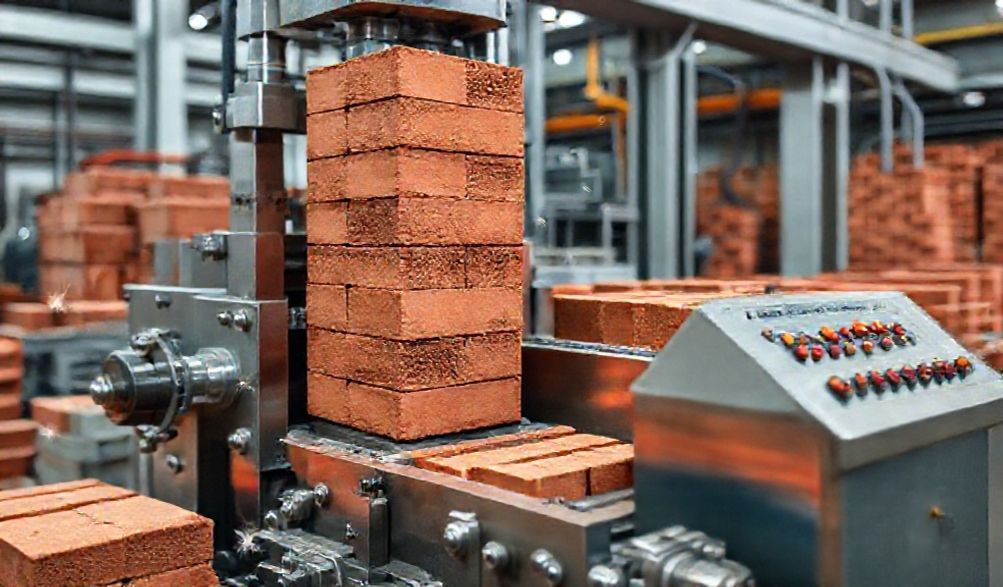
An automatic clay brick machine is an integrated system designed to transform raw clay into finished, shaped bricks with minimal human intervention. It’s a symphony of mechanical, hydraulic, and electronic components working in concert. Understanding its core workings is the first step to appreciating its value.
কোর কম্পোনেন্ট এবং সেগুলো কীভাবে কাজ করে
The magic of automation happens through a series of interconnected systems. Each plays a vital role in the journey from raw material to uniform brick.
-
Feeding and Mixing System: This is where precision begins. Automated feeders and conveyors deliver precisely measured quantities of clay, water, and any additives (like sand or fly ash) into a pugmill mixer. This ensures a homogenous, optimally tempered mix every time, which is the foundation of consistent brick quality.
-
Extrusion and Compaction Unit: Often called the heart of the machine, this is where the clay gains its strength. The prepared mix is fed into a vacuum chamber where air is forcibly removed—a process called de-airing. This prevents cracking and laminations, significantly increasing the brick’s final compressive strength. A powerful auger then compacts the clay and forces it through a die, forming a continuous, dense column of clay in the desired profile (solid, hollow, or perforated).
-
Cutting and Profiling Mechanism: As the continuous clay column exits the die, it meets the cutting system. High-tension wires or hydraulic cutters slice it into individual bricks of exact length. This mechanism is programmable, allowing for quick changeovers between different brick sizes with incredible dimensional accuracy, often within a millimeter tolerance.
-
Automated Handling and Setting: This is where true “full automation” shines. Robotic arms, cross-transfer systems, or stackers gently lift the “green” (unfired) bricks from the cutting zone. They are then systematically placed onto drying racks, pallets, or kiln cars. This eliminates the slow, labor-intensive, and physically demanding work of manual handling, while also reducing damage to the soft green bricks.
-
পিএলসি কন্ট্রোল প্যানেল: The brain of the entire operation. A Programmable Logic Controller (PLC) allows operators to set, monitor, and adjust every critical parameter—from extrusion speed and vacuum pressure to cutting frequency and handling sequences. Modern panels feature touchscreen interfaces, recipe storage for different products, and diagnostic alerts for maintenance.
স্বয়ংক্রিয় ইট তৈরির মেশিনের প্রকারভেদ
Not all automation is created equal. The right choice depends on your scale, budget, and labor strategy.
-
সম্পূর্ণ স্বয়ংক্রিয় উৎপাদন লাইন: These are complete, integrated systems. From raw material feeding to the final setting of bricks for drying, the process is seamless and requires only supervisory personnel. Ideal for large-scale plants with high output targets (often 20,000+ bricks per shift) and a focus on maximizing labor efficiency.
-
সেমি-অটোমেটিক মেশিন: These systems mechanize the most critical and strenuous processes—typically extrusion, cutting, and compaction—but may require manual intervention for tasks like feeding raw materials or removing and stacking the cut bricks. They offer a excellent middle ground, providing a major productivity boost at a lower capital investment, suitable for medium-scale operations.
-
Mobile Automatic Machines: Innovation meets practicality. These are compact, often trailer-mounted units that can be transported directly to a construction site. They enable on-site production of bricks using local soil, dramatically reducing material transport costs and logistics for large, remote projects like dams, highways, or large housing developments.
আপনার ইট উৎপাদন স্বয়ংক্রিয় করার মূল সুবিধা
The decision to automate is driven by powerful, quantifiable advantages that impact your bottom line, product quality, and market competitiveness.
অতুলনীয় দক্ষতা ও উৎপাদনশীলতা
The numbers speak for themselves. Automation shatters the production ceilings of manual methods.
- Dramatic Output Increase: A single automatic line can produce in one hour what might take a team of manual workers a full day or more. Output can range from 8,000 to over 50,000 bricks per 8-hour shift, depending on the machine’s size and configuration.
- ২৪/৭ পরিচালনার সম্ভাবনা: With proper maintenance schedules, these machines can operate around the clock. This allows you to meet tight project deadlines and maximize the utility of your capital investment.
- হ্রাসকৃত চক্র সময় The continuous, synchronized process from mixing to setting drastically shortens the time to produce a batch of bricks, improving your overall workflow and inventory turnover.
Superior Quality and Consistency
Automation replaces human variability with mechanical precision, leading to a fundamentally better product.
- মানুষের ভুল দূর করা: Every brick is formed under identical pressure, vacuum, and cutting conditions. This results in uniform dimensions, weight, and density across thousands—or millions—of bricks.
- Enhanced Structural Properties: Superior and consistent compaction leads to higher compressive strength, lower water absorption, and better thermal and acoustic performance. This translates to buildings that are stronger, more durable, and more energy-efficient.
- Simplified Construction: Uniformly sized bricks are easier and faster for masons to lay. They require less mortar, lead to straighter walls, and reduce construction waste on-site, providing value to your customers.
Operational Cost Reduction and ROI
While the initial investment is significant, the long-term savings create a compelling financial case.
- শ্রম খরচ অপ্টিমাইজেশন: Automation reduces dependence on a large, skilled manual workforce. Labor is reallocated to higher-value roles like machine supervision, maintenance, and quality control.
- সর্বনিম্ন উপাদান অপচয়: Precise feeding and mixing reduce overuse of raw materials. Consistent extrusion and cutting minimize the number of misshapen or defective “green” bricks that must be recycled or discarded.
- শক্তি দক্ষতা: Modern machines use optimized drives (like variable frequency drives) that consume power more intelligently than older, constantly-running systems.
- Clear Return on Investment (ROI): The payback period is typically driven by the savings from the factors above. While it varies, many operations see a full ROI within 1.5 to 4 years. A detailed feasibility study based on your local costs and production targets is essential.
Enhanced Worker Safety and Sustainability
Automation aligns with modern ethical and environmental business practices.
- Improved Worker Safety: It removes people from the most strenuous, repetitive, and hazardous tasks—heavy lifting, working near high-pressure equipment, and manual cutting. This reduces workplace injuries and creates a better work environment.
- Sustainable Material Use: The precise control of the mixing system allows for the consistent incorporation of industrial by-products like fly ash (from coal plants) or slag. This reduces the use of virgin clay and helps manage waste from other industries.
- হ্রাসকৃত কার্বন পদচিহ্ন: Higher efficiency means less energy consumed per brick produced. Furthermore, producing stronger, more insulating bricks contributes to the energy efficiency of the buildings they are used in, creating a positive downstream environmental impact.
How to Choose the Right Automatic Clay Brick Machine
Selecting the perfect machine is a strategic process. Rushing this decision can lead to costly mismatches. Follow this framework to ensure your investment meets your needs.
আপনার উৎপাদন প্রয়োজনীয়তা মূল্যায়ন
Start by looking inward at your own business.
- আউটপুট ক্ষমতা: Be realistic about your current and projected 5-year demand. Do you need 10,000 or 100,000 bricks per day? Choosing a machine too small will bottleneck growth; one too large will strain finances and underutilize capacity.
- Brick Type & Specifications: List every product you make or plan to make: standard solid bricks, perforated bricks, hollow blocks, or special shapes? The machine’s die and cutter must be capable of producing your entire catalog.
- Raw Material Analysis: This is critical. Send samples of your clay to potential suppliers. The machine must be engineered to handle your clay’s specific plasticity, sand content, and shrinkage behavior. A machine designed for one type of clay may fail with another.
Critical Machine Specifications to Evaluate
Now, scrutinize the technical details of the machines on your shortlist.
- Motor Power and Drive Type: Electrical systems are generally more precise and cleaner, while hydraulic systems can deliver immense force. Understand which is better for your primary brick type and local power reliability.
- Extruder Size and Vacuum Pump Capacity: A larger extruder diameter allows for higher output. A powerful vacuum pump (measured in Hg) is non-negotiable for producing high-density, high-strength bricks. Don’t compromise here.
- Automation Level and Control System: Is the PLC user-friendly? Can it store recipes? Does it provide clear fault diagnostics? A sophisticated but overly complex system can be a liability if your operators cannot master it.
- Build Quality and Key Material Grades: Inspect the quality of steel in the frame. Ask about the grade and hardening process for the auger and wear liners. These parts endure immense stress; their quality dictates machine longevity and maintenance costs.
Supplier Evaluation and Post-Purchase Support
The machine is only as good as the company behind it. The supplier is your long-term partner.
- Manufacturer Reputation and Experience: Seek established companies with a verifiable track record. Ask for client references and, if possible, visit existing installations. Look for Expertise and Authoritativeness in their field.
- Availability of Spare Parts and Local Service: A machine breakdown is inevitable. How quickly can you get a replacement auger or gearbox? A supplier with a local warehouse or a strong dealer network is invaluable for minimizing costly downtime.
- Installation, Training, and Warranty: Ensure the purchase includes professional installation, comprehensive training for your operators and maintenance staff, and a clear, robust warranty. This support package is crucial for a smooth start-up.
Integrating an Automatic Machine into Your Workflow
Successful implementation goes beyond the delivery of the machine. It requires careful planning for integration into your existing ecosystem.
Factory Layout and Infrastructure Needs
Prepare your facility আগে the machine arrives.
- Space Planning: You need ample space not just for the machine itself, but for raw material storage, the mixing area, and a well-organized zone for drying the green bricks. Plan the material flow to minimize handling.
- Utility Requirements: Confirm the electrical power (voltage, phase, amperage), water supply, and compressed air needs. Upgrading factory utilities can be a significant hidden cost if not planned for.
- Foundation and Flooring: These are heavy, high-vibration machines. They require a reinforced concrete foundation as per the manufacturer’s specifications to ensure stability and prevent misalignment.
The Commissioning and Training Process
A phased, methodical start-up is key to long-term success.
- Phased Commissioning: The installation should follow a clear plan: assembly, dry testing (without material), wet testing (with material), and finally, gradual ramp-up to full production.
- বিস্তৃত প্রশিক্ষণ Training should cover three groups: Operators (daily running and basic adjustments), Maintenance Technicians (preventive and corrective procedures), and Quality Control Staff (how to monitor output and adjust machine parameters for quality).
- Developing SOPs: Use the training period to document Standard Operating Procedures for starting up, shutting down, changing products, and conducting routine checks. This ensures consistency and safety.
Maintenance for Longevity and Performance
An automatic machine is a capital asset; protect your investment with disciplined maintenance.
- Preventive Maintenance Schedules: Adhere strictly to the manufacturer’s recommended checklists.
- দৈনিক Lubrication of moving parts, cleaning of the cutter head, checking for loose bolts.
- সাপ্তাহিক Inspection of the vacuum system, cleaning of sensors, checking hydraulic fluid levels.
- Monthly: Thorough inspection of the auger and liners for wear, checking electrical connections.
- Managing Wear Parts: Know the expected lifespan of high-wear components:
- Extrusion Auger & Liners: 6-18 months, depending on clay abrasiveness.
- Cutting Wires: Replaced daily to weekly.
- Die Mouthpiece: 6-12 months.
Keeping a small inventory of these critical parts prevents extended stoppages.
- Troubleshooting Common Issues: Empower your team to diagnose basic problems:
- Poor Extrusion/Cracking: Often related to improper clay tempering (too dry/wet) or a worn auger/liner.
- Dimensional Inaccuracy: Usually traced to a loose cutter mechanism, worn cutter wires, or incorrect PLC settings.
সচরাচর জিজ্ঞাসিত প্রশ্নাবলী (এফএকিউ)
What is the typical production capacity of an automatic clay brick machine?
Capacity varies immensely by model. Small to mid-range semi-automatic machines may produce 8,000-20,000 standard bricks per 8-hour shift. Large, fully automatic lines can consistently output 30,000 to over 50,000 bricks per shift. The final number depends on brick size, complexity, and the properties of your raw clay.
Can an automatic machine use different types of clay?
Yes, but with a crucial caveat. The machine can be adjusted for different clays, but the clay must be properly prepared (crushed, screened, and tempered) and its plasticity must fall within the machine’s operational range. Reputable manufacturers will always request a clay sample for testing before providing a firm recommendation.
How much manual labor is still required with a “fully automatic” system?
Labor is not eliminated; it is transformed. In a fully automatic line, workers shift from manual formers to equipment supervisors and technicians. Key roles include monitoring the control panel and material feed, performing periodic quality checks, conducting preventive maintenance, and managing the flow of bricks from the setting system to the dryer or kiln.
What is the average payback period for this investment?
There is no universal average, as it hinges on local factors: machine cost, labor costs you’re replacing, your production volume, and your local brick selling price. However, based on industry case studies, a well-planned investment in a correctly sized machine typically sees a payback period of 1.5 to 4 years. A detailed, site-specific financial projection is essential.
Are automatic machines suitable for small-scale or startup businesses?
Absolutely. The market is not only for industrial giants. Many manufacturers offer smaller, modular, or semi-automatic machines designed as entry points for startups or small businesses. The strategy is often to start with a machine that meets your initial capacity and budget, with a design that allows for future upgrades (like adding an automatic stacker) as your business grows.
উপসংহার
Investing in an automatic clay brick machine is a strategic decision that goes beyond mere equipment purchase; it’s a commitment to modernizing your production philosophy. The compelling advantages—from exponential gains in productivity and consistent, high-quality output to improved workplace safety and a stronger environmental profile—make a powerful case for automation.
This transition is a calculated step towards future-proofing your business. By thoroughly understanding the technology, honestly assessing your needs, and partnering with an authoritative and experienced supplier who offers robust support, you can navigate this significant investment with confidence. The result positions your operation not just to meet current market demands, but to build a more resilient, efficient, and profitable foundation at the very heart of the construction industry’s future.
<