
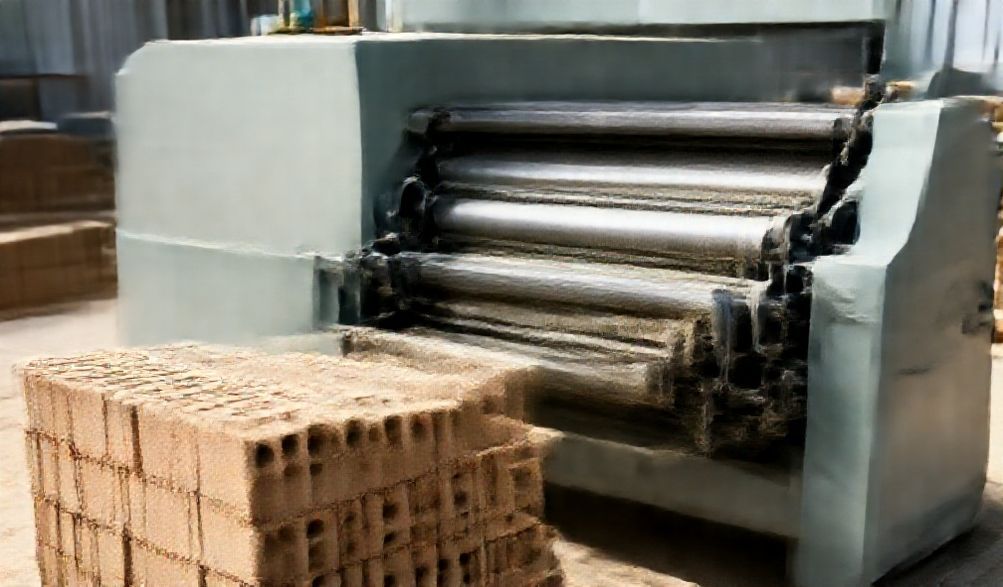
Cement Brick Making Machine Price in Hyderabad (2026): A Complete Buyer’s Guide
You’re standing in your yard in Kukatpally or on a plot in Shamshabad, surveying the space. The demand for construction in Hyderabad is booming, and you see an opportunity. Supplying cement bricks locally could be a game-changer for your business. But a quick online search for a cement brick making machine price in Hyderabad leaves you more confused than informed. Quotes vary wildly, from a few lakhs to several crores. How do you make sense of it all without risking a poor investment?
This guide is designed to cut through the noise. We won’t just list prices; we’ll provide you with the expert framework used by industry professionals to evaluate these machines. By understanding the key factors that drive cost—from automation levels to local service support—you’ll be equipped to make a confident, cost-effective decision tailored to the Hyderabad market. Let’s move beyond the sticker price and build a solid foundation for your investment.
Understanding What Drives the Cost of Cement Brick Making Machines
The price tag on a brick-making machine isn’t arbitrary. It’s a direct reflection of its capabilities, durability, and the technology it employs. Understanding these core factors is the first step to ensuring you pay for what you need—and avoid paying for what you don’t.
1. Machine Type & Automation Level (The Biggest Price Factor)
This is the single most significant determinant of price. Your choice here dictates not only your initial investment but also your operational model, labor costs, and scale.
- Manual Block Making Machines: These are hand-operated or mechanically lever-based machines.
- Price Range: ₹ 75,000 – ₹ 2,00,000
- Ideal For: Entrepreneurs testing the market, very small-scale projects, or producing bricks for personal use. They require significant manual labor for mixing, feeding, and block ejection.
- Semi-Automatic Machines: The workhorse for small-to-medium businesses (SMBs) across Telangana. They mechanize the pressing and vibration process but may require manual feeding of raw material or removal of finished bricks.
- Price Range: ₹ 2,50,000 – ₹ 8,00,000
- Ideal For: Most serious startups and growing businesses. They offer an excellent balance between output (500-2,000 bricks per hour) and affordability, significantly reducing labor intensity compared to manual machines.
- Fully Automatic Machines: These are complete production lines with automated material feeding, pressing, curing, and stacking. They often include sophisticated PLC control panels.
- Price Range: ₹ 10,00,000 – ₹ 25,00,000+
- Ideal For: Large-scale commercial production units aiming for outputs of 3,000+ bricks per hour with minimal manual intervention. The investment is substantial but justified by volume and consistency.
2. Production Capacity (Output per Hour)
Capacity is directly tied to price. A machine’s output is measured in bricks per hour (BPH) for a standard 4”x8”x16” block.
- A machine rated for 500 BPH will cost significantly less than one rated for 2,000 BPH, even within the same automation category.
- Key Advice: Don’t just buy for today’s needs. Project your business growth 2-3 years ahead. Investing in a machine with slightly more capacity than you currently need can save you from a costly upgrade too soon.
3. Brand & Origin of Manufacture
The brand name carries weight in terms of pricing, perceived reliability, and support.
- Established Indian Brands: Manufacturers from Coimbatore, Ahmedabad, or Hyderabad itself often provide more competitive pricing. The major advantage is the ease of accessing spare parts and after-sales service locally in areas like Balanagar or Jeedimetla.
- International Brands: Machines from certain European or East Asian countries may command a premium price. This is often associated with cutting-edge technology, exceptional build quality, or specific patented features. However, always verify the strength of their service network in Hyderabad.
4. Key Technical Specifications
The devil is in the details. These specs impact long-term operating costs and versatility.
- Motor Power (HP/KW): A more powerful motor (e.g., 10 HP vs. 5 HP) handles heavier loads and denser mixes but consumes more electricity. Choose based on your required brick density.
- Brick Size & Mold Options: The standard mold is often included. However, if you plan to produce pavers, hollow blocks, or designer bricks, additional custom molds will add to the cost. Machines that allow quick mold changeovers also tend to be priced higher.
- Build Quality & Material: The grade and thickness of the steel used in the frame and vibration table determine longevity. A machine built with premium-grade steel will resist wear and deformation longer, justifying a higher initial cost with lower maintenance.
Current Price Ranges in the Hyderabad Market (2026 Estimates)
Important Disclaimer: The following price ranges are indicative estimates for 2026 based on current market trends and industry analysis. Prices fluctuate with raw material (steel) costs, brand policies, and specific configurations. Always request a detailed, formal quotation from your shortlisted suppliers.
Entry-Level & Manual Machines
- Price Range: ₹ 75,000 – ₹ 2,00,000
- What to Expect: Basic, robust machines suitable for producing 200-500 bricks per hour with a team of 2-3 workers. Ideal for micro-enterprises and village-level entrepreneurship.
Semi-Automatic Machines (Most Popular Segment)
- Price Range: ₹ 2,50,000 – ₹ 8,00,000
- What to Expect: This broad range covers various capacities.
- Lower End (₹ 2.5L – ₹ 4.5L): Basic semi-automatic models with outputs of 800-1,200 BPH.
- Higher End (₹ 4.5L – ₹ 8L): Advanced semi-automatic or “egg-laying” type mobile machines with better vibration systems, higher output (1,500-2,500 BPH), and features like hydraulic systems.
Fully Automatic & High-Capacity Plants
- Price Range: ₹ 10,00,000 – ₹ 25,00,000+
- What to Expect: This is for industrial-scale production.
- Stationary fully automatic plants with conveyor systems and automatic pallet feeders start around ₹ 10 lakhs.
- High-end plants with robotic stacking, advanced curing systems, and outputs exceeding 5,000 BPH can easily reach ₹ 25 lakhs and beyond.
Beyond the Sticker Price: Calculating Your Total Investment
A savvy buyer in Hyderabad looks at the Total Cost of Ownership (TCO), not just the purchase invoice. Overlooking these factors can cripple your profitability.
Initial Setup & Installation Costs
The machine’s price is just one part of the initial outlay. Budget for:
* Foundation: A strong, level concrete foundation is mandatory.
* Electrical Work: Setting up a three-phase power connection (for most semi and fully automatic machines) and proper wiring.
* Installation & Commissioning: Some suppliers include this; others charge extra. Always clarify.
Operational Costs (The Ongoing Expense)
Your daily running costs will be dictated by:
* Raw Materials: The price of cement, sand, and aggregate in Telangana. Establishing reliable, cost-effective supply chains is crucial.
* Power Consumption: Calculate based on the motor’s HP rating and your daily operational hours. A 10 HP motor running 8 hours a day consumes significantly more than a 5 HP motor.
* Labor: Even semi-automatic machines require operators and helpers for material handling.
Maintenance & Spare Parts Budget
Treat this as non-negotiable. Set aside a capital buffer (typically 5-10% of the machine cost annually) for:
* Regular wear parts: Molds, liner plates, springs, and belts.
* Preventive maintenance: Regular greasing and part inspections.
The Hidden Cost of Poor Quality
A machine that is ₹ 1 lakh cheaper but breaks down frequently has a catastrophic hidden cost:
* Production Downtime: Lost revenue and missed orders.
* Poor Brick Quality: Rejects damage your reputation and waste raw materials.
* Absent Service: If the supplier vanishes, you’re left sourcing expensive parts yourself.
Finding Reliable Suppliers & Manufacturers in Hyderabad
Your supplier is as important as the machine. A reliable partner ensures smooth operations for years.
Key Industrial Areas for Machinery in Hyderabad
Focus your physical search in Hyderabad’s industrial hubs:
* Balanagar
* Jeedimetla
* Sanath Nagar
* Kukatpally Industrial Area
These clusters host multiple dealers, allowing you to compare machines and reputations in a single trip.
How to Vet a Supplier: A Checklist
Do not skip this due diligence:
* Local Reputation & History: How long have they been operating in Hyderabad? Ask other local business owners.
* Live Demonstration: Never buy without one. See the machine run, produce bricks, and assess the noise, vibration, and final brick quality.
* After-Sales Service: This is critical. Ask: Do they have a dedicated service team in Hyderabad? What is their typical response time? Do they stock common spare parts locally?
* Warranty Terms: Get the warranty document. Understand what is covered (e.g., workmanship, motor) and for how long.
* Client References: Request contacts of 2-3 clients in or near Telangana you can speak to.
Online B2B Platforms vs. Direct Dealers
- Online Platforms (IndiaMART, TradeIndia): Useful for discovering suppliers and getting initial price indications. However, use them as a research tool, not a purchase portal.
- Direct Dealers/Manufacturers: Highly recommended. A physical visit to their yard or office allows for proper inspection, demonstration, and building a relationship. It simplifies future service calls.
Smart Tips to Get the Best Value for Your Money
Define Your Needs Clearly Before Shopping
Answer these questions first:
* What types of bricks does my target market demand? (Solid, Hollow, Pavers, Interlocking?)
* What is my realistic daily and monthly production target?
* What is my available space and power connection?
Always Opt for a Live Demonstration
Watch the machine through a full cycle. Check for:
* Consistency in brick dimensions and density.
* Ease of operation and safety features.
* The overall build quality and finish.
Negotiate on the Complete Package
Instead of haggling only on the machine price, negotiate the package deal:
* Can they include installation?
* Can they provide a basic spare parts kit?
* Will they offer extended warranty coverage?
* Can they include operator training for your staff?
Consider Financing & Government Schemes
- MSME Loans: Several banks offer attractive loan schemes for small-scale industrial equipment.
- State Subsidies: Investigate if the Telangana government or central MSME schemes offer any capital subsidies or interest subventions for manufacturing equipment. A good local supplier can often guide you on this.
Frequently Asked Questions (FAQ)
Q1: What is the cheapest cement brick making machine available in Hyderabad?
A: The cheapest options are manual machines, starting around ₹ 75,000. However, weigh this low cost against high manual labor requirements and limited output (200-500 bricks per hour). It’s a viable start for a nano-enterprise but not for scalable commercial production.
Q2: Which is better: a new machine or a used cement brick machine in Hyderabad?
A: A new machine comes with a warranty, latest technology, and predictable reliability—it’s the safer, recommended choice for most. A used machine can save 30-40% on capital but is risky. Only consider it if you can bring a knowledgeable mechanic for a thorough inspection, verify the machine’s service history, and ensure spare parts are still available.
Q3: How much profit can I make with a brick making machine in Hyderabad?
A: Profitability isn’t guaranteed by the machine alone. It depends on your operational efficiency, raw material sourcing cost, overhead management, and local market rates. A simple way to estimate is: Profit per Brick = (Selling Price per Brick) – (Cost of Raw Materials + Power + Labor + Maintenance Overhead). High-volume, efficient operations with good market access yield the best returns.
Q4: Are there any training programs provided by suppliers?
A: Any reputable supplier must provide basic operational and safety training for your machine operators. This should be a stated part of the purchase agreement. Lack of training is a red flag.
Q5: What is the typical warranty period for these machines?
A: Warranty terms vary. A common structure is 1 year on the machine frame and core components, and 6 months to 1 year on the electric motor. Always read the warranty document to understand inclusions, exclusions, and claim procedures.
Conclusion
Navigating the cement brick making machine price in Hyderabad is about understanding a spectrum, not pinpointing a single number. The “right” price is the one that aligns with your specific business plan, balancing initial investment with long-term productivity and local support.
Remember, this machine is a long-term asset for your business. Your goal is to minimize the Total Cost of Ownership, not just the purchase price. This comes from choosing the right automation level, a reliable brand with strong Hyderabad service, and a supplier who acts as a partner.
Ready to take the next step? Use this guide as your checklist. Define your needs, visit suppliers in Balanagar or Jeedimetla with confidence, ask the detailed questions we’ve outlined, and witness live demonstrations. Invest not just in a machine, but in the foundation of your business growth for the next decade.