
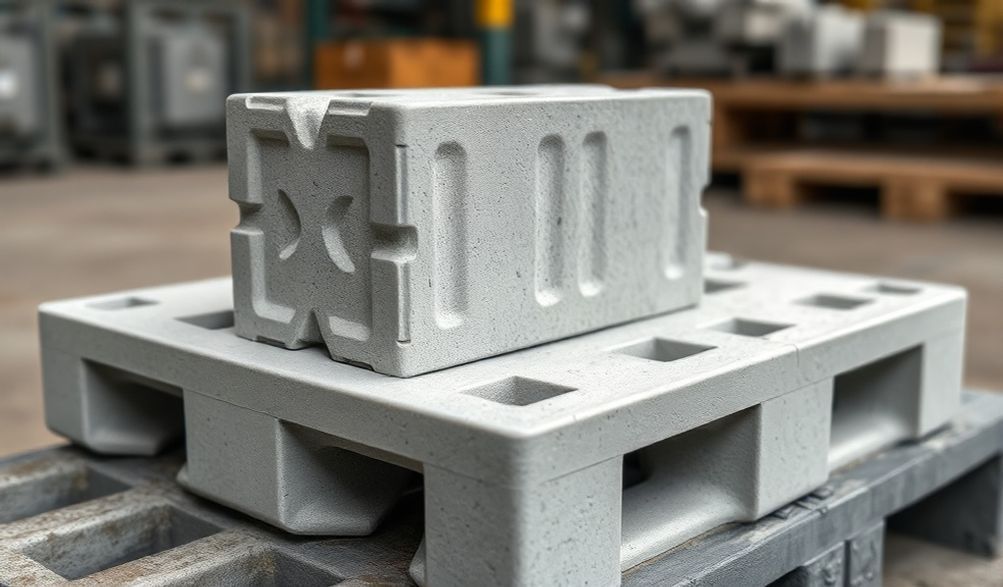
Paletas GMT para Máquinas de Ladrillos: La Guía Definitiva de Moldes Duraderos y de Alto Rendimiento
Introducción
Si estás en el negocio de fabricación de ladrillos, conoces el procedimiento demasiado bien. Justo cuando la producción alcanza su ritmo, te detienen los palés de madera deformados que causan ladrillos desalineados, o te enfrentas al ciclo implacable de lijar, sellar y reemplazar moldes desgastados. Este tiempo de inactividad no es solo un inconveniente; es un golpe directo a tus resultados, causando retrasos frustrantes, calidad de producto inconsistente y costos operativos en espiral.
Esta guía, extraída de décadas de experiencia práctica en la fabricación de productos de concreto y un profundo conocimiento en ciencia de materiales, está aquí para presentar una solución transformadora. Vamos a dejar a un lado las distracciones para hablar sobrePaletas GMT para máquinas de ladrillosUn salto tecnológico que está redefiniendo la durabilidad y la eficiencia en el piso de producción. Los palets de termoplástico con malla de vidrio (GMT) no son solo una alternativa más; son una mejora estratégica diseñada para eliminar los problemas crónicos asociados con los palets tradicionales de madera, acero y plástico estándar.
Al final de esta guía completa, tendrás una comprensión clara y respaldada por expertos sobre qué son los palés GMT, sus ventajas incomparables, cómo seleccionar los adecuados para tu operación y las mejores prácticas para maximizar su vida útil. Nuestro objetivo es proporcionarte el conocimiento necesario para optimizar tu línea de producción y lograr la máxima eficiencia, una calidad superior de ladrillos y una rentabilidad a largo plazo.
¿Qué son los palés GMT? (La ciencia detrás de la resistencia)
Para apreciar por qué los palés GMT son un cambio radical, necesitas entender qué los distingue a un nivel fundamental. Esto no es solo un plástico diferente; es un compuesto sofisticado diseñado para un rendimiento extremo.
Entendiendo el Material GMT
GMT significaMat de Vidrio TermoplásticoEs un material compuesto de alto rendimiento que consta de dos componentes clave:
* Una Alfombra de Fibra de Vidrio Aleatoria:Esto proporciona la resistencia a la tracción y la rigidez, actuando como un esqueleto de refuerzo.
* Una Matriz Polimérica Termoplástica:Normalmente de polipropileno, este une las fibras de vidrio, proporcionando resistencia al impacto, estabilidad química y forma.
La magia ocurre en el proceso de laminación. La estera de fibra de vidrio se impregna completamente y se fusiona con el termoplástico fundido bajo un intenso calor y presión. El resultado es una lámina homogénea con una relación resistencia-peso excepcional, donde las fibras de vidrio se distribuyen uniformemente para resistir la tensión desde cualquier dirección.
Cómo se fabrican los palés GMT para máquinas de ladrillos
Convertir láminas de GMT en moldes de ladrillos de precisión es un proceso que exige pericia en ingeniería. No es un simple corte; es un conformado de precisión.
- Corte de Precisión:Las láminas de GMT se cortan al tamaño exacto del espacio en blanco requerido para el palet final.
- Termoformado:El ladrillo en blanco se calienta hasta que es flexible y luego se moldea en un gran molde hecho a medida bajo alta presión. Este molde es el negativo de la forma y textura deseada del ladrillo.
- Enfriado y Acabado:El palet formado se enfría para fijar su forma permanentemente. Los bordes se recortan y se perforan con precisión los agujeros necesarios para el montaje en máquinas.
Todo el proceso está adaptado para coincidir con modelos específicos de máquinas de ladrillos (como Zenith, Hess o Besser) y dimensiones exactas de los ladrillos, garantizando un ajuste perfecto y un rendimiento consistente desde el primer día.
Principales Ventajas del Uso de Paletas GMT en la Producción de Ladrillos
Cambiar a palés GMT no es una simple sustitución; es una mejora operativa. Así es como ofrecen beneficios tangibles donde más importa.
Durabilidad y Longevidad Inigualables
Esta es la piedra angular de la propuesta de valor de GMT. Estas paletas están construidas para durar.
* Resistencia a la Abrasión:La superficie termoplástica dura y el refuerzo de vidrio resisten el raspado constante del hormigón y los áridos mucho mejor que la madera o los plásticos más débiles.
* Inmunidad a la Humedad y a los Productos Químicos:A diferencia de la madera, el GMT no absorbe agua, no se hincha, no se pudre ni reacciona con los compuestos alcalinos del hormigón húmedo. Permanece dimensionalmente estable en condiciones de humedad en plantas.
* Comparación de la Esperanza de Vida:En nuestra experiencia de campo, mientras que los palets de madera pueden durar unos meses bajo uso intensivo, y otros plásticos podrían sobrevivir un par de años, los palets de GMT de alta calidad ofrecen consistentemente una vida útil de3 a 7 años o másreduciendo drásticamente la frecuencia de cambio.
Estabilidad Dimensional Superior y Calidad del Ladrillo
La precisión es rentabilidad en la fabricación de ladrillos. Los palés GMT sobresalen en esto.
* No Warping: Their resistance to moisture and heat prevents the warping and twisting common in wood, which leads to misshapen bricks and production jams.
* Thermal Stability: They exhibit minimal expansion and contraction with temperature fluctuations, ensuring brick dimensions remain consistent from the first batch in the morning to the last batch at night.
* Resultado: You achieve a higher yield of first-quality bricks with smooth finishes, sharp edges, and uniform dimensions. This reduces waste, minimizes customer rejections, and protects your brand’s reputation for quality.
Significant Operational Cost Savings
Look beyond the initial price tag. The Total Cost of Ownership (TCO) tells the true story.
* Reduced Replacement Costs: The multi-year lifespan eliminates the recurring cost of purchasing wooden or short-life plastic pallets.
* Tiempo de inactividad minimizado: Fewer pallet changes mean more continuous production time. Less time spent on maintenance is more time spent making sellable product.
* Menos mantenimiento: Forget about weekly sanding, sealing, or painting. GMT pallets require only routine cleaning, freeing up labor for more valuable tasks.
Enhanced Worker Safety and Efficiency
A smoother operation is a safer and faster one.
* Lighter Weight: GMT pallets are significantly lighter than their steel counterparts. This makes them easier and safer for operators to handle, reducing fatigue and risk of injury during setup or changeover.
* Excellent Release Properties: The non-porous, smooth surface of GMT prevents concrete from adhering aggressively. Bricks release more cleanly, which speeds up the production cycle and reduces the need for excessive release agents.
How to Choose the Right GMT Pallets for Your Brick Machine
Investing in GMT pallets is a strategic decision. Making the right choice requires careful consideration of your specific operation. Here’s our unbiased advice.
Critical Compatibility Factors
Getting the fit wrong is not an option.
* Machine Model and Type: This is non-negotiable. You must specify the exact make, model, and type of your brick machine (e.g., fully automatic, semi-automatic, manual). The mounting hole pattern, dimensions, and pallet thickness must be a perfect match for your machine’s carriage.
* Brick Size and Design: Are you producing standard hollow blocks, pavers, solid bricks, or a special architectural shape? The GMT pallet must be molded to the precise cavity design, including any desired surface textures (smooth, split-face, rock-faced, etc.).
Evaluating GMT Pallet Specifications
Not all GMT is created equal. Ask your supplier for these details.
* Thickness and Ply: Thicker pallets (e.g., 8mm, 10mm, 12mm) generally offer greater load capacity and longevity for heavy block production. Some are made from multiple laminated layers (ply) for added strength.
* Glass Fiber Content: A higher percentage of glass fiber (e.g., 40% vs. 30%) typically translates to greater stiffness, strength, and resistance to deformation under load.
* Acabado superficial: Discuss the finish needed for your brick’s aesthetic. A polished mold surface will produce a smooth brick, while a textured mold will impart a rustic look.
Supplier Vetting: Questions to Ask
Your supplier’s expertise is as important as the product.
1. Can you provide material certifications or test data for your GMT composite?
2. Do you have case studies or testimonials from brick manufacturers with similar machines and production volumes?
3. What is the warranty period and what does it cover?
4. Do you offer custom engineering support for unique brick designs or machine adaptations?
5. What is your after-sales service and support process?
Installation, Maintenance, and Best Practices
To get the full return on your GMT pallet investment, proper handling and care are essential. Based on common feedback from operators, here are the key protocols.
Proper Installation for Optimal Performance
A correct start prevents problems.
* Ensure the machine carriage is clean and free of old concrete debris or damaged mounting hardware.
* Carefully align the mounting holes on the GMT pallet with those on the carriage. Do not force them.
* Use the correct bolts or fasteners, typically provided or specified by the pallet manufacturer. Tighten them evenly and to the recommended torque to avoid creating stress points.
Routine Maintenance and Cleaning Protocol
Consistency is key to longevity.
* Daily/Per Shift: Use a stiff-bristled brush or plastic scraper to remove loose concrete residue. A quick blow-down with compressed air can be effective.
* Weekly/As Needed: For more stubborn buildup, wash with a mild detergent and water. Critical: Avoid harsh chemical solvents, acids, or abrasive steel brushes, as these can degrade the thermoplastic surface over time.
* Release Agents: If a release agent is needed, use a water-based, non-petroleum product compatible with plastics. Apply sparingly.
Troubleshooting Common Issues
- Brick Sticking: First, ensure the pallet is clean. If sticking persists, slightly increase the amount of release agent or consult your supplier for a recommended brand. Check that the concrete mix water content is not too high.
- Surface Wear: Regularly inspect the pallet surface for deep scratches or wear patterns. Minor surface gloss loss is normal. Significant wear in a specific area may indicate an alignment issue with the machine or mixer.
- When to Call the Supplier: For any cracking, de-lamination (separation of layers), or persistent dimensional issues, contact your supplier immediately. Do not attempt major repairs in-house, as this may void warranties.
Frequently Asked Questions (FAQ) About GMT Pallets
Q1: Are GMT pallets more expensive than traditional wood pallets?
A: Yes, the initial purchase price is higher. However, when evaluated on a cost-per-cycleocost-per-brick basis, GMT pallets are far more economical. You eliminate the constant, recurring cost of wood pallet replacement, associated labor for maintenance, and the hidden cost of production downtime. The long-term savings are substantial.
Q2: Can GMT pallets be used for all types of concrete bricks and blocks?
A: They are exceptionally versatile and suitable for the vast majority of products, including standard hollow blocks, solid bricks, pavers, and landscaping blocks. For extremely high-temperature curing processes (e.g., certain aggressive steam curing regimes), it’s crucial to consult your supplier to ensure the specific GMT composite’s heat deflection temperature is suitable.
Q3: How long can I expect a set of GMT pallets to last?
A: With proper maintenance and under normal production conditions, a quality set of GMT pallets can last between 3 and 7 years. This range depends on factors like your machine’s cycle speed, the abrasiveness of your concrete mix, and how rigorously cleaning protocols are followed.
Q4: Do you offer custom sizes and designs?
A: Reputable manufacturers specialize in custom engineering. They can create GMT pallets to match any brick machine model and produce custom cavity designs for unique brick shapes, sizes, and surface textures.
Q5: What is the best way to clean and store GMT pallets?
A: For cleaning, use non-abrasive tools (plastic scrapers, stiff brushes) and mild detergents. Avoid harsh chemicals. For storage, if pallets are to be removed for an extended period, clean them thoroughly, allow them to dry completely, and store them flat in a cool, dry place away from direct sunlight to prevent any unnecessary thermal stress.
Conclusión
GMT pallets for brick machines represent a clear evolution in manufacturing technology. By offering a combination of exceptional durability, superior dimensional stability, and significant long-term cost savings, they provide a solution to the most persistent challenges on the brick production floor. Moving from a cycle of frequent replacement and maintenance to a model of reliable, high-performance tooling is a strategic decision that modernizes your operation and boosts your competitive edge.
This guide, built on professional expertise in brick manufacturing technology, demonstrates that the investment in GMT is an investment in the consistency, quality, and efficiency of your entire production process.
Ready to optimize your production line and end the cycle of pallet-related downtime? Contact our expert engineering team today for a free, no-obligation consultation and a precise quote on custom GMT pallets designed for your specific brick machine.
<