
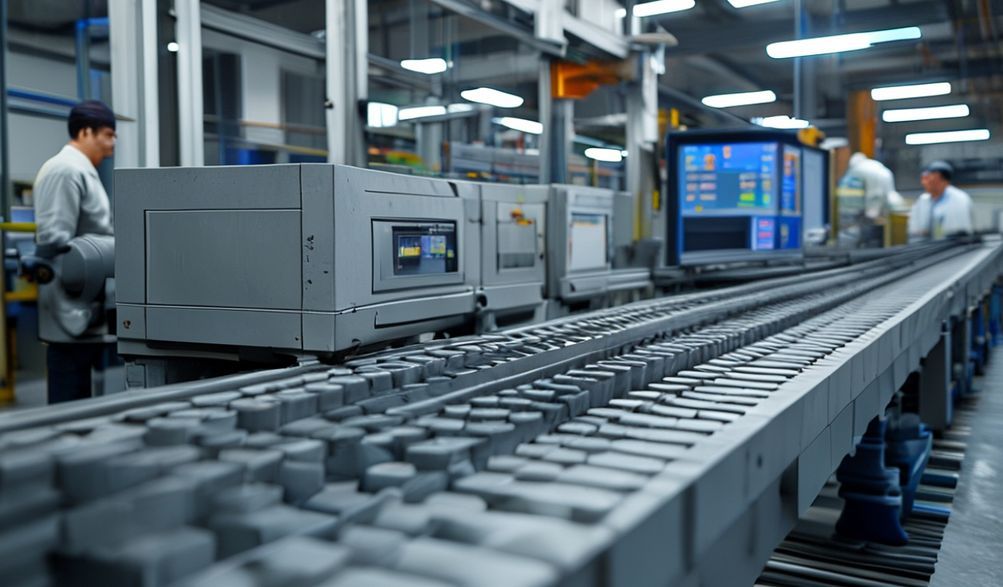
Votre guide ultime pour l'approvisionnement d'une machine de fabrication de blocs de béton en Chine : fournisseurs, sélection et économies
L'industrie mondiale de la construction repose sur l'efficacité et l'abordabilité. Au cœur d'innombrables projets, du logement abordable à l'aménagement paysager complexe, se trouve un élément fondamental : le bloc de béton. Pour répondre à cette demande incessante, les entreprises du monde entier se tournent vers l'épicentre de la fabrication industrielle - la Chine. L'opportunité d'obtenir une machine de fabrication de blocs de béton de haute qualité et économique en provenance de Chine est immense, mais le chemin est souvent entouré de complexité. Naviguer dans une mer de fournisseurs, déchiffrer les spécifications techniques et gérer la logistique internationale peut sembler accablant.
Les points de douleur courants affligent les acheteurs : la paralysie face à trop de choix, les préoccupations persistantes concernant des problèmes de qualité cachés, les barrières de communication frustrantes et la tâche ardue de vérifier la légitimité d’un fournisseur à des milliers de kilomètres. Ce guide est votre solution définitive. Basé sur une analyse sectorielle et une expérience pratique en approvisionnement, cette ressource complète est conçue pour vous outiller avec les connaissances et les outils nécessaires afin d’identifier, d’évaluer et de collaborer en toute confiance avec le bon fournisseur chinois. Notre objectif est de transformer un approvisionnement international complexe en un investissement structuré et réussi.
Pourquoi se procurer une machine de fabrication de blocs en Chine ?
Pour les entrepreneurs et les entreprises établies qui cherchent à pénétrer ou à se développer dans le secteur des matériaux de construction, la Chine n'est pas seulement une option ; c'est souvent le choix le plus stratégique. Les raisons vont bien au-delà de simples économies de coûts, englobant l'échelle, la variété et la prouesse technologique.
Rentabilité & Tarification Compétitive
L'avantage le plus convaincant est d'ordre financier. Les fabricants chinois bénéficient d'économies d'échelle inégalées, de chaînes d'approvisionnement concentrées pour des matières premières comme l'acier et les systèmes hydrauliques, ainsi que de techniques de production avancées et efficaces.
- Investissement en capital réduit : You can acquire a machine with similar or greater capability than Western counterparts for a fraction of the initial cost.
- Retour sur investissement supérieur : This reduced upfront investment dramatically shortens your payback period, improving your overall return on investment and freeing capital for other business needs.
- Tiered Market: Whether you need a basic manual machine or a fully automated plant, China offers competitive pricing at every level, allowing for precise budget alignment.
Manufacturing Scale & Variety
China’s manufacturing ecosystem is vast and specialized. You are not limited to a few standard models.
- Machine Type Spectrum: Find everything from simple, manual egg-laying machines to high-output, fully automatic stationary plants with robotic pallet handling and stackers.
- Diversité des produits Suppliers offer machines specialized for every block type: standard hollow blocks, solid blocks, paving stones, interlocking bricks, curb stones, and more.
- Évolutivité : Solutions exist for every business stage—from small startups and rural projects to large-scale commercial block yards supplying major construction firms.
Evolving Technology & Innovation
The outdated stereotype of Chinese manufacturing being purely about low-cost, low-tech copies is obsolete. Leading manufacturers are at the forefront of innovation.
- Contrôles avancés : Modern machines feature precise PLC (Programmable Logic Controller) systems, user-friendly touchscreen HMIs (Human-Machine Interfaces), and even IoT capabilities for remote monitoring and diagnostics.
- Ingénierie Robuste : Designs increasingly adhere to international standards (like CE), utilizing high-strength steel and precision machining for durability and stability.
- Concentrez-vous sur l'efficacité : Innovations often target energy savings, faster cycle times, and reduced waste, directly impacting your operational profitability.
How to Identify Reputable Chinese Suppliers
With thousands of companies claiming to be the best, separating credible partners from unreliable traders is your first critical task. A systematic approach is essential.
Key Verification Platforms (Beyond Alibaba)
While Alibaba is a common starting point, diversifying your search can yield more direct and specialized contacts.
- Made-in-China.com: Often features more factory-direct suppliers rather than trading companies. The platform tends to attract manufacturers with a strong domestic and international focus.
- Global Sources: Known for its rigorous supplier verification processes, it caters specifically to B2B global trade. Suppliers here are typically more experienced in export procedures.
- Industry-Specific B2B Platforms: Look for niche portals focused on construction machinery or brick-making equipment. These attract specialized, knowledgeable suppliers.
Essential Supplier Credentials to Check
Never take a supplier’s word at face value. Request and verify these documents:
- Permis d'exploitation : A legitimate company will readily provide its official Chinese business registration.
- ISO 9001 Certification: Indicates a certified quality management system in their manufacturing process.
- Machinery Certifications: For electrical safety and market access, CE certification is crucial for exporting to many countries. Other relevant certifications (like ISO for specific components) are a plus.
- Factory Audit Reports: Reports from independent third parties like SGS, Bureau Veritas (BV), or TÜV provide objective evidence of factory conditions, capacity, and quality controls.
- Patents: If a supplier claims unique technology, ask for patent certificates. This demonstrates R&D investment and innovation.
The Power of Historical Evidence
Past performance is the best predictor of future behavior. Dig into a supplier’s track record.
- Genuine Customer Reviews: Look for detailed reviews with photos or videos. Be wary of generic, overly positive feedback.
- Project Case Studies & Videos: Request specific examples of machines installed and operating in countries similar to yours. A real production video is worth a thousand sales photos.
- Export History: Ask which countries they regularly export to. A supplier with a history of shipping to regions with strict standards (Europe, Australia, North America) is a strong positive indicator.
Critical Technical & Commercial Evaluation Factors
Once you’ve shortlisted credible suppliers, a deep dive into the technical and commercial details will determine your long-term satisfaction and profitability.
Plongée approfondie dans les spécifications des machines
Move beyond basic model numbers. Your quotation should include, and you must scrutinize, these specifics:
- Capacité de production : Not just “blocks per hour,” but under what conditions (block size, mix design)? Ask for the standard 8-hour shift output for the specific block type you need.
- Personnalisation des moules : What is the cost and lead time for a custom mold? What standard mold configurations are included? Mold quality is critical for block finish and longevity.
- Exigences en matière d'alimentation électrique : Detail the electrical specs (voltage, phase, total kW) and hydraulic system pressure. Ensure compatibility with your local infrastructure.
- Marques de composants de base : The brands used for key parts are a primary quality indicator. Prefer suppliers using recognized international brands (e.g., Siemens or Mitsubishi PLCs, Schneider electrics, Rexroth or Yuken hydraulics) or reputable top-tier Chinese brands.
Understanding Quotations & Total Cost
A low initial price can be misleading. Understand the full financial picture.
- Incoterms are Key: Know exactly what you are paying for.
- EXW (Ex-Works) : You own and manage everything from the factory gate. Lowest machine price, highest logistical complexity.
- FOB (Franco à bord) : Supplier delivers and loads the machine onto the ship at their port. You handle sea freight and destination logistics. Most common balance of control.
- CIF (Cost, Insurance & Freight): Supplier arranges and pays for sea freight and insurance to your nearest port. Simplifies for you but offers less control over shipping.
- Hidden & Ancillary Costs: Clarify costs for: spare parts starter kits, optional equipment (like cement silos or mixers), on-site installation services, and technical documentation translation.
- Secure Payment Terms: The standard and safest structure is 30% deposit via T/T (Telegraphic Transfer), with 70% balance paid against a copy of the Bill of Lading. This protects both parties.
The Non-Negotiable: After-Sales Service
The quality of after-sales support defines your operational success. Negotiate this upfront.
- Garantie : Typically 12-18 months for major parts. Ensure the warranty covers both parts et labor for repairs during the period.
- Documentation: Demand complete, clear, English-language operation manuals, electrical diagrams, and hydraulic schematics.
- Support Structure: What is provided? Remote guidance via WhatsApp/Video? Will they dispatch an engineer for installation and training, and at what cost?
- Pièces de rechange : What is the guaranteed lead time for critical spare parts? Do they maintain a recommended parts inventory list for you?
Navigating the Procurement Process Safely
With your chosen supplier and agreed terms, a structured process minimizes risk and ensures a smooth transaction.
Effective Communication & Sample Orders
- Clarity is King: Use diagrams, photos, and even simple sketches to communicate technical details. Record video calls where you discuss specifications.
- The Value of a Sample Mold: For custom block designs, ordering a single sample mold before committing to the full machine is a wise, low-cost way to verify design and quality.
- Factory Visit: If feasible, a visit is invaluable. If not, insist on a comprehensive live video tour of the factory floor, not a pre-recorded promo.
Protecting Your Investment: Contract Essentials
A formal, detailed Proforma Invoice (PI) or Sales Contract is mandatory. It must include:
- Technical Specification Annex: A standalone, exhaustive document listing every component, material, brand, and performance metric. This is your quality benchmark.
- Clear Delivery Timeline: State production time and shipping schedule. Include penalty clauses for significant delays not caused by you.
- Quality Inspection Protocol: Stipulate your right to a Third-Party Pre-Shipment Inspection (PSI). An inspector verifies the machine’s build, function, and packing before shipment.
Logistics, Shipping, and Customs Clearance
- From Factory to Port: The supplier handles this under FOB or CIF terms.
- Freight Forwarder: Hire a reliable freight forwarder in your country or use one with a China office. They are your logistics experts, handling booking, documentation, and customs clearance at your destination.
- Essential Documents: Ensure you receive these from the supplier:
- Commercial Invoice
- Packing List
- Bill of Lading (the title document for the goods)
- Certificate of Origin
- Equipment Manuals and CE Certificates
Foire aux questions (FAQ)
Q1: What is the typical price range for a concrete block making machine from China?
A : Prices vary dramatically based on automation and output. Small manual machines start around $5,000 – $15,000. Semi-automatic models range from $20,000 – $60,000. Large, fully automatic production lines can cost $80,000 to over $200,000. Always request a detailed quote based on your specific requirements.
Q2: How can I ensure the machine quality without a factory visit?
A : You can mitigate risk effectively by: 1) Demanding a live video call showing the factory and a similar machine running, 2) Requesting a performance video of your actual machine model, 3) Insisting on a third-party Pre-Shipment Inspection, and 4) Verifying the brands of core components (PLC, hydraulics) in your contract.
Q3: What are the most reliable payment methods when dealing with a new supplier?
A : T/T (Bank Transfer) with milestones is standard and offers a good balance. For larger orders, a Letter of Credit (L/C) provides more security for both parties but adds complexity and cost. Avoid making 100% upfront payments. Using secure payment methods on B2B platforms can also offer protection.
Q4: Do suppliers provide training and installation support?
A : Reputable suppliers do. This must be negotiated. Options include: detailed video/PDF manuals, live remote training via video call, or sending a technician to your site. On-site support typically involves additional costs for the engineer’s flight, accommodation, and daily fee, so clarify this in the quotation.
Q5: How long does it take from order to delivery?
A : A general timeline is 15 to 45 days for production (depending on machine complexity) plus 30 to 45 days for sea shipping. Door-to-door delivery can take 2 to 4 months total. Always confirm specific dates with your supplier based on your order and chosen shipping terms.
Conclusion
Sourcing a concrete block making machine from China is a significant but highly rewarding venture. This journey involves understanding the compelling Pourquoi, meticulously vetting the qui, conducting a thorough technical evaluation of the quoi, and safely managing the Comment of procurement and logistics. Success hinges on diligent research, crystal-clear communication, and a framework for verifying expertise and credibility—exactly what this guide provides.
By applying this structured approach, you move from being a hopeful international buyer to an informed, confident partner. You are equipped to make a decision that balances cost, quality, and long-term support, laying a solid foundation for your business’s growth and profitability.
Ready to take the next step with confidence? Download our free, comprehensive “Supplier Vetting Checklist & Technical Question Template” to systematically evaluate your shortlisted suppliers and ensure no critical detail is overlooked.
<