
Jagorar Cikakke Kan Injinan Yin Tubalin Kankare: Nau'uka, Fa'idodi & Yadda Ake Zaɓe Su
Gabatarwa
Masana'antar ginin duniya na ci gaba da neman kayan da ba su da tsada kuma masu dorewa. A cikin wannan buƙatar, tubalin ramuka sun zama babbar mafita, suna ba da ingantaccen haɗin aiki, tattalin arziki, da alhakin muhalli. Amma a bayan kowane ingantaccen tubalin ramuka akwai wata fasaha mai mahimmanci: injin yin tubalin ramuka.
Wannan injin ne injin kera bulo na zamani, yana canza albarkatun kamar siminti, tokar wuta, da yashi zuwa bulo na gini masu inganci da ƙarfi. Matsayinsa na canzawa ne, yana ba wa ƴan kasuwa damar kafa kasuwanci da kuma kamfanonin gine-gine damar sarrafa hanyoyin samar da kayansu, ingancinsu, da farashinsu.
Wannan jagora ta zama cikakkiyar tushen ku na ƙwararru. Tana haɗa zurfin ilimin masana'antu, cikakkun bayanai na fasaha, da shawarwarin siyayya masu amfani, an tsara ta don masu kasuwanci, manajoji na gini, da 'yan kasuwa na masana'antu. A ƙarshe, za ku fahimci nau'ikan injuna daban-daban, manyan fa'idodinsu, cikakken jerin abubuwan zaɓi, mahimman shawarwari na aiki, da amsoshin tambayoyin da suka fi muhimmanci. Manufarmu ita ce ba ku damar yin cikakkiyar yanke shawara na saka hannun jari don takamaiman bukatun ku.
Menene Injin Yin Tubalin Rami? Aiki da Ka'ida na Tsakiya
A tsakinsa, na'urar yin bulo mai ramuka wata na'ura ce da ke sarrafa samar da bulo na siminti mai ramuka ta hanyar matsawa da girgiza. Fahimtar aikinta ya fara ne da samfurin da take ƙirƙirawa.
Ma'anar Samfur: Tubalin Rami da Tubalin Ƙwaƙƙwalwa
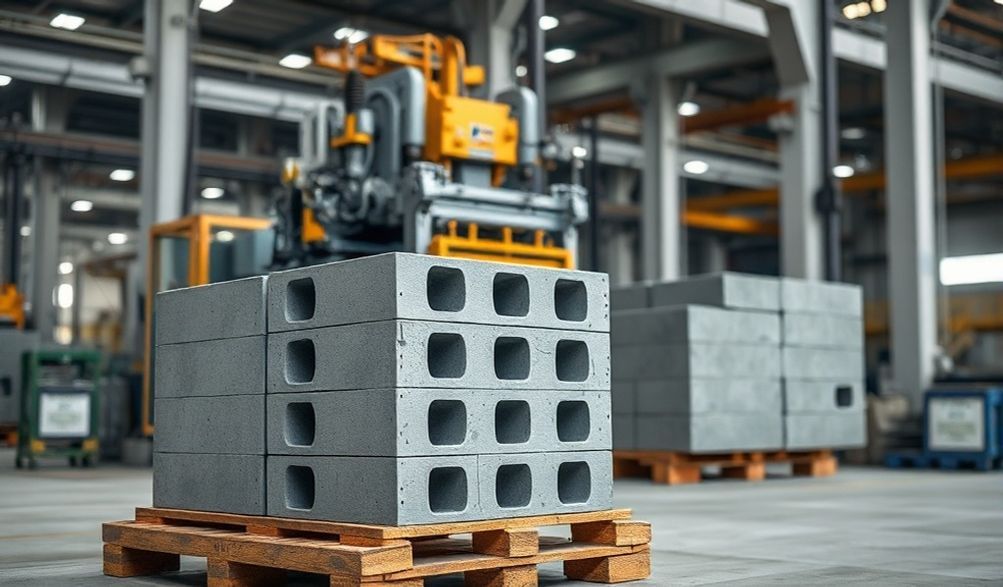
Tubalin da ba su cika, wanda kuma ake kira raka’o’in masonry na siminti (CMUs) ko tubalan da ba su cika, ana bayyana su ta hanyar ƙirar su: sun ƙunshi ramuka ko sarari (da ake kira “cibiyoyi”) ɗaya ko fiye.
- Tsarin Tsari:Waɗannan ramuka yawanci suna ɗaukar kashi 25% zuwa 50% na jimillar yankin giciye na bulo. Suna ratsa cikin bulo daga sama zuwa ƙasa.
- Sakamakon Fa'idodi:
- Mai Sauƙi:Yana da sauƙi sosai idan aka kwatanta da tubalin ƙwaƙƙwaran, wanda ke sa ya zama mai sauƙin jigilar su da kuma sarrafa su a wurin aiki, tare da rage tsadar sufuri da nauyin aiki, da kuma rage nauyin ginin.
- Rufi:Tasoshin iska da ke cikin ramuka suna ba da kyakkyawar rufi na zafi da sauti, wanda ke haifar da gine-gine masu inganci a makamashi da kuma ƙarancin amo.
- Amfani:Cores ɗin suna ba da damar sauƙin shigar da bututun wutar lantarki, bututun famfo, da sandunan ƙarfafawa (rebar), waɗanda za a iya girtawa don ƙarin ƙarfi.
Yadda Injin ke Aiki: Tsarin Asali
Ko da yake ƙira sun bambanta, tsarin samarwa na asali yana daidaitawa a cikin yawancin injina:
- Ciyarwa:Kayan aikin da aka riga aka haɗe (cakuda siminti, yashi, tokar ƙura, ƙurar dutse, da ruwa) ana ciyar da su cikin maƙura na injin.
- Haɗawa:Matsakaici na ciki yana tabbatar da gauraye mai daidaito, mai daidaito, wanda ke da mahimmanci ga ƙarfin bulo iri ɗaya.
- Ƙarfafawa & Girgiza:Ana jefa simintin cikin wani madaidaici (siffar bulo da ake so). Sannan injin ya yi amfani da babban matsi...matsin lamba na ruwada kuma mita-mitagirgizaWannan aikin biyu yana kawar da iskar iska kuma yana matsawa kayan da yawa, yana ba da ingancin tsarin bulo.
- Fitowa & Warkewa:Bulan bulo da aka yi sabo, "kore", ana fitar da shi daga madaidaicin zuwa kan pallet ko na'urar jigilar kaya. Daga nan sai a koma da shi zuwa wurin da ake jikansa, inda zai sami ƙarfi cikin kwanaki ta hanyar sarrafa danshi da zafin jiki.
Aikace-aikacen Farko a Ginin Gine-gine
Brick ɗin da ake samarwa suna da amfani da yawa kuma ana amfani da su a:
* Gine-ginen Zama:Don ga bangon da ke ɗaukar nauyi da waɗanda ba sa ɗaukar nauyi.
* Gidajen Kasuwanci:Ofisoshi, ɗakunan ajiya, da wuraren kasuwanci.
* Bango na Raba Dakuna:Ƙirƙirar rarrabuwa a cikin tsari.
* Landscaping & Boundary Walls: For garden walls, fences, and other outdoor applications.
Types of Hollow Brick Making Machines: A Detailed Breakdown
Choosing the right type is your first major decision. Machines are categorized by operation, capacity, and output.
By Operation: Manual, Semi-Automatic, and Fully Automatic
-
Na'urorin Hannu: Operated primarily by hand levers.
- Zuba Jari:Farashin farko mai ƙarancin gaske.
- Aiki High labor intensity, slow, and output dependent on operator skill.
- Sakamako: Low (100-500 bricks per day).
- Ya Dace Da: Micro-enterprises, very small-scale projects, or regions with extremely low labor costs.
-
Matsin Injin Mai Ƙaramin Gudanarwa: Combine mechanical operation (like hydraulic pressure) with manual handling of bricks and pallets.
- Zuba Jari: Moderate.
- Aiki Requires a small team (2-4 people) for operation and handling.
- Sakamako: Medium (800-2500 bricks per 8-hour shift).
- Ya Dace Da: Small to medium businesses (SMBs) and startups with a steady demand.
-
Matsarori Masu Sarrafa Kansu Gabaɗaya: Computer-controlled systems that automate feeding, mixing, molding, stacking, and pallet return.
- Zuba Jari: High capital expenditure.
- Aiki Minimal; often just 1-2 operators for monitoring.
- Sakamako: High (3000-15,000+ bricks per shift).
- Ya Dace Da: Large-scale manufacturers, construction companies supplying major projects, and high-volume businesses.
By Production Capacity: Small, Medium, and Large Scale Plants
- Small Scale: Outputs up to 2,000 bricks per day. Often semi-automatic, suitable for local market supply.
- Medium Scale: Outputs between 2,000 and 8,000 bricks per day. Can be robust semi-automatic or entry-level automatic lines.
- Large Scale Plants: Outputs exceeding 8,000 bricks per day. Always fully automatic production lines with conveyor systems and sometimes robotic palletizers.
By Brick Type and Size
Machines are configured with interchangeable molds to produce various products:
* Tubalan Hollow Block na Al'ada: 4-inch, 6-inch, 8-inch, and 12-inch thicknesses.
* Tsari Mai Ƙarfi: For applications requiring maximum load-bearing capacity.
* Tubalin Kafa da Tubalin Haɗin Kai: For driveways and walkways.
* Siffofi na Musamman: Curved blocks, chimney blocks, or lintels.
Specialized Machines: Mobile vs. Stationary Plants
- Tsire-tsire Masu Tsayawa: The standard setup, installed in a fixed factory location.
- Na'urorin Yin Tubalin na Wayar Hannu: Mounted on a trailer for easy transport. The key advantage is on-site production, eliminating transport costs for bricks and allowing immediate use. Ideal for large, remote construction projects like dams, highways, or large housing developments.
Key Benefits of Using a Hollow Brick Making Machine
Investing in this technology unlocks a cascade of advantages, from the balance sheet to the building site.
Economic Advantages
- Lower Unit Cost: Producing in-house drastically reduces the cost per brick compared to purchasing from third-party suppliers.
- High-Profit Margins: Creates a revenue stream by selling surplus bricks to the local market.
- Reduced Dependency: Shields your projects from market price fluctuations and supply chain delays of traditional bricks.
Construction & Performance Benefits
- Lightweight Nature: Eases construction speed and reduces dead load on the building foundation.
- Insulation Mai Girma: Thermal properties lower heating and cooling costs. Acoustic insulation enhances comfort in residential and commercial spaces.
- Proven Structural Strength: When produced to proper standards, hollow blocks offer excellent compressive strength for multi-story construction.
Environmental & Sustainability Benefits
- Amfani da Sharar Gida: Can incorporate industrial by-products like fly ash (from coal plants) and slag, diverting them from landfills.
- Ingantattun Amfani da Albarkatu The hollow design uses less raw material per unit volume than a solid block.
- Energy-Efficient End-Product: Buildings made with hollow bricks have a lower lifetime carbon footprint due to reduced energy consumption.
Business and Operational Benefits
- High Production Speed: Machines produce bricks far faster than manual or traditional methods.
- Matsayin Inganci Mai Dorewa: Automated processes ensure every brick has identical dimensions, density, and strength, leading to better construction quality.
- Haɓaka Kasuwancin: You can start small and add capacity by upgrading machines or adding shifts as demand grows.
How to Choose the Right Machine: A Buyer’s Checklist
This decision should be driven by careful analysis, not impulse. Use this checklist to guide your evaluation.
Assess Your Business Needs & Goals
Answer these questions first:
* Target Market: Are you supplying a single project, local retailers, or large contractors?
* Daily Production Volume: What is your current and projected 3-year demand? Be realistic.
* Kasafin kuɗi: What is your total investment cap, including machine, installation, and working capital?
* Available Space & Power: Do you have a suitable factory space with a 3-phase electrical connection?
Critical Technical Specifications to Scrutinize
- Compaction Force (Tonnage): Measured in tons, this determines brick density and strength. For standard blocks, 100-150 tons is common; for pavers or high-strength blocks, 200+ tons may be needed.
- Lokacin Zagayowar: The time to produce one brick or one mold of bricks. Faster cycles mean higher output.
- Bukatar Wutar Lantarki: Verify if it runs on standard 3-phase electricity or requires a diesel generator.
- Yawan Amfani da Molds: Does the supplier offer a range of mold options, and how easy/expensive is it to change them?
Quality and Durability Factors
- Ginin Firam The main frame should be made from heavy-duty steel plates and profiles, not lightweight sections.
- Component Brands: Reputable brands for hydraulic pumps, valves, PLCs (for automatics), and vibrator motors indicate reliability.
- Kariya daga Tsatsa: Look for sandblasting and high-quality paint coating to protect against rust in humid production environments.
Manufacturer & After-Sales Support Evaluation
This is often more important than a slight price difference.
* Warranty: A minimum of 12 months on parts and workmanship is standard for reputable makers.
* Samun Kayan Gyara: Ensure common wear parts are readily available locally or can be shipped quickly.
* Tallafin Fasaha: Does the company provide installation supervision, operator training, and troubleshooting support?
* Company Reputation: Research their history, ask for client references, and if possible, visit an existing plant using their machine.
Cost Analysis: Investment vs. Return on Investment (ROI)
Calculate a simple payback period:
1. Calculate your total investment (Machine + Installation + Initial Raw Material).
2. Estimate your monthly profit: (Selling Price per Brick – Production Cost per Brick) x Monthly Production Volume.
3. Payback Period (Months) = Total Investment / Monthly Profit.
A well-run operation with a suitable machine can often see a payback period of 12-24 months.
Operating and Maintaining Your Machine for Longevity
Your machine is a long-term asset. Proper operation and maintenance are non-negotiable for profitability and longevity.
Essential Raw Material Preparation
The quality of your bricks is directly tied to your raw material mix.
* Mix Ratios: A common starting mix is 1 part cement, 3 parts sand, and 3 parts stone dust/aggregate (1:3:3). Fly ash can replace 15-25% of the cement. Always conduct trial batches.
* Danshin Ruwa: The mix must have the right consistency—typically 8-10% water. Too dry causes weak bricks; too wet causes deformation.
* Ingancin Kaya: Use clean, well-graded sand and aggregates free of clay, silt, or organic matter.
Daily Operation Best Practices
- Startup: Check oil levels, ensure the area is clear, and run the machine empty for a few minutes to warm up hydraulics.
- During Operation: Monitor brick formation, listen for unusual noises, and check for consistent vibration.
- Shutdown: Clean the hopper, mold, and platform thoroughly. Follow the manufacturer’s specific shutdown procedure.
Routine Maintenance Schedule
- Kullum: Clean the machine, check for loose bolts, and inspect hydraulic hoses for leaks.
- Mako-mako: Lubricate all moving parts (pivots, guide rods) as per the manual. Check hydraulic oil level and condition.
- Kowane wata: Tighten all bolts and nuts on the frame and vibration table. Inspect mold liners for wear.
Troubleshooting Common Issues
- Poor Brick Strength: Likely causes are incorrect mix ratio, low cement content, insufficient compaction force, or improper curing.
- Surface Cracks: Usually caused by too much water in the mix, excessive vibration, or rapid drying during curing.
- Bricks Sticking in Mold: Often due to a worn or damaged mold liner, insufficient release agent, or a misaligned ejection system.
Frequently Asked Questions (FAQ) About Hollow Brick Making Machines
What is the average cost range for a hollow brick machine?
Prices vary dramatically based on automation and capacity. Manual machines can start from $2,000 – $8,000. Semi-automatic models typically range from $15,000 – $50,000. Fully automatic production lines begin around $60,000 and can exceed $250,000 for high-capacity plants. Always remember: specifications dictate the final price.
What raw materials can I use?
The most common materials are Portland cement, sand (river or crushed), stone dust (aggregate), and water. A key advantage is the ability to use industrial waste like Tozar ƙura (to replace cement) and slag. Some setups also allow for the use of recycled concrete aggregate.
How much space and what kind of power supply is needed?
You need space for three areas: the machine itself, raw material storage, and a curing yard. A small semi-automatic setup may require 1,500 – 3,000 sq. ft. Most industrial machines require a Watsa lantarki mai matakai uku (380V/415V). Mobile or remote options often use diesel power packs.
Is special training required to operate the machine?
While modern machines are designed for user-friendliness, comprehensive training from the supplier is crucial. Proper training ensures operator safety, maximizes production efficiency, and teaches essential daily maintenance to prevent costly breakdowns.
What is the typical lifespan of a well-maintained machine?
A high-quality hollow brick making machine that receives diligent, scheduled maintenance can have a productive lifespan of 10 to 15 years or more. The key factor is preventative care—neglect can reduce this lifespan by half.
Ƙarshe
Selecting the right hollow brick making machine is a strategic decision that impacts your project’s cost, timeline, and quality, or your business’s profitability and growth trajectory. It requires balancing your immediate production needs with long-term goals, prioritizing machine quality and manufacturer support over the lowest initial price tag.
Our final expert recommendation is to conduct thorough due diligence. Request material tests from potential suppliers using your local raw materials to see the final product quality. Always calculate the Farashin Mallaka Gabaɗaya, factoring in maintenance and potential downtime, not just the purchase price.
We encourage you to consult with multiple reputable manufacturers, ask for client references you can contact directly, and, if feasible, visit a working plant to see the machine in operation. This firsthand experience is invaluable.
By making an informed investment, you are not just purchasing a machine; you are acquiring the key technology to build a more profitable, efficient, and sustainable future in the ever-evolving construction industry.
<