
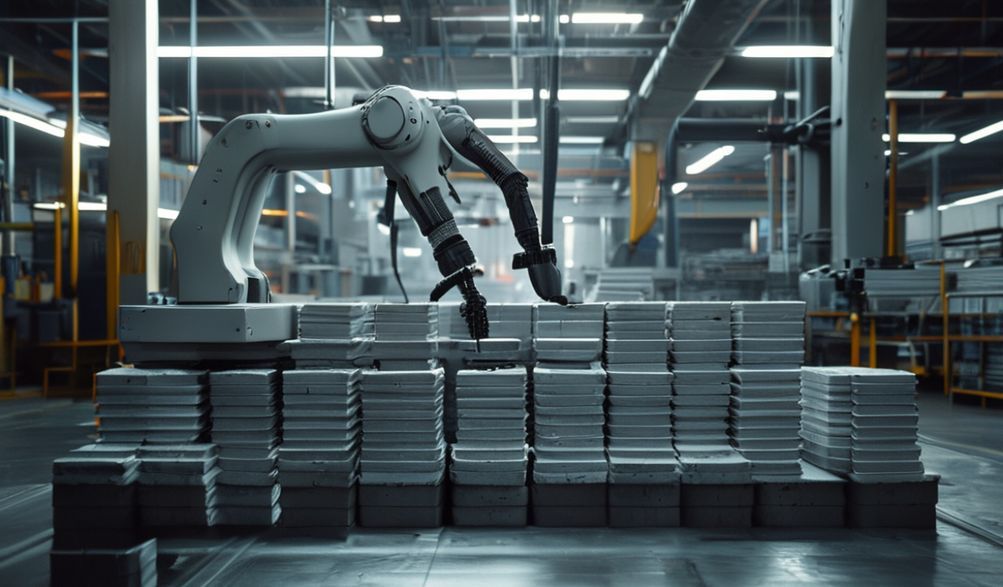
Your Ultimate Guide to China Block Making Machines Factories: Inside FUDA Block Making Factory
The global construction boom shows no signs of slowing. From affordable housing projects to sprawling urban infrastructure, the demand for reliable, high-quality building materials is insatiable. At the heart of this production are block making machines, the workhorses that transform raw concrete into the very bricks and pavers shaping our world. For decades, savvy business owners and construction firms have turned their gaze eastward, to the undisputed global manufacturing hub: China.
But navigating the vast landscape of Chinese manufacturers can be daunting. How do you separate market leaders from mere trading companies? This guide, built on industry analysis, technical audits, and procurement experience, cuts through the noise. We’ll provide a comprehensive framework for evaluating suppliers, then zoom in for a detailed case study of a representative and reputable manufacturer: फूडा ब्लॉक निर्माण कारखाना. By the end, you’ll have actionable insights to navigate the procurement process with confidence, ensuring your investment delivers on promises of quality, reliability, and value.
चीन ब्लॉक निर्माण मशीनरी का वैश्विक केंद्र क्यों है
China’s dominance in block making machinery isn’t accidental. It’s the result of decades of strategic development, creating an ecosystem unmatched in scale and efficiency.
Scale and Supply Chain Dominance
- विनिर्माण क्लस्टर: The industry is concentrated in powerful industrial clusters, most notably in provinces like फ़ुजियान (where FUDA is based) and Shandong. This clustering creates intense competition and specialization, driving innovation and cost-efficiency.
- Mature Ecosystem: Within these clusters, you find not just assembly plants, but a complete supply chain. From high-grade steel foundries and precision hydraulic component manufacturers to PLC (Programmable Logic Controller) suppliers, everything is locally available. This reduces lead times, minimizes logistics costs, and allows for rapid prototyping and customization.
तकनीकी प्रगति और नवाचार
Gone are the days of associating Chinese manufacturing solely with low-cost, low-tech copies. The industry has evolved dramatically.
* Automation Leap: Modern Chinese factories produce everything from simple manual egg-laying machines to fully automatic, computer-controlled production lines with robotic palletizers. The focus is on smart manufacturing—machines with IoT capabilities for remote monitoring and predictive maintenance.
* आर एंड डी निवेश: Leading manufacturers reinvest significant revenue into research and development. They’re not just building machines; they’re engineering solutions for higher output, better block density, and lower energy consumption per block.
Competitive Pricing and Value
This is the most cited advantage, but it’s often misunderstood.
* Cost-Structure Advantage: Economies of scale, efficient supply chains, and skilled labor at competitive wages create a fundamental price advantage.
* Value for Money: The real story isn’t just lower price, but superior price-to-performance ratio. A semi-automatic machine from a reputable Chinese factory like FUDA can often outperform a similarly priced machine from other regions, while a high-end automatic line may offer 80-90% of the capability of a European counterpart at 50-60% of the cost.
Critical Factors When Evaluating Chinese Block Machine Factories
Before focusing on any single supplier, you need a robust evaluation framework. Here are the non-negotiable factors to scrutinize.
Manufacturing Capabilities and Certifications
A factory’s physical and procedural backbone tells you everything.
* Look for Certifications: आईएसओ 9001 certification for quality management systems is a strong baseline indicator of a structured operation.
* In-House vs. Assembly: Does the factory forge, weld, and machine key components (like frames and mold boxes) in-house? This grants superior quality control versus a mere assembly shop buying generic parts.
* QC Processes: Ask about their checkpoints. Quality should be monitored at every stage: raw material inspection, machining precision, hydraulic pressure testing, and final run-off testing before dispatch.
Machine Portfolio and Technical Specifications
The product range reflects technical depth and market understanding.
* मशीन प्रकार: A strong factory will offer a spectrum:
* By Product: Concrete hollow block machines, paver/interlocking block machines, curbstone machines, and multi-purpose machines.
* ऑपरेशन द्वारा: Mobile (egg-laying), stationary, semi-automatic, and fully automatic lines.
* Key Specs to Compare: Don’t just look at price. Compare:
* आउटपुट क्षमता: Measured in blocks per 8-hour shift (e.g., 15,000-30,000 for standard blocks).
* स्वचालन स्तर: From manual feed to fully automated batching, mixing, and stacking.
* मोल्ड की बहुमुखी प्रतिभा: How quickly can molds be changed? Does the factory offer custom mold design?
R&D, Customization, and After-Sales Support
This is where reputable factories truly separate themselves.
* Engineering Team: A dedicated R&D department is essential for customizing machines to your local raw materials (e.g., different aggregate sizes, fly ash content) or unique block designs.
* After-Sales is Non-Negotiable: The machine’s value is realized over its 10+ year lifespan. Confirm:
* तकनीकी सहायता Detailed installation manuals, video guides, and real-time online troubleshooting (via WhatsApp/WeChat).
* Training: Provision for operator and maintenance training, either onsite or via video conference.
* Warranty & Parts: A clear warranty (typically 12-24 months on core components) and a lifelong supply of spare parts with accessible pricing lists.
Deep Dive: FUDA Block Making Factory – A Case Study in Reliability
Let’s apply our evaluation framework to a concrete example. Based in the industrial heartland of Fujian Province, FUDA Block Making Factory serves as a compelling case study of a modern, export-focused Chinese manufacturer.
Company Profile and Industry Standing
Established over two decades ago, FUDA has grown from a local workshop to an international exporter. Their mission typically centers on providing “intelligent and eco-friendly block making solutions.” Their reputation is built on consistent performance in export markets across Africa, Southeast Asia, the Middle East, and South America. While specific awards should be verified directly, manufacturers of this caliber often hold “Gold Supplier” status on B2B platforms and have a portfolio of successful project references—always ask for them.
FUDA’s Manufacturing and Quality Assurance Process
A tour of a factory like FUDA’s reveals a commitment to process.
* Structured Production Flow: The workshop is likely segmented into zones: steel cutting/welding, precision machining, hydraulic assembly, electrical cabinet wiring, and a final testing area.
* Quality at Each Stage: They employ a multi-stage QC protocol. Incoming materials are inspected; critical welds are tested; hydraulic systems are pressure-tested for leaks; and every machine undergoes a 48-72 hour no-load and load test with concrete before crating.
* घटक गुणवत्ता: Reputable manufacturers don’t cut corners on core components. FUDA, for instance, is known to use internationally recognized brands for critical parts—think Siemens or Mitsubishi PLCs, Schneider electrics, and Rexroth hydraulics—alongside high-chromium alloy steel for molds to ensure longevity.
Analyzing FUDA’s Block Making Machine Range
A typical portfolio from a factory like FUDA includes several key lines. Below is a simplified comparison:
| Model Type | Key Features | Ideal Output (8hr shift) | Best For |
| :— | :— | :— | :— |
| Mobile Block Machine | “Egg-layer” design, no pallet needed, easy to move. | 5,000 – 10,000 blocks | Small businesses, startups, remote projects. |
| Semi-Automatic Stationary | Fixed production line, manual feed/stacking, high pressure. | 15,000 – 25,000 blocks | Medium-scale block yards, steady demand. |
| Fully Automatic Line | PLC control, auto batching, mixing, stacking, robotic palletizing. | 30,000 – 100,000+ blocks | Large-scale commercial production, 24/7 operation. |
What Sets FUDA Apart? Unique Value Propositions
Beyond the specs, several factors contribute to a factory’s standout reputation.
* Energy-Efficient Design: Modern machines focus on reducing power consumption per block through optimized hydraulic cycles and efficient vibration systems.
* User-Centric PLC Systems: The control panels are often multi-language (English, Spanish, French, etc.) with touchscreen interfaces, fault diagnosis displays, and production data tracking.
* Durability-First Engineering: Emphasis on robust structural design with reinforced frames to handle constant vibration, ensuring machine alignment and stability for years.
* Comprehensive Support Package: They typically provide not just a machine, but a solution package: foundation drawings, electrical schematics, a detailed parts catalog, and a direct line to their after-sales engineers.
Navigating the Procurement Process: From Inquiry to Delivery
Understanding the journey from initial contact to a running machine on your floor is crucial for risk management.
Effective Communication and Quotation Analysis
- The Detailed Inquiry: Your first contact should be specific. Include desired block type/size, daily output target, local voltage/power, and details of your raw materials (cement type, aggregate size).
- Decoding the Proforma Invoice (PI): The PI is your key document. Scrutinize it for:
- Machine Price: Is it FOB (Free On Board) or CIF (Cost, Insurance, Freight)?
- Scope of Supply: Exactly what is included? (e.g., standard molds, spare parts kit, tools?)
- Payment Terms: Standard terms are often 30% deposit, 70% before shipment.
- छिपी हुई लागत Clarify costs for optional extras, special packaging, or extended warranties.
The Importance of Factory Audits and Sample Requests
- Virtual Audits: If you can’t visit, request a live video tour via Zoom or WhatsApp. Ask to see the workshop, QC area, and testing process. This builds immense trust.
- Sample Orders: For large projects, consider ordering a single mold or a small test batch of blocks. This verifies block quality and machine compatibility with your materials before committing to a full line.
Logistics, Installation, and Commissioning
- Incoterms Explained:
- FOB (Port in China): You are responsible for and control the main shipping and insurance. Offers more control and potential cost savings.
- CIF (Your Nearest Port): The supplier arranges and pays for shipping/insurance to your port. Simpler but less control over freight costs.
- स्थापना और कमीशनिंग: Discuss this upfront. Options include:
- Remote Guidance: The factory provides detailed documentation and video calls to guide your local team.
- Onsite Technician: For complex automatic lines, you can contract a factory engineer to travel for installation and training—a highly recommended investment for smooth startup.
अक्सर पूछे जाने वाले प्रश्न (एफएक्यू)
Q1: Is FUDA Block Making Factory a verified and trustworthy manufacturer?
ए: While this article uses FUDA as a representative case study, due diligence is always your responsibility. Verification methods include checking their business license, Alibaba Gold Supplier status (if applicable), requesting third-party audit reports (like SGS), and critically analyzing reviews on B2B platforms. Always ask for and contact 2-3 past international clients for references.
Q2: What is the typical price range for a block making machine from factories like FUDA?
ए: Prices vary dramatically. A small mobile machine can start around $15,000, a robust semi-automatic line may range from $45,000 to $80,000, and a large-scale fully automatic production line can exceed $150,000. The only way to get an accurate price is to provide detailed specifications and request a formal quotation.
Q3: Can these factories customize machines for specific block designs or raw materials?
ए: Absolutely. Reputable factories like FUDA thrive on customization. The process involves you providing technical drawings of your desired block or even sending physical samples. Their R&D team will then design the mold and potentially adjust machine parameters (vibration frequency, pressure) to suit your specific raw material mix.
Q4: What after-sales support can I expect when importing from China?
ए: Standard support includes: 1) Detailed installation & operation manuals (often digital), 2) Video guidance library, 3) Online troubleshooting via communication apps, 4) A parts warranty (commonly 12-24 months for core components), and 5) Access to a spare parts catalog for future orders. Clarify the response time for technical queries.
Q5: How do I handle machine maintenance and source spare parts in the long term?
ए: Upon purchase, request a complete maintenance manual and a critical spare parts list. It’s wise to purchase an initial spare parts kit (seals, filters, common wear items) with the machine. Establish a good relationship with your factory contact for future parts orders, which are typically shipped via air freight or sea courier. For critical components, consider keeping a small inventory on hand.
निष्कर्ष
Sourcing block making machinery from China presents a significant opportunity for value and capability, but it demands a strategic, informed approach. We’ve explored the macro reasons for China’s dominance and provided a detailed framework for evaluating any supplier—scrutinizing their manufacturing depth, technical portfolio, and support structures. Using फूडा ब्लॉक निर्माण कारखाना as a lens, we’ve shown what a well-established, process-driven manufacturer looks like.
The key to success lies in thorough due diligence. Move beyond glossy brochures and generic websites. Prepare detailed technical inquiries, insist on virtual or physical factory audits, and communicate relentlessly. By doing so, you transform the complex process of sourcing from china block making machines factories into a confident investment in the future growth and productivity of your business.
<