
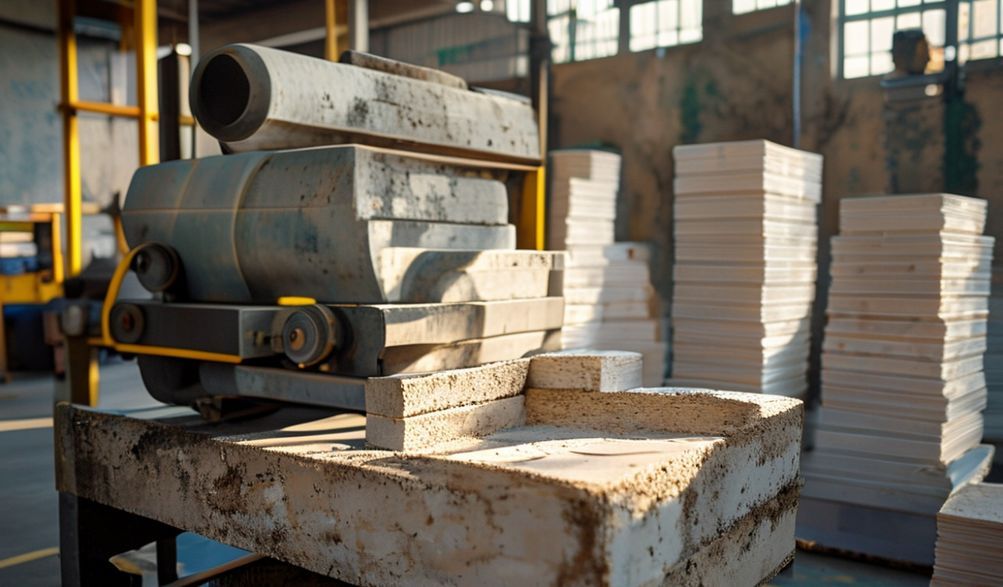
Gid Anplas Sou Achte yon Machin Pou Fè Blòk nan Bangladèch (2026)
Entwodiksyon
Syèl Bangladèch la se yon temwayaj de anbisyon. Avèk sektè konstriksyon an k ap grandi nan yon vitès remakab—ki kontribye plis pase8% nan PIB nasyonal lademann pou materyo konstriksyon solid ak abòdab pa janm te pi wo a. Soti nan gwo pwojè nan Dhaka ak Chattogram rive nan bezwen lojman k ap grandi nan zòn perirben, nasyon an ap bati avni li, yon estrikti apre lòt.
Sepandan, pou mason, kontraktè, ak antreprenè kap vle grandi, ti boum sa a prezante yon defi enpòtan. Konte sou blòk beton achte deyò souvan lakòz kalite iregilye, depans enprevizib, ak reta pwojè ki fristre. Solisyon tradisyonèl la? Travay men, ki vin pi chè chak jou epi ki gen difikilte pou satisfè echèl ak presizyon nesesè pou konstriksyon modèn.
Antre nan machin pou fè blòk: yon zouti jeni ki fò ki transfòme materyo brit an blòk bilding presi ak fò. Se solisyon definitif pou kontwole chèn apwovizyonman ou, asire kalite, epi debloke yon gwo potansyèl ekonomi. Gid sa a fèt apati yon analiz pwofon sou kondisyon espesifik mache Bangladèch, egzijans teknik, ak panorama founisè yo. Nou te pran an kont reyalite rezo elektrik lokal yo, disponiblite materyo brit, ak enpòtans sipò aprè laprant ki aksesib.
Gid konplè sa a ap sèvi kòm kat wout ou. Nou pral eksplore kalite machin ki disponib yo, dekonpoze faktè kle yo pou acha w la, mete aksan sou founisè konfyans yo, epi bay enfòmasyon sou operasyon yo pou asire siksè w nan sektè fabrikasyon blòk vibran Bangladèch la.
Poukisa envesti nan yon machin pou fè blòk nan Bangladèch?
The Construction Boom & Market Demand
Bangladesh is in the midst of an unprecedented infrastructure revolution. Government initiatives like housing schemes, the development of economic zones, and massive road and bridge projects are creating sustained demand. Concurrently, rapid urbanization is driving commercial and residential construction.
A key trend within this boom is the decisive shift from traditional burnt clay bricks to concrete blocks (hollow, solid, and paving). Concrete blocks offer superior strength, better thermal insulation, and are more environmentally sustainable. This shift isn’t just a preference; it’s becoming a standard, opening a vast and growing market for locally produced, quality-assured blocks.
Economic & Operational Advantages
Investing in a block making machine is not just an equipment purchase; it’s a strategic business decision.
- Ekonomi Siyifikatif nan Depans: Eliminate the middleman. Producing your own blocks drastically reduces your long-term material costs for construction projects. For entrepreneurs, it cuts out procurement uncertainty and price volatility.
- Kontwòl Kalite San Konpwomi: You dictate the mix design, vibration, and curing process. This results in blocks with consistent dimensions, high compressive strength (e.g., 3000+ PSI), and excellent durability, ensuring the integrity of your builds.
- A Tangible Business Opportunity: Your machine can become a profit center. Beyond fulfilling your own needs, you can supply blocks to other contractors, developers, and retailers, creating a steady revenue stream.
- Unmatched Speed & Efficiency: A single semi-automatic machine can produce hundreds of blocks in an hour—output that would require dozens of laborers manually. This accelerates project timelines and allows you to take on more work.
Types of Block Making Machines Available in Bangladesh
Choosing the right type of machine is the first critical step. Your choice should align with your scale of operation, budget, and local infrastructure.
Machin pou Fè Blòk Manyèl
These are simple, lever-operated machines where all processes—mixing, filling, compacting, and stripping—are done by hand.
- Ideal Pou: Individuals or very small-scale startups, community projects, or locations with absolutely no electricity.
- Avantaj:
- Lowest upfront investment cost.
- No power requirement.
- Simple to understand and operate.
- Desavantaj:
- Trè entansif nan travay ak dousman.
- Pwodiksyon ki pi ba (tipikman 200 a 500 blòk pa jou).
- Inconsistency in block density and finish is common.
Machin Semi-Otomatik pou Fè Blòk
This category represents the sweet spot for most small and medium enterprises (SMEs) in Bangladesh. They use an electric motor to power a vibration system for compaction, while material feeding and block removal are manual or semi-mechanized.
- Ideal Pou: Growing construction firms, dedicated block manufacturing businesses, and medium-scale housing projects.
- Avantaj:
- Excellent balance between cost, automation, and output.
- Significantly higher production (1,000 to 5,000+ blocks per 8-hour shift).
- Produces high-density, strong blocks consistently.
- Available in various models (4-block, 6-block, 10-block molds).
- Desavantaj:
- Requires a stable power supply or generator.
- More expensive than manual machines.
Machin Konplètman Otomatik pou Fè Blòk
These are complete production lines with automated material feeding, mixing, molding, curing, and stacking. They often include pallet return systems and sophisticated control panels.
- Ideal Pou: Large-scale block manufacturing plants supplying major cities, developers, or government projects.
- Avantaj:
- Very high output with minimal manual labor.
- Exceptional consistency and quality.
- Optimized for 24/7 industrial production.
- Desavantaj:
- Envestisman kapital wo.
- Requires significant space and reliable three-phase power.
- Needs skilled technicians for operation and maintenance.
Faktè Kle Pou Konsidere Anvan Ou Achte
A successful purchase goes beyond just selecting a type. These factors will determine your long-term satisfaction and profitability.
Kapasite Pwodiksyon ak Kondisyon pou Pwodiksyon
Don’t guess—calculate. Assess your current and projected demand.
* For your own construction projects: Estimate blocks needed per month.
* For a manufacturing business: Research local market demand and sales potential.
Match this to a machine’s “blocks per shift” capacity. A model with a 6-block mold will produce roughly twice as much as a 4-block mold in the same time, for example.
Machine Specifications & Features
Scrutinize the technical details that matter in the Bangladeshi context.
- Kalite Blòk: Ensure the machine can produce the specific blocks in demand: standard hollow blocks, solid blocks, paving slabs, and interlocking blocks for landscaping.
- Sous Pouvwa: This is crucial. While electric motors are common, diesel-engine or hybrid (electric/diesel) models are a lifesaver in areas prone to load-shedding.
- Sistèm Vibration: The heart of the machine. Look for high-quality, durable vibration motors mounted on a robust table. This ensures proper compaction for strong, non-friable blocks.
- Konpatibilite Matyè Premye: The machine must work efficiently with locally available materials—Sylhet sand, Burimari stone dust, and common cement grades (e.g., Crown, Seven Rings, Scan).
Supplier Reputation & After-Sales Service
This is arguably the most critical factor for your investment’s security. A machine is a long-term asset, and support is non-negotiable.
- Physical Presence: Prioritize suppliers with a registered office, showroom, or workshop in Bangladesh (e.g., in Dhaka, Chattogram, or Bogura). This is your strongest indicator of commitment.
- Rezo Sèvis: Ask explicitly about their after-sales team. Do they have trained technicians who can travel to your site for installation, training, and repairs?
- Disponiblite Pyès Depo: The most common failure point is the lack of spares. Ensure the supplier stocks critical wear parts (molds, vibration motors, springs) locally for quick replacement.
- Warranty & Training: A clear, written warranty (typically 1 year on the main frame and motor) is essential. Operator training should be part of the purchase package.
Top Block Making Machine Brands & Suppliers in Bangladesh
Navigating the supplier landscape requires a balanced view of international quality and local practicality.
Established International Brands
Global brands like Zenith (Germany), Hess (Germany), and others are available through authorized dealers in Bangladesh.
- Avantaj: Cutting-edge technology, high durability, and excellent performance for large-scale, intensive use.
- Desavantaj: Higher initial purchase price. Imported spare parts can be expensive and may have longer lead times. Service depends entirely on the capability of the local dealer.
Reliable Local Manufacturers & Assemblers
This sector has grown impressively. Several Bangladeshi companies in Dhaka, Narayanganj, and Bogura now manufacture or assemble machines using quality components.
- Pros (The E-E-A-T Advantage): They build machines with local conditions in mind. Spare parts are cheaper and immediately available. Service response is typically faster. We strongly advise visiting their workshops to see the build quality, meet the engineers, and assess their operations firsthand.
- Desavantaj: Brand recognition may not match international giants, though the value proposition is often superior for the local market.
Questions to Ask Your Supplier
Arm yourself with this checklist during negotiations:
1. “Can you provide a list of past clients I can contact for a reference?”
2. “What is included in the installation and commissioning process?”
3. “How many days of hands-on operator training do you provide?”
4. “Please provide the warranty document. What is covered and what is excluded?”
5. “Where is your spare parts inventory located, and what is the typical response time for a service call?”
Cost Analysis & ROI for a Block Plant in Bangladesh
Breakdown of Investment Costs
Your total investment extends beyond the machine’s price tag.
- Machine Price (Approximate Ranges in BDT):
- Manual Machine: ৳50,000 – ৳150,000
- Semi-Automatic Machine: ৳300,000 – ৳1,200,000 (varies greatly with capacity and features)
- Fully Automatic Plant: ৳2,500,000+
- Additional Setup Costs:
- Land/Shed rental or construction.
- Raw material initial stockpile (cement, sand, stone chips).
- Labor (machine operator, helpers).
- Power connection and potential generator investment.
Kalkile Retou sou Envestisman (ROI) ou
A simplified model can illustrate the potential.
- Cost Per Block: Calculate the cost of raw materials (cement, sand, stone dust) for one block, plus a share of electricity and labor. For a standard hollow block, this often ranges between ৳25 – ৳35.
- Selling Price: The market selling price varies by region but can be between ৳45 – ৳60 per block.
- Gross Profit Per Block: Selling Price – Cost Price = ৳15 – ৳25.
- Daily/Weekly Profit: Multiply gross profit by your machine’s daily output.
- Peryòd Rembousman: Divide your total investment by your estimated monthly profit. For a ৳600,000 semi-automatic machine producing with a healthy margin, a payback period of 12-18 months is often achievable with consistent production and sales.
Operating Your Machine & Ensuring Block Quality
Raw Material Preparation & Mix Design
The best machine cannot compensate for poor materials.
- Sourcing: Use clean, well-graded sand and stone chips. Cement must be fresh and stored properly.
- Melanj konsepsyon an A common starting mix for hollow blocks is 1 part cement : 6 parts mixed aggregate (sand/stone dust). Water should be added to achieve a semi-dry, cohesive mix that holds its shape when squeezed.
- Gerizon: Freshly produced blocks must be kept moist for at least 7 days to achieve their designed strength (e.g., 3000 PSI). Proper curing is as important as the production process itself.
Maintenance Checklist for Longevity
Treat your machine well, and it will serve you for years.
- Daily: Clean the mold, hopper, and table thoroughly after each shift. Check for loose bolts and nuts.
- Weekly: Lubricate all moving parts (guide rods, bearings) as per the manual. Inspect the vibration motors for any unusual noise.
- Monthly: Conduct a thorough inspection of wear parts like mold liners, springs, and pallets. Replace them proactively to avoid sudden breakdowns.
Kesyon yo poze souvan (FAQ)
Q1: What is the price range for a good semi-automatic block making machine in Bangladesh?
A: A reliable semi-automatic machine can range from ৳300,000 to ৳1,200,000 BDT. The price varies based on production capacity (mold size), brand (international vs. local), build quality, and features like a diesel engine option.
Q2: Can I get a loan or financing to buy a block making machine in Bangladesh?
A: Yes. Many financial institutions offer SME loans for industrial machinery. Banks like BRAC Bank, IDLC, and DBBL have specific products for entrepreneurs. Additionally, government initiatives through the SME Foundation can be explored for supportive financing.
Q3: Which areas in Bangladesh have the highest demand for concrete blocks?
A: Major demand hubs include Dhaka Division, Chattogram, Sylhet, and Gazipur due to intense construction activity. However, significant demand is also growing in district towns, upazila centers, and areas near major infrastructure projects nationwide.
Q4: What is the typical warranty period, and what does it cover?
A: A standard warranty is 1 an on the main frame, vibration motor, and electric motor. However, coverage varies widely. Crucially, get all warranty terms in writing, noting what is excluded (wear parts like molds, misuse, etc.).
Q5: How do I find skilled operators for the machine?
A: A reputable supplier should provide comprehensive training for 2-3 of your personnel upon installation. For additional hiring, consider candidates from local technical training centers (Vocational Institutes) or seek recommendations from other block manufacturers.
Konklizyon
Investing in a block making machine in Bangladesh is a strategic step toward securing your place in the nation’s growth story. The journey begins with understanding your needs, choosing between manual, semi-automatic, or fully automatic systems, and most importantly, partnering with a supplier whose reputation for service is as solid as the blocks you’ll produce.
Let this guide reinforce the principle of due diligence. Visit supplier workshops, speak to their existing customers, and never compromise on securing a clear, written service agreement. This investment is more than machinery; it’s a tool for building resilience, ensuring quality, and creating sustainable value—whether for your own construction projects or as the foundation of a thriving new business.
Use this guide as your checklist. Take the next step: contact multiple reputable suppliers, ask the hard questions, and request detailed quotations. Your journey to becoming a key player in Bangladesh’s construction ecosystem starts now.
<