
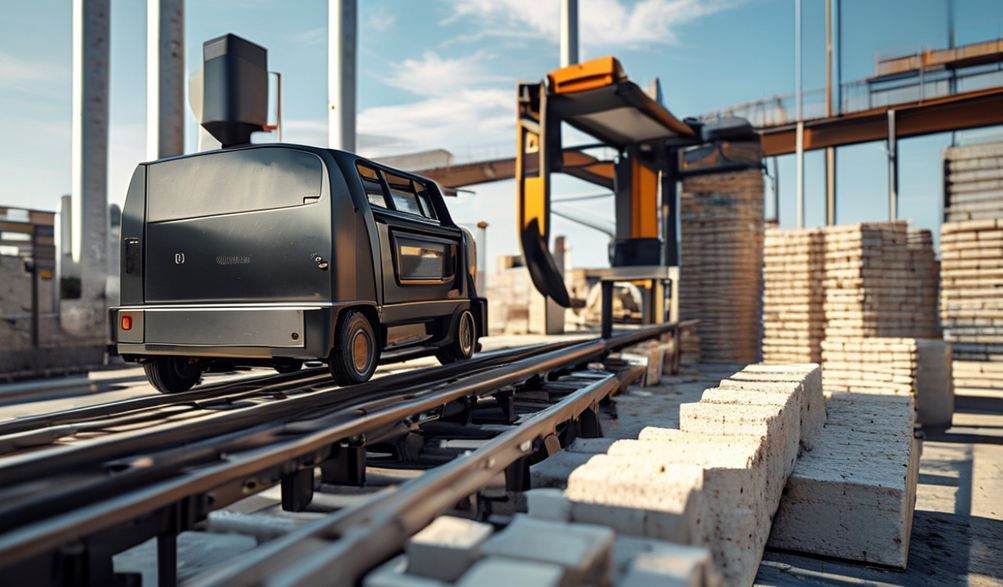
Panduan Utama Anda untuk Mesin Pembuat Blok & Mendapatkan Penawaran Bata yang Akurat
Pengantar
Merencanakan proyek konstruksi atau memulai bisnis pembuatan batu bata? Biaya bahan dapat membuat atau menghancurkan anggaran Anda. Meski mendapatkan penawaran harga batu bata adalah hal yang umum, para profesional yang cerdik tahu bahwa berinvestasi dalam mesin pembuat blok dapat menjadi pengubah permainan untuk penghematan dan kendali jangka panjang.
Panduan ini memiliki tujuan ganda. Ia akan mengungkap misteri dunia mesin pembuat blok dan membekali Anda dengan kerangka strategis untuk meminta dan membandingkan penawaran dari pemasok batu bata. Tujuan kami adalah menyediakan informasi ahli yang terpercaya—berdasarkan praktik terbaik industri dan analisis keuangan—untuk memberdayakan pengambilan keputusan Anda.
Baik Anda seorang kontraktor yang mempertimbangkan pilihan untuk pengembangan skala besar atau seorang pengusaha yang mengevaluasi usaha baru, panduan komprehensif ini akan membantu Anda menentukan jalur paling hemat biaya dan efisien ke depan.
Memahami Mesin Pembuat Blok: Pengantar
Sebelum membahas biaya, penting untuk memahami alat yang menjadi pusat keputusan: mesin pembuat blok.
Apa itu Mesin Pembuat Blok dan Bagaimana Cara Kerjanya?
A block making machine is a device that manufactures construction blocks—like hollow blocks, solid bricks, or pavers—from raw materials such as concrete, fly ash, or soil. The core process is elegantly simple:
- Mencampur: Raw materials (cement, aggregate, sand, water) are combined to form a homogeneous mix.
- Pembentukan: This mix is fed into a mold cavity of the desired block shape.
- Pemadatan: The machine uses vibration, hydraulic pressure, or a combination to densely compact the material, removing air pockets and ensuring structural integrity.
- Menyembuhkan: The freshly formed (or “green”) block is ejected and then cured, typically through air drying or steam curing, to achieve its full strength.
Owning a machine represents a fundamental shift from purchasing a finished product to owning the means of production itself.
Jenis Mesin Pembuat Blok: Dari Manual hingga Sepenuhnya Otomatis
The right machine depends entirely on your scale, budget, and labor availability.
-
Mesin Manual/Semi-Otomatis:
- Ideal Untuk: Small-scale projects, startups, or regions with low labor costs.
- Operasi: Require significant manual labor for feeding mix, operating levers, and removing blocks. Output is lower but the capital investment is minimal.
- Keluaran:Biasanya berkisar antara 500 hingga 2.000 blok per shift 8 jam.
-
Mesin Stasioner Sepenuhnya Otomatis:
- Ideal Untuk: Medium to large-scale commercial production for business or very large projects.
- Operasi: Automated from feeding to palletizing. Controlled by PLC systems, they ensure remarkable consistency and high output with minimal manual intervention.
- Keluaran: Can produce from 4,000 to over 20,000 blocks per shift.
-
Mesin Pembuat Blok Seluler:
- Ideal Untuk: Large, remote construction sites (e.g., road projects, rural developments).
- Keuntungan: They produce blocks directly on-site, eliminating the substantial cost and logistics of transporting finished bricks over long distances.
Spesifikasi Kunci yang Perlu Dipertimbangkan Sebelum Membeli
Don’t just buy a machine; buy the right machine for your needs. Focus on these specifications:
- Kapasitas Output: Match the “blocks per hour” rating to your projected daily volume. Always factor in realistic operational efficiency.
- Jenis & Ukuran Blok: Ensure the machine can produce the specific products you need: hollow blocks (for load-bearing walls), solid blocks, paving stones, or interlocking bricks for landscaping.
- Sumber Daya: Electric machines are cleaner and quieter but require a stable grid. Diesel or hybrid models offer independence for sites without reliable power.
- Tingkat Otomasi: Higher automation reduces labor costs and improves consistency but increases the initial investment and requires more skilled operation and maintenance.
The Strategic Choice: Machine Investment vs. Brick Procurement
This is the core financial and strategic decision. Do you invest in capital equipment or rely on the supply chain?
Cost-Benefit Analysis: When Does a Machine Pay Off?
A machine is an investment, not an expense. It pays off when the total cost of ownership dips below the cost of purchased bricks.
- Long-term Project Analysis: For projects requiring millions of blocks, the math often favors a machine. Calculate the total delivered cost of all bricks versus the machine cost + raw materials + operating expenses.
- Business Venture Model: If starting a block yard, your business plan must include a detailed ROI calculation. Factor in machine depreciation, maintenance, labor, raw material sourcing, and your target sale price.
- Key Variables: The price of cement and aggregate, local labor rates, electricity/diesel costs, and the prevailing market price for finished bricks are all critical inputs for your model.
Advantages of Owning a Block Making Machine
- Pengendalian Biaya: You are insulated from market price inflation and supplier price hikes. Your primary costs become raw materials, which are generally more stable.
- Kontrol Kualitas: You dictate the mix design, ensuring every block meets your required compressive strength and durability standards.
- Kustomisasi: Need a specific size, color, or texture for a unique architectural design? You can produce it on demand.
- Keandalan Rantai Pasok: Your production schedule is in your hands. No more project delays due to supplier backlog or transportation issues.
When Buying Bricks is the Smarter Option
- Short-term or Small Projects: If you only need 50,000 bricks for a single home build, the capital outlay for a machine is rarely justified.
- Lack of Capital or Space: Machines require significant upfront investment and a dedicated operational area for production and curing.
- Focus on Core Activities: Many contractors prefer to focus their capital, time, and expertise on the actual construction work rather than managing a manufacturing process.
How to Get Accurate and Comparable Brick Quotes (The Right Way)
If purchasing bricks is your chosen route, doing it correctly is paramount. Vague requests lead to vague, incomparable quotes.
Defining Your Project Specifications Clearly
Your quote request must be a detailed technical document. Ambiguity is your enemy.
- Jenis Bata: Precisely state: Clay Brick, Concrete Hollow Block (3/4/6 inch), Concrete Solid Block, Fly Ash Brick, or CLC Block.
- Precise Dimensions: Don’t say “standard block.” Specify: 400mm (L) x 200mm (W) x 100mm (H) or 16″ x 8″ x 8″.
- Quantity with Breakdown: “Total: 100,000 units. Deliver 25,000 units on [Date1], 25,000 on [Date2], etc.”
- Standar Kualitas: Reference compressive strength (e.g., Minimum 7 N/mm²), water absorption (<15%), and relevant codes (e.g., IS 2185 for concrete blocks, ASTM C90).
- Delivery Location & Site Access: Provide the full address and note any access restrictions (low bridges, narrow roads, on-site offloading instructions).
Sourcing Reputable Suppliers: Where to Look
- Local Manufacturers vs. Distributors: Buying directly from a manufacturer often yields better prices, but a distributor might offer a wider product range or more flexible logistics.
- Industry B2B Portals & Directories: Utilize platforms like Thomasnet, Alibaba (for machinery and bulk bricks), or regional construction material directories to find suppliers.
- Trade Associations & References: Your local builders’ association or chamber of commerce can provide vetted lists. The best source is often a referral from a trusted colleague.
The Quote Request Template: Ensuring Apples-to-Apples Comparison
Copy this checklist into a spreadsheet or document to send to each supplier.
| Item | Your Specification | Supplier Quote 1 | Supplier Quote 2 | Supplier Quote 3 |
| :— | :— | :— | :— | :— |
| Product Description | e.g., Concrete Hollow Block, 400x200x200mm, 7N/mm² | | | |
| Unit Price (ex. works) | | | | |
| Total Material Cost | | | | |
| Delivery Cost | To [Your Site Address] | | | |
| Taxes (GST/VAT/etc.) | Rate: ___% | | | |
| Grand Total | | | | |
| Payment Terms | e.g., 30% advance, 70% on delivery | | | |
| Lead Time | From order confirmation to first delivery | | | |
| Quote Validity | e.g., 30 days | | | |
| Quality Certification | Can you provide test reports for compressive strength/absorption? | | | |
| After-Sales/Support | Policy for broken/damaged bricks upon delivery? | | | |
Evaluating Quotes and Machine Suppliers: A Trust Checklist
With quotes in hand, shift to due diligence. The cheapest price can be the most expensive mistake.
Red Flags in Brick Quotes
- Unusually low prices that don’t align with market rates.
- Vague or missing specifications (e.g., “bricks as per standard”).
- No mention of quality standards or testing.
- Unclear or missing company contact details and physical address.
- Pressure for immediate payment or refusal to provide a formal contract.
Verifying Supplier and Manufacturer Credibility (E-E-A-T in Action)
Apply the principles of Experience, Expertise, Authoritativeness, and Trustworthiness.
- Pengalaman: How long have they been operating? Request a client list or examples of past projects similar to yours.
- Keahlian: Do their technical salespeople understand mix designs, curing processes, and relevant codes? Can they advise you?
- Otoritas: Are they members of industry associations? Do they hold relevant certifications like ISO 9001 for quality management?
- Kepercayaan: Search for independent online reviews and testimonials. Insist on visiting their plant or showroom if possible. Always work with a formal, detailed purchase order or contract.
Negotiation Tips for Best Value
- Use your detailed quote comparison as leverage.
- Negotiate on bulk discounts or better terms for a long-term supply agreement.
- Clarify and negotiate the replacement policy for bricks damaged in transit or that fail to meet the agreed-upon specs upon inspection.
Pertanyaan yang Sering Diajukan (FAQ)
Q: What is the average price range for a small block making machine?
A: Prices vary wildly based on type and automation. A basic manual machine can start from a few thousand dollars, while a semi-automatic model may range from $10,000 to $30,000. Fully automatic machines begin around $50,000 and go up significantly. Always get detailed, itemized quotes from multiple manufacturers.
Q: How much can I save by producing my own bricks vs. buying?
A: It’s entirely volume-dependent. You must calculate your Cost Per Block (CPB) for both scenarios. Machine CPB = (Cost of Raw Materials + Labor + Power + Maintenance) / Total Blocks Produced. Compare this to the Delivered Price Per Brick from suppliers. The machine investment breaks even after a certain volume threshold, often in the hundreds of thousands of blocks.
Q: What are the most important quality tests for bricks?
A: The four critical tests are: 1) Compressive Strength Test (determines load-bearing capacity), 2) Water Absorption Test (indicates durability and weather resistance), 3) Dimensional Tolerance Check, and 4) Efflorescence Test (checks for salt deposits). Always request recent test reports from your brick supplier.
Q: Can a block making machine use local raw materials?
A: Absolutely. In fact, one of the biggest advantages of concrete block machines is their ability to utilize locally available sand, gravel, crushed stone, and even industrial by-products like fly ash. A reputable machine supplier can help you develop an optimal, cost-effective mix design for your local materials.
Q: How do I maintain a block making machine for longevity?
A: Follow the manufacturer’s schedule rigorously. Key tasks include daily cleaning of molds and the mixing system, regular lubrication of all moving parts, checking hydraulic oil levels and filters, inspecting electrical connections, and ensuring vibration motors are securely fastened. Preventive maintenance is far cheaper than major repairs.
Kesimpulan
The choice between investing in a block making machine and procuring bricks from suppliers hinges on scale, budget, control, and long-term strategy. For large-scale, ongoing needs, the control and long-term savings of a machine are compelling. For defined, smaller projects, a well-managed procurement process is key.
Empower yourself by using the frameworks provided in this guide. The detailed specification checklist will transform how you collect quotes, and the supplier verification principles will protect you from poor partnerships. Remember, the most cost-effective decisions in construction are built on clear specifications, transparent comparisons, and credible partners.
Siap untuk melangkah lebih jauh? Use the project specification template above to start collecting accurate, comparable brick quotes today. If your analysis points toward machinery, begin your research by shortlisting reputable block making machine manufacturers with proven experience and support networks. For large-scale decisions, consulting with a construction cost analyst can provide tailored, data-driven clarity.
<