Deconstructing the Cost: A Framework for B2B Analysis
A professional assessment separates cost into three distinct layers: the upfront price, the running costs, and the long-term value determinants.
2.1. Capital Expenditure (CapEx): The Initial Investment
This is the invoice price, but it is composed of several key elements:
- Core Press Mechanism: The heart of the machine—its tonnage (e.g., 50-ton vs. 300-ton), whether it uses hydraulic, electro-hydraulic, or vibration-press technology, and its structural robustness. Higher tonnage and advanced hydraulic systems command a premium but produce stronger, denser blocks suitable for load-bearing applications.
- Degree of Automation: This is the primary cost driver. A manual machine requiring 6-8 operators costs less than a semi-automatic one needing 3-4, which in turn is vastly less expensive than a fully automatic line controlled by a PLC and requiring only 1-2 personnel for monitoring.
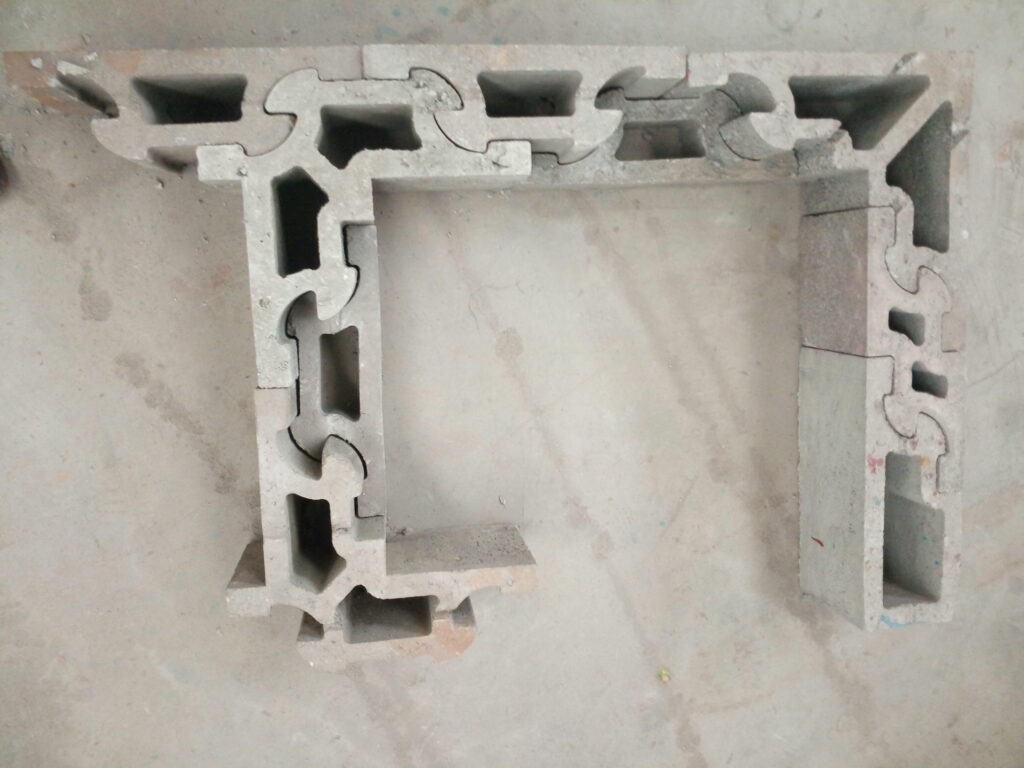
- Tooling and Mold Sets: The initial cost typically includes one standard mold. However, the ability to produce different block designs (e.g., corner blocks, pavers, grass blocks) requires additional mold sets, each a significant investment. The quality of the steel and precision of the machining in these molds are critical.
- Auxiliary Systems: Does the price include a mixer, conveyor, feeder, and pallet handling system? Often, these are quoted as part of a complete plant package. A “machine-only” price can be misleading, as necessary peripherals can add 30-50% to the total CapEx.
2.2. Operational Expenditure (OpEx): The Cost of Production
The machine’s purchase price is a sunk cost; OpEx determines daily profitability.
- Labor: The single largest variable. A fully automatic line dramatically reduces wage costs and management complexity per block produced.
- Power Consumption: Hydraulic systems and vibratory motors are power-intensive. Energy efficiency, often linked to a more sophisticated design, reduces lifetime operating costs.
- Raw Material Efficiency: High-precision machines with consistent feed systems minimize waste spillage and produce blocks with tight dimensional tolerances, reducing raw material costs per unit.
- Maintenance and Spare Parts: Routine maintenance (lubrication, filter changes) and the inevitable replacement of wear parts (mold liners, hydraulic seals, vibrator bearings) are ongoing costs. Machines designed for serviceability with locally available standard parts keep these costs predictable.
2.3. The Hidden Equation: Quality, Support, and Total Cost of Ownership (TCO)
The cheapest machine can become the most expensive asset.
- Production Downtime: A machine that breaks down frequently or requires weeks for spare parts to arrive incurs catastrophic costs in lost production and missed contracts. Reliability and local service support have a direct financial value.
- Block Quality Consistency: A machine that produces blocks with variable strength or dimensions leads to rejected batches, customer complaints, and a damaged brand reputation. Consistent quality ensures market acceptance and premium pricing.
- Technical Support and Training: Comprehensive installation, training, and ongoing technical support are not free amenities; they are integral to a rapid, successful production start-up and sustained efficiency. Their absence poses a significant business risk.
- TCO is the definitive metric: TCO = CapEx + (Annual OpEx x Machine Lifespan) – Residual Value. A higher-quality, supported machine with a longer lifespan and lower OpEx often has a superior TCO to a low-priced, unsupported alternative.
3. Market Segmentation: Aligning Machine Tier with Business Opportunity
Understanding where a machine fits in the market is key to recommending or selecting the right investment.
3.1. Entry-Level and Manual/Semi-Automatic Machines
- Cost Range: $5,000 – $30,000
- Profile: Often mobile or small stationary units. High labor dependency (5-8 workers). Lower output (500-2,000 blocks/day).
- Target Market: Micro-enterprises, community cooperatives, small-scale self-build projects. Ideal for distributors serving the rural or informal development sector.
- Investment Logic: Low barrier to entry, simple operation. Profitability hinges on low labor costs and hyper-local demand.
3.2. Mid-Range Fully Automatic Stationary Plants
- Cost Range: $50,000 – $150,000
- Profile: The workhorse of the industry. PLC-controlled, integrated mixing and conveying systems. Requires 2-4 personnel. Outputs of 3,000-8,000 blocks per 8-hour shift.
- Target Market: Established block manufacturing companies, SME builders integrating backward, medium-sized housing projects. The core market for most equipment distributors.
- Investment Logic: Optimizes the balance between productivity, quality, and manageable investment. Offers strong ROI through efficiency and ability to secure larger contracts.
3.3. High-Capacity Fully Automatic Production Lines
- Cost Range: $200,000 – $500,000+
- Profile: Industrial-grade systems with robotic pallet handling, multiple press heads, advanced curing systems, and full digital monitoring. Minimal manual intervention.
- Target Market: Large construction firms, industrial block yards supplying major urban developments and government infrastructure projects.
- Investment Logic: For capturing high-volume, high-margin contracts. Competes on scale, impeccable quality, and the ability to deliver just-in-time for mega-projects. ROI is based on dominating a regional supply.
4. The Investment Calculus: ROI and Strategic Value for Resellers & Investors
4.1. Building the ROI Model: Key Variables and Assumptions
A basic ROI calculation must be project-specific. Key inputs include:
- Machine Cost & Financing Terms
- Estimated Daily/Annual Production Capacity
- Average Selling Price per Block (influenced by quality and market)
- Comprehensive OpEx per Block (materials, labor, power, maintenance, overhead)
- Market Absorption Rate (% of capacity that can be consistently sold)
A well-run mid-range plant in a growing market can often show an ROI period of 18 to 36 months.
4.2. Beyond the Block: Value-Added Opportunities for the Distribution Chain
For distributors, the machine sale is the beginning. Recurring revenue streams include:
- Sale of Additional Mold Sets for new block designs.
- Annual Service Contracts and Preventive Maintenance Kits.
- Supply of Wear Parts and Consumables.
- Consulting on mix designs and plant optimization. This transforms a transaction into a long-term partnership.
4.3. Risk Mitigation and Investment Safeguards
Prudent investors and resellers must mitigate risk by:
- Insisting on Factory Acceptance Tests (FAT) to verify performance before shipment.
- Securing Comprehensive Warranties with clear terms on parts and labor.
- Verifying Local Technical Support through visits to existing client sites.
- Starting with a Phased Approach—begin with core equipment and scale up as the market is proven.
5. Strategic Procurement Guide for B2B Stakeholders
5.1. Defining the Client’s Project Scope and Market
The first question is not “What machine?” but “What business?” Guide the conversation to understand: target block types, required daily output, local material availability, labor market, and competitive landscape. The machine must fit the business plan.
5.2. Technical Evaluation: From Spec Sheet to Workshop Floor
Due diligence is non-negotiable:
- Request Detailed Proforma Invoices listing every included and excluded component.
- Demand Performance Data (block strength, dimensional accuracy) from independent tests or verifiable client references.
- Assess Build Quality: Review videos or visit factories to examine welding, component brands (e.g., Siemens PLCs, reputable hydraulic parts), and general craftsmanship.
5.3. Negotiating Beyond Price: Structuring a Win-Win Supply Agreement
The goal is a sustainable partnership. Negotiation points include:
- Delivery, Installation, and Commissioning Terms.
- Training Scope (number of personnel, duration, manuals).
- Spare Parts Kit included in the sale.
- Payment Terms tied to key milestones (e.g., deposit, shipment, successful commissioning).
6. Conclusion
The question of “interlocking brick machine cost for sale” is ultimately a question of investment strategy. For the B2B professional—whether a distributor selecting a product line or an investor procuring for a project—success hinges on a holistic analysis that transcends the initial price tag. By meticulously dissecting CapEx and OpEx, rigorously calculating TCO and ROI, and aligning equipment capability with a clear market opportunity, stakeholders can make informed, strategic decisions. The most profitable choice is rarely the cheapest machine; it is the machine that delivers the optimal combination of reliability, productivity, and quality support, thereby transforming a capital expenditure into a robust, revenue-generating asset for years to come. In this dynamic market, knowledge of true cost is the ultimate competitive advantage.
7. Frequently Asked Questions (FAQ) for B2B Partners
Q1: We see very low-priced machines online. What are the typical trade-offs?
A: Extremely low prices often indicate critical compromises: use of lower-grade materials (affecting durability), simplified or less robust hydraulic/power systems (leading to lower block strength and higher failure rates), minimal to no automation (increasing long-term labor costs), and absence of reliable after-sales support. The risk of protracted downtime and poor-quality output usually outweighs the initial savings.
Q2: For a distributor, is it better to stock lower-cost or higher-tier machines?
A: A balanced portfolio often works best. However, your primary focus should align with your target clients’ needs and your capacity to support them. Higher-tier machines typically bring more reputable clients, larger deal sizes, and stronger long-term service revenue. They also protect your brand’s reputation for quality. Entry-level machines can serve a volume segment but require managing different expectations and support structures.
Q3: How should we factor financing into the cost analysis for our clients?
A: Financing is a powerful sales tool and a critical part of the investment model. When presenting costs, develop projections that show monthly loan payments against projected monthly cash flow from block sales. A slightly more expensive, efficient machine may have a lower net monthly cost after factoring in lower labor and higher output. Collaborate with financial partners to create attractive lease-to-own or equipment financing packages for your clients.
Q4: What are the most commonly overlooked “hidden costs” after purchase?
A: Key hidden costs include: 1) Site Preparation: Reinforced concrete foundation, power grid connection, and shelter construction. 2) Import Duties and Logistics: For internationally sourced machines, freight, insurance, customs clearance, and port fees can add 15-30% to the landed cost. 3) Initial Raw Material Inventory: Purchasing bulk cement, aggregates, and additives to begin production. 4) Certification Costs: Having blocks tested and certified by local building standards authorities for market acceptance.
Q5: Can a single machine profitably service multiple small sites, or is a fixed plant necessary?
A: This depends on the machine type. Mobile interlock machines are designed for this purpose—they can be moved between project sites to produce blocks on-demand, saving transport costs of finished blocks. However, their output and automation level are typically lower than a stationary plant. For a business focused on supplying multiple small, localized projects, a mobile unit can be highly profitable. For supplying a general market from a central location, a fixed, higher-output plant is more efficient.