
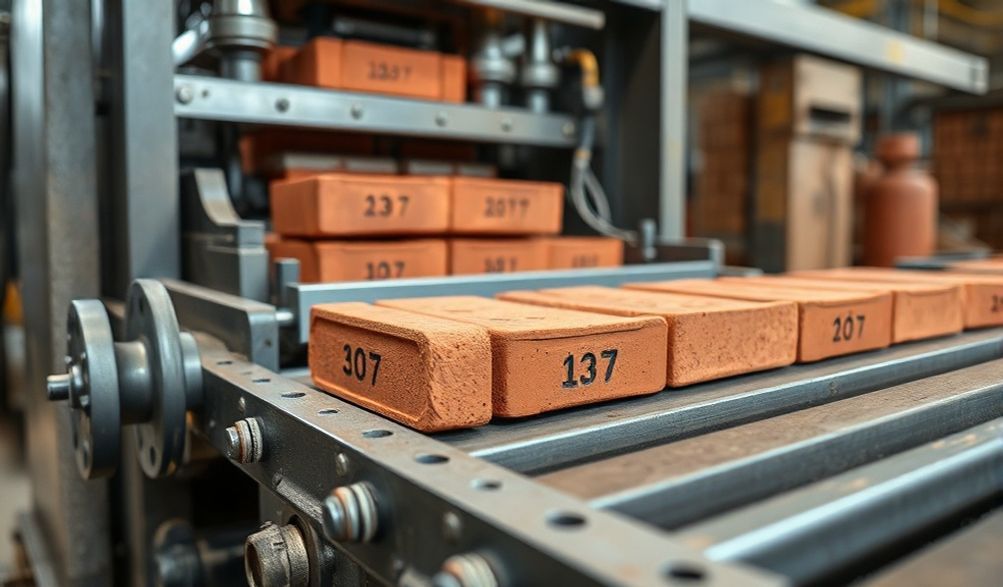
인도 클레이 브릭 머신 가격 2026: 완벽한 구매자 가이드
소개
당신이 책상 앞에 앉아 점토 벽돌 기계에 대한 견적서를 검토하고 있다고 상상해 보세요. 한 공급업체는 80만 루피에 "고품질" 반자동 모델을 약속합니다. 다른 업체는 겉보기에는 동일해 보이는 기계를 120만 루피에 제안합니다. 세 번째 업체는 완전 자동화 공장을 무려 850만 루피에 내놓습니다. 사업주, 건축업자, 또는 기업가로서 머릿속은 복잡해집니다: 어떤 것이 올바른 선택일까? 더 저렴한 기계는 합리적인 거래일까, 아니면 미래의 골칫거리가 될까? 비싼 공장이 성공을 보장할까? 이 딜레마의 핵심은 단순히 기계에 관한 것이 아닙니다—초기 비용과 장기적 수익, 품질, 신뢰성을 균형 있게 고려한 투자를 결정하는 문제입니다.
이 가이드는 산업 분석, 기술 사양 검토, 시장 동향 관찰을 기반으로 구성되었습니다. 우리의 목표는 단순한 가격 목록을 넘어서, 가격을 결정하는 복잡한 요소들을 해석하는 데 있습니다.인도에서 점토 벽돌 기계 가격투자 결정을 위한 투명하고 실행 가능한 프레임워크를 제공합니다. 여기 담긴 정보는 제조업체 데이터, 산업 보고서, 실제 구매자 경험을 종합하여 정확하고 신뢰할 수 있는 통찰력을 제공함으로써, 이 중요한 구매를 성공적으로 이끌어 드립니다.
인도 점토 벽돌 기계 시장 이해하기
인도 벽돌 제조 기계 부문은 농촌 기업가부터 대규모 산업 공장에 이르기까지 모든 것을 충족시키는 역동적이고 계층화된 생태계입니다. 이 풍경을 이해하는 것이 가격을 이해하는 첫걸음입니다.
Types of Clay Brick Machines and Their Applications
The level of automation primarily defines the machine type, which in turn dictates its price bracket and ideal use case.
- Manual/Fly Ash Brick Making Machines (Lowest Cost Tier): These are simple, lever-operated or small hydraulic machines. They require significant manual labor for feeding raw material and removing finished bricks. Ideal for very small-scale, seasonal production or specific projects like farmhouse construction. Their low output makes them an entry point, but scalability is limited.
- Semi-Automatic Clay Brick Machines (Mid-Range, Most Common): This is the workhorse of the Indian market. Key processes like mixing and molding are mechanized, but tasks like feeding raw clay or removing green bricks may require manual intervention. They offer an excellent balance between output (1,000 to 5,000 bricks per hour) and investment, making them perfect for small to medium-sized brick kilns and construction companies.
- Fully Automatic Clay Brick Plants (High-Investment Tier): These are integrated production lines. From clay feeding and mixing to molding, cutting, and stacking, the entire process is automated, often controlled by a Programmable Logic Controller (PLC). They boast high output (8,000 to 25,000+ bricks per hour) with minimal manual labor. The investment is substantial, targeting large brick manufacturers and industrial projects.
- Mobile Brick Making Machines (Niche Application): Mounted on trailers, these machines can be moved to the construction site. They are typically diesel-powered and smaller in capacity. The price premium is for portability, useful for large, remote infrastructure projects where brick transportation costs are prohibitive.
Key Indian Manufacturing Hubs and Brands
India’s manufacturing strength is concentrated in specific industrial clusters, which influences supply chains and, to some extent, costs.
- Major Clusters: Gujarat (Rajkot, Ahmedabad), Tamil Nadu (Coimbatore), and Punjab (Ludhiana) are prominent hubs. Proximity to these hubs can reduce logistics costs.
- Reputable Brands: Established Indian brands like BMM (Bellary), Force Engineering, Everon Impex그리고Shri Engineering have built strong reputations over decades. International players from China and Europe also have a presence, often at different price points.
- Brand Value Correlation: A machine from a reputed brand often carries a higher initial price tag. This premium usually covers better-quality components (like German hydraulics or Japanese bearings), robust research and development, and, most critically, a reliable after-sales service network. Industry observations consistently show that this upfront cost can prevent far greater expenses in downtime and repairs later.
Detailed Price Breakdown of Clay Brick Machines (2026)
Here, we translate market understanding into tangible numbers. Remember, these are estimated price ranges for 2026, subject to raw material (steel) cost fluctuations and technological advancements.
Price Range by Machine Type and Automation Level
-
Manual Machines: ₹1.5 Lakhs to ₹5 Lakhs.
- 포함 사항 : Basic machine, standard mold, sometimes a simple mixer. Power options (electric motor or diesel engine) affect the price within this range.
- 출력: Typically 500-1,500 bricks per 8-hour shift, heavily labor-dependent.
-
Semi-Automatic Machines: ₹5 Lakhs to ₹25 Lakhs.
- Capacity Correlation: This is the most variable range. A basic 1,000 BPH (bricks per hour) machine might start at ₹8 lakhs, while a robust 4,000 BPH model with better hydraulics and controls can reach ₹22 lakhs.
- Inclusions: The machine, a mixer or pugmill, a conveyor, and one set of standard molds. More expensive models include better control panels and sturdier frames.
-
Fully Automatic Plants: ₹25 Lakhs to ₹2 Crore+.
- Justification for High Cost: You are buying a complete system. The price includes automated material handling systems, advanced PLC controls, robotic palletizers, and sometimes in-built drying systems. A standard plant producing 10,000-12,000 BPH may range from ₹75 lakhs to ₹1.2 crore. Larger, custom-configured lines drive the price higher.
The “Hidden” Costs Beyond the Sticker Price
The machine’s invoice is rarely the final capital outlay. Smart budgeting accounts for these ancillary costs:
- 설치 및 시운전: Suppliers may charge 2-5% of the machine cost for sending an engineer to install and commission the plant on your site.
- Cost of Molds: A standard solid brick mold is often included. However, if you need molds for hollow blocks, pavers, or designer bricks, each additional mold can cost between ₹25,000 to ₹1,00,000, depending on complexity.
- 운송 및 물류: Freight costs from the factory to your site can be significant, especially for heavy machinery. Always get a freight-inclusive quote or a clear separate estimate.
- Initial Operator Training: While some suppliers include basic training, structured, in-depth training programs for your crew might involve additional costs.
Operational Costs That Impact Your Budget
The true cost of ownership is revealed in daily operation.
- 전력 소비량: Electric models are cheaper to run but require a stable grid connection. Diesel models offer location independence but have higher fuel costs. The difference between standard IE2 and premium IE3 efficiency motors also affects the long-term electricity bill.
- 원자재 준비 The brick machine needs well-prepared clay. You may need to invest in a crusher, soil screener그리고pugmill if not included, adding ₹2-8 lakhs.
- 유지보수 및 예비 부품: Annual servicing contracts, routine replacement of wear parts (like mold liners, hydraulic seals), and unexpected breakdowns require a dedicated budget. A reliable supplier network is crucial here.
- 노동 비용 This is inversely related to automation. A manual machine needs 6-8 workers, a semi-automatic needs 3-5, and a fully automatic plant may run with 1-2 supervisors. Calculate your local wage rates into the ROI model.
5 Major Factors Influencing Clay Brick Machine Prices
Why does a “10,000 BPH” machine have a ₹20 lakh price difference between brands? These five factors explain the gap.
- Production Capacity (Bricks Per Hour): This is the most direct driver. Price increases non-linearly with capacity—doubling the output often more than doubles the price due to the need for heavier, more powerful components.
- 자동화 수준 Every step automated—from feeder to stacker—adds complexity, sensors, and controls, which adds cost. A basic semi-automatic vs. one with an auto-feeder and cutter can have a 15-20% price difference.
- Machine Build Quality & Components: This is where price diverges. A machine using a standard hydraulic pump vs. a Bosch Rexroth pump, mild steel vs. hardened steel for critical parts, or a basic relay panel vs. a Siemens PLC represents vastly different build philosophies and longevity, reflected in the price.
- 애프터세일 서비스 및 보증: A supplier offering a comprehensive 2-year warranty on the main frame and 1 year on hydraulics, with a network of service engineers, factors those support costs into the price. The cheaper alternative often has limited or no real service backup.
- Customization Requirements: Need to make oversized bricks? Want to emboss a logo? Using a unique raw material mix? Any deviation from standard machine specifications requires engineering changes, leading to custom manufacturing and higher costs.
How to Get the Best Value for Your Investment
Value isn’t the lowest price; it’s the optimal balance of cost, performance, and reliability over time.
Step-by-Step Buying Guide
- Assess Your Actual Production Need: Calculate your current and 3-year projected brick demand. Overbuying ties up capital; underbuying limits growth. A 3,000 BPH machine is often a safer, more scalable starting point than a 1,000 BPH one.
- Research and Shortlist 3-5 Reputable Manufacturers: Use this guide’s hubs and brand mentions as a starting point. Look for companies with a decade-plus of presence.
- Ask for a Detailed Quotation (DQ): Reject one-line quotes. Demand a DQ that itemizes the machine, motor brand, hydraulic make, mold cost, installation, and freight separately.
- Insist on a Factory Visit or Live Demo: Seeing the machine being built or operating is invaluable. It builds confidence and allows you to assess build quality firsthand.
- Scrutinize the Warranty and Service Agreement: Read the fine print. What is covered? What is excluded? What is the response time for service calls? This document is as important as the technical specs.
Key Questions to Ask the Supplier
- “Can you provide the guaranteed brick output per 8-hour shift under standard conditions, not just peak BPH?”
- “May I have contact details for 2-3 of your existing clients using a similar model? I’d like to understand their on-ground experience.”
- “What is the lead time for critical spare parts like hydraulic cylinders or control cards?”
- “Is comprehensive operator training included, and do you provide manuals in the local language?”
Financing and Government Schemes
The initial capital outlay can be mitigated. Explore MSME loans from banks, which often offer favorable terms for manufacturing equipment. Investigate if any state or central government subsidies or schemes (like those promoting energy-efficient machinery or fly ash utilization) apply to your purchase. A good supplier can often guide you on available financing options.
자주 묻는 질문 (FAQ)
Q1: What is the cheapest clay brick machine available in India?
A: The cheapest options are manual machines, available from around ₹1.5 lakhs. However, buyers must be cautious. Their output is very low, and they are heavily labor-dependent, which may not translate to lower overall cost per brick when labor wages are factored in. They are suitable only for minimal, non-commercial production.
Q2: Is a fully automatic machine always better than a semi-automatic one?
A: Not necessarily. “Better” is context-dependent. A fully automatic plant is superior in output consistency and labor savings at a very large scale. However, for a medium-scale operator, a well-chosen semi-automatic machine offers a faster return on investment, lower upfront cost, and is easier to maintain locally. The choice hinges on your capital, production volume, and local labor economics.
Q3: How much profit can I make from a clay brick machine?
A: Profitability isn’t guaranteed by the machine alone. It’s a function of your local brick selling price, raw material (clay) cost, operational efficiency, and overheads. As a simplified model, if your production cost (including all operational costs) per brick is ₹4 and the market selling price is ₹6, your gross margin is ₹2 per brick. A semi-automatic machine producing 15,000 bricks a day can thus generate a healthy margin, but market demand and operational discipline are key.
Q4: What is the typical payback period for this investment?
A: For a well-utilized semi-automatic plant, industry reports commonly note payback periods ranging from 1.5 to 3 years. Fully automatic plants, due to higher investment, may have a payback period of 3-5 years. This is highly project-specific and depends on the factors mentioned in Q3.
Q5: How do I maintain my brick machine to ensure longevity?
A: From an expert maintenance perspective:
* Daily: Clean the machine thoroughly after each shift, especially the mold box and hydraulic rods. Check for oil leaks.
* Weekly: Lubricate all moving parts as per the manual. Tighten any loose bolts and nuts.
* Monthly: Check hydraulic oil levels and cleanliness. Inspect wear parts like mold liners and replace them if worn.
* Annually: Get a comprehensive service done by a qualified technician, including hydraulic system flushing and electrical check-ups.
결론
Navigating the 인도에서 점토 벽돌 기계 가격 landscape requires looking past the initial sticker shock. As we’ve detailed, the final price is a composite of capacity, automation, component quality, and the invaluable peace of mind that comes with strong after-sales support.
Our final expert recommendation is to base your decision on a 총 소유 비용 (TCO) analysis. Compare not just the purchase price, but the estimated operational and maintenance costs over 5 years for your shortlisted models. In the Indian context, where machine downtime can cripple production, the reputation of your supplier and the reliability of their service network are often worth a reasonable premium.
Use this guide as your checklist. Before finalizing any purchase, consult with a technical expert if possible, and always approach manufacturers with the informed, detailed questions outlined here. Your goal is not just to buy a machine, but to invest in a reliable, profitable foundation for your brick-making business for years to come.
<