
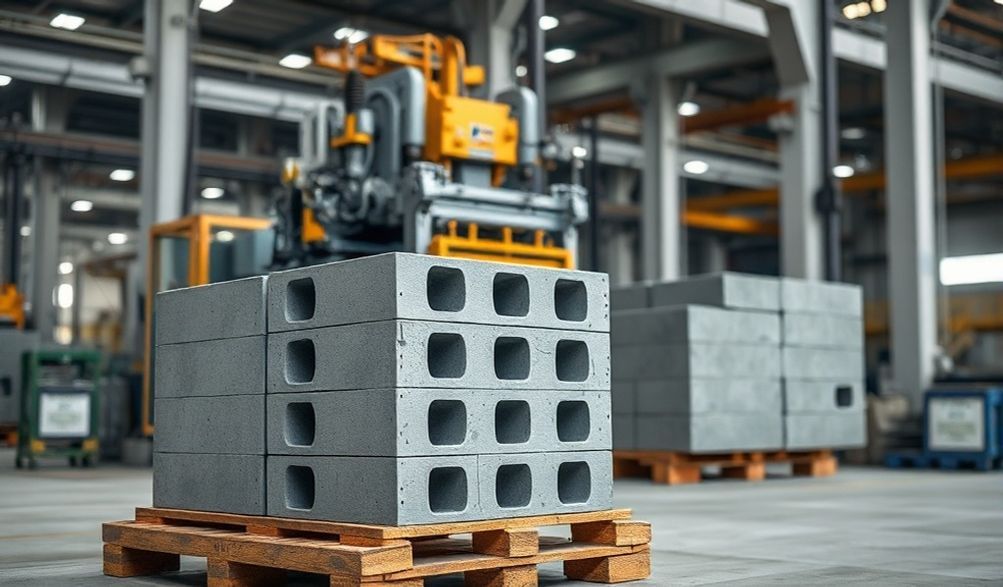
홀로우 브릭 제작 기계의 궁극적인 가이드: 종류, 장점 및 선택 방법
소개
글로벌 건설 산업은 지속 가능하면서도 비용 효율적인 재료를 끊임없이 추구하고 있습니다. 이러한 수요 속에서, 공기 벽돌은 성능, 경제성, 환경 책임성을 뛰어나게 조화시킨 선도적인 솔루션으로 부상했습니다. 그러나 모든 고품질 공기 벽돌 뒤에는 핵심 기술인 공기 벽돌 제조기가 자리 잡고 있습니다.
이 기계는 현대식 블록 제조의 엔진으로, 시멘트, 플라이 애시, 모래와 같은 원자재를 정밀하게 성형된 고강도 건축 블록으로 변환합니다. 그 역할은 변혁적이며, 기업가들이 사업을 시작하고 건설 회사들이 공급망, 품질 및 비용을 통제할 수 있게 합니다.
이 가이드는 포괄적이고 전문적인 정보원으로서, 깊은 산업 지식, 기술 사양, 실용적인 구매 조언을 종합하여 사업주, 건설 관리자, 제조업 창업자를 위해 설계되었습니다. 이를 통해 여러분은 다양한 기계의 종류, 그 상당한 이점, 선택을 위한 상세 체크리스트, 주요 운영 팁, 그리고 중요한 FAQ에 대한 답변을 명확히 이해하게 될 것입니다. 우리의 목표는 여러분이 특정 요구에 맞춰 완벽하게 정보를 바탕으로 한 투자 결정을 내릴 수 있도록 돕는 것입니다.
홀로우 브릭 제작 기계란 무엇인가? 핵심 기능과 원리
중공 벽돌 제조 기계의 핵심은 다짐과 진동 과정을 통해 중공 콘크리트 블록의 생산을 자동화하는 장치입니다. 그 기능을 이해하려면 먼저 그것이 만들어내는 제품부터 시작해야 합니다.
제품 정의: 속이 빈 벽돌 대 속이 찬 벽돌
홀로우 브릭, 또는 콘크리트 조적 단위(CMU) 및 홀로우 블록으로도 알려진 이 재료는 그 설계에 의해 정의됩니다: 하나 이상의 큰 구멍 또는 공간(코어라고 함)을 포함하고 있습니다.
- 구조 설계이 공극들은 일반적으로 블록 전체 단면적의 25%에서 50%를 차지하며, 블록의 상단에서 하단까지 관통하여 이어집니다.
- 결과적 이점:
- 경량화:고체 벽돌보다 훨씬 가벼워 현장 운반 및 취급이 용이하고 비용이 절감되며, 노동 강도를 줄이고 구조적 하중을 경감시킵니다.
- 단열공극 내부의 공기 주머니는 뛰어난 단열 및 방음 성능을 제공하여, 더욱 에너지 효율적이고 조용한 건물을 가능하게 합니다.
- 유용성코어는 전기 배관, 배수관 및 철근(리바)의 쉬운 배치를 가능하게 하며, 추가 강도를 위해 그라우팅을 할 수 있습니다.
기계 작동 원리: 기본 과정
디자인은 다양하지만, 대부분의 기계에서 기본 생산 사이클은 일관됩니다.
- 급식사전 혼합된 원자재(시멘트, 모래, 플라이 애시, 스톤 더스트, 물의 혼합물)는 기계의 호퍼로 공급됩니다.
- 믹싱내부 혼합기는 균질하고 일관된 혼합을 보장하여 벽돌 강도의 균일성에 중요합니다.
- 다짐 및 진동혼합물은 원하는 벽돌 모양의 금형에 부어집니다. 그런 다음 기계가 엄청난 압력을 가합니다.유압그리고 고주파진동이 이중 작용은 공기 주머니를 제거하고 재료를 밀도 있게 다져 벽돌에 구조적 견고성을 부여합니다.
- 이젝션 & 큐어링:신선하게 성형된 "생" 벽돌은 몰드에서 팔레트나 컨베이어로 배출됩니다. 그런 다음 양생 영역으로 이동되어, 수분과 온도를 통제된 상태로 유지하며 며칠 동안 강도를 얻습니다.
건설 분야의 주요 응용
생산된 벽돌은 다용도로 사용되며 다음과 같은 용도에 사용됩니다:
* 주거용 건물:하중 지지 및 비하중 지지 벽체용입니다.
* 상업 단지사무실, 창고 및 소매 공간.
* 파티션 벽:구조 내부에 분열을 조성합니다.
* 조경 및 경계 벽정원 벽, 울타리 및 기타 실외용도에 적합합니다.
중공 벽돌 제조 기계의 종류: 상세 분석
올바른 유형을 선택하는 것이 첫 번째 주요 결정입니다. 기계는 작동 방식, 용량, 산출량에 따라 분류됩니다.
작동 방식: 수동, 반자동, 완전 자동
-
수동 기계:주로 손잡이 레버로 작동됩니다.
- 투자매우 낮은 초기 비용.
- 노동높은 노동 집약도, 느린 속도, 그리고 작업자의 숙련도에 의존하는 생산량.
- 출력:낮음 (하루 100~500 벽돌).
- 이상적인 대상:소규모 기업, 매우 작은 규모의 프로젝트, 또는 노동 비용이 극히 낮은 지역.
-
반자동 기계:유압과 같은 기계적 작동과 벽돌 및 팔레트의 수동 취급을 결합합니다.
- 투자보통.
- 노동운영 및 처리를 위해 소규모 팀(2~4명)이 필요합니다.
- 출력:중간(8시간 교대당 800~2500 벽돌).
- 이상적인 대상:소규모 및 중규모 기업(SMB)과 안정적인 수요를 가진 스타트업.
-
완전 자동 기계:자동으로 급이, 혼합, 성형, 적재, 그리고 팔레트 반환을 수행하는 컴퓨터 제어 시스템.
- 투자높은 자본 지출.
- 노동 Minimal; often just 1-2 operators for monitoring.
- 출력: High (3000-15,000+ bricks per shift).
- 이상적인 대상: Large-scale manufacturers, construction companies supplying major projects, and high-volume businesses.
By Production Capacity: Small, Medium, and Large Scale Plants
- Small Scale: Outputs up to 2,000 bricks per day. Often semi-automatic, suitable for local market supply.
- Medium Scale: Outputs between 2,000 and 8,000 bricks per day. Can be robust semi-automatic or entry-level automatic lines.
- Large Scale Plants: Outputs exceeding 8,000 bricks per day. Always fully automatic production lines with conveyor systems and sometimes robotic palletizers.
By Brick Type and Size
Machines are configured with interchangeable molds to produce various products:
* 표준 중공 블록 4-inch, 6-inch, 8-inch, and 12-inch thicknesses.
* 단단한 블록: For applications requiring maximum load-bearing capacity.
* 포장 블록 및 인터로킹 포장재: For driveways and walkways.
* 특수 모양: Curved blocks, chimney blocks, or lintels.
Specialized Machines: Mobile vs. Stationary Plants
- 고정식 발전소: The standard setup, installed in a fixed factory location.
- 모바일 벽돌 제작 기계: Mounted on a trailer for easy transport. The key advantage is 현장 생산, eliminating transport costs for bricks and allowing immediate use. Ideal for large, remote construction projects like dams, highways, or large housing developments.
Key Benefits of Using a Hollow Brick Making Machine
Investing in this technology unlocks a cascade of advantages, from the balance sheet to the building site.
경제적 이점
- Lower Unit Cost: Producing in-house drastically reduces the cost per brick compared to purchasing from third-party suppliers.
- High-Profit Margins: Creates a revenue stream by selling surplus bricks to the local market.
- Reduced Dependency: Shields your projects from market price fluctuations and supply chain delays of traditional bricks.
Construction & Performance Benefits
- Lightweight Nature: Eases construction speed and reduces dead load on the building foundation.
- 뛰어난 단열 성능 Thermal properties lower heating and cooling costs. Acoustic insulation enhances comfort in residential and commercial spaces.
- Proven Structural Strength: When produced to proper standards, hollow blocks offer excellent compressive strength for multi-story construction.
Environmental & Sustainability Benefits
- 폐기물 활용: Can incorporate industrial by-products like fly ash (from coal plants) and slag, diverting them from landfills.
- 자원 효율성 The hollow design uses less raw material per unit volume than a solid block.
- Energy-Efficient End-Product: Buildings made with hollow bricks have a lower lifetime carbon footprint due to reduced energy consumption.
Business and Operational Benefits
- High Production Speed: Machines produce bricks far faster than manual or traditional methods.
- 일관된 품질 Automated processes ensure every brick has identical dimensions, density, and strength, leading to better construction quality.
- 비즈니스 확장성: You can start small and add capacity by upgrading machines or adding shifts as demand grows.
How to Choose the Right Machine: A Buyer’s Checklist
This decision should be driven by careful analysis, not impulse. Use this checklist to guide your evaluation.
Assess Your Business Needs & Goals
Answer these questions first:
* Target Market: Are you supplying a single project, local retailers, or large contractors?
* Daily Production Volume: What is your current and projected 3-year demand? Be realistic.
* 예산 What is your total investment cap, including machine, installation, and working capital?
* Available Space & Power: Do you have a suitable factory space with a 3-phase electrical connection?
Critical Technical Specifications to Scrutinize
- Compaction Force (Tonnage): Measured in tons, this determines brick density and strength. For standard blocks, 100-150 tons is common; for pavers or high-strength blocks, 200+ tons may be needed.
- 사이클 타임: The time to produce one brick or one mold of bricks. Faster cycles mean higher output.
- 전력 요구 사항: Verify if it runs on standard 3-phase electricity or requires a diesel generator.
- 금형의 다용도성: Does the supplier offer a range of mold options, and how easy/expensive is it to change them?
Quality and Durability Factors
- 프레임 구성 The main frame should be made from heavy-duty steel plates and profiles, not lightweight sections.
- Component Brands: Reputable brands for hydraulic pumps, valves, PLCs (for automatics), and vibrator motors indicate reliability.
- 부식 방지 Look for sandblasting and high-quality paint coating to protect against rust in humid production environments.
Manufacturer & After-Sales Support Evaluation
This is often more important than a slight price difference.
* 보증: A minimum of 12 months on parts and workmanship is standard for reputable makers.
* 예비 부품 가용성: Ensure common wear parts are readily available locally or can be shipped quickly.
* 기술 지원 Does the company provide installation supervision, operator training, and troubleshooting support?
* Company Reputation: Research their history, ask for client references, and if possible, visit an existing plant using their machine.
Cost Analysis: Investment vs. Return on Investment (ROI)
Calculate a simple payback period:
1. Calculate your total investment (Machine + Installation + Initial Raw Material).
2. Estimate your monthly profit: (Selling Price per Brick – Production Cost per Brick) x Monthly Production Volume.
3. Payback Period (Months) = Total Investment / Monthly Profit.
A well-run operation with a suitable machine can often see a payback period of 12-24 months.
Operating and Maintaining Your Machine for Longevity
Your machine is a long-term asset. Proper operation and maintenance are non-negotiable for profitability and longevity.
Essential Raw Material Preparation
The quality of your bricks is directly tied to your raw material mix.
* Mix Ratios: A common starting mix is 1 part cement, 3 parts sand, and 3 parts stone dust/aggregate (1:3:3). Fly ash can replace 15-25% of the cement. Always conduct trial batches.
* 수분 함량 The mix must have the right consistency—typically 8-10% water. Too dry causes weak bricks; too wet causes deformation.
* 재질 품질: Use clean, well-graded sand and aggregates free of clay, silt, or organic matter.
Daily Operation Best Practices
- Startup: Check oil levels, ensure the area is clear, and run the machine empty for a few minutes to warm up hydraulics.
- During Operation: Monitor brick formation, listen for unusual noises, and check for consistent vibration.
- Shutdown: Clean the hopper, mold, and platform thoroughly. Follow the manufacturer’s specific shutdown procedure.
Routine Maintenance Schedule
- Daily: Clean the machine, check for loose bolts, and inspect hydraulic hoses for leaks.
- Weekly: Lubricate all moving parts (pivots, guide rods) as per the manual. Check hydraulic oil level and condition.
- Monthly: Tighten all bolts and nuts on the frame and vibration table. Inspect mold liners for wear.
Troubleshooting Common Issues
- Poor Brick Strength: Likely causes are incorrect mix ratio, low cement content, insufficient compaction force, or improper curing.
- Surface Cracks: Usually caused by too much water in the mix, excessive vibration, or rapid drying during curing.
- Bricks Sticking in Mold: Often due to a worn or damaged mold liner, insufficient release agent, or a misaligned ejection system.
Frequently Asked Questions (FAQ) About Hollow Brick Making Machines
What is the average cost range for a hollow brick machine?
Prices vary dramatically based on automation and capacity. Manual machines can start from $2,000 – $8,000. Semi-automatic models typically range from $15,000 – $50,000. Fully automatic production lines begin around $60,000 and can exceed $250,000 for high-capacity plants. Always remember: specifications dictate the final price.
What raw materials can I use?
The most common materials are Portland cement, sand (river or crushed), stone dust (aggregate), and water. A key advantage is the ability to use industrial waste like 플라이 애시 (to replace cement) and slag. Some setups also allow for the use of recycled concrete aggregate.
How much space and what kind of power supply is needed?
You need space for three areas: the machine itself, raw material storage, and a curing yard. A small semi-automatic setup may require 1,500 – 3,000 sq. ft. Most industrial machines require a 3상 전기 공급 (380V/415V). Mobile or remote options often use diesel power packs.
Is special training required to operate the machine?
While modern machines are designed for user-friendliness, comprehensive training from the supplier is crucial. Proper training ensures operator safety, maximizes production efficiency, and teaches essential daily maintenance to prevent costly breakdowns.
What is the typical lifespan of a well-maintained machine?
A high-quality hollow brick making machine that receives diligent, scheduled maintenance can have a productive lifespan of 10 to 15 years or more. The key factor is preventative care—neglect can reduce this lifespan by half.
결론
Selecting the right hollow brick making machine is a strategic decision that impacts your project’s cost, timeline, and quality, or your business’s profitability and growth trajectory. It requires balancing your immediate production needs with long-term goals, prioritizing machine quality and manufacturer support over the lowest initial price tag.
Our final expert recommendation is to conduct thorough due diligence. Request material tests from potential suppliers using your local raw materials to see the final product quality. Always calculate the 총 소유 비용, factoring in maintenance and potential downtime, not just the purchase price.
We encourage you to consult with multiple reputable manufacturers, ask for client references you can contact directly, and, if feasible, visit a working plant to see the machine in operation. This firsthand experience is invaluable.
By making an informed investment, you are not just purchasing a machine; you are acquiring the key technology to build a more profitable, efficient, and sustainable future in the ever-evolving construction industry.
<