
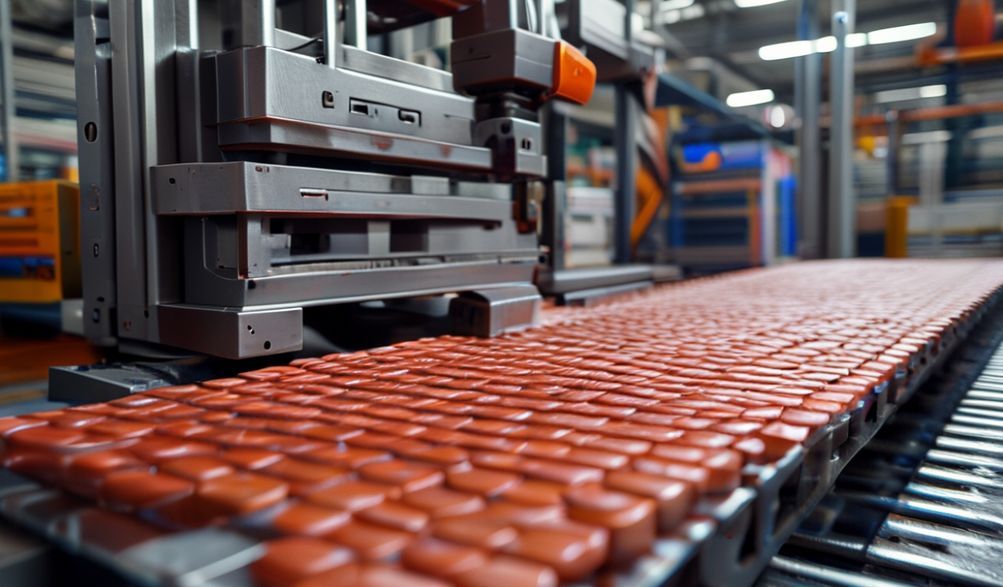
Ultima Ductor ad Machinas Pavimentorum Laterum: Intra Officinam Fabricationis Laterum FUDA
Introductio
Tellus nova forma singulis passibus mutatur. Ab elegantibus aditus privatis et frequentibus plateis mercatoriis usque ad sustinendas ambulationes urbanas, postulatio solidarum ac diuturnarum straturae solutionum numquam maior fuit. Haec prosperitas occasionem auream pro negotiatoribus et aedificiorum societatibus praebet. Attamen, hanc occasionem capessere in una deliberatione pendet: eligendo apta machinamenta producendi.
Mercatus optionsibus inundatur, ut opus formidolosum sit instrumenta invenire quae vere compensant impensam initialem cum efficentia diuturna, qualitate operis, et constanti fiducia. Multi emptores frustrantur cyclum defectuum, qualitatis inconstantis producti, et auxilii post venditionem evanescentis.
Hic est ubi in institutis et specialibus fabricis intendere omnem differentiam facit. Inter praecipua nomina in machinis laterculorum faciendis, officina FUDA laterculorum faciendorum famam sibi peperit ob suas firmas et efficaces machinas pavimentorum laterculorum. Haec via ductrix non est oratio venditionis. Est peritis pervia, super scientia industriae et principiis fabricandi aedificata, quae explicet quid in machina pavimenti laterculi quaerere debeas et quomodo officina ut FUDA ad eius constructionem accedat.
Hoc duce finito, intelleges:
* Praecipua munera et genera machinarum ad pavimenta latericia facienda.
Claves artis machinalis et consilii notae quae machinam probatam ab aliis secernunt.
Qualis ad qualitatem adstrictio intra fabricam fabricandi aspectet.
* Elementa critica, sine studio, aestimanda antequam collocationem facias.
Fundamentum scientiae prius aedificemus.
Quid est Machina Pavimentorum? Munus Principale et Genera
In suo pectore, machina laterum pavimentorum est systema subtiliter fabricatum, quod concretam materiam rudem in densas, uniformiter formata, et aspectu grata pavimentorum unitates convertit. Eius principium cardinem cognoscere primus gradus est ad emptum conscium faciendum.
Fundamentum Operandi
Processus, quamquam in exemplaribus provectis automatizatus, seriem logicam sequitur ut firmitudinem et constantiam praestet.
- Coactio & Mixtio:Cementi, harenae, aggregatorum et aquae mensurae exacte temperantur ad mixturam concreti semi-siccam formandam. Humor contentus ad compactionem propriam magni momenti est.
- Alimentatio:Haec mixtura in machinae infundibulum alimentarium infertur, quae deinde eam aequaliter in cavitatem formae super palam ferream distribuit.
- Coarctatio:Haec est maxime discriminis tempestas. Potens coniunctio altae frequentiae vibrationis et magnae pressionis hydraulicae mixturam comprimit. Haec duplex actio cauas aeris removet et particulas invicem cogit, creans massam summae densitatis et firmitatis.
- Formans & Detractio:Sub pressione, mixtura formam matricis exacte accipit. Tum matrix verticaliter tollitur (detrahitur), recenter formatum laterem in pala relinquens.
- Sanatio:Virides (recentes) lateres in suis palettis ad locum curationis transferuntur. Hic, per dies vires acquirunt per hydrationem moderatam, saepe in cubiculis curationis specialibus, antequam ad venditionem vel installationem parati sint.
Claves Genera Machinarum Pavimentorum
Machinae per gradum automationis et mobilitatis digeruntur.
-
Machinae Manuales/Semiautomaticae:
- Operatio:Significans manualis labor requiritur ad pabuli mixturam, ad vectes operandos, et ad lateres removendos.
- Output:Humilis (exempli gratia, 500-2000 caudices per octo horas operis).
- Optimum Pro:Minutissimae initia, peculiaria consilia accommodata, vel mercatus cum impensis operarum perhumilibus. Haec minorem impensam initialem sed maiorem diuturnam impensam operativam repraesentant.
-
Machinae Stationariae Plenae Automatae
- Operatio: Integrated systems handle mixing, feeding, compacting, block ejection, and stacking with minimal human intervention, typically controlled by a Programmable Logic Controller (PLC).
- Output: High and consistent (e.g., from 5,000 to over 30,000 blocks per 8-hour shift, depending on model).
- Optimum Pro: Serious businesses focused on volume production, consistency, and operational efficiency. This is typically where factories like FUDA excel.
-
Machinae Mobile ad Lateres Faciendos:
- Operatio: Mounted on a trailer, they can produce blocks directly on a construction site, eliminating transport costs for the final product.
- Output: Variable, often lower than large stationary plants.
- Nota: It’s essential to check if a specific factory like FUDA offers this mobile variant within their portfolio.
-
Concrete Paver vs. Interlocking Paver Machines:
- The core machine is often the same. The defining difference is the mucus. Interlocking pavers have specially designed edges that fit together, transferring load laterally and creating a stable, flexible pavement without mortar. Most modern paver block machines, including those from FUDA, are designed to produce interlocking pavers due to their superior market demand.
Why Choose a FUDA Paver Block Machine? Analyzing the Factory’s Edge
When evaluating a “paver block machine FUDA block making factory,” you’re assessing a product born from a specific manufacturing philosophy. Here’s what gives a reputable factory like FUDA its competitive edge.
Engineering and Design Expertise
The durability of the machine itself is paramount. Look for features that indicate heavy-duty construction:
* Robusta Ferrea Compages: The chassis must withstand constant, powerful vibrations without flexing. A welded, reinforced frame ensures machine stability and longevity.
* Powerful Vibration System: Multiple high-frequency, synchronized vibrators under the mold table are key. They ensure the concrete mix is fluidized and compacted evenly into every corner of the mold for uniform density.
* Efficient Hydraulic System: A reliable, sealed hydraulic system provides the immense pressure needed for compaction. Quality components reduce heat generation, leakage, and energy consumption.
Production Capacity and Model Range
A one-size-fits-all approach doesn’t work. A good factory offers a spectrum to match your business scale.
* Varietas Exemplorum: A range like the QCM4-30 (for standard blocks and pavers) to higher-output models like the QMJ4-45 (for higher production of pavers and interlocking blocks) allows for targeted selection.
* Clear Specifications: Output is measured in blocks per hour (e.g., 1,500 – 4,500 pcs/hr), with clear pallet size (e.g., 1100x550mm) and machine footprint details. This lets you plan your factory layout and business forecast accurately.
Automation and Ease of Operation
Automation isn’t just about reducing labor; it’s about consistency and control.
* Systema Gubernationis PLC The brain of the machine. A user-friendly touchscreen interface allows operators to set parameters, monitor operations, and diagnose issues. It ensures every block cycle is identical.
* Automata Materiae Tractatio: Integrated conveyors, automatic batching, and block stackers create a seamless production line, minimizing manual handling and boosting overall plant efficiency.
Versatility in Product Output
Your market needs may change. A versatile machine protects your investment.
* Mold-Based Flexibility: The core machine can produce an array of products—different paver shapes (herringbone, cobble, circle), curb stones, hollow blocks, and solid blocks—simply by changing the mold. This allows you to diversify your product line to meet customer demand.
Durability and Low Maintenance Design
Downtime is lost revenue. Intelligent design minimizes it.
* Wear-Resistant Materials: Critical components like mold liners, feedbox shoes, and pallet surfaces are made from hardened steel or special alloys to withstand abrasive concrete mix.
* Service-Friendly Layout: Easy access to hydraulic valves, vibrator motors, and electrical panels simplifies routine maintenance and repairs, keeping your operational costs predictable.
A Virtual Tour: The FUDA Block Making Factory’s Commitment to Quality
Trust is built on transparency. Understanding what happens inside the factory tells you more about the machine than any brochure can.
Normae Fabricationis et Moderatio Qualitatis
Quality isn’t inspected in; it’s built in through a controlled process.
* Staged Production: From cutting and welding the frame to assembling hydraulic lines and wiring the PLC, each stage has defined checkpoints.
* Severa Probatio: Before shipment, machines undergo comprehensive testing—empty runs, loaded runs with concrete, and pressure tests—to ensure they perform to specification.
* Certificationes: While specifics vary, reputable factories often adhere to international standards (like CE marking for the European market), which mandate strict safety and quality protocols.
R&D and Innovation
A static factory is a falling-behind factory. Investment in research is key.
* Focus Areas: This includes improving energy efficiency of motors and hydraulics, developing smarter PLC software for easier operation, and experimenting with new vibration techniques for even denser blocks.
Technical Support and Training
The relationship begins at purchase, not ends there.
* Comprehensive Package: Support should include detailed foundation drawings, installation supervision (onsite or remote), thorough operator and maintenance training, and clear troubleshooting manuals.
* Ecosystem Partium Substitutarum: A reliable supply of genuine spare parts, with clear part numbers and diagrams, is non-negotiable for long-term machine health.
The Supply Chain and Sourcing
The machine is only as good as its weakest component.
* Strategic Sourcing: Factories with strong reputations partner with known brands for key components—Siemens or Schneider for PLCs, Rexroth or Yuken for hydraulic parts, WEG or Siemens for motors. This ensures reliability and simplifies future repairs.
Critical Factors Before Buying Your Paver Block Machine
Armed with knowledge about what makes a good machine and factory, use this practical checklist to evaluate any supplier, including FUDA.
Necessitates Negotii Tuas Perpendens
Start with introspection:
* Propositum Diurnum Output How many square meters of pavers do you need to produce per day to meet demand?
* Spatium Praesto & Infrastructura: Do you have the floor space, ceiling height, and 3-phase electrical power required?
* Summa Consider total cost of ownership (machine, shipping, installation, foundation, initial spare parts).
* Target Market: Are you supplying residential projects, municipal contracts, or landscapers? This influences the paver types and quality needed.
Clavis Machinae Specificationes Inspiciendae
Go beyond the sales talk. Get these details in writing:
* Compaction Force: Measured in tons or kN. Higher force generally means denser, stronger blocks.
* Tempus Cycli: Seconds per block. This directly determines your maximum hourly output.
* Total Installed Power: The combined kW of all motors. This dictates your electricity cost.
* Warranty Period: What is covered (parts, labor?) and for how long (typically 1-2 years)?
* Standard Mold Compatibility: What mold systems does the machine use? Are they proprietary or industry-standard?
The Importance of After-Sales Service
Ask direct questions:
* “What is the guaranteed response time for technical support?”
* “Can you provide a list of recommended spare parts for the first year?”
* “What is the typical lead time for ordering and shipping a critical spare part?”
Requesting a Factory Visit or Live Demo
This is the most powerful due diligence step.
* Factory Visit: Seeing the manufacturing environment, quality controls, and inventory of parts builds immense trust.
* Live Demo: Request a video of the exact model you’re interested in running with concrete. Observe the cycle, the finished block quality, and the noise/vibration levels.
FAQ: Your Questions on Paver Block Machines & FUDA Answered
Q1: What is the approximate price range for a FUDA automatic paver block machine?
A: Prices vary significantly based on the level of automation, output capacity, and configuration (e.g., with or without a mixer and stacker). A basic automatic machine may start in the range of $30,000 – $50,000, while fully integrated high-output production lines can be $100,000+. For an accurate quote, you must contact the factory directly with your specific output and product requirements.
Q2: Can FUDA machines produce other products besides pavers?
A: Absolutely. This is a key advantage of stationary block machines. By changing the mold, the same machine can typically produce a wide range of concrete products, including hollow blocks, solid blocks, curb stones, garden tiles, and retaining wall units.
Q3: What kind of raw materials are required?
A: The standard raw materials are Portland cement, clean sand (fine aggregate), crushed stone or gravel (coarse aggregate, typically 3-8mm for pavers), water, and optionally, iron oxide pigments for colored pavers. The machine is designed for a semi-dry mix with low water content.
Q4: How long does it take to install and commission the machine?
A: After delivery, the process includes preparing a level concrete foundation, assembling the machine (which can take 3-7 days for a skilled team), connecting utilities, and conducting test runs. With proper preparation and factory guidance, the machine can often be producing saleable blocks within 2-4 weeks of arrival on site.
Q5: Does FUDA provide molds, and are they customizable?
A: Yes, reputable factories like FUDA usually supply a set of standard paver molds with the machine. Crucially, they also offer custom mold design and manufacturing services, allowing you to produce unique paver shapes and profiles to differentiate your products in the market.
Conclusio.
Choosing a paver block machine is a significant capital investment that forms the backbone of your production business. The decision must look beyond the initial price tag to the core pillars of machine quality, production reliability, and the tangible support of the manufacturer behind it.
Factories like FUDA, with a focused approach on robust engineering, controlled manufacturing processes, and a structured support system, represent a credible pathway for businesses aiming to establish or scale their paver production. They embody the principle that a reliable machine is a profit center, not a cost center.
Use the criteria and checklist outlined in this guide as your unbiased evaluation framework for all potential suppliers. For the most accurate specifications, pricing, and to discuss your specific project needs, the best course of action is to contact the FUDA factory directly through their official channels to request a detailed consultation, a live machine demonstration, and a formal quotation.
<