
China Block Making Machines: A Deep Dive into FUDA Brick Making Factory
Introductio
The global construction industry is a relentless engine of growth, demanding ever-more efficient, durable, and cost-effective building materials. At the heart of this demand lies a critical piece of equipment: the block making machine. From affordable housing projects to intricate landscaping, the humble concrete block is a foundational element, and the machinery that produces it can make or break a business’s profitability.
In this landscape, China has emerged not just as a participant, but as a dominant force in manufacturing industrial machinery, including brick and block making equipment. The combination of scale, advanced manufacturing capabilities, and competitive pricing has positioned Chinese factories as go-to sources for entrepreneurs and construction firms worldwide.
Among the numerous names in this sector, the FUDA Brick Making Factory has carved out a notable presence. For buyers navigating this complex market, the key question is: What does FUDA truly offer, and how does it stack up? This article provides a comprehensive, unbiased review of FUDA’s operations, product portfolio, and market position. Our analysis is grounded in industry specifications, manufacturing best practices, and procurement insights, designed to equip you with the knowledge to make a thoroughly informed decision.
Machinas ad Lateres Faciendos Intellectae: Genera et Usus
Before evaluating any manufacturer, it’s crucial to understand the machinery itself. Block making machines are not one-size-fits-all; they are categorized by their level of automation and the specific products they are engineered to produce.
Core Machine Types (Fully Automatic, Semi-Automatic, Manual)
-
Machinamenta Plena Automata: These are the pinnacle of efficiency, designed for high-volume production with minimal manual intervention.
- Operatio: Integrated computer systems control the entire process—mixing, feeding, compacting, curing, and stacking. Often feature robotic pallet handling and product stacking.
- Output: Can produce thousands of blocks per shift. Ideal for large-scale block yards, export-oriented businesses, and major construction projects.
- Usus: Best for investors with significant capital, consistent high demand, and a focus on maximizing output with a smaller labor force.
-
Semiautomaticae Machinae: Striking a balance between output and affordability, these are the workhorses of the industry.
- Operatio: Core processes like vibration and compression are mechanized, but tasks like feeding raw material or moving pallets may require manual effort.
- Output: Offers substantial daily production (hundreds to a few thousand blocks) suitable for growing businesses.
- Usus: Perfect for medium-sized enterprises, regional suppliers, and contractors looking to scale up from manual production without the full investment in full automation.
-
Manualia vel Ovipositoria Machinamenta: The most accessible entry point into block manufacturing.
- Operatio: Require significant manual labor for mixing, feeding, and block removal. The machine “lays” blocks in place on the ground.
- Output: Lower output, suitable for small-scale projects, on-site production for a specific build, or very small businesses.
- Usus: Ideal for startups with limited capital, community projects, or locations with very low labor costs.
Key Products: Concrete Block Machines, Paver Machines, Interlocking Brick Machines
The type of machine determines quomodo you produce, while the mould and configuration determine quid you produce.
- Machinae Laterum Caementiciorum: The most common type. They produce standard hollow blocks, solid blocks, and fly ash bricks used in structural walls. Versatility in mould changes is key.
- Paver Machines: Specialize in producing concrete pavers, kerbstones, and landscaping slabs. These often require higher pressure for density and a fine finish for aesthetic appeal.
- Machinae Laterum Intertextorum: Produce bricks designed to lock together without mortar. Gaining popularity for sustainable construction, retaining walls, and paving due to their speed of installation and permeability.
Why Source from China? Scale, Technology, and Cost Efficiency
Sourcing from China presents a compelling value proposition, but it requires informed diligence.
-
Beneficia:
- Incomparabilis Magnitudo et Catenae Subministratio: Concentrated industrial ecosystems mean efficient access to high-quality components (steel, hydraulics, motors).
- Investitio Investigationis et Progressionis: Leading factories continuously iterate, incorporating modern PLC controls and energy-efficient designs.
- Efficentia Impendiorum Competitive pricing arises from scale, supply chain maturity, and manufacturing expertise, offering superior value for the investment.
-
Key Considerations:
- Due Diligence is Paramount: The market has both exemplary manufacturers and less reputable traders. Verification is non-negotiable.
- Communication & Logistics: Language barriers and complex international shipping require careful management.
- After-Sales Support Variance: Service quality can differ significantly between factories and must be a core part of negotiations.
Spotlight on FUDA Brick Making Factory: An Expert Profile
FUDA positions itself as an established player in China’s block machine manufacturing sector. Let’s dissect its profile from a buyer’s perspective.
Historia Societatis et Peritia Fabricationis
FUDA typically markets itself as a factory with over a decade of experience specializing in the design and production of concrete block making equipment. This longevity suggests a degree of stability and accumulated technical know-how. Their core expertise is presented as vertically integrated manufacturing, meaning they likely control key processes like steel fabrication, welding, and assembly in-house, which is crucial for quality consistency.
Factory Capabilities and Quality Control Processes
A manufacturer’s true caliber is revealed in its production floor and quality protocols. Reputable factories like FUDA should be transparent about these.
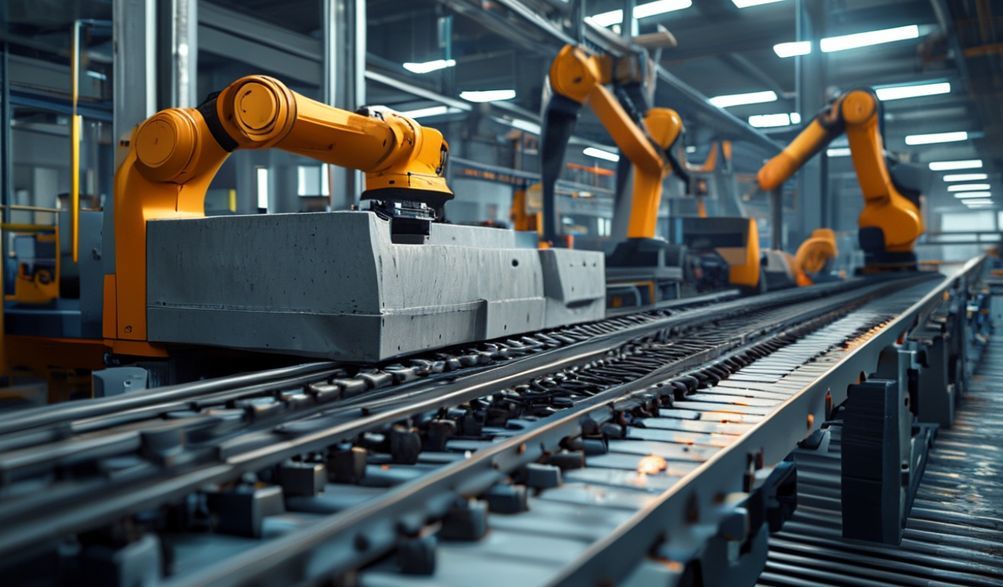
- Manufacturing Facility: They operate from dedicated factory premises, housing CNC cutting machines, automated welding robots for critical joints, and organized assembly lines. This moves them beyond basic workshop assembly.
- Quality Control Measures: A trustworthy factory will have documented QC checkpoints:
- Materiae Comparatio: Use of standardized, branded raw materials (e.g., specific grades of steel plate, reputable hydraulic brands like Yuken or Rexroth, Siemens or Schneider electrics).
- In Processus Inspectionis: Dimensional checks on machined parts, weld seam inspections (often using non-destructive testing methods).
- Probationes Ante Navem Every machine should undergo a full no-load and load test before disassembly for shipping. Buyers should insist on video evidence of this test.
FUDA’s Product Portfolio and Key Specifications
FUDA’s range typically covers the spectrum from semi-automatic to fully automatic models. Here’s a generalized overview of common model types:
| Model Series | Automation Level | Typical Output (8hr shift) | Key Product Output | Ideal For |
| :— | :— | :— | :— | :— |
| QT Series (e.g., QT4-15) | Semi-Automatic | 2,000 – 5,000 pcs | Hollow Blocks, Solid Blocks | Medium-sized block yards, regional suppliers |
| QMY Series | Mobile “Egg-Laying” | 1,000 – 3,000 pcs | Blocks on the ground | Small businesses, on-site production |
| QCM Series | Fully Automatic | 10,000 – 30,000+ pcs | Blocks, Pavers, Interlock | Large-scale investment, export business |
| QMJ Series (e.g., QMJ4-45) | Stationary Automatic | 5,000 – 15,000 pcs | Color Pavers, Curbs | Landscaping product manufacturers |
Note: Specifications are illustrative. Exact output depends on block size, mix design, and operational efficiency.
Evaluating FUDA Machines: A Buyer’s Critical Guide
Moving beyond brochures requires a critical, needs-based evaluation framework.
Analyzing Technical Specifications for Your Project Needs
Don’t just look at the headline output number. Drill deeper:
* Tempus Cycli: How many seconds for one complete block cycle? This determines your maximum theoretical output.
* Block Size Range: Does the machine’s mould table and pressure capacity support the exact block dimensions you plan to sell?
* Magnitudo Palearis et Systema: Are pallets standard size? What is the cost and lead time for replacements? Is the return system automated?
* Potestatis Postulata: Match the voltage (220V/380V/415V) and phase (3-phase) to your local grid. Incorrect specs cause major installation headaches.
The Importance of After-Sales Service and Technical Support
This is where many purchases succeed or fail. Clarify these points ante payment.
* Documentatio. Demand comprehensive English manuals with parts diagrams and troubleshooting guides.
* Digital Support: Do they provide access to installation and maintenance videos? Is there a dedicated technical contact for online support (e.g., WhatsApp, WeChat)?
* Spare Parts Policy: What is the warranty period (typically 12 months for parts)? How quickly can they ship common wear-and-tear parts? Get a recommended spare parts list and pricing.
* On-Site Services: Are installation, commissioning, and operator training available? This is usually an optional, paid service but is highly recommended for first-time buyers.
Comparing Costs: Machine Price, Shipping, and Operational Expenses
The FOB price is just the beginning. Understand the Summa Possessionis:
1. Machine Price (FOB/CIF): FOB means you own it once it’s on the ship in China; you handle the rest. CIF includes sea freight to your nearest port. CIF offers simplicity but less control.
2. Navigatio et Logistica: For FOB, you’ll need a freight forwarder. Costs include sea freight, insurance, and port handling fees. Factor in ~15-30% of machine cost for shipping, varying by destination.
3. Import Duties & Customs: Research your country’s tariff code for block making machines and the applicable duty rate. Your customs broker will need this.
4. Operational Expenses: Consider long-term costs: energy consumption of motors and hydraulics, availability and cost of local maintenance, and the price of additional moulds.
Navigating the Procurement Process with Chinese Manufacturers
A structured approach mitigates risk and ensures clarity.
Effective Communication and Request for Quotation (RFQ)
A detailed RFQ prevents misunderstandings. Include:
* Desired machine model and expected daily output.
* Specific voltage and frequency (e.g., 380V/50Hz/3Phase).
* List of required accessories (e.g., 2 extra block moulds, 50 pallets, a cement silo feeder).
* Preferred Incoterms (FOB Shanghai or CIF Lagos?).
* Request for a Proforma Invoice detailing all costs, payment terms, and warranty.
Factory Verification and Due Diligence Steps
This is your most critical task. Do not skip these steps:
* Business Verification: Request their official Licentia Negotialis and any relevant ISO certificationes. Cross-check the factory address.
* Virtual Factory Tour: Insist on a live video call tour of the factory floor in operation. Ask to see the welding, assembly, and testing areas specifically.
* Clientium Testimonia: Ask for contact information for 2-3 previous clients in regione tua vel simili mercato. Actually contact them and ask about machine performance and after-sales service.
* Third-Party Inspection: For large orders, consider hiring a third-party inspection company (e.g., SGS, BV) for a pre-shipment inspection. They verify quality, specs, and packing.
Understanding Shipping, Logistics, and Customs Clearance
- Incoterms: Know what you’re agreeing to. FOB gives you control over shipping. CIF is easier but the supplier chooses the forwarder.
- Freight Forwarder: If using FOB, engage a forwarder experienced in heavy machinery. They handle Bill of Lading, customs documentation, and port logistics.
- Vectigalis Exsolutio: In your country, you or your agent will need to submit the commercial invoice, packing list, Bill of Lading, and any certificates to clear the machine. Budget for duties and port storage fees.
Interrogationes Saepius Petitae (ISP)
Q1: What is the typical lead time for a FUDA block making machine?
A: Lead times vary. For standard models, it can range from 15-30 days after deposit. Customized machines or those with special moulds may take 30-60 days. Always get the confirmed production timeline stated in your proforma invoice.
Q2: Does FUDA provide installation and on-site training?
A: Most Chinese manufacturers, including FUDA, offer this as an optional, paid service. The cost covers an engineer’s flight, accommodation, and daily rate for a set period (e.g., 7-10 days). Negotiate this upfront. At a minimum, they should provide detailed manuals and video support.
Q3: How can I verify the authenticity and reputation of the FUDA factory?
A: Conduct multi-point due diligence: 1) Request their business license and factory registration. 2) Analyze their official website—look for genuine factory photos and videos, not just stock images. 3) Ask for specific customer references and actually call them. 4) Use B2B platforms like Made-in-China.com or Alibaba, but focus on suppliers with long tenure and “Assessed Supplier” verification, understanding that these are starting points, not guarantees.
Q4: What are the most common spare parts I should keep in stock?
A: It’s wise to maintain an inventory of high-wear items: hydraulic seals and hoses, vibration motor bearings, mould liners and wear plates, limit switches and proximity sensors, and a set of belts. The manufacturer should provide a recommended spare parts list for your specific model.
Q5: Can FUDA machines be customized for specific block designs?
A: Yes, customization of moulds is a standard service. You can provide the block design drawings (or a sample), and their engineering team will quote for the mould fabrication. Discuss the additional cost, the lead time for mould production, and any potential adjustments needed to the machine’s pressure or vibration settings.
Conclusio.
Selecting a block making machine is a pivotal capital investment that demands careful analysis. It requires a clear alignment between your business objectives, production needs, and the technical capabilities of the equipment. As we’ve explored, manufacturers like FUDA Brick Making Factory represent the competitive edge of Chinese manufacturing—offering advanced technology, scale, and cost efficiency.
The ultimate takeaway is that your success hinges not on the brand name alone, but on the rigor of your procurement process. FUDA, like any supplier, should be evaluated against a concrete framework: verified manufacturing expertise, transparent quality control, clear total costs, and robust after-sales support. Move beyond online specifications and engage in detailed, documented communication. Use the insights and checklist provided here to shortlist and compare multiple suppliers. Your goal is not just to buy a machine, but to forge a productive, long-term partnership that will build the foundation of your business for years to come.
<