
Ultima Ductoria ad Machinas Laterum Oviparorum: Quomodo Operantur & Cur Una Opus Sit Tibi
Introductio
Si in negotio constructionis versaris, morem nosti. Termini operis imminent, sed productio laterum angustiae est. Cum sumptibus operarum exsultantibus, cum labore manualis formae, cumque fastidio inconstantiae qualitatis laterum ab uno fasciculo ad alterum luctaris. Haec non sunt levia incommoda; lucra ipsa per singula opera dilata et onera reiecta effluunt.
Quid si via esset qua productionem tuam ex perpetuo certamine in certum et efficacem incrementi machinam converteres? EcceMachina ad ponendum ovumInstrumentum novatorium quod fabricam laterum concretorum parvarum et mediocrium per orbem terrarum transformavit. Automatizando partes operis maxime laboriosas, constantiam officinae ad locum tuum affert sine multiplicitate et sumptu plantae stationariae plenae.
Hic liber plenus ex industriae perspectionibus, principiis fundamentalibus machinalibus, et decenniis scientiae operativae collectivae conditus est. Essentialia destillavimus ut strepitum mercatorium transeamus. In fine huius articuli, claram comprehensionem habebis quomodo hae machinae operentur, eorum beneficia palpabilia, factores criticos ad rectam eligendam, et quomodo eas ad maximam diuturnitatem et reditum collocationis opereris.
Quid est Machina ad Lateres Ova Pariendos? Technologia Explicata
Primo intuitu, nomen "machinae ad lateres pariendos" mirum videri potest. Sed ubi in opere videris, similitudo perfecte elucet. Haec pars technologiam fundamentalem explicat, quae eam rem tam singularem et pretiosam efficit.
Definitio et Munus Nuclei
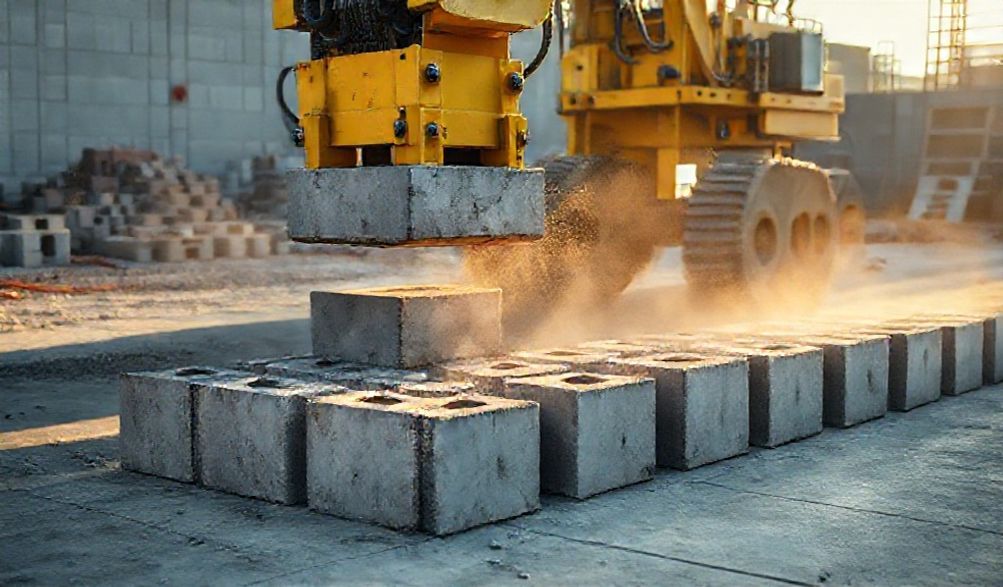
Machina ad ponenda ova est mobilis, saepe diesel vel electrica vi praedita, quae ad fabricandos lateres concretos—ut cavos, solidos, ad pavimentum, et ad margines—directe in aequa superficie curationis destinatur. Dissimilis stativis officinis quae lateres in palis producunt qui deinde ad locum curationis transportantur, ovipositor laterem creat ac deinde movet ut eum leniter in terram "ponat", non secus atque gallina ovum deponit. Haec fundamentalis methodologiae differentia est fons eius mirabilis efficacitatis et simplicitatis.
"Oviponendi" Ratio Explicata
Magia in processu continuo cyclicoque fit. Hunc cyclum intellegere clavem est ad machinae dispositionem aestimandam:
- Miscens & Pabulans:Praeparatum concretum mixtum (semiarida mixtura caementi, harenae, et aggregati) in infundibulum machinae imponitur.
- Forma & CompressioMassa in formam infunditur. Potentes vibratores, saepe capite pressorio hydraulico adiuti, materiam intensa vibratione comprimunt. Hoc cavitates aeris tollit et densum validumque laterem efficit.
- "Momens Deponendi":Hoc est signum motus. Tota forma vehiculum—nunc continens recenter formatum, compressum massam—verticaliter attollitur. Machina deinde vel ante vel retro in suis ferreis vel rotis movetur.
- Depositio:Capsula formae descendit, et later in aream curationis praeparatam eicitur. Forma ad locum suum initialem redit, relicto laterculo perfecte formato, curationi parato.
- Cyclus Repete:Machina se reficit, et cyclus iterum incipit, structuras in terra ordine composito et sequenti disponens.
Clavium Partes Eorumque Munera
Pars omnis in hac automata saltatione crucialem partem agit.
- Saltator:Introitus ad concretum crudum mixtum. Magnitudo eius quantitatem materiae simul onerandae definit.
- Mola/Vibratoris Unitas:Cor machinae. Formae mutabiles capsulae formam et magnitudinem lateris definiunt. Vibratores integri necessariam compactionis vim praebent.
- Systema Hydraulicum vel MechanicumPotestatem praebet ad vehiculum formae tollendum, pressionem in compactione adhibendam, motusque exsequendos. Systemata hydraulica ob vim et imperium lenia usitata sunt.
- Tabula Moderatoria:Continet moderamina operationum machinae, quae operatorem sinunt moderari cyclum, tempus vibrationis, et motum.
- Palearium Alimentarium (vel eius defectus):Nota, pleraeque verae oviparae faciuntnonPalas utere. Caementum directe in pavimentum curationis deponitur, quod magnum impendium et logisticam conservat.
Commoditates Usus Machinae ad Ova Deponenda
A theoria ad praxim progressus, vera commoda ab operariis et dominis negotiorum relata sunt quae hanc machinam novam rerum condicionem efficiunt. Ecce quae exspectare potes.
Efficacia et Effectus Incomparabilis
In situ observationes constanter demonstrant unam machinam ovipositricem, quae ab operariis tribus ad quinque administratur, plus efficere posse quam gregem quindecim ad viginti manuum operariorum. Cum cycli tempora inter quindecim et triginta secunda varient, productionis rates...2,000 to 5,000 blocks per 8-hour shift are common for standard hollow blocks. This dramatic increase in output with a smaller crew directly translates to faster project completion and the ability to take on more work.
Superior Space and Logistics Management
Because blocks are laid directly onto the curing floor, you eliminate two major headaches:
* No Pallet Investment: You don’t need to purchase, maintain, or replace thousands of wooden or steel pallets.
* Simplified Handling: There’s no need for complex forklift movements or racking systems to move pallets of green blocks. The blocks cure where they are laid, and are simply picked up once hardened. This significantly reduces the required yard space and handling equipment.
Enhanced Block Quality and Consistency
Manual production is vulnerable to human error—variations in mixing, compaction, and molding lead to inconsistent blocks. An egg laying machine applies precise, repeatable vibration and pressure every single cycle. This results in:
* Higher compressive strength due to better compaction.
* Uniform dimensions and sharp edges.
* Denser blocks with lower water absorption.
* A more professional, reliable product that commands better market trust and price.
Cōstatum efficācitās et Rēditiō Capitālis.
For a growing construction firm or block-making entrepreneur, the financial argument is compelling:
* Minores Impensae Capitales: It is significantly more affordable than a fully automated stationary block making plant.
* Laboris Dependentia Minuta: Cuts your largest variable cost.
* Minima Sustentatio: With fewer complex conveyors and transfer systems, maintenance is simpler and less costly.
* Scalabilitas: You can start with one machine and add more as demand grows, making it a low-risk, high-return entry into automated production.
Key Considerations Before Buying an Egg Laying Block Machine
A wise investment requires due diligence. This checklist, drawn from industry best practices, will help you evaluate your options and partner with the right supplier.
Tuas Necessitates Productionis Perpendens
Begin with a clear business plan:
* Genera et Magnitudines Caudicum: What will you primarily produce? 4″, 6″, 8″ hollow blocks? Pavers? Interlocking bricks? Ensure the machine you choose offers readily available molds for your needs.
* Output Targets: Calculate your average daily or weekly requirement based on current and projected contracts. Don’t just buy for today’s peak; plan for steady growth.
* Project Scale & Mobility: Will the machine operate at a fixed yard, or do you need to move it between sites? This affects your choice of trailer-mounted vs. static models.
Specificationum Machinarum Penitus Explicatio
Cum exemplaria comparantur, hae notiones sine exceptione exiguntur:
* Tempus Cycli: The time to produce one block. Faster cycles mean higher output.
* Block Capacity per Cycle: Some machines produce 1, 2, 3, or even 4 blocks per cycle (e.g., for pavers).
* Vis Motrix: Indicates the machine’s overall capability (e.g., 10 HP, 15 HP). More power typically supports heavier cycles and larger blocks.
* Systema Vibratorium: Frequency (Hz) and amplitude (mm) determine compaction efficiency. A combination of high frequency and variable amplitude is often ideal for different mix designs.
* Automationis Gradus: Semi-automatic machines require an operator to initiate each cycle. Fully automatic models run a continuous cycle, offering the highest output.
Power Source and Operational Environment
Your site conditions dictate the best choice:
* Electricus: Clean, quiet, and cost-effective to run, but requires reliable grid connection.
* Diesel: Offers complete independence and high torque, ideal for remote sites. Factor in fuel costs and emissions.
* Hybrida: Some models offer the flexibility to switch between power sources, providing the best of both worlds.
Manufacturer and Supplier Evaluation
This is the most critical step. The right partner ensures long-term success.
* Company History & Reputation: How long have they been in business? Look for established manufacturers with a track record.
* Post-Venditio Servitium & Auxilium: Do they offer installation guidance, operator training, and timely technical support? Ask for specific details.
* Partes Subsidiae Praesto: Are parts standardized and readily available locally or through a quick supply chain? Downtime is lost revenue.
* Client Testimonials & Site Visits: Request references and, if possible, visit an existing installation to see the machine running.
* Termini Cautionis: A clear, comprehensive warranty is a sign of a manufacturer that trusts its product’s quality.
Operating and Maintaining Your Machine for Longevity
Your machine is a significant asset. Proper operation and maintenance, as outlined in standard industry protocols, protect your investment and ensure consistent performance.
Step-by-Step Operational Procedure
Follow this safety-focused checklist for daily operation:
1. Pre-Start Check: Inspect the machine for loose bolts, hydraulic leaks, and clean the mold box. Ensure the vibration motors are secure.
2. Praeparatio Materiae: Use a consistent, semi-dry concrete mix with the correct cement-aggregate ratio. Inconsistent mix is the leading cause of block defects.
3. Machine Setup: Position the machine on a perfectly level and prepared curing floor (often a concrete slab).
4. Cycle Operation: Load the hopper, initiate the cycle, and monitor the block formation and laying process. Adjust vibration time based on block density.
5. Post-Operation: Thoroughly clean all concrete residue from the hopper, mold, and vibrator shafts before it hardens. This is a daily non-negotiable task.
Essential Daily and Periodic Maintenance
Adherence to a maintenance schedule prevents major breakdowns:
* Daily: Clean machine thoroughly. Check oil levels in the hydraulic tank. Lubricate all guide rails and moving joints as per the manual.
* Weekly: Tighten all bolts and nuts, especially on vibrator mounts. Inspect hydraulic hoses for wear. Check electrical connections.
* Monthly/Periodically: Change hydraulic oil and filters as recommended. Inspect the vibrator motors for bearing wear. Have a qualified technician perform a full system check.
Troubleshooting Common Issues
- Block Sticking in Mold: Usually caused by a worn/damaged mold, insufficient mold release agent, or an overly wet concrete mix.
- Poor Compaction/Weak Blocks: Likely due to incorrect vibration time, low vibration frequency, or an improper raw material mix (too dry or poor gradation).
- Hydraulic Leaks or Slow Movement: Check hose fittings, seals, and hydraulic fluid levels. Contaminated oil can also cause system issues.
Safety Protocols for Operators
- Mandatory PPE: Safety glasses, steel-toe boots, hearing protection, and gloves.
- Lockout/Tagout (LOTO): Always disconnect and lock out the power source (electrical or diesel) before performing any maintenance or clearing a jam.
- Safe Material Handling: Use appropriate equipment for loading raw materials to avoid strain injuries.
Egg Laying Block Machine vs. Stationary Block Making Plant
Choosing the right technology depends on your business model. Here’s an authoritative comparison to guide your decision.
Comparative Analysis: Investment and Flexibility
- Egg Laying Machine: Lower initial investment. Quick setup and commissioning. Highly mobile—can be moved between sites. Ideal for medium-scale production, start-ups, and projects requiring on-site block manufacturing.
- Planta Stativa: High capital cost. Requires permanent, significant foundation and infrastructure. Fixed location. Designed for ultra-high-volume, single-location production (e.g., 10,000+ blocks/day).
Production Output and Labor Comparison
- Egg Laying Machine: High output for its class (up to ~5,000 blocks/day). Requires a small crew (3-5). Output is ultimately limited by the sequential laying process.
- Planta Stativa: Maximum output potential is far higher due to continuous, parallel production lines. Often more automated, but may still require a larger operational and maintenance team.
Making the Right Choice for Your Business
Use this simple matrix:
* Choose an Egg Laying Machine if: You are a growing business, have multiple sites, need flexibility, have a medium-scale demand, or are working with a constrained budget.
* Consider a Stationary Plant if: You are supplying a massive, constant market (e.g., a major city), have a single, large factory site, and have the capital for a long-term, fixed infrastructure investment.
FAQ Sectio
Q1: What is the average production capacity of a standard egg laying block machine?
A: For a standard 4″ or 6″ hollow block, a well-operated machine can produce between 2,000 and 5,000 blocks in an 8-hour shift, depending on the model’s cycle time and crew efficiency.
Q2: Can one machine produce different types and sizes of blocks?
A: Yes, absolutely. This is a key advantage. By changing the mold box, the same machine can produce hollow blocks, solid blocks, paving stones, and more. Ensure you purchase the desired molds from your supplier.
Q3: What is the typical lifespan of a well-maintained egg laying machine?
A: With strict adherence to maintenance schedules and operation within design limits, a quality machine can have a productive lifespan of 10-15 years or more. Critical components like vibrators and hydraulic parts may require replacement sooner based on usage.
Q4: What raw material mix is recommended for optimal results?
A: A standard, reliable mix is a 1:6:4 ratio (Cement: Sand: Aggregate, by volume). Use a coarse, well-graded sand and 3/8″ aggregate. The mix should be semi-dry—holding its shape when squeezed in your hand but crumbling when poked.
Q5: Is special training required to operate this machinery?
A: While not overly complex, formal training from your supplier is highly recommended. Proper training ensures safety, maximizes output, minimizes waste, and extends machine life. Most reputable suppliers include basic operational training.
Q6: How much space is needed for operation and block curing?
A: You need a level, solid concrete curing floor. Space required depends on daily output. As a rule of thumb, for curing 1000 blocks, you need approximately 150-200 sq. meters, accounting for walking aisles. The machine itself requires an operational area about 4m wide by 10m long per lane.
Conclusio.
The egg laying block machine stands as a testament to smart, practical engineering. It elegantly solves the core problems of labor intensity, inconsistent quality, and logistical complexity in block production. By understanding its “lay-and-go” mechanism, recognizing the substantial benefits in efficiency and cost-saving, and carefully selecting a machine and manufacturer based on your specific needs, you can make an investment that pays dividends for years to come.
For most small to medium-sized construction businesses and block manufacturing entrepreneurs, it represents the ideal balance of capability, affordability, and flexibility. It’s not just a machine; it’s a strategic tool for scalable growth.
Ready to take the next step? We strongly encourage you to use the criteria outlined here to consult with several reputable manufacturers. Request detailed specifications, ask for client references, and if possible, insist on a live demonstration. Have specific questions about your project? Feel free to reach out—our goal is to be a continuing resource in your journey toward more efficient and profitable construction.
Author Bio:
This guide was authored by a team with over 20 years of combined experience in civil engineering, construction machinery distribution, and on-site block manufacturing operations. Our insights are drawn from direct collaboration with manufacturers, technical training sessions, and countless hours observing these machines in action across diverse project sites. We are dedicated to providing accurate, practical information to help industry professionals build their businesses on a solid foundation.