
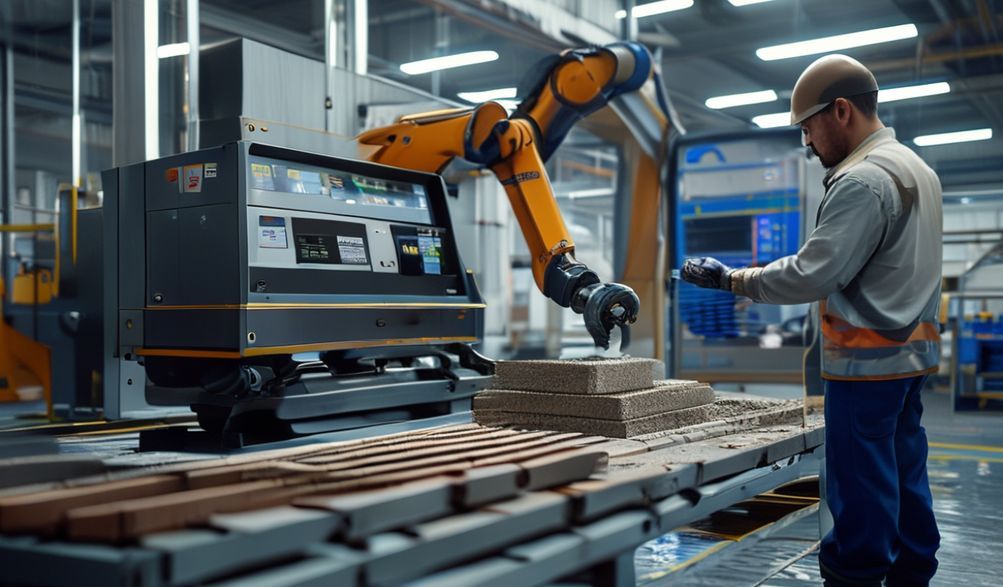
Panduan Terakhir untuk Mesin Pembuat Blok & Mencari Kilang yang Boleh Dipercayai seperti FUDA
Pengenalan
The global construction boom shows no signs of slowing. From urban housing to critical infrastructure, the demand for durable, consistent, and affordable building materials is immense. At the heart of meeting this demand lies a critical piece of technology: the block making machine. These machines are the engines of modern construction material production, transforming raw materials into precise, strong blocks with efficiency that manual labor can never match.
However, for a business owner or project manager, navigating the world of block making machinery can be daunting. The market is flooded with options, and the stakes are high. Choosing the wrong machine or partnering with an unreliable supplier can lead to crippling downtime, subpar product quality, and a devastating return on investment. The core challenge is cutting through the noise to find a manufacturer that prioritizes quality, durability, and long-term partnership over just making a sale.
In industry discussions, names like “FUDA brick making factory” often surface as benchmarks. They represent the standard of what a reliable, established manufacturer should embody: proven engineering, comprehensive support, and a commitment to client success. This guide is your comprehensive resource. We will demystify block making machine technology, outline the critical factors for selection, and provide a detailed framework for identifying a top-tier factory. Our goal is to arm you with the expertise—grounded in principles of Experience, Expertise, Authoritativeness, and Trustworthiness (E-E-A-T)—to make a confident, informed investment that will power your productivity for years to come.
Memahami Mesin Pembuat Blok: Jenis dan Aplikasi
Sebelum menilai kilang, anda mesti memahami mesin itu sendiri. Pengetahuan asas ini adalah kunci untuk menyampaikan keperluan anda dan menilai kepakaran pengilang.
Prinsip Operasi Teras: Bagaimana Mesin Pembuat Blok Berfungsi
While designs vary, most block making machines follow a core production cycle:
- Mencampurkan: Raw materials (cement, aggregates, sand, water) are precisely blended in a mixer.
- Makan & Membentuk: The mixed concrete is fed into a mold box on the machine.
- Pemadatan & Getaran: The machine applies high-pressure compaction and intense vibration. This force removes air pockets and ensures the concrete is densely packed into the mold, which is critical for the block’s final strength.
- Pelepasan Acuan: The newly formed block is ejected from the mold onto a pallet or the plant floor.
- Penyembuhan: The blocks are moved to a curing area (often a rack or chamber) where they gain strength under controlled temperature and humidity before being ready for use.
A key initial distinction is between statik (stationary) plants, which produce blocks in a fixed location for transport, and mudah alih machines, which can be moved around a site to produce blocks exactly where they are needed.
Pemecahan Jenis Mesin Biasa
-
Mesin Manual/Separa Automatik:
- Terbaik Untuk: Startups, very small-scale projects, or regions with very low labor costs.
- Operasi: Require significant manual labor for feeding, molding, and block removal. Output is low.
- Pelaburan: Lowest upfront cost, but higher long-term labor costs and inconsistent output quality.
-
Mesin Membuat Blok Sepenuhnya Automatik:
- Terbaik Untuk: Medium to large-scale factories, high-volume production (like those operated by major suppliers).
- Operasi: Entire process—from feeding and compaction to demolding and pallet stacking—is automated via PLC controls. They offer exceptional consistency, high output, and minimal manual intervention.
- Pelaburan: Higher initial cost, but superior efficiency, lower per-unit cost, and consistent quality. This is the category where factories like FUDA typically excel.
-
Mesin Blok Mudah Alih:
- Terbaik Untuk: Large construction sites, remote projects, or producing blocks directly where they will be used.
- Kelebihan: Eliminates transportation costs for finished blocks. They are self-contained, often with a small mixer and diesel engine.
-
Mesin Khusus:
- These are engineered for specific products beyond standard blocks, such as:
- Mesin Pavers Saling Mengunci: For producing paving stones that lock together without mortar.
- Mesin Blok Berongga: For creating lightweight blocks with high insulation properties.
- Curbstone & Kerb Machines: For heavy-duty landscape and road edging.
Output Utama: Apa yang Boleh Anda Hasilkan?
The right machine, with the correct molds, can produce a diverse product catalog:
* Blok Konkrit Pejal & Berongga:Tulang belakang pembinaan batu-bata.
* Batu Paving & Pavers Saling Mengunci:Untuk jalan masuk, laluan pejalan kaki, dan kawasan awam.
* Batu Bata Abu Terbang: An eco-friendly alternative using a industrial by-product.
* AAC Blocks: Autoclaved Aerated Concrete blocks, which are very light and offer excellent insulation (require a separate, specialized plant).
Critical Factors When Choosing a Block Making Machine
Selecting a machine is not about finding the most powerful one; it’s about finding the kanan one for your specific operation.
Assessing Your Production Needs (The First Step)
Answer these questions before looking at any brochure:
* What is your required daily or hourly output in blocks/pavers?
* What specific block types and sizes will you produce most often?
* What is your available factory space and ceiling height?
* What is your realistic budget, including shipping, installation, and training?
* What is the skill level of your available operators?
Spesifikasi dan Kualiti Binaan Mesin
This is where engineering excellence becomes non-negotiable.
- Ketahanan: The machine frame must be made from heavy-duty, reinforced steel to withstand years of constant vibration and pressure. Look for high-quality, wear-resistant steel molds.
- Sistem Hidraulik: This is the powerhouse. A robust, reliable hydraulic system with stable pressure ensures consistent compaction and smooth operation. Ask about the brand of pumps and valves—reputable components are a good sign.
- Sistem Getaran: The secret to a strong block. Systems can be single or dual-vibration (on the table and in the mold head). A powerful, well-balanced vibration system is essential for achieving high density and compressive strength.
- Sistem Kawalan: From basic PLCs to full-color touchscreen interfaces. A good control system allows for precise adjustment of vibration time, pressure, and cycle times, and provides diagnostic information.
Beyond the Machine: Support & Total Cost of Ownership
The machine’s price tag is just the entry fee. The real cost is in its operation over 5-10 years.
- Perkhidmatan Selepas Jualan: A factory’s commitment is tested selepas the sale. What is their warranty policy (e.g., 1 year on parts, 6 months on labor)? Do they offer remote troubleshooting? How quickly can they dispatch a technician or spare parts?
- Ketersediaan Alat Ganti: Ensure common wear parts (hydraulic seals, vibration motors, mold liners) are readily available and reasonably priced. A factory with a large installed base is often better at this.
- Kos Operasi: Consider energy consumption (electric vs. diesel), required maintenance schedules, and the need for operator training. A slightly more expensive but energy-efficient machine can save thousands in the long run.
How to Identify a Top-Tier Block Making Machine Factory
A great machine comes from a great factory. Here’s how to separate the market leaders from the rest.
Hallmarks of a Reputable Manufacturer
- Ketelusan: They provide clear, detailed specifications—not just output per hour, but cycle time, installed power, machine weight, and pressure figures. They are upfront about pricing structures and willing to share their company history.
- Experience & Portfolio: Longevity matters. A factory with 15+ years of experience has likely seen and solved countless operational challenges. Ask for a client portfolio with projects in various climates and markets.
- Kepakaran Dalaman: The best factories control the entire process. They have their own R&D team for improvements, skilled welding and assembly lines, and stringent Quality Control (QC) that inspects components from sourcing to final testing.
The Factory Visit (Virtual or Physical): What to Look For
If possible, always visit. A virtual tour is a good alternative if travel isn’t feasible.
- Production Floor: Is it organized, clean, and safe? Look at the quality of welding on machine frames—it should be smooth, even, and robust.
- Kawalan Kualiti: Ask to see their QC checks. Are components inspected upon arrival? Is there a testing area where finished machines are run under load before shipment?
- Client Proof: Request to see videos of their machines in operation at a client’s site. Ask for contact information for 2-3 past clients in a region similar to yours and actually call them.
Evaluating Certifications and Standards
While not a guarantee, certifications indicate a structured approach to quality.
* ISO 9001: Demonstrates a commitment to standardized quality management processes.
* Pensijilan CE: Essential for exporting to Europe, indicating the machine meets EU safety, health, and environmental requirements.
* Local Standards: Ensure the machine complies with the safety and performance regulations of your country.
Spotlight on Industry Standards: What a Factory Like FUDA Represents
When buyers reference a specific name like “FUDA brick making factory,” they are often pointing to an archetype of a reliable supplier. Let’s analyze what that represents in the broader market.
The Importance of Established Factories in the Supply Chain
Factories with a strong, long-standing reputation become pillars of the industry. They:
* Set Benchmarks for machine durability and performance that others follow.
* Drive Innovation by investing in R&D to improve efficiency and product range.
* Build Trust through transparency, which raises the standard for all suppliers.
Key Offerings of Leading Factories
These are the services that differentiate a true partner from a simple vendor:
* Penyesuaian: Can they modify a standard machine to work perfectly with your local sand or aggregate? Can they engineer a unique mold for a special product design?
* Comprehensive Solutions: They don’t just sell a machine; they sell a production system. This includes plant layout design, raw material ratio consultancy, and mold design services.
* Training & Commissioning: They send engineers to your site to assemble the machine, calibrate it, and train your operators on its use, maintenance, and safety protocols.
Conducting Due Diligence on Any Supplier
It is crucial to state: “FUDA” is used here as an example of the qualities to seek. You must apply this rigorous checklist to every potential supplier you consider.
1. Online Deep Dive: Search beyond their website. Look for news, industry forum mentions, and video reviews.
2. Sahkan Kesahihan Perniagaan: Check their business license, export license (if applicable), and physical address.
3. Analyze Reviews Critically: Read customer reviews on B2B platforms like Alibaba, but also search for the company name on Google and YouTube for unfiltered perspectives.
4. Verify Export History: An established factory will have a history of shipping containers worldwide. They should be able to provide examples.
Soalan Lazim (FAQ)
Q1: What is the average cost range for a block making machine?
A: Prices vary dramatically. A small manual machine can start at a few thousand dollars. A mid-range semi-automatic system may cost $25,000 – $50,000. Large, fully automatic production lines from top factories can range from $80,000 to over $300,000. Always get itemized quotes based on your specific requirements.
Q2: Can one machine produce different types of blocks and pavers?
A: Absolutely. This is achieved by changing the mold (the steel box that forms the block). Most factories offer a wide catalog of standard molds. However, factor in the cost of additional molds and the time required to change them over on the machine.
Q3: What are the most common after-sales services a good factory should provide?
A: At minimum: A clear warranty, detailed operation and maintenance manuals in your language, remote support via video call, and a reliable supply of spare parts. The best offer on-site installation, commissioning, and training.
Q4: How important is a local agent or support presence?
A: Extremely valuable. A local agent can facilitate communication, help with customs clearance, provide faster on-ground service, and understand local market conditions. It’s a strong indicator that the factory is invested in your region.
Q5: What raw materials can be used with these machines?
A: Standard machines use a mix of cement, sand (river or crushed), and aggregate (stone chips). Many modern machines are designed to efficiently use industrial by-products like fly ash or slag, which can reduce cost and environmental impact. Some specialized machines can process waste materials like construction debris.
Kesimpulan
Investing in a block making machine is a pivotal decision that will shape your business’s productivity and profitability for a decade or more. As we’ve explored, this decision hinges on two pillars: a deep understanding of your own technical needs and the crucial task of partnering with a factory you can trust.
Remember, the cheapest option is often the most expensive in the long run when faced with downtime and poor output. Prioritize factories that demonstrate tangible Pengalaman through a global portfolio, Kepakaran in their engineering and support, Kewibawaan through industry recognition and standards compliance, and Kebolehpercayaan through transparent dealings and verifiable client testimonials.
Use this guide as your checklist. Before you request a single quotation, prepare a detailed project specification sheet outlining your output goals, product mix, and site conditions. Then, approach your shortlist of factories not just as a buyer, but as a partner seeking a long-term relationship. By doing so, you’ll secure more than just a machine; you’ll secure the foundation for your future growth.
<