
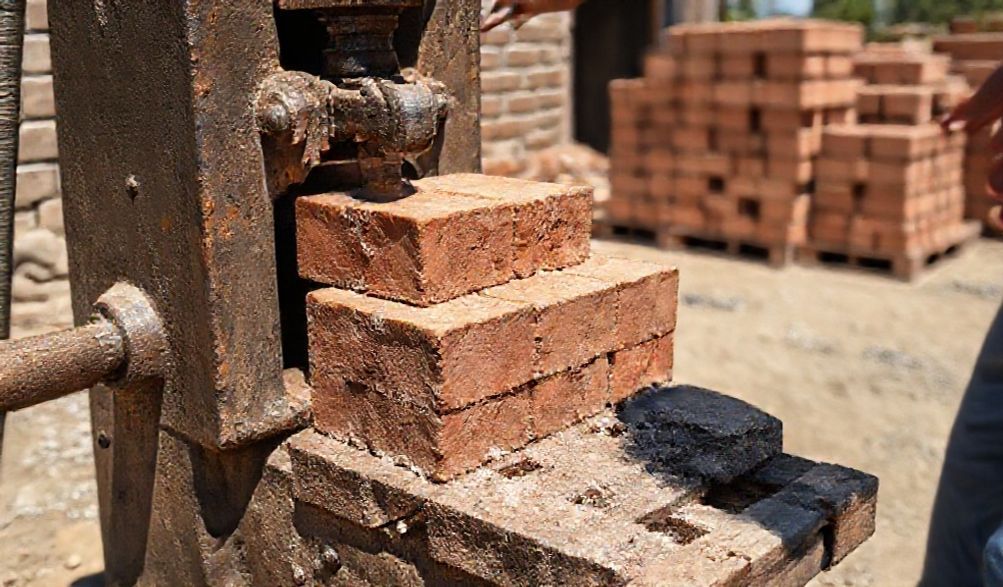
Manual Brick Making Machine Price: A Complete 2026 Buyer’s Guide
Introdução
You’re standing at the edge of your property, envisioning a new workshop, a garden wall, or perhaps the first phase of a small housing project. You know bricks are the answer, but commercial prices are eating into your slim budget or profit margin. The idea strikes you: “What if I made the bricks myself?” A quick search for a manual brick making machine price reveals a dizzying array of options, from a couple of hundred dollars to several thousand. The core dilemma for any small-scale builder, entrepreneur, or dedicated DIYer is laid bare: how do you balance a tight budget with the need for quality, durability, and sufficient output?
This guide is designed to cut through that confusion. Our purpose is to provide you with a transparent, expert-driven breakdown of the costs associated with manual brick machines. We’ll move beyond simple price lists to explain the por que behind the numbers, empowering you to make a value-driven purchase that aligns with your specific goals. By the end of this article, you will have a clear understanding of the 2026 price landscape, the key factors that influence cost, and a practical framework for selecting the best machine for your needs and budget. Let’s build that knowledge from the ground up.
Entendendo as Máquinas de Tijolos Manuais: Tipos e Aplicações
Before we delve into costs, it’s crucial to understand what you’re buying. A manual brick making machine is a mechanical press that uses human power to compact raw material—typically a mix of soil, cement, and water—into a solid, shaped brick. Unlike automated electric or hydraulic plants, these machines are powered by levers, making them ideal for locations with limited or no electricity and for operators prioritizing low capital investment.
How Manual Brick Machines Work (A Simple Explanation)
The process is elegantly simple and universally similar across most models:
- Mistura: Raw materials (e.g., laterite soil, sand, cement) are mixed with water to achieve a consistent, damp consistency—like moist potting soil.
- Carregando: This mixture is placed into the machine’s mold cavity(s).
- Compactação: The operator pulls or pushes a lever. This action drives a ram or piston down into the mold, applying immense pressure to compress the mixture.
- Ejeção: The lever is released or moved to a different position, and the freshly formed, solid brick is ejected from the mold onto a pallet or the ground.
- Cura: The bricks are stacked and kept moist for several days to gain strength before use.
This simple, robust process is the heart of every machine, but designs vary significantly to suit different scales and purposes.
Common Types and Their Primary Uses
-
Single Brick Molds: These are the simplest and most affordable tools, often just a steel mold and a hand tamper.
- Melhor Para: Tiny projects, occasional hobby use, or testing soil suitability.
- Saída: Very low (50-100 bricks per day).
-
Multi-Brick/Mobile Machines: This is the most common category for serious users. They feature a steel frame on wheels with a lever system that compacts multiple bricks (commonly 3, 4, 5, or 6) simultaneously.
- Melhor Para: Small businesses, homestead construction, community projects, and serious DIY. They offer the best balance of output, portability, and price.
- Saída: A small team can produce 500-2,000 bricks per day.
-
Prensas de Tijolos Intertravados: These specialized machines produce bricks with designed ridges and grooves that lock together without mortar, creating strong, earthquake-resistant structures.
- Melhor Para: Building projects where reduced mortar use and enhanced structural integrity are priorities.
- Saída: Varies by model, but often similar to multi-brick machines.
Applications for bricks made with these machines are vast: home construction, perimeter walls, landscaping features, small commercial buildings, sheds, and humanitarian building initiatives.
Key Factors That Determine Manual Brick Making Machine Price
The price tag on a machine isn’t arbitrary. It’s a direct reflection of its components, capabilities, and origin. Understanding these factors will help you decode any quote and compare apples to apples.
Machine Capacity & Output (Bricks Per Hour/Day)
This is the single biggest driver of cost. A machine designed to produce 3 bricks per cycle is inherently less expensive than one producing 6 bricks per cycle of the same size. Higher-capacity models require heavier frames, larger levers, and more robust compaction mechanisms to handle the increased load. When comparing prices, always link it back to the claimed daily output.
Build Quality & Materials
The quality of steel and craftsmanship separates a disposable tool from a generational asset.
* Estrutura e Estrutura: Look for thick, reinforced steel sections (e.g., 4mm+ thickness) with clean, strong welds. Cheap machines use thin, lightweight steel that will bend or warp under repeated stress.
* Moldes: The mold is the heart of the machine. Hardened, high-carbon steel molds resist abrasion and will last for hundreds of thousands of bricks. Mild steel molds will wear out quickly, losing brick dimensional accuracy.
* Moving Parts: The quality of the pivot pins, bushings, and lever mechanism dictates smooth operation and longevity. Sealed bearings are a sign of a higher-quality build.
Reputação e Origem da Marca
An established brand with a decade of history often commands a higher price for good reason: proven durability, consistent quality control, and the expectation of support. Generic or no-name machines, frequently sourced from large online marketplaces, can be cheaper upfront but are a gamble. The machine’s country of manufacture also affects price due to variations in labor costs, material prices, and import/export logistics.
Included Features & Accessories
The base price might be for a standard machine with one common brick mold. Additional costs can include:
* Different mold shapes (hollow blocks, paving slabs, decorative bricks).
* A stand-alone pan mixer for consistent material preparation.
* A wheelbarrow attachment for easier mobility.
* A set of basic maintenance tools or spare parts kits.
Always clarify what is included in the quoted price.
Manual Brick Making Machine Price Ranges in 2026
With the influencing factors in mind, here is a realistic breakdown of what you can expect to invest in 2026. Remember, these are price ranges for the machine itself; shipping, taxes, and duties are typically extra.
Entry-Level Machines (For Hobbyists & Very Small Projects)
- Faixa de Preço: $200 – $800.
- O Que Esperar: This range covers basic single-brick molds and very light-duty multi-brick presses. Construction is often minimal, using lighter-grade steel. They are suitable for personal projects like a small garden path or a single shed. Durability and output are limited. Purchase from this range with the understanding that it is a tool for occasional, non-commercial use.
Mid-Range Machines (For Small Businesses & Serious DIY)
- Faixa de Preço: $800 – $2,500.
- O Que Esperar: This is the sweet spot for most buyers. Here you will find robust 3, 4, 5, and 6-brick mobile machines from a variety of brands and generic suppliers. Expect better steel thickness (3-5mm), more refined lever systems, and reliable performance. Machines in this bracket are capable of supporting a start-up brick-making enterprise or completing a significant home construction project. This is where careful comparison of build quality and brand reputation pays off.
High-Capacity Manual Machines (For Larger Scale Production)
- Faixa de Preço: $2,500 – $5,000+.
- O Que Esperar: At this level, you are entering industrial-grade territory. These are heavy-duty machines designed for continuous, daily production. Features may include:
- Extremely heavy-duty frames and multiple reinforcement points.
- Advanced lever or flywheel systems for greater mechanical advantage.
- Capabilities for larger or specialized block types.
- Higher daily output targets (2,500+ bricks with a team).
These are investments for established small businesses with consistent demand.
Beyond the Sticker Price: Calculating Total Cost of Ownership
A savvy buyer looks beyond the initial invoice. The true cost of your machine includes several often-overlooked factors.
Shipping, Import Duties, and Local Taxes
A machine priced at $1,500 could incur $300-$600 in sea or air freight, especially if shipping internationally. If importing, be prepared for potential customs duties, port fees, and value-added tax (VAT) in your country. Always request a “landed cost” or CIF (Cost, Insurance, and Freight) quote from suppliers.
Cost of Raw Materials & Mold Customization
Your business plan must account for the ongoing cost of materials—soil, sand, cement—and their consistent availability. Furthermore, if you need a custom brick shape or size, custom mold fabrication can add $150-$500+ to your initial cost.
Maintenance, Repair, and Operational Costs
A cheap machine with poor-quality parts will break down. The cost of downtime, replacement parts, and the labor to fix it can quickly erase any initial savings. A slightly more expensive, well-built machine from a supplier that stocks spare parts will have a far lower long-term cost of ownership. Factor in periodic lubrication and general upkeep.
How to Get the Best Value for Your Money
Value isn’t about finding the cheapest option; it’s about optimizing the return on your investment. Follow this actionable advice.
Define Your Actual Needs (Output, Brick Type, Frequency)
Be brutally honest. Are you building one house, or supplying bricks for a community? Do you need standard solid bricks or interlocking ones? Will the machine be used daily for a year, or intermittently for several? Answering these questions prevents you from overbuying (wasting capital) or underbuying (facing bottlenecks and machine failure).
Research Brands and Read Verified Reviews
Go beyond the supplier’s website. Search for the machine model or brand name on independent forums, YouTube (look for long-term “update” videos), and business directories. Look for patterns in reviews: are users complaining about the same broken part after six months? Or praising the machine’s durability after five years?
Compare Supplier Credentials & After-Sales Support
The supplier is as important as the machine. Key questions to ask:
* What is the warranty period and what does it cover?
* Do you have a detailed parts diagram and inventory?
* Can you supply replacement parts, and how quickly?
* Do you offer any technical support (e.g., via WhatsApp or email)?
A supplier with good answers is selling a long-term partnership, not just a product.
Consider Buying Directly vs. Through a Local Dealer
- Buying Direct (from manufacturer/online platform): Often lower unit cost. Contras: Complex logistics, potential language barriers, difficult-to-enforce warranties, and no local support.
- Buying from a Local Dealer/Distributor: Higher price. Prós: Easier communication, local warranty handling, possible installation guidance, and quicker access to parts.
Weigh which set of risks and benefits aligns with your skills and situation.
FAQ Section
Q1: What is the cheapest manual brick making machine available?
Basic, unbranded single-brick steel molds can be found for as low as $200. However, it’s critical to understand the trade-offs: very low output, potential durability issues, and a lack of support. For any meaningful project, investing in a more capable multi-brick machine in the $800+ range typically offers far better long-term value.
Q2: Can I make a profit using a manual brick making machine?
Yes, it is possible, but it requires a realistic business approach. Success depends on:
* Strong local demand for affordable bricks.
* Reliable, low-cost access to quality raw materials.
* Efficient operation and labor management.
* A machine robust enough for daily use. Many small-scale entrepreneurs successfully use mid-range machines to build profitable businesses, especially in developing regions.
Q3: How long does a manual brick machine typically last?
Lifespan is almost entirely a function of build quality and maintenance. A very cheap machine might last for one season (50,000-100,000 bricks) before critical failure. A well-made, professionally maintained machine from the mid or high-range can last for a decade or more, producing over a million bricks.
Q4: Are there any reliable brands you recommend?
While specific model recommendations can change, brands like M7MI (from China, widely exported), Habitat for Humanity’s Hydraform (known for interlocking systems), and Makiga Engineering (popular in Africa) have established reputations in the industry. Always research the latest models and user feedback for any brand before purchasing.
Q5: Where can I buy a manual brick making machine?
Primary channels include:
* Direct from Manufacturers: On B2B platforms like Alibaba, Indiamart, or through their own websites.
* Specialized Equipment Websites: Global or regional sites focusing on construction machinery.
* Local Industrial Suppliers & Dealers: Check for agricultural or construction equipment suppliers in your area who may act as distributors.
Conclusão
Navigating the manual brick making machine price landscape requires looking past the initial number. As we’ve explored, the final cost is a reflection of capacity, materials, brand, and included features, with prices ranging from a few hundred dollars for hobby tools to several thousand for industrial-grade equipment. The smartest purchase isn’t the cheapest one you can find; it’s the machine that offers the greatest long-term value, reliability, and suitability for your specific output goals and working conditions.
Use this guide as your checklist. Define your needs, research thoroughly, and approach suppliers with informed questions about build details, shipping, and support. With due diligence, you can invest in a machine that becomes the foundation not just for bricks, but for your project’s—or your business’s—success.
<