
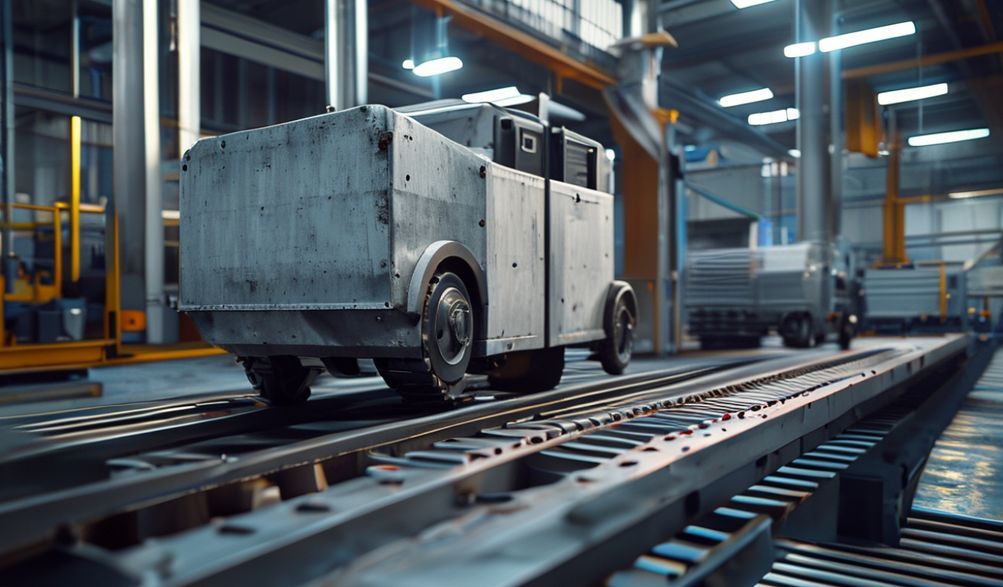
Your Ultimate Guide to Choosing a Block Machine Making Manufacturer
Введение
The global construction industry is a relentless engine of growth, demanding efficient, durable, and cost-effective materials. At the heart of countless building projects—from residential homes to massive infrastructure—lies the humble yet indispensable concrete block. The quality, consistency, and availability of these blocks are foundational to project success. This reality places immense importance on the source: the block making machine and, more critically, the manufacturer behind it.
For business owners, construction managers, and entrepreneurs, selecting the right block machine making manufacturer is a high-stakes decision. The market is flooded with options, ranging from backyard workshops to global industrial giants. The wrong choice can lead to catastrophic downtime, inferior product quality, and a devastating blow to profitability. How do you cut through the noise and identify a partner who will empower your business for years to come?
This guide is your comprehensive roadmap. We will move beyond basic specifications and price tags to explore the core principles of a wise investment. We’ll emphasize evaluating manufacturers through the lens of E-E-A-T (Опыт, Экспертность, Авторитетность и Надёжность)—a framework that separates market leaders from the rest. Whether you’re launching a new block yard or upgrading existing capacity, the insights here will equip you to make a confident, strategic choice.
Понимание машин для производства блоков: типы и области применения
Before vetting manufacturers, you must understand the machinery itself. Your production goals, site conditions, and product mix will dictate the type of machine you need.
Объяснение основных типов машин
Block machines are primarily categorized by their mobility and level of automation.
-
Стационарные станки для производства блоков: These are heavy-duty, high-output powerhouses designed for fixed-location factories. They are installed on a solid foundation and are typically fed by conveyor systems from large raw material hoppers.
- Лучше всего подходит для: Large-scale production, consistent high-volume output, and operations with dedicated factory space.
-
Мобильные станки для изготовления блоков (яйцеслойные): These machines are more compact and movable. They produce blocks directly on the ground or on a concrete slab, “laying” them like eggs as they move.
- Лучше всего подходит для: On-site production (reducing transport costs of finished blocks), smaller yards, and projects requiring flexibility in production location.
The second crucial distinction is the degree of automation:
- Полностью автоматические машины: The entire process—from raw material feeding and mixing to molding, curing, and stacking—is controlled by a Programmable Logic Controller (PLC). They require minimal manual labor and deliver the highest, most consistent output.
- Полуавтоматические станки: Core processes like compression and vibration are automated, but tasks like feeding raw material or removing finished blocks may be manual. They offer a good balance between output, cost, and labor.
- Ручные станки: Operated entirely by hand lever or simple mechanical systems. These are low-capacity machines suitable for very small-scale or startup projects with tight budgets.
Key Outputs: Beyond Standard Concrete Blocks
A versatile machine can open multiple revenue streams. Modern block machines can produce a wide array of products using interchangeable molds:
- Структурные блоки: Hollow blocks, solid blocks, and lightweight blocks.
- Paving & Landscaping Products: Interlocking pavers, garden edging, and retaining wall units.
- Специальные товары: Curbstones, chimney blocks, and insulated (thermostone) blocks.
- Индивидуальные дизайны: For architectural or niche market applications.
Defining your target product range is the first step in communicating your needs to a manufacturer.
The Hallmarks of a Top-Tier Block Machine Manufacturer
Price is a factor, but it should not be the primary driver. The true cost of a machine is measured over its entire lifespan. Partnering with a reputable manufacturer is an investment in reliability, productivity, and peace of mind. Here are the pillars of a top-tier manufacturer, aligned with E-E-A-T principles.
Проверенный опыт и долголетие в отрасли
Почему это важно: In heavy machinery, experience isn’t just a number—it’s a repository of solved problems. A manufacturer with 20+ years in the field has iteratively improved designs, understood failure points, and adapted to evolving market demands.
- Look for a rich portfolio of case studies and installation references across different regions and climates.
- A long-standing company has likely built a more robust supply chain for quality components and spare parts.
Техническая экспертиза и инновации
Почему это важно: This is the core of “Expertise.” It’s the difference between a simple metal fabricator and a true engineering firm.
- Внутренние исследования и разработки (НИОКР): Do they have a dedicated engineering team? Can they customize a solution for your specific raw materials (like fly ash or slag)?
- Качество материала: Machines should be built with high-grade, wear-resistant steel, especially in critical areas like the mold, frame, and vibration table.
- Technological Integration: Are they incorporating energy-efficient motors, smart diagnostics, or user-friendly PLC interfaces? Innovation here translates to lower operating costs and easier maintenance for you.
Manufacturing Authority & Certifications
Почему это важно: Certifications are objective validations of “Authoritativeness” and a commitment to standardized quality.
- Международные стандарты: ИСО 9001 certification is a strong indicator of systematic quality management in design and production.
- Safety & Compliance: Маркировка СЕ (for the European market) shows the machine meets EU health, safety, and environmental standards.
- Facility Scale: While not everything, a professional, organized manufacturing facility often correlates with better process control and production capacity.
Building Trust Through Transparency & Support
Почему это важно: This is the foundation of “Trustworthiness.” The relationship begins после the sale. A machine will eventually need service.
- Clear Warranty: What is covered (parts, labor)? For how long? What are the terms?
- After-Sales Service Structure: Do they have trained technicians? What is their typical response time for support queries?
- Spare Parts Policy: Are genuine spare parts readily available? Is there an online parts catalog or inventory system?
- Комплексное обучение: Will they provide thorough training for your operators and maintenance staff on-site or at their factory?
A Step-by-Step Checklist for Vetting Manufacturers
Turn the principles above into actionable steps. Break your evaluation into three phases.
Phase 1: Initial Research & Shortlisting
- Analyze Their Digital Footprint: A professional, informative website is a minimum. Dive into their content, technical blogs, and video demonstrations.
- Scrutinize Testimonials & Case Studies: Look for specific details—client names, locations, project outcomes. Generic praise is less valuable.
- Seek Independent Verification: Search for reviews on industry forums, B2B platforms, or social media. Ask your network for referrals.
Phase 2: Deep Dive & Inquiry
- Request Detailed Documentation: Ask for:
- Complete technical specifications sheets.
- Factory layout and foundation drawings.
- List of component brands (e.g., Siemens PLC, Rexroth hydraulics).
- Estimated energy consumption report.
- Ask for Client References: Request contacts for 2-3 clients in a similar business scale or region as yours. Actually call them. Ask about machine performance, reliability, and quality of service.
Phase 3: Final Evaluation & Decision
- Calculate Total Cost of Ownership (TCO): Factor in:
- Machine price
- Shipping, insurance, and customs duties
- Installation and commissioning costs
- Estimated costs of maintenance and energy over 5 years
- Clarify Logistics & Commissioning: What is the delivery timeline? Do they provide installation supervision? Who handles the machine commissioning and first batch test?
- Review Contract Details: Ensure payment terms (e.g., 30% deposit, 70% before shipment), warranty clauses, and service agreements are clear and fair.
Critical Questions to Ask Your Potential Manufacturer
Come to negotiations prepared. These questions will reveal a manufacturer’s depth of knowledge and commitment.
Questions About the Machine
- “Based on my raw material mix design, what is the expected production output (blocks per 8-hour shift) and what is the precise время цикла?”
- “Can you provide a recommended mix design (cement, aggregate, water ratio) for optimal block strength and machine performance with my local materials?”
- “How is the вибрационная система engineered? Is it high-frequency, multidirectional, and mounted on anti-vibration pads for stability and product density?”
- “What are the brands and models of key components like the hydraulic pump, PLC, and motors?”
Questions About Service & Partnership
- “What is explicitly included in your after-sales service package for the first year?”
- “What is your standard procedure and average time for delivering a critical spare part to [Your Country]?”
- “Do you offer a comprehensive training program for our team, and is it included in the price?”
- “In case of a technical issue we can’t resolve remotely, what are the options and costs for sending a technician to our site?”
Frequently Asked Questions (FAQ)
Q1: What is the average lead time for a block making machine from order to delivery?
А: Lead times vary significantly, typically from 30 to 90 days. It depends on the machine’s complexity, level of customization, and the manufacturer’s current order book. A reputable manufacturer will provide a clear and detailed production and shipping schedule upon order confirmation.
Q2: Can a single machine produce different types and sizes of blocks?
А: Yes, versatility is a key feature. Most modern machines use a standard pallet size and interchangeable molds. However, it’s crucial to confirm with the manufacturer that the machine’s frame, hydraulic pressure, and vibration system are adequately sized to handle the full range of mold sizes and product densities you plan to produce.
Q3: How important is local dealer support versus buying directly from the factory?
А: A competent local dealer can provide faster on-ground service and parts supply, which is a major advantage. However, a factory with a strong, responsive direct support team and efficient global logistics can be equally effective. Evaluate the specific support infrastructure of both options for your location.
Q4: What are the most common maintenance requirements for a block machine?
А: Daily and weekly maintenance is vital. This includes lubricating all moving parts, checking hydraulic oil levels and cleanliness, inspecting mold liners and wear parts for damage, and ensuring the vibration system is clean and functional. Your manufacturer must provide a detailed, scheduled maintenance checklist.
Q5: What factors most significantly impact the final price of a block making machine?
А: The primary drivers are: 1) Automation Level (automatic is more expensive than semi-automatic), 2) Production Capacity (higher output requires a heavier, more robust build), 3) Component Quality (premium-brand hydraulics and controls cost more), and 4) Customization (special features add cost). Never sacrifice critical quality for a lower initial price.
Заключение
Choosing a block machine making manufacturer is one of the most significant strategic decisions for your construction materials business. It transcends a simple equipment purchase; it’s the selection of a long-term technological partner. By prioritizing technical Expertise, proven Experience, authoritative industry standing, and transparent, Trustworthy practices, you invest in a foundation of productivity and profitability.
The cheapest option often carries the highest hidden cost—downtime. We encourage you to use the checklist and critical questions in this guide as practical tools during your evaluation. Consult with industry peers, visit factories if possible, and engage in detailed technical discussions with shortlisted manufacturers.
Take the next step with confidence. Begin your informed search today, and build your business on a foundation of quality and reliable partnership.
<