
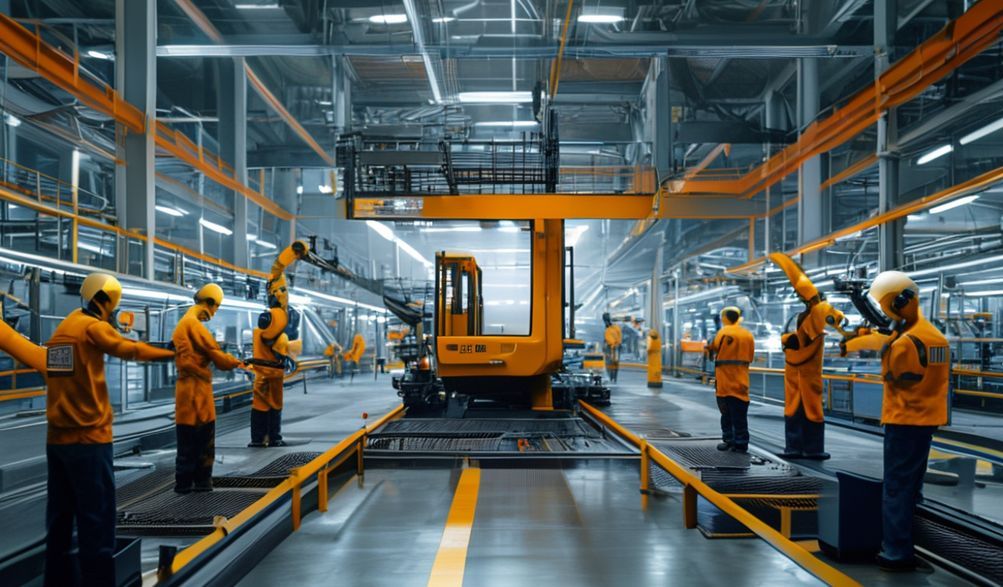
Inside China’s Premier Block Making Machine Factories: A Deep Dive into FUDA’s Manufacturing Excellence
The global construction industry is in a constant state of evolution, driven by urbanization, infrastructure demands, and the relentless pursuit of efficiency. At the heart of this evolution lies the machinery that builds our world: the automated block making machine. For businesses, contractors, and governments worldwide, sourcing reliable, high-output, and technologically advanced equipment is a critical capital decision.
In this landscape, China has emerged not just as a participant, but as the definitive global hub for manufacturing construction machinery. Among the myriad of China blocks making machine factories, one name consistently surfaces for its commitment to engineering and quality: the FUDA brick making factory.
This article serves as a comprehensive, trustworthy guide. We will move beyond simple supplier lists to provide a detailed analysis of the industry and a focused case study on FUDA. Our goal is to equip you—the buyer, engineer, or business owner—with the framework and insights needed to make an informed decision, whether you are evaluating FUDA or any other manufacturer in this competitive field.
The Landscape of China’s Block Making Machine Industry
Understanding the broader ecosystem is essential to appreciate the position of any single factory. China’s dominance in this sector is not accidental; it is the result of a powerful convergence of industrial factors.
Why China is a Global Leader in Construction Machinery Manufacturing
China’s leadership stems from a deeply integrated industrial foundation.
- Complete Supply Chain Ecosystem: From the high-grade steel for frames and molds to the precision hydraulic components, PLC control systems, and vibration motors, every critical part is manufactured within a dense, competitive domestic network. This reduces lead times and costs significantly.
- Scale and Specialization: The sheer volume of production allows factories to specialize, driving innovation and efficiency. Investment in R&D is substantial, with many factories moving from imitation to genuine innovation in automation and energy-saving technologies.
- Government and Institutional Support: Strategic national policies have long supported heavy industry and advanced manufacturing, fostering an environment where technological advancement in sectors like construction machinery is prioritized.
Key Industrial Clusters and Hubs for Block Making Machines
Production is concentrated in several key regions, each with its own characteristics:
- Fujian Province (Quanzhou, Fuzhou): A major hub for brick and block machinery, known for a high concentration of manufacturers ranging from small workshops to large, integrated plants like FUDA. The region benefits from a long history in stone processing and machinery.
- Shandong Province (Linyi, Qingdao): A powerhouse for heavy machinery and construction equipment, with strengths in larger, more robust stationary block making plants and concrete processing equipment.
- Intara y’Uburasirazuba. Leveraging its overall manufacturing excellence and export logistics, it hosts factories with strong capabilities in automated production lines and integration with other construction systems.
Distinguishing Between Factory Types: OEMs, Exporters, and Integrated Manufacturers
This distinction is crucial for your sourcing strategy:
- Original Equipment Manufacturers (OEMs)/Integrated Manufacturers: These are true factories like FUDA. They design, engineer, machine, assemble, and test on-site. This allows for strict quality control, direct customization, and typically more reliable after-sales support.
- Exporters/Trading Companies: They act as middlemen, sourcing from various (often unknown) factories. While they can simplify communication and logistics, they add a layer of cost and can obscure the true origin and quality standards of the machine. Direct factory contact removes this opacity.
Spotlight on FUDA Brick Making Factory: A Case Study in Quality
Let’s apply our understanding of the industry to a concrete example. The Uru ruganda rwubaka rwa FUDA represents the class of integrated manufacturer that has built its reputation on direct manufacturing capability.
Ibyerekeye Isosiyete: Amateka, Ubunini, na Filozofiya y'Ubwubatsi
Established with a focus on the brick and block machinery sector, FUDA has grown into a significant player. While specific financials are private, their operational scale is evident in their facilities, which typically house extensive machining workshops, assembly floors, and testing areas.
Their manufacturing philosophy often centers on a few core principles, as reflected in their communications and product design:
- Vertical Integration: Controlling key production stages in-house, from steel cutting to final assembly.
- Customer-Centric Engineering: Offering a range of models and a willingness to customize molds and systems to specific project needs.
- Value Through Durability: Emphasizing robust construction and the use of reputable brand-name components in critical areas to ensure machine longevity.
Core Product Range and Technological Innovation
A leading factory’s catalog reveals its capabilities. FUDA’s typical product range includes:
- Imashini z'ubaka ibibumbe bya sima: From fully automatic, high-output stationary machines (like the QT series) producing hollow blocks, solid blocks, and curbstone, to more mobile egg-laying block machines.
- AAC (Autoclaved Aerated Concrete) Block Production Lines: These are complete plant solutions for manufacturing lightweight, insulating building blocks, showcasing ability to handle complex, integrated systems.
- Paver and Interlocking Brick Making Machines: Specialized equipment for landscaping and hardscaping products, often with multi-layer color feeding systems.
- Brick Making Machines: For producing standard clay or concrete bricks.
Technological hallmarks you would expect from a manufacturer at this level include:
* Sisitemu zo Gucunga PLC: For fully automated, repeatable operation with touch-screen interfaces.
* Sisitemu za Hydrauliki z'Umushinga Urukomeye: For consistent block density and shape accuracy.
* Efficient Vibration Platforms: Utilizing multiple vibration motors to ensure thorough material compaction.
* Pallet Circulation Systems: Fully automated systems for moving curing pallets, which define the machine’s cycle time and overall output.
The Manufacturing Process: A Tour of Quality Assurance
The true test of a factory is on its production floor. A credible manufacturer like FUDA follows a disciplined process:
- Material Sourcing & Preparation: Using specified steel grades (e.g., Q235, Q345) that are shot-blasted and primed to prevent corrosion.
- Gukora Imashini z'ibikoresho by'Ingufu: Critical components like mold boxes, vibration tables, and structural frames are machined using CNC (Computer Numerical Control) equipment. This ensures dimensional accuracy and interchangeability of parts.
- Sub-Assembly & Integration: Hydraulic stations, electrical control cabinets, and conveyor systems are assembled in clean, organized stations before integration into the main machine.
- Gukemura mu buryo bukomeye: This is non-negotiable. Every machine should undergo:
- No-load Test: Running all functions without material to check mechanics and programming.
- Load Test (Trial Production): Producing blocks with real concrete mix to verify block quality, dimensional accuracy, and output capacity. This is often video-recorded for the client.
- Final Inspection: A comprehensive check of safety, electrical systems, hydraulic pressure, and paint finish against the order specification.
Critical Factors When Sourcing from Chinese Factories Like FUDA
Armed with industry and factory knowledge, you must know how to engage and verify. Here is a practical checklist.
How to Verify Factory Credentials and Capabilities
Do not rely on website claims alone. Request and verify:
- Business License (营业执照): A basic but essential document confirming their legal entity.
- International Certifications: ISO 9001 for quality management systems is a strong indicator. CE certification for machines destined for Europe is critical.
- Patent Certificates: For any proprietary technologies they claim to have.
- Factory Audit Report: If possible, commission a third-party inspection agency (like SGS, BV) for an on-site audit before payment.
- Client Portfolio & References: Ask for contact information for past international clients in a region similar to yours. A reputable factory will provide this.
Understanding Machine Specifications and Customization Options
Move beyond the model number. Scrutinize the technical proposal:
- Ubushobozi bwo Gukora Is it calculated in blocks/shift or blocks/hour? Under what ideal conditions?
- Ingano y'Imirongo: What is the range of the standard mold? What are the costs and lead times for custom molds?
- Ibikenewe by'ingufu: Total connected load (in kW) for the entire line, including mixers and conveyors.
- Key Component Brands: Which brands are used for the PLC (Siemens, Mitsubishi?), hydraulic pumps, vibration motors, and electrical parts? This directly impacts reliability and future maintenance.
- Guhindura Can they integrate a specific mixer or pallet type? Discuss these needs in detail during the quotation stage.
Navigating Logistics, Payment, and After-Sales Service
Clarity here prevents major disputes:
- Trade Terms: Understand Incoterms.
- FOB (Free On Board): You control and pay for shipping and insurance from the Chinese port.
- CIF (Cost, Insurance & Freight): The supplier arranges and quotes for shipping to your nearest port.
- Payment Security: Standard practice is a progressive payment.
- 30% deposit via T/T (Bank Transfer).
- 70% balance against copy of shipping documents before the goods are released.
- For larger orders, consider using a Letter of Credit (L/C) for added security for both parties.
- After-Sales Service Evaluation: Ask FUDA directly for their service structure:
- Warranty Period: Typically 12-18 months for the machine, often shorter for wear parts like mold liners.
- Ibigabanyabugenamashini: How are parts priced and shipped? Do they keep an inventory of common spare parts?
- Ubufasha bwa tekiniki Do they provide detailed English manuals, wiring diagrams, and hydraulic schematics? Is remote support via video call available?
- Overseas Engineer Dispatch: What are the costs and lead times for sending a technician for installation and training? Who covers the visa, flight, and local expenses?
Comparative Analysis: Making an Informed Decision
FUDA’s Competitive Advantages in the Market
Based on the profile of an integrated manufacturer like FUDA, their strengths in the market likely include:
- Direct Manufacturer Pricing: Eliminating trader margins can offer better value.
- Ubushobozi bwo Gukora ibyo ushaka: Direct access to engineering and production allows for tailored solutions.
- Control Over Quality: In-house production of core components ensures consistency.
- Ubwoko bw'ibicuruzwa bwerekeye mu buryo bukwiye: Ability to supply everything from a single machine to a complete production line.
Considerations and Potential Challenges
A balanced view is essential for risk management:
- Communication: Despite having English-speaking staff, technical nuances can be lost. Insist on detailed, written specifications and confirmations.
- Cultural Business Practices: Negotiation styles and contract interpretation can differ. Employ clear, simple language in all agreements.
- The “Middleman” Temptation: You may be contacted by numerous trading companies claiming to represent FUDA. Always verify contact by reaching out to the factory through official channels listed on their own website.
- Due Diligence is Paramount: The framework in this article is your starting point. Your own verification through audits, reference checks, and a well-structured contract is your ultimate safeguard.
Bibazo Byinshi Byibazwa (FAQ)
Q1: Is FUDA a manufacturer or a trading company?
A: Based on its operational model, FUDA is a direct manufacturer. This means they handle the core processes of design, machining, and assembly in their own facilities, which generally translates to better cost control, quality oversight, and customization potential compared to a trader.
Q2: What is the typical lead time for a block making machine from FUDA?
A: Lead time varies significantly. A standard, non-customized machine might be ready in 30-45 days. For complex lines, heavy customization, or complete AAC plants, lead times can extend to 60-90 days or more. Always get a written production schedule tied to your payment milestones.
Q3: Can FUDA provide installation and commissioning support overseas?
A: Most reputable Chinese manufacturers, including FUDA, offer this as a core service. It typically involves the option to send experienced engineers to your site for a defined period. The client usually covers international travel, local accommodation, and a daily service fee. Detailed installation manuals and video guides are standard.
Q4: How does FUDA ensure the quality of its machines compared to European brands?
A: The gap has narrowed considerably. Factories like FUDA often use the same tier of international components (e.g., Siemens PLCs, Schneider electrics, Rexroth hydraulics). The engineering design often follows similar principles. The primary difference often lies in brand heritage, long-term performance data, and the depth of localized service networks in your country. The value proposition is high performance at a competitive investment point.
Q5: What is the minimum order quantity (MOQ) and payment terms?
A: For standard block making machines, the MOQ is typically one (1) unit. Standard payment terms are often structured as a 30% deposit to commence production, with the 70% balance paid before shipment after the client approves pre-shipment photos and test run videos.
Ibyo byose
Navigating the world of China blocks making machine factories requires a blend of market knowledge and meticulous verification. China’s industrial ecosystem offers unparalleled value and capability, but success hinges on identifying the right type of partner: the integrated, quality-focused manufacturer.
TheUru ruganda rwubaka rwa FUDA, as an example of this category, demonstrates how a commitment to in-house manufacturing, technological integration, and a structured quality process can build a strong export reputation. Your journey should not end with this analysis, but begin with it.
Use the frameworks discussed—verifying credentials, scrutinizing specifications, and clarifying service terms—to conduct your own due diligence. Request the factory audit videos, ask for the contact details of their recent international clients, and ensure every promise is documented in a clear, enforceable contract. In the global market for construction machinery, informed diligence is the foundation of a successful investment.
<