
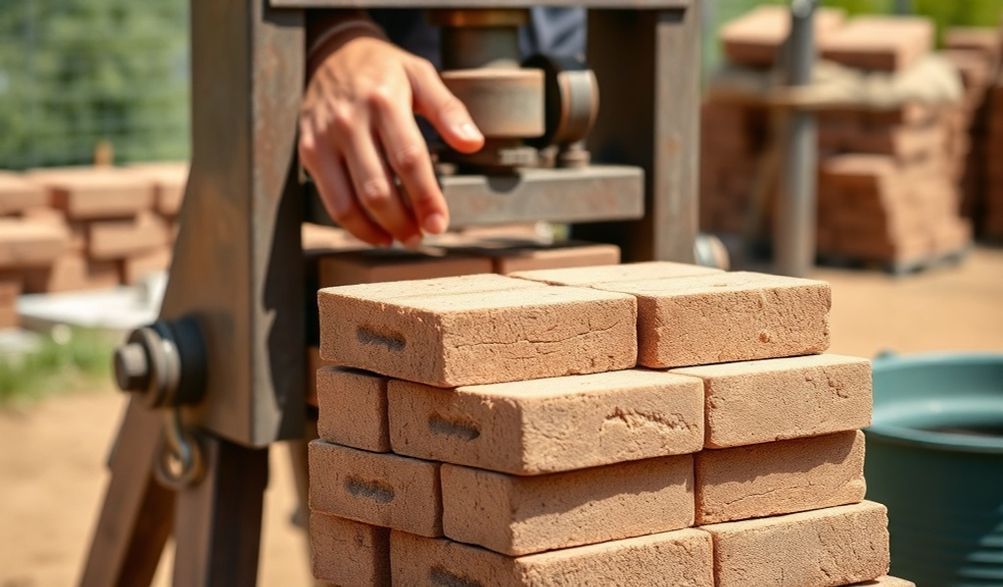
The Essential Guide to Manual Brick Molding Machines: Building Sustainably, One Brick at a Time
Intangamarara
In a world grappling with the dual challenges of affordable housing and environmental sustainability, a quiet revolution in construction is taking place. It’s not driven by complex robotics or expensive imports, but by a simple, human-powered tool: the manual brick molding machine. For small-scale builders, community cooperatives, and visionary DIYers, these machines offer a powerful key to unlocking self-reliant construction.
Moving beyond the limitations of traditional, labor-intensive mud bricks and the high cost of automated plants, manual presses provide a perfect middle ground. They combine the strength and uniformity of industrial bricks with the accessibility and low overhead of vernacular building methods. This comprehensive guide is born from practical, on-the-ground experience in sustainable building. We will demystify these machines, providing you with a trustworthy, detailed resource to understand their operation, leverage their significant benefits, and make an informed selection for your project. Whether you’re building a home, a school, or starting a small business, the foundation of your success starts here.
Understanding Manual Brick Molding Machines
What is a Manual Brick Molding Machine?
At its core, a manual brick molding machine is a mechanical device that uses human force to compress raw earth or a stabilized mixture into a dense, standardized brick. It replaces the need for electrical grids, diesel generators, or costly kiln firing. The fundamental principle is mechanical compaction—applying high pressure to soil particles to eliminate air voids and create a strong, cohesive unit.
The evolution of this tool is a story of appropriate technology. From simple wooden frames that produced sun-dried adobe bricks, the design has been refined into durable, efficient steel presses capable of producing bricks strong enough for multi-story buildings. This progression reflects a global understanding that sustainable building often starts with smart, simple tools.
Ingingo Nyamukuru n'Imikorere Yazo
Every manual brick press is a system of interconnected parts. Understanding each component is crucial for effective operation and maintenance.
- Ikadiri This is the skeleton of the machine. Typically constructed from heavy-duty steel angle or channel, it must withstand tremendous repetitive force without bending or warping. A robust frame ensures consistent brick quality and operator safety.
- Mold Box/Chamber: This defines the shape and size of your final product. It can be designed for standard rectangular bricks or specialized interlocking bricks. Mold boxes are often removable or interchangeable, allowing one machine to produce different brick types.
- Compaction Mechanism: The heart of the operation. There are three primary types:
- Lever-Operated Presses: Use a long lever to generate high compressive force through a mechanical advantage. They are common and allow for good control.
- Screw-Type Presses: Utilize a large threaded screw to drive a compression plate into the mold. They can generate extremely high, steady pressure but may be slower per cycle.
- Impact-Based Systems (e.g., Cinva Ram style): Use a lever to lift a heavy weight (rammer) which is then dropped onto the soil in the mold. This dynamic compaction can be very effective for certain soils.
- Sisitemu yo Gukuraho A critical feature for efficiency. After compaction, a mechanism—often a foot pedal or secondary lever—pushes the formed brick smoothly out of the mold box onto a base plate. A good system prevents brick damage during release.
- Base Plate & Pallet: The solid platform where the brick is formed and ejected. Pallets (often wooden or metal sheets) allow the fresh “green” brick to be carried away for curing without being handled directly.
Advantages of Using a Manual Brick Press
Ubushobozi bwo gukoresha amafaranga neza no gutanga amafaranga make
The financial argument for manual machines is compelling. The initial capital outlay is a fraction of the cost of motorized or automated equipment. More importantly, operational costs are near zero—no electricity bills, no fuel costs. Maintenance involves simple lubrication and part replacement, avoiding expensive technician call-outs. This low barrier to entry opens brick production to individuals and micro-enterprises.
Sustainability and Environmental Impact
Manual brick presses are a cornerstone of green construction. Their operation produces zero direct carbon emissions. They promote the use of local, on-site materials, drastically reducing the transportation footprint associated with fired bricks or concrete blocks. Furthermore, they minimize material waste through precise molding and can even utilize suitable sub-soil from the building site itself.
Portability and Operational Flexibility
Unshackled from power cords and fuel supplies, these machines go where the project is. They are indispensable for:
* Remote or Off-Grid Construction: Building in areas without reliable infrastructure.
* Disaster Relief and Community Development: Rapid, on-site production of building materials for housing projects.
* Small-Scale and Backyard Projects: Perfect for building garden walls, sheds, or home extensions without the logistical hassle of ordering delivered materials.
Empowerment and Skill Development
Perhaps the most profound benefit is social. Operating a manual press fosters local self-reliance, reducing dependency on external supply chains. It creates tangible opportunities for small-scale entrepreneurship—a single machine can be the start of a viable brick-making business. On a community level, it builds valuable, transferable skills in mechanics, material science, and construction.
How to Operate a Manual Brick Molding Machine: A Step-by-Step Guide
Quality bricks are made through process, not just pressure. Follow these best practices.
Step 1: Material Selection and Preparation
This is the most critical step. A perfect machine cannot compensate for poor material.
- Ideal Soil Composition: You need a balanced mix of clay (the binder), silt, and sand/gravel (the aggregate). Pure clay will crack; pure sand will not bind. The ideal is a “loam.”
- The Jar Test: A simple field analysis. Fill a clear jar 1/3 with soil, 2/3 with water, shake vigorously, and let it settle for 24 hours. Layers will form: gravel (bottom), sand, silt, and clay (top). A good brick soil might have roughly 30% clay, 30% silt, and 40% sand/gravel.
- Guhagarika For greater strength and weather resistance, add a stabilizer like Portland cement (5-10% by volume) or lime. Mix it thoroughly with dry soil first.
- Ubushyuhe bw’umwuka Achieve the “plastic” state. The material should hold its shape when squeezed in your fist and show a slight sheen, but not drip water. Too dry = weak brick; too wet = brick deforms.
Step 2: Machine Setup and Safety Check
- Place the machine on a level, stable, and solid surface (a concrete slab is ideal).
- Before starting, inspect all welds, bolts, pins, and the mold cavity for cracks, wear, or damage.
- Personal Protective Equipment (PPE) is non-negotiable: Wear sturdy gloves, safety glasses to protect from flying particles, and steel-toe boots.
Step 3: The Molding and Compaction Process
- Kuremera Fill the mold box evenly with your prepared mix. Do not overfill; follow the manufacturer’s guideline. Some operators use a “scraping bar” to level the material.
- Gukosora: Apply force steadily and fully. With a lever press, pull the lever to its maximum position and hold for a moment. The goal is uniform density, not speed. Inconsistent pressure leads to weak spots.
- Guhagarika Engage the ejection mechanism smoothly. Guide the solid “green” brick onto a waiting pallet. Handle it with care, as it is still fragile.
Step 4: Curing and Drying the Bricks
- Initial Setting (24-48 hours): Keep the newly molded bricks in a shaded, covered area protected from direct sun and wind to prevent rapid moisture loss and cracking.
- Proper Stacking: After initial setting, stack bricks in a criss-cross (“honeycomb”) pattern to allow maximum air circulation for even drying.
- Curing Duration: Allow bricks to cure for a minimum of 2-4 weeks. For cement-stabilized bricks, lightly mist them with water for the first 7-10 days to ensure the cement cures properly, then let them dry completely. Full strength develops over time.
Choosing the Right Machine for Your Project
Assessing Your Brick Requirements
Begin by defining your needs:
* Umushinga wo Kubarurira Estimate total bricks needed and your required daily output. A small home might need 5,000 bricks; plan your production timeline accordingly.
* Ubwoko bwa brike: Standard bricks require mortar. Amatafari y'ibumba asanga have keyed edges that fit together, reducing mortar use by up to 50% and increasing wall shear strength.
* Required Compressive Strength: For non-load-bearing garden walls, 1-2 MPa may suffice. For load-bearing single-story walls, aim for bricks testing above 3 MPa. Know your local building code requirements.
Critical Features to Compare
When evaluating models, scrutinize these aspects:
- Ubushobozi bwo gukora: Manufacturers may cite optimistic numbers. A realistic range for a single operator is 30-70 bricks per hour, factoring in material prep and rest breaks.
- Ubwiza bwo Kubaka Look for thick steel (at least 5mm), clean, continuous welds, and corrosion-resistant paint or galvanization. Weight can be an indicator of sturdiness.
- Ergonomics: A machine with poor leverage or awkward operation will cause rapid fatigue, lowering output and increasing injury risk. Test the action if possible.
- Spare Parts & Support: Ensure the supplier can provide replacement mold boxes, wear plates, and pins. A machine without available parts has a very short lifespan.
Top Manual Brick Machine Models Reviewed
Note: This is a typology review, not a brand endorsement.
- Imashini z'ubukoreshwa mu gukora amatafari y'ibumba. Excellent for DIYers and projects aiming for efficiency. They simplify bricklaying and create very stable walls. Popular styles include the “hydraform” or “earth block” type press.
- High-Volume Lever Presses: Often feature a longer lever and robust frame for higher pressure. Suited for small business owners or community projects where a team can operate one machine continuously.
- Multi-Brick Molds: Machines designed to produce 2, 3, or 4 bricks per compression cycle. They significantly increase daily output but require more raw material prepared per cycle and are heavier to operate.
Bibazo Byinshi Byibazwa (FAQ)
Q: How many bricks can I make in a day with a manual machine?
A: Output varies based on machine type, operator skill, and workflow. A single skilled operator using an efficient lever press can typically produce 200 to 500 quality bricks in an 8-hour day, including material preparation time. A two-person team (one preparing mix, one operating) can increase this significantly.
Q: What is the compressive strength of manually pressed bricks?
A: With proper soil selection and stabilization (e.g., 5-10% cement), manually pressed bricks can consistently achieve strengths between 3 MPa to 7 MPa (≈ 435 to 1015 PSI). This is suitable for one and two-story residential construction. Always test your specific mix in a lab.
Q: Can I use ordinary backyard soil?
A: Not all soils are suitable. Pure sand or heavy clay will not bind properly. The ideal soil is a “loam”—a balanced mixture of clay, silt, and sand. Simple field tests (like the jar test or ribbon test) are essential to determine suitability before starting production.
Q: What maintenance does a manual brick machine require?
A: Maintenance is minimal but critical. It includes regular cleaning after use to prevent material buildup, lubrication of all moving pins and hinges with grease or oil, and periodic inspection for cracks or deformation in the mold and frame. Proper storage under cover will prevent rust.
Q: Are bricks made this way durable and weather-resistant?
A: Yes, but protection is key. Stabilization with cement greatly enhances durability and water resistance. For long-term weather exposure, finished walls should be protected with a plaster render or water-repellent coating. A properly sized roof overhang is also crucial to minimize direct rain exposure.
Ibyo byose
The manual brick molding machine is more than a tool; it is a philosophy of building. It represents a shift towards empowerment, resilience, and ecological sense. By marrying human ingenuity with the earth beneath our feet, it provides a tangible solution for affordable shelter and local economic development.
The journey to successful brick production is straightforward but demands attention to detail. It begins with understanding your soil, is executed through consistent, careful operation, and is enabled by choosing a well-built machine matched to your vision. This guide has laid out that path. Start with small batches, experiment with your local materials, and refine your technique. With patience and practice, you will not just be making bricks—you’ll be building confidence, community, and a more sustainable future, one solid block at a time.
Authoritative Note & Disclaimer: This guide synthesizes established principles of soil mechanics, appropriate technology, and hands-on construction practice. It is intended for educational and informational purposes. Always consult local building codes and regulations before construction. For structural projects, having your brick samples tested by a qualified engineer is strongly recommended to ensure they meet the required safety standards for your specific application.
<