
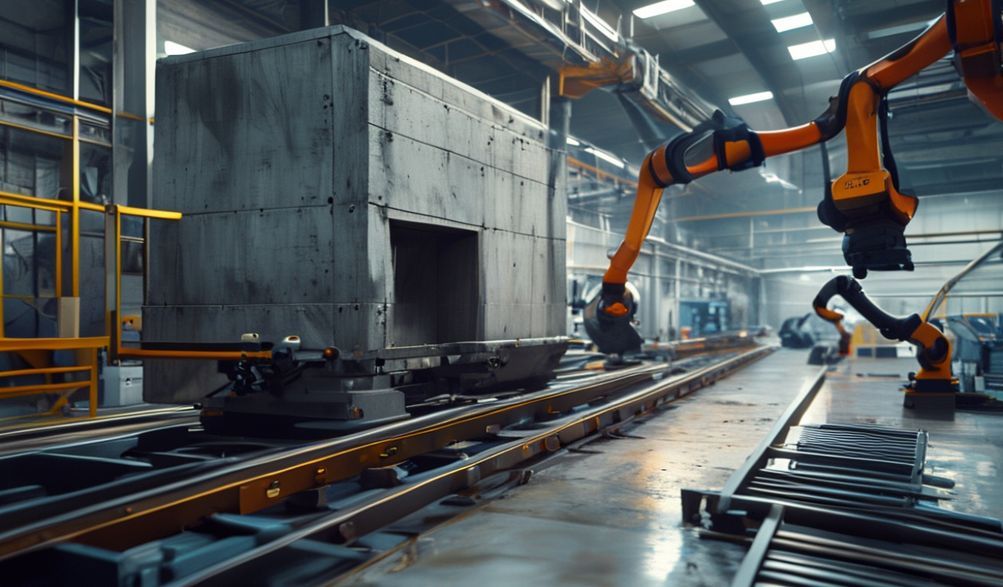
Inyoborazi Yuzuye ya Mashini Y’Igihugu Y’Ubwoko bwa QT12-15 Ikora Amatafa ya Sima.
Intangamarara
Inganda y'ubwubatsi ku isi zose zihora zihangayikishijwe n'igihe n'ingengo y'imari. Uko imijyi igenda yiyongera ndetse n'uguhinga ku ndaro z'ubwubatsi bwiza n'ibikoresho by'ibanze bikazamuka, ibigo bikora ibikoresho by'ubwubatsi bihagaze kuri leta yo gutanga ibikoresho by'ubwubatsi bifite ubuziranenge ku buryo bwihuse kandi bworoheje kurusha ibihe byose. Hagati y'iki kibazo, hari ikintu cy'ingenzi: ciment block. Kuyikora ku giciro gito, mu buryo butandukanye, kandi ku rugero runini ntabwo ari akazi ke.
Ku ba nyirubucuruzi, abayobora imishinga, n’abashoramari, ikibazo nyamukuru kirabagaragara. Ni gute ushobora gushyira mu nzibacyo icyifuzo cyo kuzamura umusaruro munini n’ubushobanzi bwo gukora ibicuruzwa byihariye, byose uhora ugenzura neza amafaranga y’ishoramari n’ibiciro by’imikorero? Kwishingikiriza ku bikoresho bishaje, bikoreshwa n’abantu bikuraho imikura n’inyungu, mu gihe gushora mu mashini ava mu turere tumwe tw’ibiciro byinshi bishobora guhungabanya inyungu mbere y’uko umusaruro utangira.
Injira mu gisubizo cyateguwe kugira ngo gifate iryo tandukaniro:Imashini ikora amatafari ya sima yikora QT12-15, ibikomoka ku cyicaro gikora ibintu byinshi ku isi, Ubushinwa. Iyi mashini igereranya impinduka zikomeye, itanga uruvange rw’ibikorwa byikora, ubushobozi bwo kwiyunga n’ibintu by’inyungu zitangaje. Iyi nyoboro yubatswe hashingiwe ku gusesengura birambuye ibipimo by’inganda, amakuru ataziguye aboneka mu nganda z’ibikoresho, n’ubumenyi bw’imyaka myinshi ku bijyanye n’ibikoresho by’Ubushinwa. Intego yacu ni ukuguhugurira inzira y’icyizere, ikuzuyemo ubumenyi, kugira ngo ushobore gufata ibyemezo by’ikomeza ibicuruzwa byawe kandi ukazakoresha ibikoresho byawe by’akamaro.
Iyi nzira y'ibanze izakuyobora mu byo ukeneye kumenya byose—kuva mu buryo bwa tekinike bwa QT12-15 n'ububasha bunini bw'uburyo bwo guhitamo ibyo ukunda, kugeza ku ntambwe zifatika zo gushaka, gukoresha, no kongera inyungu zawe ku mihate y'ingamba.
Gusobanukirwa QT12-15 Imashini Itunganya Ibikoresho By’amabuye Y’ibumba Ikora Itwara This translation captures the essence of the original English text, which is the title of a technical document or product description. "Understanding" is translated as "Gusobanukirwa," which means to comprehend or grasp. "QT12-15" is kept as is, as it is likely a model number. "Automatic Block Making Machine" is translated to "Imashini Itunganya Ibikoresho By’amabuye Y’ibumba Ikora Itwara," which directly means a machine that automatically makes construction blocks (commonly bricks or concrete blocks). The translation maintains the technical and descriptive nature of the original title.
Before diving into customization and sourcing, it’s essential to understand what the standard QT12-15 machine brings to the table. This model is a cornerstone in the semi-automatic to fully automatic range, designed for profitable, medium-to-large-scale production.
Ibyingenzi n'Ibikurikira mu Bumenyi n'Ubumenyi bw'ikoranabuhanga
The “QT12-15” nomenclature itself is informative. It typically signifies a machine that can produce 12 blocks per cycle (of a standard 400x200x200mm hollow block) on a 1200mm x 600mm pallet, with a cycle time of around 15 seconds. Here are the key technical specifications that define its capability:
- Ibikorwa byo gukoraBihumbi2,880 – 3,456 blocks per 8-hour shift (based on a 15-18 second cycle time). This translates to roughly 12,000 – 15,000 standard hollow blocks in a 24-hour period.
- Ibikenewe by'ingufu: A robust system, often requiring about 45.5 kW to power its vibration motors, hydraulic system, and control panel.
- Ingano y'ipaleInzira zisanzwe z’ibikoresho byo gutwara ibintu (pallet) ni1200mm x 600mm, providing a large molding area for multiple blocks per cycle or larger special products.
- Sisitemu yo Gutengurwa: Equipped with high-frequency vibration motors (e.g., 2 units of 11 kW) mounted on a stabilized table for dense, well-compacted blocks.
- Ingano z'Umubare wose: A substantial footprint, often around 7000mm (L) x 3000mm (W) x 3500mm (H), requiring proper factory planning.
- Sisteme yo Gucunga Utilizes a Programmable Logic Controller (PLC) and a user-friendly interface for setting parameters and monitoring operations.
How It Works: The Fully Automated Production Cycle
The “Automatic” in its name is the key to its efficiency. Once raw materials are loaded into the hopper, the machine manages the entire process with minimal human intervention:
- Gukora Ibikoresho mu buryo Bwikoreye hamwe no Kubaranga: Materials are conveyed and mixed (either in an integrated mixer or a separate pan mixer feeding the hopper).
- Gukora Imyubakire mu buryo bwikora: The concrete mix is fed into the mold box on the vibrating table. Powerful, synchronized vibration under high pressure compacts the material.
- Automatic Lifting & Pallet Feeding: The molded blocks, on their pallet, are lifted and transferred onto a conveyor belt. An automatic pallet feeder supplies a new, clean pallet for the next cycle.
- Automatic Curing & Stacking: The green blocks on pallets are conveyed to a curing area (like a stacker/rack system). Once cured, an automatic stacker layers them for transport.
This continuous cycle dramatically reduces labor costs and human error while maximizing output.
Standard Output: What Can You Produce?
The versatility of the QT12-15 is one of its greatest strengths. By simply changing the mold, it can produce a wide array of products:
* Amakaduriro: (e.g., 400x200x200mm, 400x150x200mm) – The most common product for walls.
* Ibirindiro by'umwimerere: For foundations and structures requiring higher load-bearing capacity.
* Amabuye Y'urukuta n'Amabuye Y'umurongoKubikoresho mu nzira zo mu nzu, mu nzira z'ibikoresho, no mu gusasa imbuga.
* Imyanya yo guhagarara, Imyanya yo Gutera Imyera, n’Ibishushanyo Byihariye: For infrastructure and decorative applications.
The “Custom” Advantage: Tailoring the QT12-15 to Your Needs
While the standard machine is powerful, its true potential is unlocked through customization. This is where Chinese manufacturers excel, transforming an off-the-shelf solution into your perfect production partner.
Why Customization from China is a Game-Changer
Chinese machinery factories are not just production lines; they are often engineering hubs. They are accustomed to adapting core designs to meet specific regional and project-based challenges. Whether you’re working with unique local aggregates (like volcanic rock or specific slag byproducts), need to comply with unusual national block size standards, or have a patented block design, they can modify the QT12-15 to suit. This flexibility ensures your machine isn’t just a purchase, but a strategic fit for your market.
Common Customization Options
Mold Customization
This is the most frequent request. Manufacturers can design and fabricate molds for virtually any shape or size.
* Unique Dimensions: Need a block sized 390x190x190mm for your local market? No problem.
* Complex Designs: For decorative facades, special textures, logos, or interlocking patterns.
* Material Optimization: Mold design can be tweaked to work best with your specific concrete mix recipe.
Automation Upgrades
Take efficiency to the next level.
* Robotic Pallet Feeders/Cleaners: For a fully hands-off pallet handling system.
* Advanced PLC & Touchscreen HMI: For more precise control, data logging, and diagnostic capabilities.
* Integrated Color Feeding System: To automatically add and mix pigments for colored concrete products.
* Automatic Cube Stackers and Wrappers: For a complete end-of-line solution.
Material System Modifications
The machine can be adapted to your raw materials.
* Hopper and Feeder Adjustments: For handling larger or smaller aggregate sizes.
* Mixer Specifications: Upgrading to a more powerful or corrosion-resistant mixer for specific additives.
* Sensitivity Calibration: Adjusting vibration frequency and pressure for lighter weight blocks using fly ash or other lightweight aggregates.
The Customization Process: From Inquiry to Delivery
A transparent process is key to a successful custom project:
1. Needs Assessment: You provide detailed requirements, including target block specifications, daily output goals, and raw material details.
2. Technical Drawing Review: The manufacturer creates and shares 2D/3D drawings of the proposed machine and custom molds for your approval.
3. Quotation & Contract: A detailed quote is provided, covering the machine, molds, spare parts, and agreed Incoterms. A contract safeguards both parties.
4. Production & Factory Acceptance Test (FAT): During manufacturing, you can request progress photos. Before shipping, a FAT is conducted where the machine is run in the factory for your inspection (in-person or via video).
5. Shipping & Installation: The machine is crated, shipped, and delivered. Reputable suppliers provide installation manuals and remote/onsite support.
Key Benefits of Investing in a Chinese-Made QT12-15 Machine
Exceptional Cost-Effectiveness and ROI
The value proposition is undeniable. A Chinese-manufactured QT12-15 typically offers a significantly lower initial investment than a comparable machine from Europe or North America, without a proportional sacrifice in core functionality or durability. This lower capital outlay, combined with the machine’s high output and labor savings, leads to a faster and more substantial Return on Investment (ROI), freeing up capital for other business areas.
High Efficiency and Consistent Output Quality
Automation is the guardian of consistency. The PLC-controlled cycle ensures every block receives identical vibration, pressure, and processing time. This eliminates the variability inherent in manual or semi-automatic production, resulting in a uniform product with high dimensional accuracy and compressive strength. Consistent quality builds your brand’s reputation and reduces waste from rejected blocks.
Durability and Ease of Maintenance
These machines are built for industrial environments. Key stress points like the mold frames, vibration table, and hydraulic components are constructed from heavy-duty steel and alloys. Furthermore, the modular design philosophy of many Chinese manufacturers means that common wear parts (like mold liners, hydraulic seals, and conveyor belts) are standardized and readily available globally, minimizing costly downtime.
Navigating the Sourcing Process with Expertise
How to Identify Reputable Manufacturers in China
Due diligence is your most important tool. Expertise, Authoritativeness, and Trustworthiness (E-A-T) are critical.
* Verify Credentials: Look for a valid business license, and check for Ubuhushya bwa ISO 9001 (quality management). A factory with 10+ years of experience is generally more reliable.
* Seek Transparency: Request a virtual or in-person factory tour. A reputable company will have no issue showing you their production floor and assembly lines.
* Use Platforms Wisely: Sites like Made-in-China.com and Alibaba are useful for discovery, but move the conversation to direct email/WeChat. Always check the company’s own website and their transaction history/reviews on the platform.
* Ask for References: A confident supplier will provide contact information for previous international clients. Take the time to reach out and ask about their experience.
Critical Questions to Ask Your Supplier
Go beyond price. This checklist separates good suppliers from great partners:
* What is the exact warranty period and what does it cover? (e.g., 12 months for parts, excluding wear items).
* What is your after-sales service structure? Do you provide 24/7 online technical support?
* Can you provide a complete set of documentation in English? (Operation manual, electrical diagrams, parts catalog).
* Do you offer installation guidance videos or online video call support during our setup?
* How do you handle spare parts orders, and what is the typical delivery time to my country?
Understanding Logistics, Shipping, and Installation
- Incoterms: Understand your responsibilities. FOB (Kuri Bugenewe) means you own the goods and handle all costs once they’re loaded on the ship at the Chinese port. CIF (Igiciro, Ubwishingizi, n'Ubucuruzi) means the supplier arranges and pays for shipping to your nearest port.
- Shipping: Sea freight in a 40ft HQ container is standard for these machines. The supplier should handle professional crating and export customs clearance.
- Installation: Most suppliers include detailed installation manuals and offer remote support. For an additional fee, you can often arrange for an engineer to visit your site for installation and training—a highly recommended option for first-time buyers.
Maximizing Your Investment: Operation and Best Practices
Optimal Raw Material Preparation
The machine is only as good as the mix you feed it.
* Mix Ratio: A common starting point is a cement:sand:aggregate ratio of 1:3:5 for hollow blocks, but this must be optimized for your materials and block strength requirements.
* Material Grading: Use well-graded sand and aggregates (typically 3-8mm for hollow blocks). Consistent sizing ensures better compaction and block finish.
* Ubushyuhe bw’umwuka The mix should have just enough water to bind (usually a water-cement ratio of 0.5-0.6). Too dry causes poor compaction; too wet causes block deformation.
Routine Maintenance Checklist for Longevity
Preventative care prevents major repairs.
* Buri munsi: Check hydraulic oil levels, grease all lubrication points, clean the mold and pallets, and inspect for loose bolts or parts.
* Buri cyumweru: Clean the entire machine thoroughly, check the tension of conveyor belts, and inspect electrical connections.
* Monthly: Change hydraulic oil filters, perform a detailed inspection of the vibration motors, and calibrate sensors if needed.
Troubleshooting Common Operational Issues
- Blocks Sticking in Mold: Likely caused by an under-oiled or worn mold. Increase mold release agent or check for mold damage.
- Poor Compaction/Weak Blocks: Check vibration motor function, ensure the mix is not too dry, and verify the pressure settings on the hydraulic system.
- Hydraulic System Overheating: Check oil level and cleanliness. Ensure the oil cooler is functioning and not clogged with dust.
Bibazo Byinshi Byibazwa (FAQ)
Q1: What is the exact production capacity of the QT12-15 in 8 hours?
A: For standard 400x200x200mm hollow blocks, with a conservative 18-second cycle time, you can expect approximately 12,800 blocks in an 8-hour shift (12 blocks/cycle x 200 cycles/hour x 8 hours). Output varies with block size and cycle time settings.
Q2: How much does a custom QT12-15 machine typically cost from China?
A: Prices vary widely based on configuration. A standard model might range from $35,000 to $50,000 USD FOB. Extensive customization, premium automation upgrades (like robotic stackers), and high-grade component choices can increase the price. Always get itemized quotes.
Q3: What kind of after-sales service can I expect from a Chinese manufacturer?
A: Trustworthy suppliers provide comprehensive support: 24/7 online technical support via WhatsApp/WeChat/Skype, detailed English operation and parts manuals, installation video guidesnaremote diagnostic assistance via video call. They also maintain an inventory of key spare parts for prompt shipment.
Q4: Is operator training provided?
A: Yes, reputable suppliers provide multiple training resources. This includes detailed manuals, pre-recorded instructional videos, and, most effectively, live training sessions conducted via video call during your installation and commissioning. On-site training by a visiting engineer can also be arranged.
Q5: How do I ensure the machine meets my local safety and quality standards?
A: You must proactively communicate your local standards (like CE, UL, or others) during the initial inquiry phase. Reputable manufacturers can often adapt the electrical control system and provide supporting documentation or test reports to help you demonstrate compliance, though obtaining the final certification is usually the importer’s responsibility.
Ibyo byose
The China-made Custom QT12-15 Automatic Concrete Block Making Machine stands as a compelling solution for businesses aiming to scale their production intelligently. It successfully marries robust automation, remarkable versatility through customization, and outstanding value—a combination that is hard to find elsewhere.
Your success in this venture hinges not just on choosing the right machine model, but on selecting the right manufacturing partner. Let this guide serve as your framework. Prioritize suppliers who demonstrate proven Ubumenyi through technical knowledge, Ubushobozi bwo kugira uburenganzira via a solid track record, and Gukwiriye through transparent communication and robust after-sales commitments.
Now is the time to act. Use the insights and checklists provided to engage with shortlisted manufacturers. Request detailed quotations, review their technical drawings for your custom needs, and initiate those all-important conversations about support and partnership. Your ideal block production line is waiting to be built.
<