
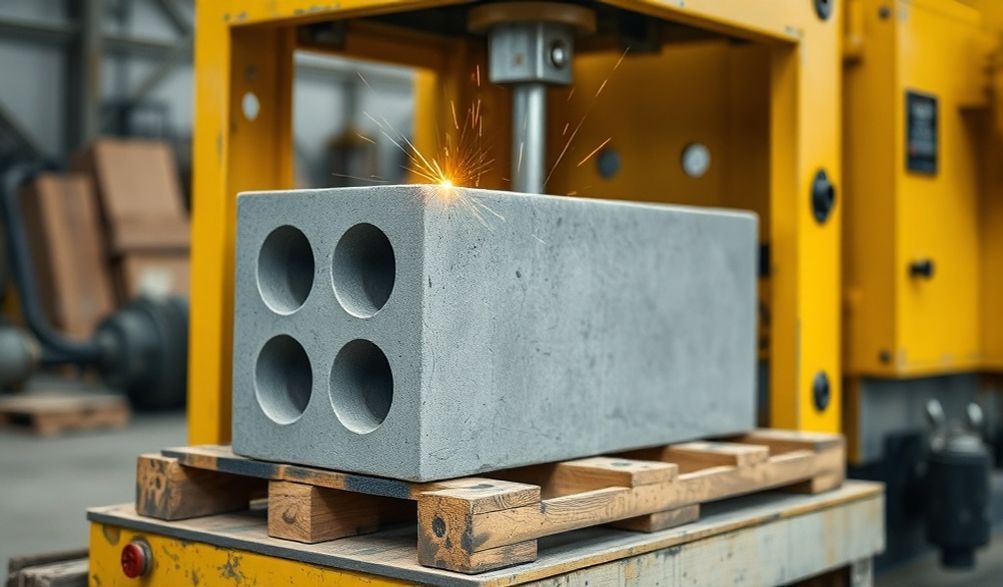
The QTJ4-40 Block Machine: Your Ultimate Guide to Features, Operation & Cost
Introduction
For builders, contractors, and entrepreneurs, the constant pressure to source reliable, high-quality concrete blocks can be a major bottleneck. Delays in supply, inconsistent quality, and rising costs can derail project timelines and budgets. What if you could produce durable, standardized blocks on-demand, right at your project site or in a small yard?
Enter the QTJ4-40 block machine—a semi-automatic workhorse engineered to solve these exact challenges. This robust machine is the cornerstone for countless small to medium-scale operations worldwide, offering a perfect balance of affordability, simplicity, and productivity. It’s the ideal launchpad for starting a block-making business or bringing production in-house for construction firms.
This comprehensive guide is built on more than just specifications. We’ve synthesized technical manuals, insights from experienced operators, and manufacturer data to provide you with a trustworthy, practical resource. Our goal is to empower you with a clear understanding of the QTJ4-40’s capabilities, operation, and value proposition, helping you make a confident and informed investment decision.
What is the QTJ4-40 Concrete Block Making Machine?
The QTJ4-40 is a staple in the concrete products industry. It’s designed for efficiency and reliability, providing a critical stepping stone between purely manual labor and expensive, fully automated production lines.
Core Function and Design Philosophy
At its heart, the QTJ4-40 is a semi-automatic, egg-laying type block machine. The “egg-laying” nickname comes from its operation: it compacts concrete mix into a mold on a pallet, then lifts to deposit (or “lay”) the fresh block onto the ground or a curing rack, before moving to the next spot. This design eliminates the need for a complex conveyor system, simplifying the entire process.
Its core purpose is to transform a mix of cement, sand, and aggregates into precise, high-density concrete products. Primarily used for hollow blocks and solid blocks, it can also be adapted with different molds to produce paving stones, kerbstones, and other standard construction units.
Key Technical Specifications of the QTJ4-40
Understanding the specs is key to planning. Here’s a breakdown of the QTJ4-40’s typical capabilities:
| Specification | Detail |
| :— | :— |
| Power | 13.2 kW (18 HP) electric motor |
| Production Capacity | 3,840 – 5,760 pieces / 8 hours (for standard 400x200x200mm hollow blocks) |
| Cycle Time | Approx. 15-20 seconds |
| Vibration System | Combined table and mold vibration with eccentric shafts |
| Hydraulic Pressure | 16 MPa (for mold compaction and lifting) |
| Standard Block Size | 400x200x200mm, 400x150x200mm, 400x100x200mm |
| Pallet Size | 850x450x40mm (approx.) |
| Machine Weight | ~3,000 kg |
| Machine Dimensions | ~3000x1700x2500mm (LxWxH) |
Note: Specifications can vary slightly between manufacturers. Always confirm exact details with your supplier.
Ideal Use Cases and Project Scale
The QTJ4-40 excels in specific scenarios. It’s not meant for mega-infrastructure projects, but rather for sustainable, localized production.
- Small & Medium Construction Companies: Produce blocks for your own projects, ensuring supply control and reducing material costs.
- Startup Block Manufacturers: A premier choice for entrepreneurs entering the construction materials market due to its lower capital requirement and manageable operational complexity.
- Community & Rural Development Projects: Ideal for producing building materials locally for housing projects, schools, or local infrastructure.
- Niche Product Fabricators: With mold changes, it’s perfect for businesses focusing on paving slabs, garden edging, or decorative blocks.
Its Niche: It sits comfortably between manual machines (high labor, low output) and fully automatic plants (high output, high cost, complex operation). The QTJ4-40 offers mechanized efficiency without overwhelming technical demands.
Key Features and Advantages of the QTJ4-40 Machine
Why has the QTJ4-40 remained popular for decades? Its design incorporates several key features that translate directly into user benefits.
Robust Construction and Durability
This machine is built to last in a demanding industrial environment.
- Heavy-Duty Steel Frame: Provides a stable, vibration-resistant platform for consistent operation.
- High-Strength Shafts & Bearings: Critical components are over-engineered to withstand constant stress, reducing breakdowns.
- Hardened Steel Liners & Mold Components: Resist wear from abrasive concrete mix, extending the lifespan of consumable parts and protecting your investment.
Semi-Automatic Operation: The Best of Both Worlds
The semi-automatic design is its greatest strength. It strikes an optimal balance.
- Higher Productivity than Manual: One operator can manage the production cycle, yielding thousands of blocks per day.
- Lower Cost & Complexity than Fully Automatic: No need for PLC programmers or specialized engineers. Maintenance is more straightforward and parts are commonly available.
- Superior Block Quality: The combination of powerful dual vibration (from the table and the mold) and hydraulic pressure ensures the concrete mix is thoroughly compacted. This eliminates voids, resulting in blocks with high density, superior strength, and excellent surface finish.
Versatility in Block Production
A single QTJ4-40 machine can be the foundation for a diverse product line. By investing in different interchangeable molds, you can produce:
- Hollow blocks (4-inch, 6-inch, 8-inch)
- Solid blocks
- Paving stones
- Curbstones
- Grass grid blocks
This versatility allows you to respond to market demand and maximize the return on your equipment investment.
Cost-Effectiveness and Low Maintenance
From acquisition to daily operation, the QTJ4-40 is designed for economy.
- Affordable Capital Outlay: The initial purchase price is accessible for small businesses.
- Energy Efficient: The 13.2kW motor provides ample power without excessive electricity consumption.
- Easy Maintenance: Common lubrication points and a simple mechanical/hydraulic system mean routine upkeep can be performed by your own team, minimizing downtime and service costs.
How to Operate and Maintain Your QTJ4-40 for Longevity
Proper operation and maintenance are non-negotiable for achieving the machine’s advertised lifespan and output. Here’s a practical guide.
Step-by-Step Operational Guide
1. Raw Material Preparation:
The machine can only be as good as the mix you feed it. A standard mix ratio is 1 part cement : 3 parts sand : 5 parts aggregate (0-5mm). The mix must be semi-dry (low slump), holding its shape when squeezed in your hand. Water content is critical—too little and blocks crumble; too much and they deform.
2. The Production Cycle:
* Feeding: The operator places an empty pallet on the production table and fills the mold box with the prepared concrete mix, slightly overfilling it.
* Compacting & Vibrating: The machine is activated. The hydraulic head presses down while powerful dual vibrations compact the mix into the mold for 3-5 seconds.
* Lifting: The hydraulic system lifts the mold vertically, leaving the freshly formed block on the pallet on the table (the “egg-laying” action).
* Curing: The operator uses a forklift or pallet jack to transfer the pallet of green blocks to a curing area. Blocks must be kept moist and covered for at least 24 hours before being stacked for air curing (typically 28 days for full strength).
3. Safety Procedures:
* Always wear safety glasses, gloves, and steel-toe boots.
* Ensure all safety guards are in place before operation.
* Never place hands near the mold during the vibration and lifting cycle.
* Lock out power before performing any cleaning or adjustment.
Essential Daily and Weekly Maintenance Checklist
Consistency prevents major failures.
Daily:
* Lubricate all grease nipples (on vibration shafts, guide columns, linkages).
* Clean excess concrete from the mold, table, and machine frame.
* Visually check for loose bolts or nuts.
* Check hydraulic oil level and for any leaks.
Weekly:
* Thoroughly inspect the mold for wear or damage.
* Check the tension of drive belts.
* Inspect vibration motors and bearings for unusual noise or heat.
* Tighten all major structural bolts.
Troubleshooting Common Issues
-
Poor Block Strength or Crumbling Edges?
- Likely Cause: Incorrect water-cement ratio (too dry) or insufficient vibration time.
- Solution: Adjust mix moisture and ensure the vibration cycle is 3-5 seconds.
-
Blocks Sticking to the Mold?
- Likely Cause: Dirty or dry mold faces.
- Solution: Clean the mold thoroughly after each shift and apply a light, approved mold-release oil spray periodically.
-
Excessive Machine Vibration or Noise?
- Likely Cause: Loose bolts on vibration motors, worn bearings, or an unbalanced load.
- Solution: Power down, inspect and tighten all motor mounts. Listen for grinding noises from bearings.
Critical Factors Before Buying a QTJ4-40 Block Machine
Making the right purchase involves more than just transferring funds. Due diligence is crucial.
Assessing Your Production Needs and Budget
Be realistic. Calculate your average daily block requirement based on current and projected contracts. Can the QTJ4-40’s 4000-5000 blocks/day output meet this? Remember, your total investment includes:
* The block machine itself.
* Additional molds for different products.
* Pallets (you’ll need hundreds for a smooth curing cycle).
* A pan or planetary mixer for consistent concrete.
* Material handling equipment (forklift or pallet jack).
* Space for production, curing, and storage.
Choosing a Reputable Supplier or Manufacturer
This is where the principles of E-E-A-T (Experience, Expertise, Authoritativeness, Trustworthiness) are vital. Prioritize suppliers who demonstrate:
- Experience: A long track record (e.g., 10+ years) in manufacturing block machinery.
- Expertise: Ability to provide detailed technical drawings, mix designs, and operational guidance. They should answer your technical questions knowledgeably.
- Authoritativeness: Look for verifiable client testimonials, videos of machines in operation, and a presence at industry trade shows.
- Trustworthiness: Clear, written warranty terms (typically 12 months on core parts), a documented after-sales service plan, and transparent communication about shipping costs and timelines.
Understanding Warranty, Shipping, and After-Sales Service
The cheapest price online can become the most expensive mistake. Always clarify:
* Warranty Coverage: What parts are covered? What is the process for claiming?
* Shipping: Is it FOB or CIF? Who handles customs clearance? What is the estimated delivery time?
* After-Sales Support: Do they provide installation manuals, video guides, or online training? Is there a technician available for remote video support? How quickly can they ship spare parts?
A reliable supplier is a long-term partner, not just a vendor.
Frequently Asked Questions (FAQ) About the QTJ4-40
Q1: What is the exact production output per 8-hour shift for the QTJ4-40?
A: Under optimal conditions with a skilled operator, you can expect between 3,840 and 5,760 pieces of standard 400x200x200mm hollow blocks in an 8-hour shift. Output varies based on block type, operator speed, and how efficiently green blocks are removed for curing.
Q2: Can the QTJ4-40 use fly ash or other waste materials in the mix?
A: Yes, absolutely. Incorporating fly ash (typically 15-25% cement replacement) is common and recommended. It can reduce material costs, improve workability, and enhance long-term strength. The machine can handle various mixes as long as the consistency is correct.
Q3: Is technical training provided with the machine purchase?
A: Reputable suppliers almost always provide training. This usually includes a detailed operation manual, instructional videos, and often a video call walkthrough. Confirm the exact scope of training before purchasing. On-site training may be available at an extra cost.
Q4: What are the most common spare parts I should keep in stock?
A: To minimize downtime, consider keeping a small inventory of:
* Vibration motor bearings
* Hydraulic seals and O-rings
* Springs for the mold shock absorption system
* Wear liners for the mold box
* Common bolts, nuts, and belts
Q5: How does the QTJ4-40 compare to the QMJ4-45 or other similar models?
A: The QMJ4-45 is a mobile egg-laying machine with a built-in diesel engine, designed for on-site production without external power. The QTJ4-40 is stationary and electric-powered. Compared to other similar stationary models like the QCM4-30, the QTJ4-40 generally has a higher vibration force and production capacity. The best choice depends on your need for mobility, power source, and required output.
Conclusion
The QTJ4-40 block machine stands as a testament to practical, efficient engineering. It offers a proven pathway to in-house block production for builders and a viable business model for entrepreneurs. Its durability, semi-automatic operation, and versatility make it a smart, calculated investment for small to medium-scale projects.
Remember, your success hinges not only on the machine’s quality but also on the trustworthiness and support of the supplier behind it. Prioritize partners with strong technical expertise and a reliable after-sales network. This ensures you get not just a piece of equipment, but a productive asset backed by real support.
Ready to take the next step? We encourage you to reach out to reputable manufacturers with your specific production goals and project details. Request a formal quotation, clarify all technical and support terms, and make your move toward self-sufficient, profitable block production.