
The Ultimate Guide to Cement Block Machines: Types, Costs, and How to Choose
Introduction
From towering skyscrapers to humble family homes, concrete blocks are the unsung heroes of modern construction. Their durability, fire resistance, and thermal mass make them a cornerstone of building projects worldwide. But behind every reliable block is a machine engineered to produce it with precision and efficiency.
Are you a builder, contractor, or entrepreneur looking to improve efficiency, reduce material costs, or even start a block manufacturing business? Navigating the world of cement block machines can be daunting. With options ranging from simple hand-operated presses to sprawling, fully automated production lines, making the wrong choice can be a costly mistake.
This comprehensive guide is designed to demystify the entire process. We’ll break down the types of machines, analyze costs, and provide a clear framework for selection. The information here is synthesized from direct manufacturer specifications, decades of industry operational reports, and practical, hands-on experience to ensure you receive trustworthy, actionable advice. Whether you’re sourcing equipment for a specific project or planning a long-term investment, this guide will equip you with the knowledge to proceed with confidence.
What is a Cement Block Machine? Understanding the Basics
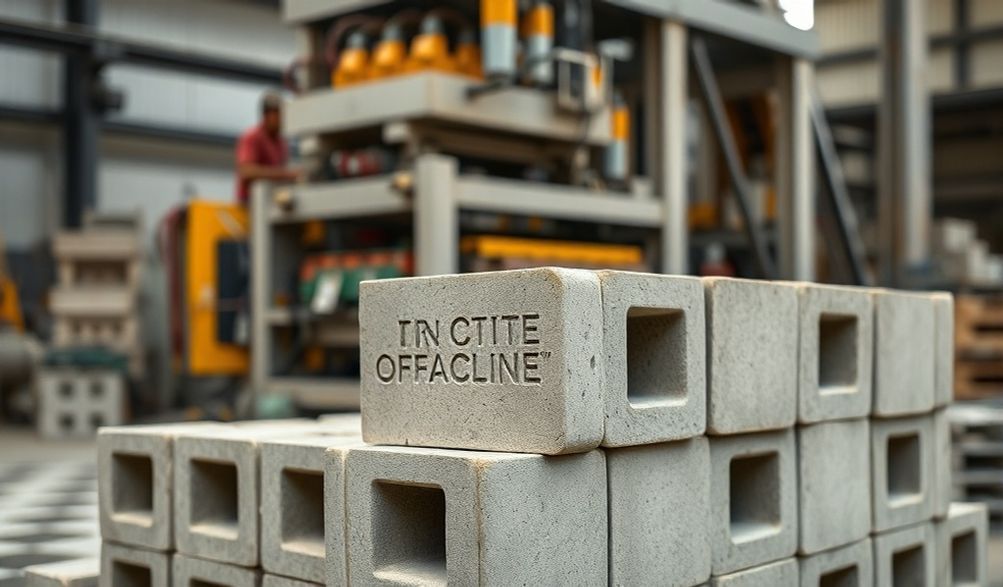
A cement block machine, more accurately termed a concrete block making machine, is a piece of equipment designed to manufacture concrete blocks (hollow, solid, paving stones, curbstones, etc.) by compacting a mixture of cement, aggregates, and water into a mold under high pressure, often assisted by vibration.
The core process is elegantly straightforward but relies on precise engineering:
1. Mixing: Raw materials are combined to form a homogeneous, semi-dry concrete mix.
2. Molding: This mix is fed into a mold cavity of a specific shape and size.
3. Compacting & Vibrating: The mix is subjected to high compression and vibration to remove air pockets and ensure a dense, strong block.
4. Demolding & Curing: The newly formed “green” block is ejected from the mold and moved to a curing area, where it gains strength over time through controlled hydration.
Key Components and How They Work
Understanding the machine’s anatomy is key to evaluating its quality:
* Hopper: The entry point for the raw concrete mix. A well-designed hopper ensures consistent, uninterrupted material flow.
* Mixer (Optional on some models): Some machines have an integrated pan or planetary mixer to prepare the concrete on-site.
* Mold (or Mold Box): The heart of the machine. This interchangeable steel component defines the block’s shape, size, and texture (e.g., smooth, split-face). High-hardness steel is essential for longevity.
* Vibrator System: Typically an electric or hydraulic vibrator pack that shakes the mold at high frequency. This critical action consolidates the concrete, ensuring a uniform, void-free block.
* Hydraulic System (or Mechanical Leverage): Provides the immense force needed to compress the mix. In automatic machines, hydraulics also control mold movement, pallet feeding, and block ejection.
* Control Panel: On semi- and fully-automatic models, this houses the PLC (Programmable Logic Controller) and interfaces for setting production parameters.
From Raw Materials to Finished Block: A Simple Breakdown
The transformation is a marvel of simple physics and chemistry:
* Input: Portland cement, fine aggregates (like sand), coarse aggregates (like crushed stone), and clean water.
* Process: The machine applies vibration to settle the mix and compaction (often 1000+ PSI) to densify it. This creates immediate “green strength,” allowing the block to hold its shape.
* Output: The demolded block is then cured, usually by steam curing in a kiln for rapid strength gain or by air/water curing for 14-28 days to reach its full compressive strength.
Types of Cement Block Machines: Find Your Perfect Match
Choosing the right type of machine is the most critical decision you’ll make. Your choice should be dictated by your production goals, budget, and labor availability.
Manual Block Making Machines
- Description: These are human-powered presses. An operator manually fills the mold, engages a lever mechanism to apply pressure, and then releases the block onto the ground.
- Ideal For: Small-scale projects (e.g., building a single home, a wall), NGOs in low-infrastructure areas, or entrepreneurs testing the market with minimal capital.
- Pros: Very low cost, no power requirement, simple to operate and maintain, highly portable.
- Cons: Very low output (40-100 blocks per 8-hour day), labor-intensive, inconsistent block quality dependent on operator skill, limited to simpler block designs.
Semi-Automatic Block Making Machines
- Description: These machines automate the core functions of compaction and vibration with electric or diesel power. Operators typically manually feed the mix and remove finished blocks, but the pressing cycle is automated.
- Ideal For: Small to medium-sized businesses, block yards supplying local builders, and contractors undertaking multiple projects per year.
- Pros: Good balance of cost and output (300-1,500 blocks per hour), consistent block quality, can produce a wider variety of block types with mold changes, reasonable energy efficiency.
- Cons: Requires a steady power source, involves more moving parts than manual machines, requires some technical knowledge for maintenance.
Fully Automatic Block Making Machines
- Description: These are complete production lines. They feature automatic material batching, mixing, block molding, curing, and stacking. They often include pallet circulators and stackers, requiring minimal human intervention.
- Ideal For: Large-scale commercial block manufacturing plants, major construction companies producing for their own projects, and industrial suppliers.
- Pros: Very high output (2,000-10,000+ blocks per hour), exceptional product consistency, low labor cost per block, can run continuously.
- Cons: High initial investment, significant space and infrastructure requirements (strong foundation, three-phase power), complex maintenance requiring specialized technicians.
Mobile vs. Stationary Block Machines
This is a crucial secondary consideration, especially for contractors.
* Mobile Block Machines: Mounted on a trailer, these are designed for on-site production. They eliminate transport costs for finished blocks and are perfect for remote projects. They are typically semi-automatic.
* Stationary Block Machines: Set up in a fixed location (a yard or factory). They are the foundation of a block supply business. All fully automatic and most high-output semi-automatic machines are stationary.
Critical Factors to Consider Before Buying
Look beyond the brochure. These factors will determine your long-term satisfaction and profitability.
Production Capacity (Blocks Per Hour)
Don’t just buy the biggest machine you can afford. Calculate your realistic needs.
* How to Calculate: Estimate your average daily or weekly block requirement. Factor in future growth. Choose a machine whose capacity is 20-30% higher than your peak demand to allow for maintenance and market expansion. Remember, a machine rated for 1,000 blocks per hour may only achieve that under perfect, continuous conditions.
Block Types and Sizes (Hollow, Solid, Paver, etc.)
- Market Demand: What blocks sell best in your region? Standard hollow blocks for walls? Interlocking pavers for landscaping? Solid blocks for heavy-duty applications?
- Mold Versatility: Can the machine easily switch molds? How much does an additional mold cost? A versatile machine that can produce multiple products allows you to adapt to market trends.
Power Source: Electric, Diesel, or Hybrid?
- Electric: Cleaner, quieter, and generally lower operating cost per hour. Requires reliable, often three-phase, grid power. Ideal for stationary plants.
- Diesel: Offers complete independence from the grid. Essential for mobile operations or areas with frequent power outages. Higher fuel and maintenance costs, and produces emissions/noise.
- Hybrid: Some models offer the flexibility to switch between power sources, providing valuable backup.
Automation Level and Labor Requirements
Automation isn’t just about output; it’s about control.
* Labor: A manual machine might need 4-6 people for meaningful output. A semi-automatic might need 2-3. A fully automatic line might only need 1-2 people for supervision and pallet management.
* ROI: Calculate the wage savings of higher automation against the increased capital cost, financing, and maintenance. Higher automation also drastically reduces variability in block quality.
Machine Durability and After-Sales Support
This is where supplier reputation is everything.
* Build Quality: Look for heavy-duty structural steel, high-grade hydraulic components (brand names like Bosch Rexroth are a good sign), and hardened, precision-machined molds.
* Warranty: What is covered, and for how long? A one-year comprehensive warranty is standard for quality machines.
* After-Sales Support: This is non-negotiable. Does the supplier offer installation supervision, operator training, and readily available spare parts? Can they provide references from local clients? A slightly cheaper machine from an unresponsive supplier can become a very expensive paperweight.
Cement Block Machine Price Range and ROI Analysis
Prices vary wildly based on configuration, brand, and origin. The following are estimated price brackets for the machine alone (ex-factory), excluding shipping, taxes, and installation.
| Machine Type | Estimated Price Range (USD) | Key Determinants |
| :— | :— | :— |
| Manual | $1,000 – $5,000 | Build quality, number of blocks per cycle |
| Semi-Automatic | $15,000 – $75,000 | Production capacity, level of automation, brand |
| Fully Automatic | $80,000 – $500,000+ | Output level, degree of integration (with mixer, stacker), customization |
Beyond the Sticker Price: Calculating Total Cost
The machine’s price is just the beginning. Factor in:
* Shipping & Logistics: Can be significant for heavy machinery, especially overseas.
* Installation & Foundation: Some suppliers include supervision; you often cover local labor and materials for the base.
* Training: Essential for safe and efficient operation.
* Initial Spare Parts Kit: A wise investment to minimize downtime.
* Utilities & Infrastructure: Cost of electrical hookup, water supply, and curing space/kiln.
Understanding Your Return on Investment (ROI)
A simple analysis can clarify the business case:
1. Cost Per Block: Calculate your total fixed (machine depreciation, rent, utilities) and variable (cement, aggregates, labor, maintenance) costs divided by total blocks produced.
2. Market Price: Determine the average selling price for your block type in your area.
3. Break-Even Volume: Divide your total initial investment by your profit margin per block. This tells you how many blocks you need to sell to recover your upfront costs.
Example (Simplified): If your total investment is $50,000 and you make a net profit of $0.20 per block, you need to sell 250,000 blocks to break even. If your machine produces 1,000 blocks per day, you’d need 250 production days.
Important Note: This is a simplified model. For a detailed business plan, we strongly advise consulting with a financial advisor or accountant to model cash flow, financing costs, and tax implications specific to your situation.
Operating and Maintaining Your Machine for Longevity
A machine is a long-term partner. Proper care is the key to a decade or more of service.
Step-by-Step Safe Operation Checklist
- Pre-Start: Check hydraulic oil levels, ensure all guards are in place, inspect molds for damage or residue, clear the work area.
- During Operation: Wear appropriate PPE (safety glasses, gloves, hearing protection). Never reach into moving parts. Monitor for unusual noises or vibrations.
- Shutdown: Follow the manufacturer’s procedure. Clean the mold and hopper thoroughly to prevent concrete hardening. Lock out the power source.
Routine Maintenance Schedule
- Daily: Clean the entire machine. Check for loose bolts/nuts. Lubricate all moving joints as per the manual.
- Weekly: Inspect hydraulic hoses for leaks. Check vibrator mounts. Clean the hydraulic oil filter.
- Monthly: Test safety systems. Check electrical connections for tightness. Take a sample of hydraulic oil to check for contamination.
- Annually: Consider a full professional service: replace hydraulic oil and filters, inspect the vibrator motor bearings, calibrate pressure sensors.
Troubleshooting Common Issues
- Poor Block Quality (Crumbling Edges): Usually indicates an incorrect water-cement ratio (too dry) or insufficient vibration/compaction time.
- Blocks Sticking in Mold: Mold may need cleaning or a release agent. Could also be due to an overly wet mix.
- Weak Vibration: Check vibrator motor mounts and electrical connections. The vibrator itself may be failing.
- Hydraulic System Overheating: Check oil level and cooler. Oil may be contaminated or the wrong grade.
Cement Block Machine FAQ
Q1: What is the difference between a cement block machine and a concrete block machine?
A: In practice, the terms are used interchangeably. However, “concrete block machine” is more technically accurate. “Cement” is just one ingredient (the binder) in “concrete,” which is the full composite material including aggregates and water. The machine processes concrete to make blocks.
Q2: Can I start a business with a manual block machine?
A: Absolutely. A manual machine is a classic low-risk, low-cost entry point. It allows you to understand the process, develop a customer base, and validate your market with minimal investment. The key is to have a clear plan to reinvest profits to scale up to a semi-automatic machine as demand grows.
Q3: How much space do I need for a semi-automatic plant?
A: As a rough guideline, you should plan for:
* Production Shed: At least 1,000 sq ft (100 sq m) for the machine, raw material storage, and a small mixing area.
* Curing Area: This is often the largest requirement. You need enough space to store blocks for 7-28 days. This could easily require 5,000-10,000 sq ft for a modest operation.
* Additional Space: For finished block storage, office, and vehicle access.
Q4: What is the typical lifespan of a well-maintained machine?
A: With diligent maintenance and proper operation, you can expect:
* Manual Machines: 10-15+ years.
* Semi-Automatic Machines: 15-20 years (with potential component replacements like hydraulics).
* Fully Automatic Lines: 20-25 years, though major subsystems may be refurbished or replaced during this time.
Q5: Where can I find reliable suppliers and manufacturers?
A: Conduct thorough research:
* Industry Trade Shows: Attend major construction equipment expos.
* Verified B2B Platforms: Use platforms with supplier verification systems.
* Request References: Any reputable supplier should provide contact information for past clients in a similar region or business. Call them.
* Final Warning: Be extremely cautious of deals that seem too good to be true, especially from unknown suppliers offering prices far below market rates. This often indicates inferior materials, poor craftsmanship, and zero after-sales support.
Conclusion
Choosing the right cement block machine is a strategic decision that hinges on a clear understanding of your project scale, budget, desired block types, and long-term operational vision. We’ve walked through the spectrum from manual presses to fully automated plants, each serving a distinct purpose in the construction ecosystem.
Remember, the cheapest initial price is rarely the most economical choice in the long run. Prioritizing machine durability, consistent output quality, and—above all—reliable after-sales support from your supplier will protect your investment and ensure your productivity for years to come.
Use this guide as your foundational research. Your next step is to engage with the market from a position of knowledge. Contact multiple reputable suppliers with the informed questions outlined here. Request detailed specifications, videos of their machines in operation, and always insist on speaking to existing customers. A product demonstration, either virtual or in-person, is invaluable. By doing this due diligence, you will move forward with the confidence needed to make a sound investment that powers your construction projects or business growth.