
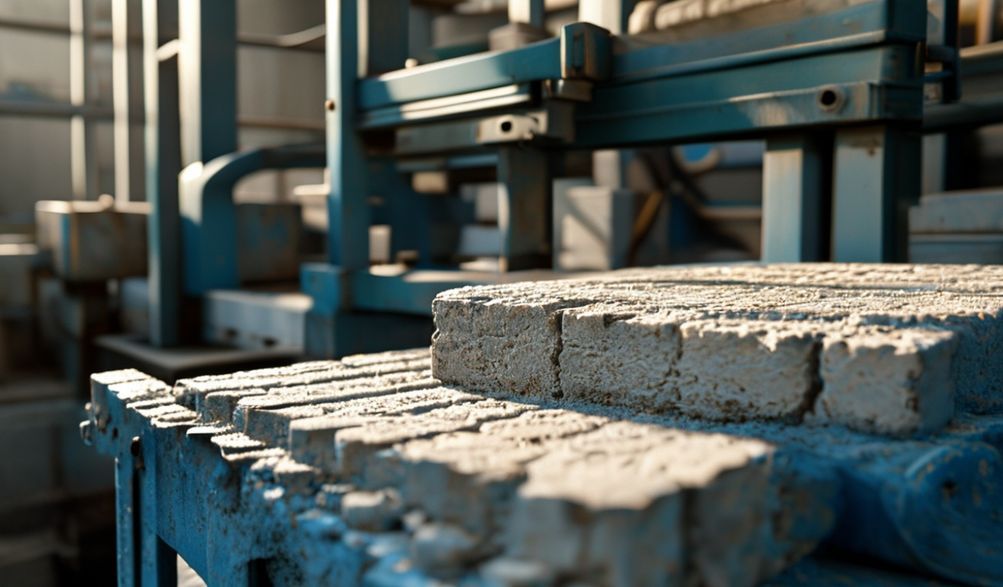
Ang Kumpletong Gabay sa Disenyo ng Manwal na Makina ng Paggawa ng Bloke para sa Maliit na mga Pabrika
Sa isang panahon ng mabilis na urbanisasyon at pandaigdigang pagtutulak para sa sustenableng, lokal na pag-unlad, ang pangangailangan para sa abot-kayang materyales sa konstruksiyon ay hindi pa kailanman naging mas mataas. Para sa mga komunidad at negosyante sa umuunlad na ekonomiya, ito ay nagpapakita ng isang malaking oportunidad. Subalit, may malaking puwang sa pagitan ng malalaking, kapital-intensibong planta ng semento at ang pangangailangan para sa maliit na batch, maaasahang produksyon ng bloke sa antas ng barangay o bayan. Dito papasok ang sining at agham ngdisenyo ng makina para sa paggawa ng bloke nang manuwalmaging pundasyon para sa tunay na pag-unlad ng ekonomiya at imprastraktura.
Ang maliliit na pabrika at mga startup ay humaharap sa tatlong magkakabit na hamon: ang labis na mataas na halaga at kumplikadong mga ganap na awtomatikong makinarya, hindi maaasahan o hindi umiiral na kuryente mula sa grid, at ang pangangailangan ng isang solusyon na simple gamitin, hindi kapani-paniwalang matibay, at kumikita mula sa unang araw. Para sa isang negosyo tulad ngPabrika ng paggawa ng bloke ng FUDAAng landas patungo sa tagumpay ay hindi nababakuran ng mamahaling, high-tech na mga import, kundi ng mga kagamitang matalino ang pagkakayari at pinatatakbo ng tao.
Ang gabay na ito ay nagsisilbing iyong komprehensibong plano. Batay sa mga taon ng praktikal na karanasan sa engineering sa disenyo ng makinarya para sa bloke at direktang pakikipagtulungan sa maliliit na pabrika sa iba't ibang kapaligiran, ibinabahagi namin ang mga prinsipyo na nagpapabago sa mga piraso ng bakal sa isang maaasahang makina ng negosyo. Nakatuon kami sa praktikal at subok na mga disenyo na nagbibigay-prioridad sa tibay at return on investment kaysa sa mga nakasisilaw na tampok. Sa pamamagitan ng pag-unawa sa pangunahingdisenyo ng isang manual na makina ng paggawa ng blokepinapalakas mo ang iyong sarili upang makagawa ng matalinong desisyon, maiwasan ang magastos na mga pagkakamali, at makabuo ng isang negosyong kasing tibay ng mga bloke na nililikha nito.
Mga Pangunahing Prinsipyo sa Disenyo ng Makina ng Manwal na Bloke
Ang kagandahan ng isang manual na block machine ay nasa kanyang pagiging simple. Subalit, ang pagkasimpleng iyon ay bunga ng masusing inhenyeriya. Ang isang mahusay na dinisenyong makina ay isang magkasanib na sistema kung saan nagtatagpo ang mekanika, mga materyales, at pagpapatakbo ng tao upang tuluy-tuloy na lumikha ng isang mahalagang produkto.
Ang Mga Pangunahing Mekanika: Paggamit ng Lihit, Puwersa, at Panginginig
Sa kaibuturan nito, ang isang manual na makina ay isang mekanikal na amplifier. Ito ay nagpapalit ng pagsisikap ng tao sa napakalaking presyur na kailangan upang pindutin ang hilaw na materyal at gawin itong isang solidong bloke.
- Leverahe & Bentaheng Mekanikal:Ang mahabang braso ng pingga ang siyang puso ng makina. Ang disenyo ng punto ng pibot (fulcrum) kaugnay ng inilapat na puwersa (pagpilit ng operator) at ng kargada (ulo ng kompresyon) ang nagtatakda ng mekanikal na bentahe. Ang mas mahabang pingga o ang estratehikong paglalagay ng pibot ay maaaring magparami ng puwersa ng operator nang 10 beses o higit pa, na nakakamit ang kinakailangang kilonewtons (kN) ng presyon para sa wastong pagpapatigas. Ang hindi maayos na pagkalkula ng heometriya ng pingga ay nagreresulta sa labis na pagkapagod ng operator at mahina, hindi sapat na napapatigas na mga bloke.
- Ang Tungkulin ng Panginginig:Ang presyon lamang ay hindi sapat. Ang isang kongkretong halo ay naglalaman ng mga bulsa ng hangin na nagpapahina sa huling produkto. Ang mga manual na makina ay nagsasama ng panginginig—karaniwan sa pamamagitan ng pangalawang aksyon ng "pagtampak," isang umuugoy na mesa, o mekanismong martilyo-sa-balangkas—upang gawing tulad-likido ang halo. Pinapayagan nito ang mga partikula na tumigil nang siksikan, inaalis ang mga puwang at lumilikha ng isang magkakatulad at matibay na istruktura ng bloke. Dapat tiyakin ng disenyo na ang panginginig na ito ay epektibong naipapasa sa hulma.
Disenyo para sa Tibay at Pangmatagalang Gamit
Ang isang manual na block machine sa isang maliit na pabrika ay hindi isang marahang kasangkapan; ito'y tumatagal sa libu-libong mataas na tensiyon na siklo. Ang disenyo nito ay dapat na likas na matibay.
- Hindi Puwedeng Magpalit ng Materyales:Ang mga kritikal na bahagi ay dapat na yari mula sa de-kalidad na istruktural na bakal (tulad ng ST-52 o katumbas nito).
- Baston at Pingga:Ang mga ito ay sumasailalim sa pinakamataas na mga stress at dapat lumaban sa pagbaluktot at pagkapagod ng metal.
- Kahon ng Molde at Mga Plakang Pangsuot:Ang mga ito ay lumalaban sa patuloy na paggasgas mula sa buhangin at mga pinagsamang materyales. Mahalaga ang pinatigas na bakal o mga palitang plato na pang-gasgas.
- Mga Pamantayan sa Paghihinang at Paggawa ng mga BagayDito nabibigo ang mga murang makina. Ang mga kritikal na welds ay dapat na full-penetration, tuloy-tuloy, at malinis. Ang mga reinforcement gusset sa mga high-stress junction (kung saan nagdudugtong ang lever sa frame, mga sulok ng mold box) ay tanda ng de-kalidad na disenyo, na pumipigil sa malawakang pagkabigo.
- Pagpapagamot sa Ibabaw para sa Tunay na Kondisyon sa Mundo:Ang mga bloke ay niluluto gamit ang tubig, kadalasan sa labas. Ang makina ay nangangailangan ng proteksyon. Ang tamang pagkakasunod-sunod ng disenyo ay kinabibilangan ng sandblasting (upang alisin ang kalawang at lumikha ng isang ibabaw na pagdikitahan ng pintura) na susundan ng de-kalidad na enamel pang-industriya o, mas mainam, ang powder coating para sa mas matibay na proteksyon laban sa kalawang.
Ergonomiks at Kaligtasan ng Operator
Ang isang makina na nakakasakit o nagpapagod sa nagpapatakbo nito ay isang pabigat. Ang mahusay na disenyo ay nagtataguyod ng produktibidad at kaligtasan.
- Pagpapaliit ng Pagkapagod:Ang taas ng hawakan ay dapat magbigay-daan sa natural na pagtulak o paghila nang hindi labis na pagyuko. Ang siklo ng operasyon—pagpuno, pagpiga, paglabas—ay dapat maging malinis at maayos hangga't maaari upang mapanatili ang isang matatag na ritmo sa loob ng 8-oras na pagtatrabaho.
- Mga Integradong Tampok ng Kaligtasan:Ang disenyo ay dapat isama ang:
- I-secure ang mga locking pin o bolt para sa molde upang maiwasan ang pag-alis sa panahon ng kompresyon.
- Isang matatag, malapad ang paa na balangkas na hindi matutumba habang ginagamit ang pingga.
- Makinis na mga gilid at protektadong mga pinching point kung saan maaaring masabit ang mga daliri.
Mga Pangunahing Bahagi at ang Kanilang mga Pagtutukoy sa Disenyo
Let’s dissect the machine into its core systems, understanding the “why” behind each specification.
The Frame: Backbone of the Machine
The frame is the foundation. Every other component mounts to it, and every ounce of compression force reacts through it.
- Stability Over Everything: The frame must be massively rigid. Any flex during compression absorbs energy meant for the block and leads to misalignment. Heavy-gauge rectangular or square tubular steel sections are preferred for their high strength-to-weight ratio.
- Design Impact: A rigid frame ensures the compression force is directed vertically into the mold, and it provides a solid reaction point for the clean ejection of the finished block. A flimsy frame will warp, causing binding, uneven blocks, and rapid failure.
Mold Box and Pallet System Design
This is the “heart” of the machine, where the raw material becomes a finished product.
- The Mold Box: This holds the mold(s) and must be built like a vault.
- Tolerances: Precise internal dimensions ensure mold alignment. Even a few millimeters of slop results in block size variation.
- Taper: A slight inward taper (1-2 degrees) on the interior walls is a critical design feature that allows the compacted block to eject cleanly without cracking.
- Palitanang Molde: A key advantage of manual machines is versatility. The design should allow one operator to safely swap molds for producing 4″, 5″, or 6″ hollow blocks, solid blocks, or paving stones. Molds are typically made from 3-5mm thick steel, with critical wear areas often hardened.
- The Pallet System: The pallet is the “floor” of the mold during compression. The design must include a reliable feeder system (often a simple sliding tray or pedal-operated mechanism) that positions the pallet perfectly under the mold every time. Pallet material (often 3mm steel sheet or thick, treated plywood) must be perfectly flat and resistant to warping from moisture.
The Compression and Ejection Mechanism
This is the “muscle” of the operation, comprising the lever, compression head, and ejection foot.
- Lever Arm & Compression Head: The lever’s connection to the compression head (or plate) must be a robust pivot. The head must be sized and aligned to apply perfectly even pressure across the entire surface area of the mold(s). Uneven pressure leads to blocks with varying density and strength.
- Ejection Foot Design: After compression, the lever mechanism typically engages a separate “ejection foot” that pushes the finished block and pallet down and out of the mold box. The geometry must provide a smooth, powerful, and straight downward motion to avoid jamming or damaging the block’s edges.
Optimizing Design for Production Efficiency & Block Quality
A good design makes blocks. A great design makes excellent blocks efficiently.
Achieving Consistent Block Density and Strength
Quality is a direct output of design precision.
- The Compaction Ratio: This is the ratio of the volume of loose mix to the volume of the finished block. Machine design dictates this by controlling the available pressure and vibration. A consistent, high compaction ratio (typically 1.5 to 1.8) is the hallmark of a strong block. This must be matched with a well-graded raw material mix.
- Precision to Prevent Defects: Tight tolerances in mold and frame alignment prevent “laminations”—visible horizontal cracks in the block caused by misalignment during compression. Sharp, precise mold corners produce blocks with clean, sharp edges for better masonry.
Design Features for Higher Output
Throughput is revenue for a factory like FUDA.
- Single vs. Multi-Block Design: While simpler, a single-block machine limits output. Designs for 2, 3, or even 5 blocks per cycle dramatically increase production. The trade-off is a larger machine requiring more operator effort per stroke, but the output per hour increases significantly.
- Streamlining the Work Cycle: Efficient designs incorporate features that reduce non-productive time:
- A return spring on the lever to automatically reset it.
- A foot-pedal-operated pallet feeder to keep the operator’s hands free.
- An optimized workstation layout where raw material is on one side and the block stack on the other, minimizing movement.
Adapting Design for Local Raw Materials
A machine designed for standard sand and gravel may struggle with local alternatives. Good design is adaptable.
- Aggregate-Specific Adjustments: For harsh, angular aggregates (like crushed basalt), mold wear plates need to be extra hard. For lighter materials (like volcanic ash or laterite), the vibration system may need adjustment to achieve proper compaction without over-pressuring.
- Flexibility for Stabilized Earth: For producing Compressed Stabilized Earth Blocks (CSEBs) with lower cement content, the design focus shifts slightly. Vibration becomes less critical than extremely high, sustained pressure, which may influence the optimal lever geometry and compression head design.
From Design to Operation: A Practical Guide for Factories
How does this all come together on the factory floor? Let’s translate theory into practice.
The FUDA Factory Case Study (Hypothetical Application)
Imagine the FUDA Block Making Factory in a growing regional town. After market analysis, they identify demand for both standard 6″ hollow blocks for housing and decorative interlocking paving stones for driveways and walkways.
- The Machine Selection: FUDA invests in a robust, 3-block manual machine with a reinforced frame made from 80x40mm rectangular steel tube. Key design features include interchangeable mold boxes (one for 6″ blocks, one for paving stones), hardened steel wear plates, and a pedal-operated pallet system.
- Workflow & Output: With a crew of three—one mixing, two operating the machine—they establish a rhythm. The well-designed lever allows for efficient compression. Their output reaches approximately 600-700 high-quality blocks per 8-hour shift, allowing them to service multiple small construction projects simultaneously and build a reputation for quality.
Maintenance Blueprint for Your Manual Machine
A durable design is maintained with simple, regular care. Base maintenance on the identified wear points:
- Daily: Clean excess concrete from the mold box, lever pivots, and pallet system. Lightly oil pivot points.
- Weekly: Check and tighten all bolts and locking pins. Inspect the mold liners/wear plates for excessive wear.
- Monthly: Conduct a thorough inspection for any hairline cracks in the frame, especially near welds. Check the pallets for flatness and replace if warped.
Cost-Benefit Analysis: Manual vs. Semi-Automatic
For a small factory owner, this is the crucial calculation.
| Factor | Well-Designed Manual Machine | Basic Semi-Automatic Machine |
| :— | :— | :— |
| Paunang Puhunan | Very Low (1x) | High (8x – 15x) |
| Pangangailangan sa Kuryente | None | Essential (3-Phase grid or large generator) |
| Operating Cost | Labor (2-3 persons) | Power + Labor (1-2 persons) |
| Maintenance | Simple, low-cost, local | More complex, may require specialist |
| Output Scale | Ideal for 300-1,500 blocks/day | Ideal for 2,000-8,000 blocks/day |
| Best For | Startups, low-power areas, niche/custom blocks | Steady, high-volume contracts in powered areas |
For FUDA-scale operations starting out or working in areas with uncertain infrastructure, the manual machine offers a faster break-even point, lower risk, and valuable operational flexibility.
Mga Madalas Itanong (FAQ)
Q1: What is the typical production output per day for a well-designed manual block making machine?
Isalin ang teksto sa Filipino. I-output LAMANG ang isinalin na teksto. With a skilled crew of 2-3 people, a well-designed multi-block machine can produce between 500 and 900 blocks in an 8-hour shift. Output depends heavily on the block type (paving stones are faster than large hollow blocks), crew efficiency, and the machine’s specific design features like multi-block capability and streamlined pallet feed.
Q2: Can I customize the machine design to produce special-shaped blocks?
Isalin ang teksto sa Filipino. I-output LAMANG ang isinalin na teksto. Absolutely. This is one of the greatest strengths of manual machines. You can work with a competent fabricator to design custom molds for unique paving patterns, landscaping blocks, or vent blocks. The machine design must ensure the compression head is compatible with the new mold’s surface area to maintain proper pressure.
Q3: What are the most common design flaws in cheap manual block machines?
Isalin ang teksto sa Filipino. I-output LAMANG ang isinalin na teksto. Buyer beware. Common flaws include:
* Flimsy Frames: Using thin, low-grade steel that flexes, wasting energy and breaking quickly.
* Poor Welds: Spot welds or incomplete penetration welds that crack under cyclic load.
* Incorrect Leverage: An undersized lever or poorly placed pivot that cannot generate sufficient pressure.
* Soft Molds: Mold boxes without hardened wear surfaces that deform rapidly, ruining block dimensions.
Q4: How critical is operator training for achieving good results with a manual machine?
Isalin ang teksto sa Filipino. I-output LAMANG ang isinalin na teksto. Extremely critical. The machine is a tool, and the operator is the craftsman. Key training focuses on: maintaining a consistent material mix (water content is vital), properly filling the mold to avoid voids, and applying the full, correct compression stroke every time. Consistency in operation leads to consistency in block quality.
Q5: Where can I find reliable technical drawings or manufacturers for these designs?
Isalin ang teksto sa Filipino. I-output LAMANG ang isinalin na teksto. Seek out established local metal fabrication workshops with a proven track record in agricultural or construction equipment. Review publicly available patent documents for mechanical principles. Most importantly, visit the workshop before purchasing. Inspect their materials, ask for certifications on steel grade, and examine the quality of welds and finishes on their existing products. Trust is built on transparency.
Konklusyon
Designing a manual block making machine is an exercise in applied physics, material science, and human-centered engineering. It moves from the fundamental principles of leverage and compaction, through the rigorous selection of materials and components, to the final goal of optimizing a complete production system for a small-scale factory. This journey underscores that the right machine is far more than a tool; it is the sustainable, profitable engine of a local business.
For entrepreneurs and operations like the Pabrika ng paggawa ng bloke ng FUDA, investing in a robust, intelligently designed manual machine is a strategic decision. It provides independence from unstable power grids, offers unparalleled flexibility for product lines, and creates local jobs and value. It represents a pragmatic, powerful step toward meeting the global demand for affordable construction.
As you move forward, let these principles guide you. Prioritize robust design and quality fabrication over the lowest initial price. Consult with experienced fabricators, analyze your specific market needs and raw materials, and remember that in block making, the strength of your business is quite literally built on the strength of your machine’s design.
Call to Action: Ready to build your foundation? Start by auditing your local market needs and material availability. Then, seek out a reputable fabricator—ask the hard questions about steel grade, weld quality, and design features. Choose a partner who understands that they are not just selling you a machine, but helping you build a legacy of quality and resilience in your community.
<