
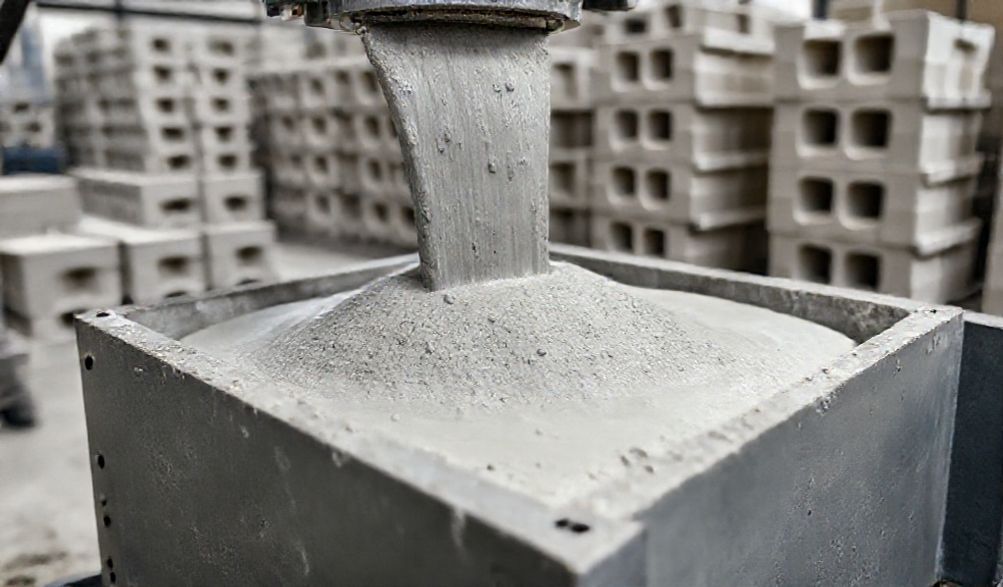
Остаточний посібник з машин для виробництва пінобетонних блоків: вибір, експлуатація та переваги
Вступ
Глобальна будівельна галузь опинилася на вирішальному роздоріжжі. Через зростаючі вимоги до сталості, енергоефективності та зниження витрат будівельники та девелопери активно шукають альтернативи традиційним матеріалам, що вимагають великих ресурсів. Звичайні глиняні цеглини та щільні бетонні блоки, хоч і надійні, мають суттєві недоліки: надмірну вагу, низькі теплоізоляційні властивості та значний вуглецевий слід.
Увійдіть у світ легких бетонних блоків (CLC) або пінобетонних блоків — сучасного будівельного матеріалу, який вирішує саме ці проблеми. Ці легкі, теплоізоляційні та універсальні блоки революціонізують будівництво стін, перегородок і навіть несучих елементів. Але справжнім рушієм цієї інновації ємашина для виробництва блоків з пінобетонуЦе спеціалізоване обладнання перетворює прості сировинні матеріали на високоякісний будівельний продукт.
Цей вичерпний посібник створено на основі глибоких знань галузі, технічних специфікацій та практичних операційних найкращих практик. Незалежно від того, чи ви підрядник, який оцінює нові матеріали, підприємець, що досліджує виробничий бізнес, чи керівник проекту, який шукає кращі рішення, цей ресурс розроблено саме для вас. До кінця ви отримаєте чітке розуміння того, як працюють ці машини, критичних факторів для вибору правильної моделі, покрокового виробничого процесу та відчутних переваг, які ця технологія може принести вашим проектам або бізнес-починанням.
Що таке машина для виробництва пінобетонних блоків?
В основі своїй, машина для виробництва пінобетонних блоків є інтегрованою системою, призначеною для виготовлення легких бетонних блоків шляхом стабілізації мікроскопічних повітряних бульбашок у цементній суспензії. На відміну від стандартної блокоформувальної машини, яка лише ущільнює щільний бетон, ця машинастворюєлегка клітинна структура, що призводить до блоків, які можуть бути на 80% легшими за свої традиційні аналоги.
Основна функція та результат: Пояснення процесу виготовлення блоків CLC
Процес витончений у своїй простоті, але точний у виконанні. Основна функція машини — змішувати попередньо сформовану стабільну піну з суспензією цементу, золи (або піску) та води. Ця піна, створена зі спеціального агенту та води, складається з мільйонів міцних, однакових бульбашок. При однорідному змішуванні з суспензією ці бульбашки залишаються неушкодженими, утворюючи рівномірну замкненоклітинну структуру по всій суміші. Потім цю аеровану суспензію заливають у форми різних розмірів та форм, де вона твердне та витримується, фіксуючи клітинну матрицю на місці. Результатом є блок з відмінним співвідношенням міцності до ваги та властивостями природної теплоізоляції.
Ключові компоненти стандартної машини
Розуміння ключових компонентів розкриває таємниці роботи машини:
- Генератор піни:Серце системи. Воно змішує точне співвідношення піноутворювача та води під тиском для отримання надзвичайно стабільної та сухої піни. Якість піни безпосередньо визначає однорідність та міцність кінцевих блоків.
- Блок змішування:Зазвичай це примусовий або лопатевий міксер, який ретельно змішує цемент, зольну піну, пісок (якщо використовується) та воду в однорідну, без грудок суспензію. Консистенція тут є ключовою для забезпечення рівномірної якості блоків.
- Система лиття під тискомЦе може варіюватися від простих знімних сталевих піддонів для ручних машин до складних систем віброконвеєрів з автоматичними палетними подавачами у повністю автоматизованих лініях. Форми визначають розмір блоків (наприклад, 600x200x100 мм, 600x200x150 мм).
- Панель керування:Нервовий центр. Він варіюється від базових ручних перемикачів для насосів і мішалок до передових систем програмованих логічних контролерів (ПЛК), які автоматизують весь процес дозування, змішування та заливання, забезпечуючи відтворювану точність.
Пінобетон проти традиційних блоків: порівняння матеріалів
| Властивість | Пінобетонні (CLC) блоки | Традиційні глиняні цегли / Щільні бетонні блоки |
| :— | :— | :— |
| Суха щільність600 – 1200 кг/м³ | 1800 – 2000 кг/м³ |
| Теплопровідність | Дуже низька (0,1 – 0,3 Вт/м·К)Високий (0,5 – 1,5 Вт/м·К)
| Міцність на стискання3 – 7 Н/мм² (придатний для несучого та ненесучого) | 5 – 20+ Н/мм²
| Sound Absorption | Excellent due to porous structure | Fair |
| Environmental Impact | Lower. Uses industrial waste (fly ash), less energy to produce. | Higher. High firing energy (bricks) or cement content (blocks). |
| Workability | Easy to cut, shape, and drill with hand tools. | Requires specialized cutting tools. |
Types of Foam Concrete Block Machines: Choosing the Right Model
Selecting the correct machine type is your first and most crucial strategic decision. The choice hinges on your production goals, budget, and available labor.
Manual / Small-Scale Machines
- Ідеально підходить для: Entrepreneurs starting a small business, on-site production for specific projects, research and development, or educational purposes.
- Операція: These are essentially standalone units where material batching, mixing, foam generation, and pouring into molds are performed manually. Demolding is also a hands-on process.
- Вихідна потужність: Typically 20 to 50 cubic meters per day (approx. 500-1200 blocks).
- Переваги: Lowest capital investment, minimal infrastructure needed, simple to understand.
- Недоліки: High labor dependency, lower consistency in block quality, physically demanding, lower overall output.
Напівавтоматичні машини
- Ідеально підходить для: Small to medium-sized enterprises (SMEs) aiming for steady commercial production to supply local builders and contractors.
- Операція: Key processes are mechanized. The mixing and foam generation are often automated and controlled via a panel. Operators manually place empty molds on the filling station and remove filled molds for curing. Some systems include a conveyor for mold movement.
- Вихідна потужність: Ranges from 50 to 150 cubic meters per day (approx. 1200-3600 blocks).
- Переваги: Excellent balance between cost and productivity, more consistent product quality than manual machines, reduced physical strain on workers.
- Недоліки: Still requires a moderate-sized operational crew, initial investment is higher than manual setups.
Fully Automatic Production Lines
- Ідеально підходить для: Large-scale industrial production plants supplying regional or national markets.
- Операція: These are integrated systems. From raw material silos and automated batching to mixing, foam injection, pouring into molds on a moving pallet conveyor, curing in controlled chambers, and automatic demolding and stacking—the entire process is PLC-controlled with minimal human intervention.
- Вихідна потужність: Can exceed 300+ cubic meters per day.
- Переваги: Maximum output and efficiency, unparalleled consistency in block quality, minimal labor costs per block, highest level of professionalism.
- Недоліки: Very high initial capital investment, requires significant factory space and stable power supply, needs skilled technicians for maintenance.
- ROI Note: For high-volume scenarios, the speed, consistency, and labor savings of a fully automatic line can lead to a compelling return on investment, justifying the upfront cost.
Critical Factors for Selecting Your Machine
Beyond the machine type, several nuanced factors separate a profitable, smooth-running operation from a problematic one. In practice, seasoned operators emphasize looking beyond the brochure.
Оцінка ваших виробничих потреб
Begin by asking concrete questions:
* Projected Daily Output: What is your current market demand? What are your growth projections for 2-3 years? Don’t buy a machine that maxes out your current needs with no room for growth.
* Block Size Variety: Will you need to produce multiple block sizes (thicknesses) or special shapes (like lintel blocks)? Ensure the machine’s molding system can accommodate this flexibility.
* Available Space & Infrastructure: Do you have adequate covered space for production, curing, and raw material storage? Is your electrical supply (3-phase power often required) sufficient?
Quality and Durability of Machinery
The adage “you get what you pay for” is profoundly true here. A cheaper machine made with inferior components will cost more in downtime and repairs.
* Frame & Build: Look for a robust, welded steel frame that resists vibration and wear.
* Critical Components: Inspect the quality of the mixing blades (should be hard-wearing steel), the foam pump (diaphragm pumps are often preferred for durability), and the slurry pump.
* Manufacturer Reputability: Research the manufacturer’s history. How long have they been in business? Can they provide references from existing clients?
Automation Level and Ease of Operation
Balance your budget with long-term operational costs.
* A semi-automatic machine might have a higher upfront cost than a manual one but will save significantly on labor wages and produce more uniform blocks, reducing waste.
* User Interface: The control panel should be intuitive. Clear labeling, logical layout, and safety cut-offs are essential.
* Maintenance Access: Can key components like the mixer shaft or pump be easily accessed for cleaning and service? Good design prioritizes serviceability.
After-Sales Support and Service
This is perhaps the most critical factor for надійність and long-term success. A machine is a long-term asset.
* Warranty: What is covered, and for how long? A reputable manufacturer stands behind their product with a clear, comprehensive warranty.
* Наявність запчастин: Are spare parts (wear parts like seals, blades, etc.) readily available? What is the typical lead time? Local stock is a major advantage.
* Technical Training & Support: Does the supplier offer installation supervision and on-site training for your operators? Is there a dedicated technical support hotline? This support is invaluable, especially during the initial setup phase.
The Operational Workflow: From Raw Materials to Finished Block
Understanding the production process helps in planning your plant layout and quality control protocols. Here is a step-by-step breakdown based on standard industry practice.
Step 1: Raw Material Preparation & Mix Design
Consistency starts here. The common raw materials are:
* Цемент: Ordinary Portland Cement (OPC 43 or 53 grade) is standard.
* Зольний пил: Class F fly ash is a pozzolanic waste product from coal plants. It improves workability, reduces cement use (lowering cost and carbon footprint), and enhances long-term strength. It’s a core ingredient.
* Пісок Optional. If used, it must be fine, clean, and free of silt (often sub-2mm).
* Вода: Potable water free of impurities.
* Foam Agent: A synthetic or protein-based concentrated liquid designed to generate high-stability foam.
Themix design—the precise ratio of these materials—is calculated based on the target density and strength of the block (e.g., 800 kg/m³, 4 N/mm²). This formula must be strictly adhered to for every batch.
Step 2: Foam Generation and Slurry Mixing
Two parallel processes occur:
1. The dry ingredients (cement, fly ash) are mixed with water in the mixing unit to form a homogenous slurry.
2. The foam generator produces a stiff, shaving-cream-like foam by diluting the foam agent with water and aerating it.
The foam is then injected into the slurry mixer in a controlled manner. The foam-to-slurry ratio is critical; more foam lowers density and strength but increases insulation. The mixture is gently blended to avoid collapsing the bubbles.
Step 3: Molding, Curing, and Demolding
- Лиття: The aerated slurry is poured into prepared molds (oiled for easy release). In manual systems, this is done with a hose; in automatic lines, it’s precisely dispensed.
- Лікування: This is when the block gains strength. Natural curing involves letting the blocks sit in the molds for 12-24 hours before demolding, then storing them under damp covers or in a mist chamber for 14-28 days. Steam curing (using a boiler and curing chamber) accelerates the process, allowing demolding in 6-8 hours and achieving target strength in 24 hours, significantly boosting production turnover.
- Демонтаж: “Green” blocks are carefully removed from the molds. They are still fragile at this stage and must be handled with care before being moved to the curing area.
Step 4: Quality Control and Testing
Proactive QC builds авторитетність and customer trust.
* On-Site Tests: Daily checks of fresh block density (weighing a known volume), dimensional accuracy, and visual inspection for cracks.
* Lab Tests: Periodic samples should be sent to a lab for compressive strength tests (as per ASTM C869 or IS 2185 Part 4), water absorption, and dry density verification. Keeping these records is essential for certification and client assurance.
Advantages of Investing in a Foam Concrete Block Plant
The benefits extend far beyond simply making blocks; they impact your entire project or business model.
Economic Benefits: Reducing Construction Costs
- Lower Material Cost: Substituting a significant portion of cement with fly ash, an inexpensive industrial by-product, reduces raw material expense.
- Зменшене структурне навантаження: Lighter blocks mean lighter foundations, walls, and supporting structures, leading to savings on steel and concrete in the building frame.
- Швидше будівництво: Large-format, lightweight blocks are easier and quicker to lay, reducing masonry time and labor costs.
Superior Product Properties
- Теплоізоляція: The entrapped air provides exceptional thermal resistance (high R-value), reducing heat transfer. This leads to substantial energy savings on heating and cooling for the life of the building.
- Fire Resistance & Soundproofing: Being mineral-based, CLC offers excellent fire ratings. The porous structure also absorbs sound effectively, enhancing acoustic comfort.
- Workability: Blocks can be easily sawn, nailed, drilled, and grooved with standard carpenter’s tools, allowing for easy installation of conduits and pipes.
Environmental and Sustainability Edge
This is a key driver in modern construction. Foam concrete technology aligns perfectly with green building principles.
* Utilizes Industrial Waste: It consumes fly ash, diverting it from landfills.
* Нижчий вуглецевий слід: Reduced cement usage directly lowers the CO2 emissions associated with production.
* Ефективність використання ресурсів: Less raw material is used per volume compared to dense concrete, and the insulation properties lead to long-term energy savings in buildings. This contributes positively to certifications like LEED or BREEAM.
Часті питання (FAQ)
Q1: What is the typical compressive strength range of machine-made foam concrete blocks?
Strength is density-dependent. Blocks in the range of 800-1000 kg/m³ typically achieve compressive strengths between 3.5 to 5.0 N/mm², which is suitable for low-rise load-bearing walls and excellent for partition walls. Higher densities (1100-1200 kg/m³) can achieve strengths of 6-7+ N/mm².
Q2: Can I use a foam concrete block machine for other products like panels or slabs?
Yes, absolutely. By using different molds, the same machine and slurry can produce insulated wall panels, floor screed, void fill, and roofing insulation slabs. This product diversification can significantly increase business potential.
Q3: What is the average payback period for a semi-automatic machine?
This varies by region, market demand, and operational efficiency. However, with a steady market, a well-run semi-automatic plant can often see a return on investment within 18 to 36 months, considering the lower operational costs and competitive product pricing.
Q4: How important is fly ash, and what can be used as a substitute?
Fly ash is highly beneficial for cost, workability, and sustainability. If not available, it can be substituted entirely with finely ground sand (often called “sand-based CLC”). The mix design and foam dosage will need adjustment, and the block’s thermal properties may differ slightly.
Q5: What are the most common maintenance requirements for the machine?
Daily cleaning of the mixer and pumps with water to prevent slurry hardening is crucial. Regularly check and grease moving parts, inspect hoses for wear, and clean the foam generator nozzles. Following the manufacturer’s maintenance schedule is key to longevity.
Q6: Are the blocks produced suitable for load-bearing walls?
Yes, when produced at the appropriate density and strength (generally above 1000 kg/m³ and 4 N/mm²), CLC blocks are certified for use in load-bearing construction for low-rise to mid-rise buildings, as per relevant building codes. Always verify with local engineering standards.
Висновок
Choosing and implementing a foam concrete block machine is more than a purchase; it’s a strategic investment in productivity, product quality, and future profitability. From the compact manual unit for a startup to the sprawling fully automatic plant, this technology opens the door to manufacturing a construction material that meets the pressing demands of our time: sustainability, efficiency, and performance.
As a final piece of expert advice, prioritize the quality of the machinery and the reliability of the manufacturer’s support network over the allure of the lowest initial price. If possible, visit an existing plant using the equipment you are considering and request sample blocks for independent testing. This due diligence is invaluable.
The shift towards greener, smarter building materials is not a trend but a permanent evolution in the construction industry. Investing in foam concrete block technology positions you at the forefront of this change, offering a future-proof solution for a market that increasingly values environmental responsibility and economic efficiency.
<