A Comprehensive Guide to Block Machine Classifications
Foundational Classification: By Mode of Operation and Mobility
The most immediate way to categorize block machines is by their degree of automation and their intended site of use. This classification directly impacts labor requirements, capital outlay, and business model.
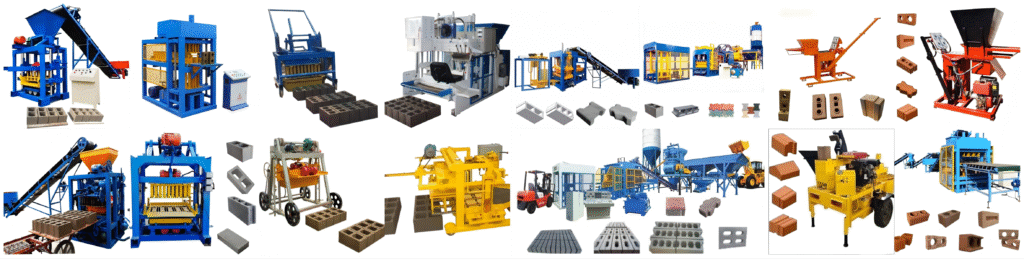
Stationary Block Making Plants
These are industrial-grade production systems designed for permanent installation in a dedicated factory or production yard. They form the backbone of large-scale, commercial block production.
- Core Characteristics: Built for high-volume output and continuous operation, stationary plants are heavy, robust, and not intended for relocation. They are typically the central component of an integrated production line that may include automated batching systems, conveyor belts, pallet stackers, and curing chambers.
- Typical Configurations:
- Single Hopper, Single Mold Machines: The classic workhorse, producing one block or a small pallet of blocks per cycle. Versatile and reliable.
- Multilayer or Multideck Machines: Feature multiple mold boxes stacked vertically. During one cycle, several layers of blocks are produced simultaneously on a single large pallet, dramatically increasing output per cycle for high-demand products like paving stones or standard hollow blocks.
- Primary Market: Large-scale manufacturers supplying regional construction markets, ready-mix concrete companies diversifying into precast products, and major infrastructure project consortia.
Mobile or Portable Block Making Machines
Engineered for flexibility and on-site production, these units bring the factory to the project.
- Core Characteristics: Mounted on a trailer or a self-contained skid frame, these machines are designed for easy transport. They are often diesel-powered or equipped for generator hookup, providing complete independence from fixed power infrastructure. While output is generally lower than stationary plants, their value proposition lies in logistics savings.
- Key Advantages: Eliminates the cost and carbon footprint of transporting heavy blocks over long distances. Enables production just-in-time, reducing on-site storage space. Ideal for remote locations, large singular projects (dams, military bases, rural housing developments), and disaster relief construction.
- Primary Market: Construction contractors, government agencies, NGOs, and entrepreneurs focusing on localized, project-based production.
Mechanical Classification: By Pressing and Vibration Principle
The method by which a machine compacts concrete is fundamental to its design, product quality, and energy profile. This technical classification is crucial for matching machinery to specific raw material mixes and product specifications.
Hydraulic Press Block Machines
These are the industry standard for high-density, high-strength blocks, utilizing pressurized fluid systems to generate immense compaction force.
- Operating Principle: A hydraulic power unit drives a ram (compaction head) that applies direct, controllable pressure from above onto the concrete mix in the mold, often synchronized with vibration from below.
- Sub-Types:
- Down-Stroke Presses: The compaction head descends into the mold box. This design allows for excellent surface finish and precise control over the top face of the block.
- Up-Stroke Presses: The vibration table and mold rise towards a stationary compaction head. This design can offer advantages in stability and pallet handling for certain product types.
- Advantages: Capable of producing very high compressive strength blocks (exceeding 20 MPa). Excellent dimensional accuracy and surface quality. Highly adaptable to different mix designs, including those with lower cement content or recycled aggregates.
- Considerations: Higher initial investment and more complex maintenance due to the hydraulic system. Generally higher energy consumption, though modern systems with variable displacement pumps are improving efficiency.
Mechanical or Vibro-Compression Block Machines
This category relies primarily on high-frequency, high-amplitude vibration to densify the concrete, sometimes augmented by mechanical leverage rather than full hydraulic pressure.
- Operating Principle: Powerful eccentric mass vibrators mounted directly on the mold table or frame fluidize the concrete mix, allowing it to settle into the mold with great density. A mechanical or limited-pressure hydraulic system may provide supplemental compaction.
- Advantages: Often simpler in design with fewer hydraulic components, leading to potentially lower maintenance costs and initial price point. Can be very effective for standard hollow blocks and products where extreme ultra-high strength is not the primary requirement.
- Considerations: Product strength is highly dependent on a perfectly graded mix design. May struggle with certain marginal or lightweight aggregates. Can be noisier in operation and may transmit more vibration to the foundation.
Hybrid (Electro-Mechanical) Press Systems
A growing category that seeks to merge the benefits of different systems, often with a focus on energy efficiency.
- Operating Principle: Utilizes servo-electric actuators or electromechanical drives to provide precise compaction force, replacing traditional hydraulic cylinders. Vibration systems remain but are often optimized with frequency converters.
- Advantages: Dramatically reduced energy consumption, as power is used only during the movement phase. Cleaner operation (no hydraulic oil). Quieter and capable of exceptional control and repeatability. Ideal for environments with strict energy or environmental regulations.
- Considerations: Currently represents a higher-end technological investment. May have different servicing requirements for control systems and electrical drives.
Classification by Product Output and Mold System
The nature of the final product portfolio defines another key axis of differentiation.
Single-Product/Multi-Product Machines
- Fixed Mold Machines: Dedicated to producing one specific block size and shape with maximum efficiency. Mold changeover is not designed for. Used in mega-projects requiring millions of identical units.
- Quick-Mold-Change (QMC) Machines: Equipped with systems (hydraulic clamps, sliding tables) that allow a full mold change in 15-30 minutes. This flexibility is essential for commercial plants serving diverse customer orders, enabling production of hollow blocks, solid blocks, and paving stones on the same machine.
Specialized Block Machines
Designed for specific, often high-value niche products.
- Interlocking Block Machines: Produce dry-stack blocks with integral vertical and horizontal alignment systems, eliminating the need for mortar in wall construction. Critical for rapid, cost-effective building systems.
- Insulated Concrete Form (ICF) Block Machines: Manufacture foam-insulated, stay-in-place formwork blocks used in energy-efficient building envelopes.
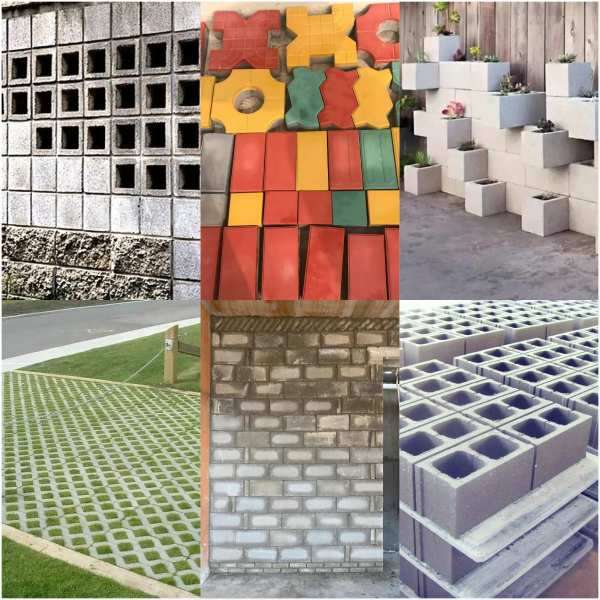
- Paver and Slab Making Machines: Specifically engineered for producing landscaping pavers, tiles, and thin slabs. Often feature multilayer technology and specialized vibration patterns for superior surface finish and wear resistance.
- Curystone and Retaining Wall Block Machines: Robust machines designed for large, heavy products, often with textured faces for aesthetic applications.
Strategic Considerations for Market Alignment
Matching Machine Type to Business Model
- The Entrepreneur/Start-Up: Often begins with a small, manual or semi-automatic mobile machine to validate the market, manage cash flow, and build customer relationships before scaling up.
- The Established Regional Manufacturer: Requires a fully automatic stationary plant with QMC capability to offer a full product catalog, ensure consistent quality, and compete on efficiency and service.
- The Infrastructure Contractor: Leans towards high-output, robust mobile plants or temporary stationary setups to supply a specific, time-bound project with controlled cost and logistics.
The Automation Spectrum: From Manual to Fully Integrated
- Manual Machines: All operations—feeding, pallet placement, block removal—are performed by hand. Lowest capital cost, highest labor intensity and variability.
- Semi-Automatic Machines: Core pressing cycle is automated, but an operator is needed to feed pallets and/or remove finished blocks. A middle ground for growing businesses.
- Fully Automatic Machines: The entire cycle from pallet feed to block ejection is automated. Delivers highest and most consistent output per worker.
- Fully Integrated Production Lines: The block machine is synchronized with upstream (mixer, conveyor) and downstream (curing system, stacker, splitter) automation. Represents the peak of industrial production, minimizing human intervention.
Conclusion
Understanding the different types of block machines is not an exercise in memorizing specifications; it is the development of a critical analytical framework. For the distributor and procurement professional, this knowledge enables the translation of a client’s vague needs—”I need a block machine”—into a precise technical and commercial solution. It allows for the critical alignment of a buyer’s market context, capital readiness, raw material availability, and product ambitions with the most suitable category of equipment: be it a mobile vibro-compression unit for a rural housing project or a fully integrated, servo-electric stationary plant for a greenfield eco-concrete factory.
The landscape of block machinery is diverse because the needs of the global construction market are diverse. By mastering this taxonomy, you position yourself not as a mere order-taker, but as a strategic advisor. You add value by guiding clients away from costly mismatches and toward investments that will yield productivity, profit, and growth. In the end, the right type of machine is the one that seamlessly fits into your client’s business, turning raw materials into reliable building blocks—for structures, and for commercial success.
FAQ
Q1: What is the most important factor to consider first when choosing a type of block machine?
A: The single most critical initial factor is clear demand and product specification. You must define what you need to produce (hollow blocks, pavers, specialty shapes), in what volume (blocks per day/week), and for which market (local project, regional distribution). The machine type flows from these answers. Choosing a machine before defining the product-market fit is a common and costly error.
Q2: Is a hydraulic press machine always better than a mechanical vibro-compression machine?
A: Not always. “Better” is context-dependent. If the goal is to produce standard hollow blocks with a well-controlled aggregate mix at the lowest possible capital cost, a well-designed vibro-compression machine may be the optimal choice. If the goal is to maximize strength, use variable or marginal aggregates, or produce dense paving stones, a hydraulic press is typically superior. It’s a trade-off between performance, material flexibility, and initial investment.
Q3: Can a mobile machine produce the same quality blocks as a stationary plant?
A: Yes, absolutely. Modern mobile machines can incorporate the same hydraulic pressing and vibration technology as stationary plants. The quality is determined by the machine’s core compaction system and the mix design, not its mobility. The primary difference is in sustained output volume and the level of peripheral automation (like automated curing), not the inherent quality of a single block.
Q4: What does “quick mold change” capability really mean, and is it worth the extra investment?
A: A true QMC system uses hydraulic clamping and pre-assembled mold carts to allow a complete mold swap in under 30 minutes by one or two operators. Without it, changing molds can take several hours of skilled labor using tools. For any producer planning to offer more than one standard product (which is most commercial producers), QMC is almost always worth the investment. It dramatically increases operational flexibility, reduces downtime, and enables response to custom orders.
Q5: How does the trend towards sustainability affect the choice of machine type?
A: Sustainability pushes choices in several directions:
- Material Use: Machines that can compact lower-cement mixes or high percentages of recycled aggregates (like crushed concrete) are favored. Hydraulic presses often excel here.
- Energy Efficiency: Electro-mechanical and next-generation hydraulic systems with energy recovery are becoming more attractive, especially in regions with high energy costs or carbon taxes.
- Localized Production: The sustainability benefits of reducing transport miles boost the argument for mobile or portable on-site production for large, localized projects.
A sustainable strategy influences the technical specifications within a chosen machine category.