
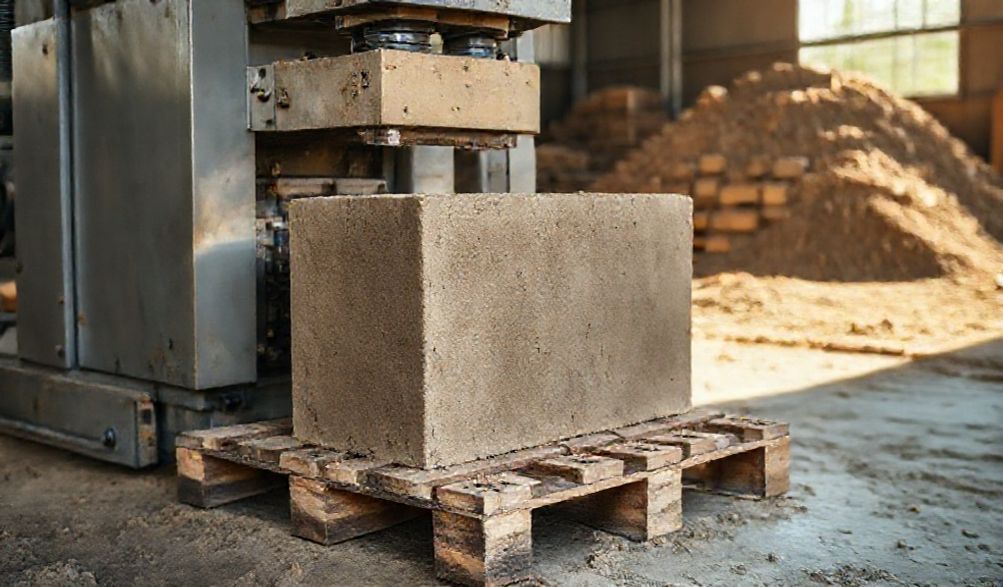
Your Ultimate Guide to Buying an Earth Block Machine for Sale in 2024
Introduction
What if the most durable, energy-efficient, and affordable building material was already beneath your feet? With the global sustainable construction market projected to skyrocket, there’s a quiet revolution returning to one of humanity’s oldest building methods: earth. But this time, it’s powered by precision engineering.
This definitive guide is crafted for the modern builder—whether you’re a contractor eyeing cost-effective projects, an eco-entrepreneur launching a block yard, or a dedicated DIY enthusiast. Your search for a reliable earth block machine for sale ends here. We’ve distilled extensive industry research, technical specifications, and real-world insights into a single resource. Our goal is to move you from curiosity to confidence, ensuring your investment builds not just walls, but a solid foundation for success.
By the end of this guide, you will understand the different types of machines, know which features are non-negotiable, navigate the true costs involved, and learn how to identify a trustworthy supplier. Let’s build your knowledge from the ground up.
Understanding Earth Block Machines: More Than Just a Press
At first glance, an earth block machine might look like a simple press. In reality, it’s a sophisticated tool that transforms raw, subsoil into a premier building commodity through controlled force and design.
What is an Earth Block Machine?
An earth block machine is a device that compresses damp, engineered earth into dense, uniform blocks suitable for construction. Unlike traditional brick-making, which involves kiln-firing at high temperatures, this process relies on mechanical compression.
- Key Differentiator: It uses the earth’s natural composition, stabilized for strength, eliminating the massive carbon footprint associated with fired clay or concrete blocks.
The Science Behind the Compression: CEBs vs. Adobe
Not all earthen blocks are created equal. The machine you choose dictates the type of block you produce.
- Compressed Earth Blocks (CEBs): These are the modern standard. A CEB machine applies high pressure (often 10-20 tons) to a mix of soil, sand, and a small percentage of stabilizer (like cement or lime). This creates a block with high compressive strength, dimensional accuracy, and water resistance.
- Traditional Adobe Blocks: Made from a simple clay-sand-straw mix, adobe is formed in molds and sun-dried. It requires no machine but offers lower structural strength and greater susceptibility to erosion.
- The Stabilization Factor: Stabilization (typically 5-10% cement) is what elevates a CEB from a historic material to a code-compliant, durable modern one. It chemically bonds the soil particles, drastically improving strength and weather resistance.
Why Choose Earth Block Construction?
The benefits extend far beyond nostalgia, offering tangible advantages for today’s builds:
- Sustainability & Low Embodied Energy: The primary material is locally sourced soil, minimizing transportation. The production process uses a fraction of the energy required for concrete or fired bricks.
- Excellent Thermal Mass: Earth blocks absorb heat during the day and release it at night, naturally regulating indoor temperatures and slashing heating/cooling costs.
- Cost-Effectiveness: With up to 90% of the material available on-site for many projects, material costs plummet.
- Superior Performance: They offer inherent fire resistance, are unappealing to pests like termites, and provide excellent acoustic insulation.
- Health & Aesthetics: Walls are breathable, regulating humidity, and the natural, textured finish is visually warm and appealing.
Types of Earth Block Machines for Sale: Finding Your Fit
Your project scope and goals are the primary drivers for choosing the right machine type. Here’s how they break down in the market.
Manual / Hand-Press Machines
These are the lever-operated or simple hydraulic hand presses of the CEB world.
- Ideal For: Small homestead projects, garden walls, NGO-led community builds, workshops, and educational purposes.
- Pros:
- Very low initial investment.
- Ultimate portability—no power needed.
- Simple to understand and maintain.
- Cons:
- Highly labor-intensive.
- Low production rate (e.g., 40-80 blocks per person per day).
- Block quality can vary with operator consistency.
Semi-Automatic & Fully Automatic Electric/Hydraulic Machines
This is the sweet spot for small to medium businesses and serious owner-builders.
- Ideal For: Building a single home, starting a commercial block yard, or undertaking multiple projects per year.
- How They Work: Soil mix is fed into a hopper. The machine then automatically fills a mold, applies high hydraulic pressure, and ejects the finished block. Semi-automatic may require manual pallet feeding, while fully automatic runs a continuous cycle.
- Pros:
- High, consistent production (e.g., 300-800+ blocks per hour).
- Excellent, uniform block quality.
- Significantly reduces physical labor.
- Cons:
- Higher upfront cost.
- Requires a power source (3-phase electric or diesel).
- More complex maintenance.
Mobile Block Plants and Large-Scale Industrial Machines
These are the production powerhouses, often truck-mounted or as large stationary systems.
- Ideal For: Large construction firms, municipal projects, and high-volume block manufacturers supplying regional markets.
- Pros:
- Maximum output (1,000+ blocks per hour).
- Often integrated systems with soil screening, mixing, and conveyor belts.
- Highest level of automation and efficiency.
- Cons:
- Very significant capital investment.
- Requires a large operational footprint and skilled crew.
- Complex logistics and setup.
Critical Features to Evaluate Before You Buy
Looking beyond the basic type, these technical features separate adequate machines from exceptional, long-lasting investments.
Production Capacity (Blocks Per Hour/Day)
Don’t just look at the peak “blocks per hour” rating. Consider sustainable, day-long production rates.
- Ask Yourself: Do I need to build a house in 3 months or supply a housing development? Match the machine’s output to your peak demand, not your average. A machine running at 50% capacity lasts longer than one constantly pushed to its limit.
Block Size and Mold Versatility
Standard rectangular blocks are just the beginning. Mold flexibility future-proofs your investment.
- Key Point: Ensure the supplier offers interchangeable molds. Popular options include:
- Interlocking blocks (for mortar-less construction).
- Thin-veneer blocks.
- Specialty shapes for arches or corners.
- Check: The cost and lead time for additional molds.
Compression Force and Power Source
This is the heart of your machine’s capability.
- Compression Force: Measured in tons (e.g., 10-ton, 20-ton press). Higher tonnage generally produces denser, stronger blocks suitable for load-bearing walls. For most single-story homes, 10-15 tons is sufficient.
- Power Source:
- Electric: Cleaner, quieter operation but requires reliable grid or generator.
- Diesel/Hydraulic: Offers high power and mobility for remote sites.
- Manual: As discussed, for very small-scale use.
Build Quality and Durability
A machine is a long-term asset. Inspect its construction.
- Frame & Welds: Look for heavy-duty, reinforced steel frames with clean, robust welds.
- Critical Components: Research the brand of the hydraulic pump, cylinders, and electrical controls. Recognizable brand names often mean easier part sourcing.
- Finish: Quality paint or powder coating fights rust and indicates care in manufacturing.
Ease of Use and Maintenance
Downtime is lost revenue. Prioritize user-friendly design.
- Manuals & Training: Does the supplier provide clear, illustrated manuals in your language? Do they offer on-site or video training?
- Maintenance Access: Can you easily access grease points, hydraulic lines, and the mold chamber for cleaning?
- Parts Availability: What is the supplier’s policy on spare parts? Is there a local distributor or must they ship internationally?
The Real Cost of an Earth Block Machine
The purchase price is just the entry ticket. A smart buyer budgets for the total cost of ownership.
Initial Purchase Price Ranges
Prices vary wildly based on type, automation, and origin. Use these as very broad 2024 guides:
- Manual Presses: $500 – $3,000 USD.
- Semi-Automatic Machines: $8,000 – $25,000 USD.
- Fully Automatic / Industrial Machines: $30,000 – $100,000+ USD.
Golden Rule: Be wary of prices that seem too good to be true. Superior steel and components cost money.
Beyond the Sticker Price: Hidden Costs
These often-overlooked expenses can surprise new buyers:
- Shipping & Logistics: For an international order, freight, insurance, and port fees can add 15-30% to the machine cost.
- Import Duties & Taxes: Research your country’s tariff codes for construction machinery.
- Site Preparation: A stationary machine needs a level, reinforced concrete pad.
- Auxiliary Equipment: Budget for a pan mixer or rotary mixer, a soil screener, a small loader (like a tractor), and block pallets.
Operational Costs and ROI Considerations
This is where the investment proves its worth.
- Running Costs: Electricity/fuel, labor for 2-3 operators, routine maintenance supplies (hydraulic fluid, grease).
- Calculating Cost Per Block: Add up material (soil, stabilizer), labor, and machine amortization costs. A well-run operation can produce CEBs for a fraction of the cost of conventional bricks.
- ROI Scenario: A small builder purchases a $15,000 semi-automatic machine. By saving $1.50 per block compared to purchased bricks on a 5,000-block home, they save $7,500 on one project. The machine pays for itself in two to three similar projects, and every block produced afterward is pure profit or savings.
How to Vet Suppliers and Ensure a Smart Purchase
Your relationship with the supplier is as critical as the machine itself. This is where due diligence pays off.
Researching Manufacturers and Distributors
- History & Specialization: Favor companies that have been in the soil compression business for years, not general equipment dealers.
- Portfolio & Proof: Demand photos and videos of their machines in operation, not stock footage. Look for a list of completed projects or customer references you can contact.
Key Questions to Ask Any Seller
Walk into the conversation prepared. Ask:
- “What is the exact warranty period, and what components are covered/ excluded?”
- “Can you provide a detailed parts list with OEM manufacturer numbers?”
- “Do you offer installation supervision or comprehensive operation training?”
- “What is your lead time for spare parts, and what is the shipping process?”
- “Can you connect me with a past customer in my region who has a similar machine?”
The Importance of After-Sales Support
The sale is the beginning. Reliable support includes:
* Accessible technical assistance (phone, email, WhatsApp).
* A clear spare parts catalog and ordering system.
* Availability of service manuals and troubleshooting guides.
Considering New vs. Used Machines
A used machine can be a great deal but carries risk.
- Pros of Used: Lower initial cost.
- Cons of Used: Unknown wear, potential hidden damage, expired or void warranty.
- Red Flags: Excessive rust (especially in critical areas), leaking hydraulics, worn mold faces, and a seller unwilling to demonstrate the machine under power. Always insist on a live video demonstration.
FAQ: Your Earth Block Machine Questions Answered
Q1: What type of soil is best for an earth block machine?
A: The ideal soil is a “loam” with a mix of roughly 15-30% clay (binder), 60-80% sand and silt (aggregate), and minimal organic matter. Simple field tests—like the jar test or ribbon test—can give a good indication. Professional lab testing is recommended for large projects.
Q2: Can I make blocks that meet building code standards?
A: Absolutely. Properly stabilized and compressed CEBs can achieve compressive strengths exceeding many code requirements. The key is to have your final block mix (soil + stabilizer) tested by a certified engineering lab for compressive strength and durability. Present this data to your local building authority for approval.
Q3: How many people are needed to operate a semi-automatic machine?
A: A typical efficient crew for a semi-automatic machine is 3-4 people: one feeding the mixer/hoper, one managing the block ejection and pallet placement, and one moving and stacking cured blocks. For a fully automatic system, 2 people may suffice.
Q4: Where can I find earth block machine suppliers near me?
A: Start with targeted online searches using “earth block machine distributor [Your Country/Region].” Attend sustainable building expos or natural building workshops. Explore international B2B marketplaces but apply rigorous vetting. Industry associations for sustainable construction can also be valuable resources.
Conclusion
Choosing the right earth block machine for sale is a strategic decision that hinges on aligning technology with your vision. It’s about matching the machine’s capacity to your ambition, its build quality to your timeline, and its supplier to your need for long-term support.
Remember, the most crucial step happens before you even contact a seller: test your soil. The quality of your raw material is the ultimate dictator of your success. A fantastic machine with poor soil will only produce poor blocks.
Ready to move from research to action? [Download our free Earth Block Machine Buyer’s Checklist] to compare models, evaluate suppliers, and ensure you don’t overlook a single critical detail in your purchasing journey.
Have a specific scenario or a lingering question? Share your thoughts in the comments below. Let’s build a community of knowledge around sustainable construction.