
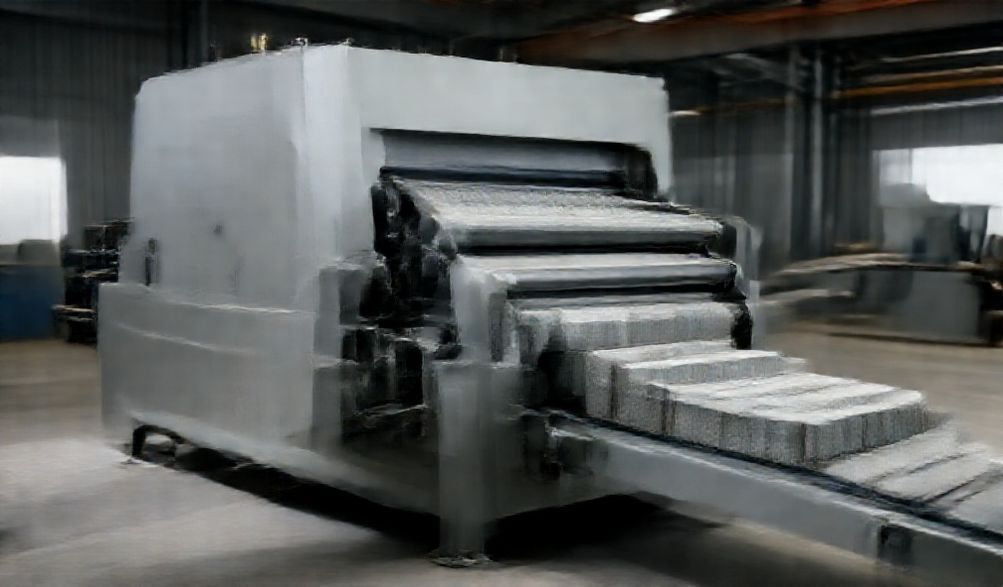
Your Ultimate Guide to Choosing a Cement Brick Making Machine Manufacturer
Introduction
In an era where infrastructure defines progress, the demand for reliable, sustainable, and cost-effective building materials is at an all-time high. Cement bricks have emerged as a premier choice, offering durability, thermal efficiency, and environmental benefits over traditional clay bricks. Yet, the true quality of these bricks is forged not just in the mix, but in the machine that molds them.
Selecting the right cement brick making machine manufacturer is arguably the most pivotal decision for any construction business, block yard startup, or large-scale project developer. This choice transcends a simple equipment purchase. It represents a strategic investment in your operational backbone, directly influencing your product quality, daily output, profit margins, and market reputation.
A subpar machine from an unreliable source can lead to inconsistent bricks, frequent breakdowns, exorbitant maintenance costs, and ultimately, project failures. Conversely, a partnership with a reputable manufacturer lays the foundation for years of smooth, profitable, and scalable production. This guide serves as your comprehensive roadmap. We will dissect the critical factors that separate industry leaders from the rest, empowering you to make an informed, confident investment in your business’s future.
Why Your Choice of Manufacturer Matters More Than the Machine
It’s easy to be captivated by a machine’s specifications or its price tag. However, the entity behind the machine—the manufacturer—holds the key to your long-term success. The manufacturer’s ethos, capabilities, and support systems are embedded in every component of the machine you operate.
Quality Assurance & Machine Longevity
A distinguished manufacturer invests in excellence from the ground up. This commitment is visible in:
- Superior Metallurgy and Components: They use high-grade steel for frames, precision-engineered hydraulic systems from reputable brands, and industrial-grade vibration motors. This ensures the machine can withstand constant pressure and vibration without deformation.
- Precision Engineering: Tolerances matter. Expert manufacturers employ advanced CNC machinery and skilled technicians to ensure every part fits perfectly, leading to smoother operation and less wear and tear.
- Rigorous Testing Protocols: Before shipment, each machine should undergo comprehensive testing under load. This includes cycle testing, pressure checks, and trial production runs to guarantee it performs to specification from day one.
Impact on Final Product Quality
Your machine is the direct determinant of your product’s marketability. A well-engineered machine from a quality-focused manufacturer delivers:
- Dimensional Accuracy and Consistency: Every brick, block, or paver is identical. This precision is non-negotiable for modern construction, ensuring easy laying, structural integrity, and a professional finish.
- Optimal Compaction and Strength: Advanced vibration and hydraulic systems ensure the concrete mix is compacted uniformly, eliminating voids and achieving the designed compressive strength for load-bearing applications.
- Superior Surface Finish: The quality of molds and the precision of the ejection system result in bricks with clean edges and smooth surfaces, reducing the need for plaster and enhancing aesthetic appeal.
Total Cost of Ownership (TCO)
The initial purchase price is just the entry fee. A reliable manufacturer designs machines for low Total Cost of Ownership.
- Energy Efficiency: Modern, well-designed machines optimize power consumption, especially crucial for fully automatic plants that run for extended periods.
- Lower Maintenance & Downtime: Built with durability in mind, these machines require less frequent repairs. When maintenance is needed, standardized parts and clear manuals simplify the process.
- Higher Resale Value: Equipment from a renowned manufacturer retains its value significantly better, protecting your capital investment.
Choosing a cheap, unknown manufacturer often leads to hidden costs: constant repairs, poor brick quality that can’t be sold, production halts, and premature machine failure.
Key Factors to Evaluate in a Cement Brick Making Machine Manufacturer
Navigating the global market requires a structured evaluation. Look beyond glossy brochures and assess these concrete factors.
Proven Industry Experience & Track Record
Longevity and specialization are strong indicators of stability and expertise.
- Years in Business & Core Focus: Prefer manufacturers with a decade or more of dedicated experience in brick and block making machinery. This suggests resilience and deep domain knowledge.
- Portfolio & Client Evidence: Request detailed case studies, project lists, or videos from past installations, especially those similar to your planned operation. A credible manufacturer will proudly share this information.
Technical Expertise & Innovation
The manufacturer’s technical depth dictates your machine’s capabilities and future-proofing.
- In-House R&D: Do they have an engineering team that develops and improves their models? This shows a commitment to innovation and adapting to new market demands.
- Range of Offerings: A broad portfolio (manual, semi-automatic, fully automatic, mobile) indicates comprehensive understanding. It also means they can offer unbiased advice on what’s best for you, not just what they have in stock.
- Customization Capability: Can they adapt machine output, brick sizes (e.g., for local standards), or incorporate specific features? This flexibility is vital if your needs are unique.
Manufacturing Standards & Quality Control
This is where promises become tangible. Scrutinize their production integrity.
- International Certifications: Look for ISO (Quality Management Systems) and CE (meeting EU health, safety, and environmental standards) certifications. These are third-party validations of a structured quality process.
- Component Quality: Ask for specifics: “What brand are the hydraulic pumps and valves?” “Who supplies the PLC and electrical components?” Renowned sub-component brands are a good sign.
- Factory Audit: If possible, a visit is invaluable. You can assess workshop organization, worker skill, and quality checkpoints firsthand.
After-Sales Support & Service Network
This factor is the ultimate test of a manufacturer’s commitment. The machine will need support; ensure it’s readily available.
- Warranty Structure: A clear, comprehensive warranty (e.g., 12-24 months on core parts) is essential. Understand what is covered and the claim process.
- Commissioning Services: Do they offer installation supervision, calibration, and on-site operator training? This ensures you start production correctly.
- Spare Parts Ecosystem: Is there a dedicated spare parts department? How quickly can critical parts be shipped? Local service agents or warehouses are a major advantage for international buyers.
A Deep Dive into Machine Types and Their Applications
Understanding the technology landscape ensures you invest in the right tool for your specific job.
Manual & Semi-Automatic Machines
Ideal for entrepreneurs, small businesses, and community projects.
- Operation: Require significant manual labor for feeding mix and removing bricks. Semi-automatic models use a mechanical or hydraulic press for compaction.
- Output: Lower production (500 – 2,000 blocks per 8-hour shift).
- Pros: Very low capital investment, simple operation and maintenance, low power consumption.
- Cons: Labor-intensive, product consistency relies heavily on operator skill.
Fully Automatic Block Making Plants
The powerhouse for commercial, high-volume production.
- Operation: Computer-controlled, from raw material feeding to brick stacking on pallets. Minimal human intervention required.
- Output: High production (2,000 – 10,000+ blocks per shift).
- Pros: Maximum output and consistency, low labor cost per block, programmable for different products.
- Cons: High initial investment, significant power requirements, need for skilled maintenance.
Mobile Brick Making Machines
A game-changer for large, remote, or on-site projects.
- Operation: Mounted on a trailer, these machines can be towed directly to a construction site.
- Key Advantage: Drastically reduces the cost and logistical hassle of transporting finished bricks over long distances. Production happens where the bricks are needed.
- Application: Large infrastructure projects (dams, roads), remote housing developments, disaster relief construction.
Specialized Machines
Designed for specific, high-value products.
- Interlocking Paver Machines: Produce paving stones with interlocking designs for driveways and walkways.
- Hollow Block Machines: Create standard or custom hollow blocks for walls, offering excellent insulation and reduced weight.
- Curbstone & Landscape Product Machines: For manufacturing heavy-duty curbstones, lawn edging, and other architectural elements.
Essential Questions to Ask Before You Buy
Arm yourself with these questions during discussions with potential suppliers.
Questions About the Machine:
- What is the precise production capacity in blocks per hour for the specific brick type I want (e.g., 4″ solid block)?
- What are the detailed power requirements (voltage, phase, total connected load)? What is the estimated energy consumption per 1,000 blocks?
- What is the recommended raw material mix ratio (cement:sand:aggregate)? What is the maximum aggregate size it can handle?
- What is the cycle time, and how many bricks are produced per cycle?
Questions About the Manufacturer:
- Can you provide contact details for 2-3 clients in my region or with a similar business model? (Follow up on these references).
- What is the complete delivery timeline, from order confirmation to installation-ready at my site? What does installation involve?
- What specific training do you provide for machine operators and maintenance staff? Is it on-site or at your factory?
- What is your standard response time for technical support? Do you offer remote diagnostics? What if a critical part fails?
Building a Sustainable Partnership
Your goal is not a one-time transaction, but a long-term operational alliance.
Transparency in Quotations and Contracts
A detailed, itemized quotation builds trust. It should clearly separate:
* Machine cost
* Mold costs (for each brick type)
* Spare parts kit price
* Packaging, shipping, and insurance
* Installation and training fees
Beware of suspiciously low “all-inclusive” quotes that may hide costs or compromise on quality.
The Importance of Factory Visits
If feasible, a factory visit is the single most revealing step. You can:
* Observe build quality on the shop floor.
* Assess the scale and organization of the operation.
* Meet the engineering and management team.
* See testing procedures in action.
Evaluating Customer Testimonials and Industry Reputation
Go beyond the testimonials on the manufacturer’s website.
* Search for the company name on independent B2B platforms and industry forums.
* Look for video reviews from clients on platforms like YouTube.
* Check if they are regularly featured or participating in major international construction equipment exhibitions.
Frequently Asked Questions (FAQ)
Q1: What is the average cost range for a cement brick making machine?
A: Costs vary immensely. A basic manual machine can start from $3,000 – $7,000. A semi-automatic model may range from $15,000 – $50,000. A full automatic production line can range from $70,000 to over $300,000, depending on automation level and output. Always base your budget on a detailed quotation for your required configuration.
Q2: How do I determine the right production capacity for my business?
A: Conduct a realistic market analysis. Calculate your current orders and projected growth for the next 3-5 years. Factor in a single-shift or multi-shift operation. A good rule is to choose a machine that meets 120-150% of your current demand to allow for growth without immediate need for a costly upgrade.
Q3: What kind of after-sales service should I expect from a top manufacturer?
A: Expect a structured support package: Pre-delivery consultation, detailed installation manuals or on-site supervision, comprehensive operator and maintenance training, a clear and fair warranty document, a readily available catalog of spare parts, and multiple channels for technical support (phone, email, WhatsApp, video call).
Q4: Can the machine produce different types and sizes of bricks?
A: Yes, most machines are designed for versatility. The key is the mold. Reputable manufacturers offer a wide range of interchangeable molds for solid blocks, hollow blocks (different cavity patterns), pavers, and more. Ensure the machine’s pressure and vibration systems are suitable for all the products you intend to make.
Q5: What are the most common maintenance requirements?
A: Daily and weekly routines are crucial: Cleaning excess concrete after each shift, checking hydraulic oil levels and filters, lubricating all guide rods and bearings, inspecting electrical connections for tightness, and ensuring the vibration table is clean and functional. Your manufacturer must provide a clear maintenance schedule.
Conclusion
The journey to finding the ideal cement brick making machine manufacturer is a deliberate process of vetting, verification, and vision alignment. It requires you to look past the machinery’s exterior and evaluate the core pillars of the company behind it: their experience in weathering industry cycles, their expertise in mechanical and civil engineering, their authoritativeness as proven by clients and certifications, and their fundamental trustworthiness in post-sale support.
This decision forms the bedrock of your production capability. By prioritizing a manufacturer who excels in these areas, you secure more than a piece of equipment—you gain a partner invested in your productivity and profitability. Take a systematic approach: compile a list of potential suppliers, ask the hard questions from this guide, demand verifiable proof, and listen carefully to existing customers.
Your diligence will be repaid with a machine that delivers consistent quality, operational reliability, and a strong return on investment for years to come. Begin your search with the manufacturer in mind, and you’ll build a business on the most solid foundation possible.