
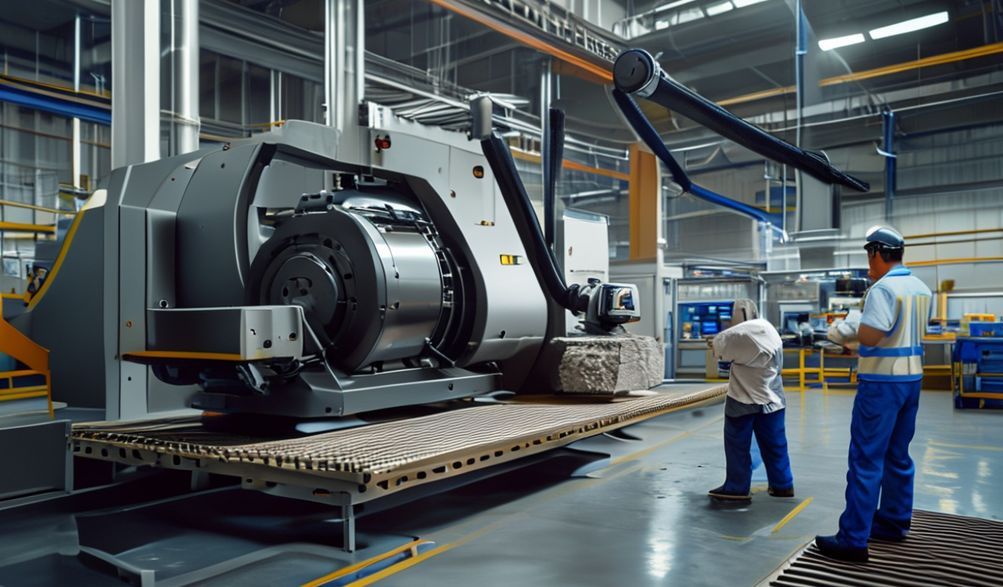
Your Ultimate Guide to Choosing a Wholesale Hollow Block Making Machine Manufacturer: Spotlight on FUDA Brick Making Factory
Introduction
The global construction landscape is defined by a relentless demand for affordable, durable, and versatile building materials. At the heart of this demand lies the humble hollow block—a cornerstone of modern infrastructure, from residential housing to large-scale commercial projects. For entrepreneurs and construction businesses, the opportunity in block production is immense. However, the very foundation of a successful block-making venture isn’t just the raw materials; it’s the machine that transforms them.
The critical challenge for many lies in sourcing the right production engine. Too often, businesses face the pitfalls of inconsistent machine quality, hidden maintenance costs, poor technical support, and disappointing output. Choosing the wrong wholesale hollow block making machine manufacturer can turn a promising investment into a costly, stagnant asset.
This is where the decision transcends a simple purchase and becomes a strategic partnership. Selecting a manufacturer with proven engineering expertise, robust after-sales systems, and a commitment to your success is paramount. In this comprehensive guide, we will dissect the key factors that separate industry leaders from the rest, using the established practices of FUDA brick making factory as a benchmark for excellence. Our goal is to arm you with expert, unbiased knowledge, grounded in industry experience and engineering principles, to help you make a confident, informed, and profitable investment in your business’s future.
Why Your Choice of Hollow Block Machine Manufacturer Matters
Selecting a manufacturer is the most significant decision you will make for your block production business. It directly influences your product quality, operational costs, and long-term viability. Let’s break down why this choice carries so much weight.
Impact on Product Quality & Consistency
The precision and robustness of your hollow block machine dictate the quality of every single block you produce. A manufacturer with superior engineering ensures:
- Optimal Block Density & Strength: The machine’s vibration system and hydraulic pressure must work in perfect harmony to compact the concrete mix thoroughly, eliminating voids. This process is critical for achieving the required compressive strength (often measured against standards like ASTM C90).
- Dimensional Accuracy: Precision-machined molds and a stable, heavy-duty frame guarantee that every block has consistent length, height, and width. This accuracy is non-negotiable for efficient, waste-free bricklaying on site.
- Surface Finish Quality: A well-engineered machine produces blocks with smooth, sharp edges and clean surfaces, enhancing the aesthetic appeal and professional reputation of your product.
Inconsistent quality from a subpar machine leads to customer rejections, wasted materials, and a damaged brand reputation.
Total Cost of Ownership (TCO) vs. Initial Price
The cheapest machine on the market is often the most expensive in the long run. Smart buyers evaluate Total Cost of Ownership, which includes:
- Initial Investment: The purchase price.
- Energy Consumption: Efficient hydraulic and vibration systems consume less electricity, significantly reducing daily operating costs.
- Maintenance & Downtime: Machines built with inferior components break down more often, requiring costly repairs and halting production. Premium-grade steel, hydraulics, and electrical parts last longer.
- Production Output & Efficiency: A machine that produces 2,000 blocks per hour with 95% uptime generates far more revenue over its lifespan than a cheaper machine producing 1,200 blocks with frequent stoppages.
- Resale Value: Equipment from a reputable manufacturer holds its value much better.
The Critical Role of After-Sales Support & Training
Your relationship with the manufacturer begins after the sale. Comprehensive support is not a luxury; it’s a necessity.
- Installation & Commissioning: Proper setup by trained technicians ensures the machine operates at peak performance from day one.
- Comprehensive Operator Training: Well-trained staff operate the machine safely, maximize output, and perform basic troubleshooting.
- Readily Available Spare Parts: A global manufacturer with a structured parts inventory means you won’t face weeks of downtime waiting for a crucial component. This is a key differentiator for manufacturers like FUDA brick making factory.
Key Factors to Evaluate in a Wholesale Manufacturer
When vetting potential partners, scrutinize them against these critical criteria.
Engineering Expertise and Manufacturing Capabilities
Look beyond the sales brochure. Investigate the company’s core competencies.
* In-House R&D: Does the manufacturer invest in developing and improving its own technology?
* Quality Certifications: ISO standards (like ISO 9001) indicate a systematic approach to quality management in design and production.
* Production Facilities: Modern factories equipped with CNC (Computer Numerical Control) machinery, laser cutters, and automated welding lines produce more precise and consistent machine frames.
Range of Machinery and Customization Options
A one-size-fits-all approach rarely works. A strong manufacturer offers a spectrum of solutions.
* Automation Levels:
* Manual/Semi-Automatic: Lower initial cost, higher labor requirement. Ideal for starting businesses or markets with low labor costs.
* Fully Automatic: Higher output, consistent quality, and reduced labor. Best for medium to large-scale production.
* Output Capacity: Machines should be available for small yards (e.g., 1,000 blocks/day) up to large industrial plants (10,000+ blocks/day).
* Customization: Can they adapt mold designs for unique block patterns or adjust the system for locally available raw materials (like specific aggregates or fly ash)?
Material and Component Quality
The durability of a machine is determined by the quality of its parts.
* Frame: Should be constructed from heavy-duty, reinforced steel plates to withstand constant vibration and pressure.
* Hydraulic System: Look for renowned, reliable brands for pumps, valves, and cylinders. A robust system ensures stable pressure and smooth operation.
* Molds: Must be made from high-chromium, wear-resistant steel to maintain dimensional accuracy over thousands of cycles.
* Electrical Components: PLC (Programmable Logic Controller) systems and sensors from established brands improve reliability and control.
Global Reputation and Client Portfolio
A proven track record is the best indicator of future performance.
* Case Studies & Testimonials: Request detailed examples of successful installations, especially in regions similar to yours.
* Export History: Experience in shipping and installing machines internationally shows an understanding of logistics, customs, and diverse operational environments.
* Industry Presence: Participation in major international construction and machinery trade fairs signals a commitment to the global market.
Inside FUDA Brick Making Factory: A Manufacturer Deep Dive
Let’s apply the above criteria to a real-world example. FUDA Brick Making Factory has established itself as a prominent force in the global block machinery market. Here’s a closer look at what they represent.
Company Legacy and Core Philosophy
FUDA has built its reputation on a foundation of engineering innovation and client-centric partnership. With years of dedicated focus on concrete block making technology, their mission extends beyond selling machines—they aim to provide complete production solutions that empower their clients’ businesses to grow and thrive.
Core Product Lines and Technical Specifications
FUDA typically offers a comprehensive range to suit various business scales:
* Semi-Automatic Hollow Block Machines: Robust, cost-effective workhorses perfect for starting a block yard or smaller production needs. Outputs can range from 800 to 2,000 blocks per 8-hour shift.
* Fully Automatic Hollow Block Making Machines: These are the flagship models for high-volume production. Featuring automatic material feeding, block molding, curing, and pallet return systems, they can produce from 3,000 to over 10,000 standard blocks per day with minimal manual intervention.
* Key Technical Features: Their machines often incorporate high-frequency vibration systems for optimal compaction, energy-efficient hydraulic power units, and user-friendly PLC touchscreen interfaces for precise control over every production parameter.
The FUDA Manufacturing Advantage
Their capabilities are rooted in their infrastructure:
* Advanced Production Facility: Utilizing CNC machining centers and automated welding ensures component precision and structural integrity.
* Stringent Quality Assurance: A multi-stage inspection process, from raw material intake to final performance testing, is in place to uphold strict quality standards.
* In-House Mold Manufacturing: This allows for greater quality control over the most critical wear part and enables faster customization for clients.
Commitment to Client Success
FUDA’s service model is designed for long-term partnership:
1. Pre-Sales Consultation: Engineers work with clients to understand project goals, raw materials, and site conditions.
2. Layout & Foundation Design: They provide detailed factory layout drawings and foundation plans tailored to the specific machine and site.
3. On-Site Installation & Training: Technicians supervise installation and conduct thorough training for operators and maintenance staff.
4. After-Sales Support: A dedicated service team assists with remote troubleshooting and ensures genuine spare parts are available.
The Wholesale Partnership Advantage with FUDA
For distributors, large contractors, or entrepreneurs setting up major production yards, the wholesale model offers distinct benefits.
Competitive Pricing for Bulk and B2B Buyers
By engaging directly with a manufacturer like FUDA for wholesale orders, you eliminate intermediary markups. This direct relationship provides significant value, making large-scale projects or starting a distribution business more financially viable.
Comprehensive Service Package
A wholesale partnership often includes an elevated level of service:
* Detailed technical documentation and foundation plans.
* Priority installation and commissioning scheduling.
* Extended operator training programs.
* Potential for customized spare parts packages.
Streamlined Logistics and Global Export Experience
FUDA has developed expertise in the complex process of international shipping. They handle:
* Professional Packaging: Machines are disassembled, crated, and protected for ocean freight.
* Shipping Documentation: Assistance with commercial invoices, packing lists, and certificates of origin.
* Logistics Coordination: Experience in working with freight forwarders to ensure smooth delivery to your nearest port.
Making an Informed Purchase Decision
Defining Your Project Requirements
Before contacting any manufacturer, clarify your own needs:
* Block Types & Sizes: What are the market standards in your region?
* Daily/Annual Production Target: Be realistic about your current market and growth plans.
* Budget: Consider TCO, not just the purchase price. Include costs for installation, power connection, and initial raw materials.
* Site Conditions: Space, power supply (voltage, phase), and raw material storage.
Questions to Ask Any Potential Manufacturer
Use this checklist during your discussions:
1. What is the exact warranty period and what does it cover?
2. What is the lead time from order to shipment?
3. Can you provide a list of recommended spare parts for the first year?
4. Do you offer installation supervision, and what is the cost?
5. Can I see performance data or videos from a machine in operation?
6. What are the payment terms (e.g., T/T, L/C)?
7. Can you provide contact information for 2-3 clients in my region?
The Next Steps: From Inquiry to Installation
A professional process typically follows these stages:
1. Initial Inquiry: Share your project requirements.
2. Quotation & Proposal: Receive a detailed offer with machine specifications, pricing, and delivery terms.
3. Factory Visit (Highly Recommended): Inspect the manufacturing process firsthand or request a virtual tour.
4. Order Confirmation: Sign a contract and provide a deposit.
5. Production & Testing: Witness the factory acceptance test (FAT) if possible.
6. Shipping & Delivery: Track your shipment.
7. Installation & Training: Commission your machine and begin production.
Frequently Asked Questions (FAQ)
Q1: What is the typical lead time for a wholesale order from a manufacturer like FUDA?
Lead times vary based on machine complexity and order queue. For standard models, expect 30-45 days for production after order confirmation, plus shipping time. Customized solutions may take longer. Always confirm the schedule during quotation.
Q2: Can the machines be customized for producing special block designs or using local raw materials?
Yes, reputable manufacturers like FUDA often offer customization. This can include creating new mold designs for unique block shapes (e.g., interlocking, garden blocks) and adjusting the mixer ratio or vibration system to optimally work with the properties of your local sand, aggregate, or cement blends.
Q3: What kind of warranty and technical support can I expect with a wholesale purchase?
Standard warranties often cover manufacturing defects in key components for 12-18 months. Technical support typically includes remote assistance via phone, email, or video call. The availability of on-site service should be clarified in the contract.
Q4: How does FUDA ensure the machine will work efficiently in my specific country’s climate and conditions?
Experienced manufacturers design for global operation. They will consult with you on local conditions (humidity, temperature, dust) and may recommend specific protections or adjustments. Their experience with similar climates, evidenced by their client portfolio, is a key assurance.
Q5: What are the key differences between semi-automatic and fully automatic hollow block machines?
* Semi-Automatic: Lower initial investment. Requires more manual labor for feeding raw material and removing blocks. Lower output (good for startups). Offers more flexibility for quick mold changes.
* Fully Automatic: Higher initial cost. Minimal labor—automated from feeding to stacking. Very high, consistent output. Higher energy consumption but lower cost per block at scale. Better for large, continuous production.
Q6: As a new business, what is the minimum viable setup you would recommend for starting a block production yard?
A common starting point is a semi-automatic machine with a production capacity of 1,500-3,000 blocks per 8-hour shift. This requires a basic concrete mixer, a pallet supply, and a curing area. This setup balances manageable investment with sufficient output to supply small contractors and local projects, allowing for business growth.
Conclusion
Choosing a wholesale hollow block making machine manufacturer is a strategic decision that will define the productivity and profitability of your business for years to come. It requires looking beyond the initial price tag to evaluate engineering prowess, material quality, and—most importantly—the manufacturer’s commitment to being a true partner in your success.
As we’ve explored, manufacturers like FUDA brick making factory exemplify the standards the industry should strive for: deep technical expertise, verifiable manufacturing quality, and a comprehensive support system designed for client growth. By partnering with a manufacturer that embodies these principles, you’re not just buying a machine; you’re investing in a reliable foundation for your venture’s future.
Ready to move forward with confidence? Begin by systematically defining your project needs and preparing your questions. For a detailed framework to evaluate potential partners, download our comprehensive buyer’s checklist for evaluating block machine manufacturers. If you’re ready to discuss a specific solution, contact FUDA’s expert engineering team today for a free, no-obligation consultation and a project quote tailored precisely to your operational goals and market potential.