
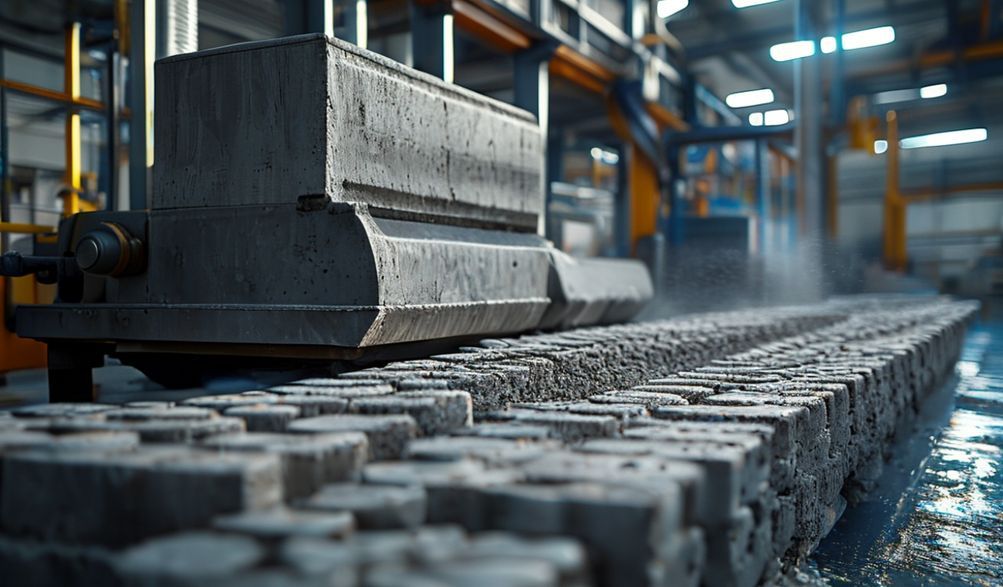
Die Ultieme Gids vir Sementholblokmasjiene | Insigte van FUDA Fabriekkundiges
Inleiding
Die globale konstruksiebedryf is in 'n konstante wedloop—teen tyd, begrotings en omgewingsimpak. Die kern van hierdie uitdaging lê in die soeke na bekostigbare, duursame en volhoubare boumateriaal. Sementholblokke het na vore getree as 'n hoeksteenoplossing, wat uitstekende sterkte-tot-gewig-verhoudings, termiese isolasie en koste-effektiviteit bied. Die produksiemetode is egter wat 'n winsgewende, kwaliteitgedrewe projek van 'n sukkelende een onderskei.
Vir dekades het afhanklikheid van handearbeid gelei tot inkonsekwente blokke, verlammende lae produksie, en onvolhoubare fisiese eise op werkers. Vandag staar die moderne bouer of entrepreneur 'n ander uitdaging in die gesig: om 'n komplekse mark van masjinerie te navigeer, waar die keuse van verkeerde toerusting 'n katastrofiese belegging kan wees. Dit is waar diep, praktiese ervaring onskatbaar word.
Betree die FUDA Blokvervaardigingsfabriek. Ons is nie net toerustingverkopers nie; ons is bedryfbaanbrekers met dekades van praktiese ervaring in beide vervaardiging en bedryf.sement holblok maakmasjieneOns masjiene is die stille vennote in konstruksieprojekte regoor die wêreld, van plaaslike behuisingsontwikkelings tot grootskaalse infrastruktuur. Ons het die proses deurleef, van die tekentafel tot die produksievloer.
Hierdie omvattende gids benut FUDA se ongeëwenaarde kundigheid. Ons doel is om die wêreld van holblokmasjinerie te ontraaisel en jou die kennis te gee om die verskillende tipes, sleutelkenmerke en kritieke keuringskriteria te verstaan. Teen die einde sal jy toegerus wees om 'n ingeligte, selfversekerde besluit te neem wat in lyn is met jou besigheidsdoelwitte, en om jou belegging in 'nsement holblok maakmasjienis beide betroubaar en winsgewend.
Wat is 'n Sement Holblokmaakmasjien?
'n Sement holblokmasjien is 'n gespesialiseerde stuk industriële toerusting wat ontwerp is om die vervaardiging van hol betonblokke te outomatiseer en te standaardiseer. Dit omskep rou materiale—hoofsaaklik sement, aggregate (soos sand en gruis), en water—in presies gevormde, hoësterkte boublokke deur 'n beheerde proses.
Kernfunksie en Basiese Meganika
Die operasie, hoewel gesofistikeerd in ingenieurswese, volg 'n logiese volgorde:
- Meng:Rou materiale word in 'n menger gekombineer om 'n homogene, semi-droe betonmengsel te skep. Die konsekwentheid is deurslaggewend—te nat, en die blok sal nie sy vorm hou nie; te droog, en dit sal nie behoorlik saampers nie.
- Vorming:Die mengsel word in 'n vormkas gevoer. Hierdie vorm bepaal die blok se vorm, grootte en die kenmerkende hol ruimtes wat gewig verminder en isolasie verbeter.
- Verdigting: This is the heart of the process. The machine applies immense pressure (through vibration, hydraulic rams, or a combination) to compress the mix within the mold. This compaction removes air pockets, ensures density, and is critical for achieving the required compressive strength.
- Uitskiet & Uitharding: The newly formed “green” block is ejected from the mold onto a pallet or the floor. It then enters a curing period, where it gains strength over days, often through steam curing for faster results.
The machine’s primary role is to achieve precision, strength, and uniformity at a scale impossible manually.
Benefits of Using a Specialized Machine (vs. Manual Labor)
- Exponential Increase in Output: Machines produce hundreds or thousands of blocks per shift, compared to a few dozen by hand.
- Ongeëwenaarde Konsekwentheid: Every block has identical dimensions, weight, and density, leading to faster, cleaner construction with less mortar waste.
- Superior Compressive Strength: Controlled, high-pressure compaction creates structurally superior blocks that meet or exceed building codes.
- Drasties Arbeidskoste Vermindering: Automates the most labor-intensive tasks, allowing a small team to manage high-volume production.
- Geoptimaliseerde Materiaalgebruik: Precise batching and mixing minimize raw material waste, improving your bottom line.
- Verbeterde Werker Veiligheid: Reduces the risk of repetitive strain injuries associated with manual block molding.
Types of Cement Hollow Block Machines: A FUDA Factory Breakdown
Choosing the right type of machine is your first and most critical decision. At FUDA, we categorize machines based on automation level, which directly correlates with output, investment, and operational complexity.
Manual / Hand-Operated Block Making Machines
- Ideaal Vir: True startups, very small-scale projects, community self-build initiatives, or businesses with extremely tight initial capital.
- FUDA se Perspektief: We often recommend these as an entry point for entrepreneurs testing the market. They are low-cost, portable, and require no electricity. However, we are transparent about their limitations: output is low, physical labor is still high, and achieving consistent quality depends heavily on the operator’s skill. They are a tool for production, but not for significant scaling.
Semi-Automatiese Blokmaakmasjiene
- Ideaal Vir: Small to medium-sized businesses (SMEs) ready to scale, regional block supply yards, and contractors supplying their own projects.
- Sleutelkenmerke: These machines often feature a mechanical or hydraulic system for compaction and block ejection. Some automation is introduced, such as a conveyor for feeding mix or a system for moving pallets. Operation typically involves an attendant to feed material and initiate cycles.
- Expertise Display: This category represents the sweet spot for growing businesses. It offers a dramatic leap in productivity and quality over manual machines without the capital outlay and infrastructure demands of a fully automatic line. The ROI is clear and achievable. FUDA has helped countless SMEs graduate to this level and build thriving enterprises.
Volledig Outomatiese Blokvervaardigingsmasjiene
- Ideaal Vir: Large-scale commercial block plants, industrial production for city-wide or export supply, and government infrastructure projects.
- Sleutelkenmerke: These are complete production lines. They integrate computerized control panels, automatic batching and mixing systems, robotic mold changers, and automated stackers/palletizers. The entire process, from raw material to stacked blocks ready for curing, is seamless.
- Authority & Trust: Based on FUDA’s experience supplying these systems, the decision here is strategic. The initial investment is substantial and requires proper factory space and power infrastructure. However, for the right operation, the long-term value is unmatched: minimal labor costs, breathtaking output (thousands of blocks per hour), and pin-point consistency. We work with clients to conduct thorough ROI analyses, ensuring this leap is data-driven.
Key Features to Consider When Choosing Your Machine
Beyond the automation type, drill down into these essential specifications. This is where FUDA’s guidance ensures your machine fits your needs perfectly.
Produksiekapasiteit (Blokke Per Uur/Dag)
Don’t just look at a peak “per hour” rating. Consider realistic 8-hour or 24-hour shift outputs. Match this with:
* Your current order book.
* Your growth projections for the next 3-5 years.
* FUDA Advice: It’s often wiser to invest in a machine with 20-30% more capacity than you currently need, to accommodate growth without immediate reinvestment.
Block Size and Mold Versatility
Standard hollow block sizes (e.g., 4″, 6″, 8″) are a given. The real value lies in versatility.
* Verwisselbare Vorms: Can the machine easily produce solid blocks, paving stones, curb stones, or designer landscape blocks with a simple mold change? This allows you to diversify your product line and capture new markets.
* Vormkwaliteit: FUDA uses high-hardness, precision-machined steel molds to ensure block accuracy and long service life.
Power Source and Operational Requirements
- Elektries Most common for semi and fully automatic machines. Clean, efficient, but requires a stable grid connection.
- Diesel: Essential for sites with unreliable or no electricity. Offers mobility but has higher fuel costs and maintenance.
- Hibried: Some FUDA models offer flexibility, a major advantage for operations in developing regions or remote sites.
Automation Level and Control Systems
This ties back to machine type but focus on the operator interface.
* A well-designed Programmeerbare Logiese Beheerder (PLB) system in automatic machines makes operation intuitive, monitors performance, and simplifies troubleshooting.
* For semi-automatic machines, look for robust, user-friendly mechanical controls.
Build Quality and Durability (The FUDA Standard)
This is the most critical differentiator between a short-term asset and a long-term workhorse.
* Raam & Struktuur: We use reinforced, high-grade steel plate and profiles to withstand years of vibration and high-pressure stress.
* Hidrouliese Stelsel: The heart of the machine. FUDA employs reliable, brand-name pumps, valves, and cylinders, ensuring smooth operation and consistent pressure.
* Vibrasie Stelsel: High-frequency, durable vibration motors are key to proper compaction. Ours are mounted on isolated platforms for efficiency and longevity.
* Our Process: Every FUDA machine is a product of rigorous in-house quality control—from sourcing materials to final assembly and testing. We build machines to last in real-world conditions.
Why Source from a Reputable Factory Like FUDA?
In a market flooded with options, the manufacturer’s reputation is your primary shield against risk.
In-House Engineering and R&D Expertise
FUDA maintains a full team of mechanical, electrical, and civil engineers. We don’t just assemble parts; we design, iterate, and innovate. Our R&D focuses on improving energy efficiency, ease of maintenance, and adapting to new materials and block designs.
Comprehensive Quality Control from Foundry to Assembly
Trust is built on consistency. Our multi-stage QC process includes:
1. Incoming inspection of all raw materials and components.
2. In-process checks during machining and fabrication.
3. Final performance testing under simulated production conditions before dispatch.
Real-World Testing and Performance Data
Onsondervinding is tangible. We don’t just provide theoretical specs. We share performance data from our own testing and, with client permission, case studies showing machines operating in environments similar to yours. You see proof, not just promises.
After-Sales Support: Installation, Training, and Spare Parts
This is where many suppliers fail, and where FUDA excels. Our partnership begins at delivery.
* Installasie & Inbedryfstelling: We guide you through setup, either remotely or with on-site technicians.
* Omvattende Opleiding: We train your operators on safe, efficient machine use and your maintenance staff on routine servicing and diagnostics.
* Genuine Spare Parts Guarantee: A reliable, long-term supply of original parts is critical for minimizing downtime. FUDA maintains a vast inventory and offers clear parts manuals.
FAQ: Your Cement Hollow Block Machine Questions Answered by FUDA Experts
Q1: What is the average cost range for a cement hollow block making machine?
A: Prices vary dramatically with type and capacity. Manual machines start from a few thousand dollars. Semi-automatic machines range from $15,000 to $50,000+. Fully automatic production lines begin around $70,000 and can exceed $200,000. FUDA provides transparent quotations based on your specific configuration.
Q2: How much space is needed to install and operate a semi-automatic machine?
A: A typical semi-automatic station, including space for raw materials, the machine, and block curing, requires a minimum covered area of about 200-300 square meters. We provide detailed layout plans with every proposal.
Q3: What is the typical lead time from order to delivery for a FUDA machine?
A: For standard models, lead time is typically 20-30 days after order confirmation. For fully customized or large automatic lines, it can be 45-60 days. We maintain clear communication throughout the manufacturing process.
Q4: Can your machines use alternative materials like fly ash or crushed aggregate?
A: Absolutely. Our machines are designed to work with various mix designs. Using industrial by-products like fly ash can reduce costs and create more eco-friendly blocks. We can advise on optimal mix ratios for your local materials.
Q5: What kind of training do you provide for machine operators and maintenance staff?
A: We provide detailed operation manuals, instructional videos, and live video conference training. For larger machines, on-site training is often included. We cover daily operation, safety protocols, routine maintenance, and basic troubleshooting.
Q6: How do I calculate the potential ROI for a block making machine investment?
A: The basic formula considers: (Revenue from blocks sold) – (Cost of raw materials + labor + power + maintenance). Key variables are your local block selling price, production capacity, and operational days. FUDA’s consultants can help you build a realistic financial model based on your market.
Conclusion
Selecting the right cement hollow block making machine is a strategic decision that hinges on understanding your production needs, growth ambitions, and operational context. From the affordability of a manual starter machine to the powerhouse efficiency of a fully automatic line, the correct choice lays the foundation for a profitable and sustainable business.
Throughout this guide, one theme remains clear: partnering with an experienced, reputable manufacturer is not an added cost—it is essential risk mitigation. FUDA Block Making Factory brings decades of hands-on expertise, rigorous engineering standards, and an unwavering commitment to after-sales support to the table. We ensure you receive more than just a machine; you gain a reliable partner in your construction or manufacturing venture.
Ready to turn your block production goals into reality? Contact FUDA’s engineering team today for a free, no-obligation consultation. Let us analyze your needs and provide a personalized machine recommendation.
Want to dive deeper first? Request our detailed specification sheets and project case studies to see FUDA machines in action around the world.
<