
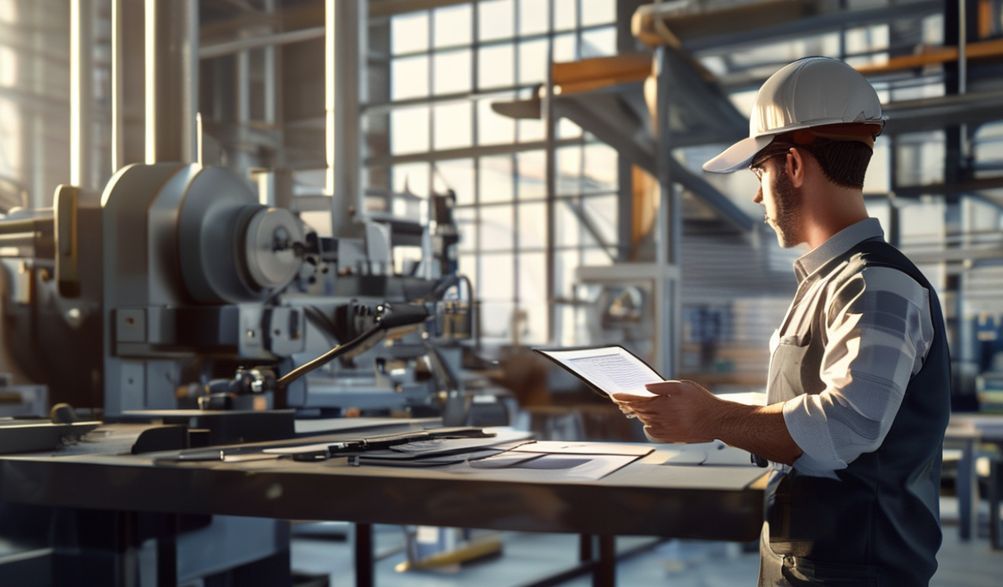
Hoe om Akkurate Baksteen Sement Masjien Kwotasies te Kry: 'n 2026 Koper se Gids
Om 'n kwotasie vir 'n baksteen-sementmasjien te kry, kan voel soos om appels met lemoene te vergelyk. Sonder die regte kennis loop jy die risiko om te veel te betaal of toerusting te koop wat nie aan jou projek se vereistes voldoen nie. Een verskaffer se "ten volle outomatiese" stelsel is 'n ander se "semi-outomatiese" model, en die finale prys kan met tienduisende dollars wissel gebaseer op besonderhede wat in die klein druk weggesteek is.
Hierdie gids, saamgestel uit bedryfsverkrygingsinsigte en tegniese spesifikasies, sal die kwotasieproses ontraaksel. Ons sal jou help om te verstaan watter faktore prys beïnvloed, watter vrae aan verskaffers te stel, en hoe om te verseker dat jy kwotasies regverdig vergelyk om 'n selfversekerde belegging te maak.
Of jy nou 'n kontrakteur is wat operasies uitbrei, 'n bouer wat 'n nuwe onderneming begin, of 'n projekbestuurder wat toerusting bekom, hierdie stap-vir-stap-gids sal jou toerus om die beste waarde en werkverrigting uit jou sementsteenmasjienkwotasie te verkry.
Verstaan Baksteen Sementmasjiene: Tipes en Toepassings
Voordat jy 'n enkele kwotasie aanvra, moet jy weet wat jy koop. Die term "baksteen sement masjien" dek breedweg toerusting wat gebruik word om sementagtige materiale te meng en dit in stene of blokke te vorm. Om die verkeerde tipe vir jou toepassing te kies, is die vinnigste manier om jou begroting te vermors.
Kern Masjien Tipes Verduidelik
-
Baksteenmaakmasjiene (Blokmakers):Dit is die kern van produksie. Hulle neem voorbereide mengsel en druk dit in vorm.
- Stilstaande teenoor Mobiel:Stasieêre modelle is vir vaste fabrieksinstellings met hoë uitset. Mobiele masjiene is kleiner, dikwels diesel-aangedrewe, en kan tussen werfterreine verskuif word.
- Hidrouliese vs. Vibrasiepers:Hidrouliese perse gebruik geweldige druk vir digte, hoësterkte blokke (soos betonblokke). Vibrasieperse gebruik meganiese vibrasie om die mengsel te konsolideer, ideaal vir hol blokke en standaard stene.
-
Sementmengers (vir mortel/blokproduksie):'n Konsekwente mengsel is krities vir gehalte bakstene. Die regte menger verseker homogeniteit.
- Panmengers: Excellent for stiff, dry concrete mixes used in block making. They provide thorough, forced mixing.
- Twin-Shaft Mixers: Offer intense, high-speed mixing for a very uniform blend in a short time, perfect for large-scale production lines.
- Drum Mixers: More common for wetter concrete pours; less ideal for the dry mixes of brick making but may be used for smaller operations.
-
Integrated Block Production Lines: These are turnkey systems that automate the entire process.
- They typically link a mixer, a conveyor, a block maker, a brick elevator, and a curing rack system. This minimizes labor and maximizes output for serious production volumes.
Matching the Machine to Your Project
A clear understanding of your needs is your most powerful tool when requesting quotes.
- Skaal: Are you producing 500 bricks per day for local projects or 10,000 per shift for commercial supply? This dictates everything.
- Kleinskaalse: Manual or semi-automatic machines. Lower capital cost, higher labor involvement.
- Grootskaal: Fully automatic lines. Significant investment, minimal labor, consistent high output.
- Uitvoervereistemente: Be specific. Calculate your needed bricks per hour based on project deadlines and market demand. Don’t buy excess capacity you can’t use.
- Rou Materiaal: The machine must be compatible with your materials. Specify if you’ll use standard Portland cement, fly ash, slag, or specific aggregates. Some machines are better suited for certain mix designs.
Key Factors That Influence Brick Cement Machine Quotes
Why does one machine cost $15,000 and another $150,000? The quote is a reflection of these core components. Understanding them lets you assess value, not just price.
Machine Specifications & Capabilities
- Outomatiseringsvlak: This is the primary cost driver. A manual machine requires an operator for every cycle. A fully automatic system with a PLC (Programmable Logic Controller) runs with minimal intervention, justifying its higher price through labor savings.
- Production Capacity & Output Speed: Quotes will specify “cycles per hour” and “bricks per cycle.” Multiply these for your hourly output. Higher speed requires more robust engineering.
- Mold Types, Sizes, and Customization: The standard mold included will affect price. Custom molds for special block designs (interlocking, textured, unique sizes) add cost. Check how easily molds can be changed.
- Kragbron: Electric motors are cleaner and cheaper to run in a fixed location. Diesel engines offer mobility and independence from the grid. Hybrid options exist but add complexity.
Quality & Durability Components
This is where hidden value (or future cost) resides.
- Frame Construction & Material: Look for high-grade steel (e.g., Q235 or better) and robust welding. A flimsy frame will warp under constant pressure, ruining brick consistency.
- Key Component Brands: The brand of the hydraulic system, PLC, electrical components, and motors matters. Quotes from reputable suppliers will name these brands (e.g., Siemens, Schneider, Yuken). Generic “branded” parts are a red flag.
- Korrosiebeskerming: Is it a basic paint job or a proper sandblasting and electrostatic powder coating? Better protection means longer life, especially in humid environments.
Supplier & Logistics Considerations
The machine’s price tag isn’t the final cost.
- Manufacturer vs. Local Dealer: Buying directly from a manufacturer often yields a lower price and direct technical support. A local dealer adds a markup but provides faster parts access, local service, and easier communication. Weigh which is more valuable for your operation.
- Shipping, Insurance, and Import Duties: For international purchases, Incoterms (like FOB, CIF, DDP) on the quote are crucial. Does the quoted price include delivery to your port, or to your site? Who pays insurance and import taxes? A seemingly cheap FOB price can double with these additions.
- Installation and Commissioning: Does the quote include a technician to install, calibrate, and train your staff? If not, factor this significant cost and risk in.
How to Request a Quote: A Step-by-Step Process
A vague request gets a vague quote. Structure your inquiry to get detailed, comparable responses.
Preparing Your Project Details
Create a one-page specification sheet to send to all suppliers. Include:
* Desired Brick Type & Size (e.g., 6″ hollow block, solid paver)
* Target Daily/Weekly Output (in bricks)
* Raw Material Details (cement type, aggregate size)
* Site Conditions (available space, power supply – voltage/phase)
* Preferred Automation Level
Finding and Vetting Potential Suppliers
- Where to Look: Use industry-specific B2B platforms (e.g., Alibaba, but with heavy vetting), construction equipment directories, and attend trade shows. Peer recommendations are gold.
- Assessing Supplier E-E-A-T:
- Ondervinding: How long have they been in business? Ask for their company history.
- Kundigheid: Do they have technical documentation, videos, and knowledgeable sales engineers?
- Gesaghebbendheid: Look for industry certifications (ISO 9001, CE marking for export to certain regions).
- Betroubaarheid: Scour for genuine customer reviews and testimonials. Ask for client references in your region.
The Quote Request Template
A clear template forces clarity in response. Here’s a sample structure:
Subject: Quote Request for Semi-Automatic Brick Making Machine – [Your Company Name]
Dear [Supplier Name],
We are sourcing equipment for a new block production project and request a detailed quotation based on the following specifications:
- Masjientipe: Stationary, semi-automatic hydraulic block making machine.
- Vereiste Uitset: Minimum 1,200 standard 6″ hollow blocks per 8-hour shift.
- Kragtoevoer: 380V, 3-phase, 50Hz electric motor.
- Included Molds: One standard 6″ hollow block mold.
- Key Requirements: Detailed breakdown of pricing, warranty terms, and delivery schedule.
Please provide your formal quote including:
* Itemized machine price.
* Spare parts list and pricing.
* Warranty period and coverage details.
* Delivery terms (please quote both FOB and CIF to [Your Nearest Port]).
* Cost for installation/commissioning services.
* Estimated lead time.
We look forward to your detailed proposal.
Sincerely,
[Your Name/Company]
Decoding and Comparing Your Received Quotes
Now comes the analysis. Lay all quotes side-by-side using a spreadsheet.
Line-Item Analysis: What to Look For
- Masjienbasis Prys: The starting point for comparison.
- Cost of Spare Parts & Standard Molds: Are spare parts reasonably priced? Is a second mold included or extra?
- Warranty Period & Terms: “12-month warranty” is meaningless without scope. It must specify what’s covered (frame, hydraulics, cylinder, PLC) and what’s excluded (wear parts like molds, seals). Look for suppliers offering 18-24 months.
- Training, Installation, and After-Sales Support Fees: Are these line items, included, or absent? An “absent” cost is a future surprise.
Red Flags in a Quote
- Vague Descriptions: “1 set of block making machine” is unacceptable. It should list the model, motor power, hydraulic pressure, etc.
- “Lump Sum” Pricing: A single total price without a breakdown suggests they don’t want you to compare or know where the costs are.
- Onrealisties Lae Pryse If a quote is 40% below others, quality, components, or warranty are almost certainly compromised. Remember the old adage.
- Unclear Warranty or Support: Phrases like “warranty against manufacturing defects” are too vague. How are claims processed? Who pays for return shipping?
The Total Cost of Ownership (TCO) Perspective
The cheapest quote can be the most expensive in the long run. Calculate TCO:
TCO = Purchase Price + Shipping + Installation + (Estimated Annual Maintenance & Repairs x Machine Lifespan) + Downtime Costs
A robust machine with a slightly higher purchase price but lower maintenance costs, longer lifespan, and reliable after-sales support will have a lower TCO. This is the true measure of value.
Negotiating and Finalizing Your Purchase
You have your compared quotes. Now, secure the best deal.
Effective Negotiation Strategies
- Use Competing Quotes Ethically: You can say, “Your machine is our preferred choice, but Supplier B is offering a comparable specification at [X] price with a longer warranty. Is there any flexibility to improve your offer to help us choose you?”
- Negotiate on Value-Adds, Not Just Price: If the price is firm, negotiate for extended warranty, a free spare parts kit, an extra mold, or discounted installation services.
- Clarify Payment Terms: Secure favorable terms. A 30% deposit, 60% before shipment, and 10% after successful commissioning is common and protects you.
Pre-Purchase Verification
- Request Customer References: Actually contact them. Ask about machine performance, reliability, and the supplier’s support responsiveness.
- Ask for a Live Video Demonstration: Request a video call where they run the exact model you’re buying, producing the block you need.
- Review the Final Contract Thoroughly: Ensure every detail from the final quote (specs, warranty, delivery terms, payment schedule) is captured in the sales contract before signing or sending payment.
Frequently Asked Questions (FAQ) About Brick Cement Machine Quotes
Q1: What is the average price range for a brick making machine?
A: There is no single “average.” Prices range from around $5,000 for a small manual press to over $300,000 for a large, fully automated production line. A robust semi-automatic machine for a small business typically falls between $15,000 and $50,000, heavily dependent on specifications, quality, and supplier.
Q2: Should I buy from a local dealer or directly from a manufacturer?
A: It depends on your priorities. A vervaardiger typically offers a lower price and direct access to technical knowledge. A local dealer provides faster parts availability, local service technicians, and easier communication, but at a higher initial cost. For complex machines, local support can be worth the premium.
Q3: How long does installation and commissioning usually take?
A: For a single machine, installation and basic training can take 3-7 days on-site. For a full production line, it may take 2-4 weeks. Crucially, the quote should specify who provides this service, the duration, and what “commissioning” includes (e.g., producing 1000 satisfactory blocks).
Q4: What is typically included in the warranty?
A: A comprehensive warranty covers defects in materials and workmanship for core components like the main frame, hydraulic cylinder, and power system for 12-24 months. It explicitly excludes wear parts (molds, mixer blades, seals) and damage from improper operation, lack of maintenance, or using incorrect materials.
Q5: Can I get a quote for a customized mold design?
A: Absolutely. Most reputable suppliers offer custom mold fabrication. To get an accurate quote, provide a detailed technical drawing with precise dimensions. Expect to pay a premium for the custom tooling and a longer lead time for production.
Conclusion
Securing an accurate and valuable brick cement machine quote is not about finding the lowest number—it’s about understanding the story behind that number. By defining your project needs, understanding the factors that drive cost, vetting suppliers rigorously, and comparing quotes on a total cost of ownership basis, you transform from a vulnerable buyer into an informed partner.
Arming yourself with this knowledge transforms you from a price-shopper into a value-driven buyer. Your next brick cement machine quote shouldn’t be a source of confusion, but a clear roadmap to a productive and profitable investment.
Start by drafting your project specifications using the guidelines above, then begin your search for suppliers with a focus on proven expertise and transparent communication.
<