
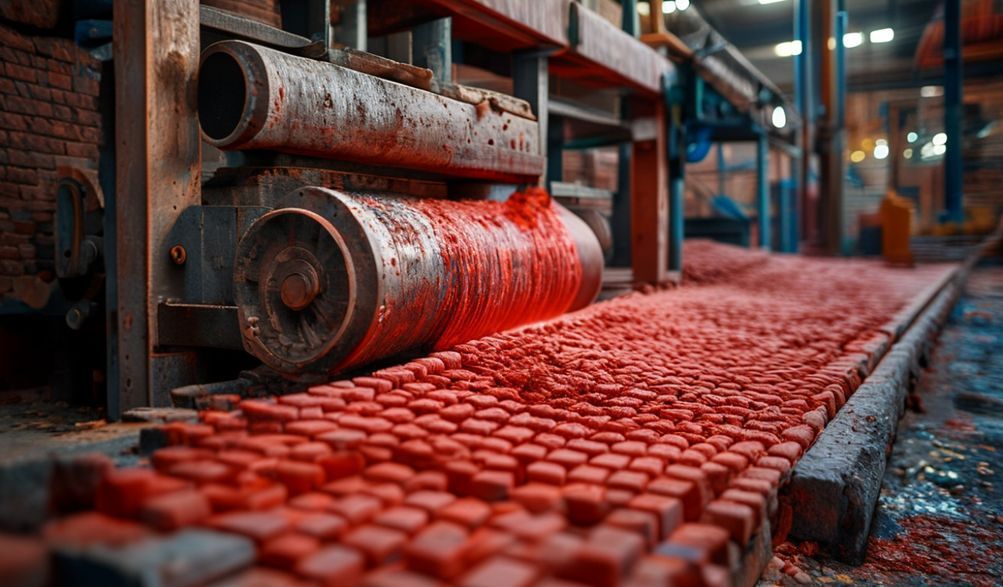
Die Ultieme Gids vir Kleibaksteenmaakmasjiene in Pakistan (2026 Kooppersgids)
Inleiding
Pakistan se konstruksiebedryf is die ruggraat van sy ekonomiese ontwikkeling, met 'n onversadigbare vraag na kwaliteit boumateriaal. In die hart van byna elke struktuur lê die nederige baksteen—'n fundamentele eenheid wat vir generasies lank stede en huise gebou het. Vir dekades lank het die tradisionelebhatta(oon) stelsel, afhanklik van handearbeid en ambagtelike metodes, het die landskap oorheers. Vandag is 'n diepgaande verskuiwing aan die gang. Vooruitstrewende vervaardigers wend hulle tot tegnologie om volgehoue uitdagings te oorkom en hul toekoms in 'n mededingende mark te verseker.
As jy 'n baksteen-oond eienaar, 'n konstruksie-entrepreneur of 'n belegger is, sukkel jy waarskynlik met bekende kwelpunte: onbestendige baksteen-kwaliteit wat tot klandeeklagtes lei, skrikwekkende en onvoorspelbare arbeidskoste, produksietempo's wat nie tred kan hou met projek sperdatums nie, en die verlammende ondoeltreffendheid van hoë brandstofverbruik. Hierdie probleme knaag nie net aan wins nie; hulle bedreig die levensvatbaarheid van jou besigheid self.
Die oplossing is duidelik: modernekleibaksteenmaakmasjiene in PakistanDit gaan nie net oor die vervanging van 'n paar werkers nie; dit gaan oor die revolusionering van jou hele produksieparadigma. Investering in die regte masjinerie is die beslissende stap om gestandaardiseerde kwaliteit te bereik, eksponensiële wins in produksie, en aansienlik gesonder winsmarges.
Hierdie gids is ontwerp om jou mees betroubare hulpbron te wees. Saamgestel uit gedetailleerde tegniese spesifikasies, huidige markontledings en regstreekse insigte van Pakistanse aanlegoperateurs en gevestigde vervaardigers, is ons doel om jou met gesaghebbende, ervaringsgebaseerde kennis toe te rus. Ons sal deur die verkoopsjargon sny om 'n duidelike, omvattende padkaart te verskaf vir 'n selfversekerde en ingeligte belegging. Hierdie uiteindelike gids sal die tipes masjiene beskikbaar, hul tasbare voordele, 'n realistiese koste-analise en die kritieke faktore wat jy moet oorweeg voordat jy 'n masjien aanskaf, ondersoek.kleibaksteen maakmasjien in Pakistan.
Verstaan van Kleibaksteenvervaardigingsmasjinerie
Om van handmatige produksie na 'n gemeganiseerde stelsel oor te skakel, is 'n beduidende sprong. Om die kernmeganika en beskikbare opsies te verstaan, is die eerste stap na 'n slim aankoop.
Hoe Kleibaksteenmaakmasjiene Werk (Die Basiese Proses)
Terwyl ontwerpe verskil, is die kernbeginsel van 'n moderne baksteenmasjien om die eeue-oue proses te outomatiseer en te vervolmaak. Hier is 'n vereenvoudigde uiteensetting:
- Kleivoorbereiding:Rou klei word eers in 'n breker gevoer om klonte en klippe af te breek. Dit word dan met water in 'n kleimolen gemeng om 'n homogene, plastiese konsistensie te verkry—'n kritieke stap vir sterkte.
- Ekstrusie en Vorming:Hierdie voorbereide klei word in die masjien se ekstruder gevoer. 'n Kragtige skroef druk die klei deur 'n vakuumkamer (wat lugsakke verwyder vir hoër digtheid) en dan deur 'n spesiaal ontwerde matrys. Hierdie matrys vorm die deurlopende kleikolom in die verlangde profiel (solied, hol, ens.).
- Sny:Soos die gevormde kleikolom die matrys verlaat, sny 'n outomatiese draad of snyer dit in individuele stene van presiese, eenvormige lengte.
- Droogmaak & Bak:Die groen (ongebakte) stene word dan versigtig gedroog om vog te verwyder voordat hulle in 'n oond (hofman, tonnel, ens.) gelaai word vir bakking, waar hulle hul finale hardheid en duursaamheid verkry.
Die masjien se rol is om te verseker dat elke enkele baksteen uit hierdie proses identiese afmetings, digtheid en strukturele integriteit het—'n konsekwentheid wat onmoontlik is om met handmatige vorming te bereik.
Tipes Kleibaksteenvervaardigingsmasjiene Beskikbaar in Pakistan
Die Pakistanse mark bied oplossings vir elke skaal van operasies:
-
Handmatige/Semi-outomatiese Masjiene: Ideal for small-scale startups, rural enterprises, or those with limited capital.
- Operasie: Require significant manual intervention for feeding clay and removing finished bricks. The extrusion and cutting are mechanized.
- Uitset: Typically produce 2,000 to 8,000 bricks per 8-hour shift.
- Gebruiksgeval: Perfect for testing the market, catering to local demand, or as a supplementary production line.
-
Volledig Outomatiese Baksteenvervaardigingsaanlegte: The powerhouse choice for serious, large-scale commercial production.
- Operasie: Integrated systems that automate clay feeding, extrusion, cutting, and brick setting onto dryer cars or pallets. They often include automated stackers and loaders.
- Uitset: Can produce from 15,000 to over 50,000 bricks per shift.
- Gebruiksgeval: For established manufacturers supplying major construction projects, developers, and distributors. They maximize output while minimizing labor.
-
Mobiele Baksteenvervaardigingsmasjiene:'n Veelsydige oplossing wat gewildheid verwerf.
- Voordeel: Mounted on a trailer, these units can be transported directly to a construction site or clay pit. This drastically reduces the cost and logistics of transporting heavy raw clay.
- Gebruiksgeval: Excellent for large, on-site projects like housing societies, dams, or where clay sources are scattered.
Key Components of a Reliable Machine
The durability and performance of your machine hinge on the quality of its core components:
- Extruder (Auger & Barrel): The heart of the machine. A high-grade steel auger and a reinforced, wear-resistant barrel are non-negotiable for consistent clay flow and pressure.
- Vacuum Chamber: This component removes air from the clay. A higher vacuum level (measured in Hg) results in denser, stronger bricks with fewer cracks.
- Cutter Assembly: Must provide clean, vibration-free cuts for precise brick dimensions. Look for sturdy wires or blades and a stable cutting mechanism.
- Control Panel & Gearbox: A user-friendly control system and a rugged, industrial-grade gearbox ensure smooth operation, easy troubleshooting, and long service life.
Investing in a machine with robust components might have a higher upfront cost but pays dividends in lower downtime, fewer repairs, and superior brick quality.
Benefits of Investing in a Modern Brick Making Machine in Pakistan
The transition to mechanization is an investment in your business’s future. Here are the concrete returns you can expect:
Dramatically Increased Production Output & Efficiency
A single semi-automatic machine can outperform 15-20 skilled manual laborers. Where a traditional setup might produce 8,000-10,000 bricks per day with a large crew, a medium-sized automatic plant can reliably produce 25,000+ bricks in the same timeframe, with a fraction of the workforce.
Superieure en Konsekwente Baksteen Kwaliteit
Machines eliminate human error. Every brick has:
* Precise dimensional accuracy (e.g., uniform 9″ x 4.5″ x 3″ size), essential for modern plastering and construction standards.
* Higher compressive strength due to better compaction and vacuum processing.
* Excellent finish and sharp edges, increasing their market value and appeal.
Aansienlike Vermindering in Arbeidskoste en Afhanklikheid
Automation reduces dependence on a large, often unpredictable, labor force. You need fewer skilled operators, leading to direct savings on wages and eliminating issues related to labor shortages or strikes.
Long-Term Cost Savings and Higher Profit Margins
While the initial investment is substantial, the operational savings are transformative. Reduced labor, lower fuel consumption per brick (due to faster kiln cycling), and minimal waste from rejected bricks all contribute to a lower cost per brick and significantly higher profit margins.
Versatility in Brick Products
With a simple mold change, a single machine can produce various products to meet market demand:
* Solid bricks for load-bearing walls.
* Hollow or perforated bricks for lighter, better-insulated structures.
* Paving bricks (block pavers) for landscaping and driveways.
* Special shapes for architectural features.
This flexibility allows you to diversify your product line and tap into multiple revenue streams.
Key Considerations Before Buying in Pakistan
A successful purchase goes beyond just selecting a machine. It requires careful planning tailored to Pakistani conditions.
Assessing Your Production Needs and Scale
Vra jouself:
* What is my current and projected future demand?
* Who are my customers (local market, contractors, large developers)?
* Calculate your required bricks per hour/day. It’s better to invest in a machine with 20-30% more capacity than your current need to allow for business growth.
Power Requirements: Electricity vs. Diesel
This is a critical decision point given Pakistan’s energy landscape.
* Elektriese Motors: Cleaner, quieter, and generally more efficient. However, they require a reliable, continuous power supply. A three-phase connection is usually necessary for industrial machines.
* Dieselenjins: A practical necessity in areas plagued by load-shedding. They offer complete independence from the grid but come with higher fuel costs, more noise, and greater maintenance needs.
* Hybrid Solution: Many opt for an electric machine paired with a dedicated generator as a backup, offering a balance of efficiency and reliability.
Clay Quality and Preparation
The machine is only as good as the clay you feed it. Pakistani clay varies by region.
* Testing: Have your clay tested for composition, plasticity, and shrinkage.
* Voorbereiding is die Sleutel: Budget for and include auxiliary equipment: a clay crusher to break down hard lumps and a double-shaft mixer to ensure perfect water-clay amalgamation. Neglecting preparation will lead to machine jams, wear, and poor-quality bricks.
After-Sales Support: The Most Critical Factor
This cannot be overstated. A machine is a long-term asset that will require maintenance.
* Plaaslike Tegniese Ondersteuning: Does the supplier have engineers readily available for installation, training, and breakdowns?
* Spare Parts Inventory: Are common wear parts (augers, liners, cutter wires) available in their local warehouse? Waiting months for a part from overseas can shut down your entire operation.
* Omvattende Opleiding: Ensure they provide hands-on training for your operators and maintenance staff.
Choosing a supplier with a strong service network in Pakistan is more important than a slightly lower price from a supplier with no local presence.
Top Suppliers and Brands of Clay Brick Making Machines in Pakistan
Navigating the supplier landscape requires diligence. Here’s an overview (Note: This is a general market guide; always conduct your own due diligence).
Established Local Manufacturers and Assemblers
Several Pakistani engineering firms have developed strong expertise in manufacturing and assembling robust brick making machines. Their advantages include:
* Begrip van Plaaslike Toestande: Machines are often designed with Pakistani clay and power issues in mind.
* Proximity for Service: Faster response times for technical support and maintenance.
* Easier Spare Parts Procurement.
Look for companies with a proven track record, a physical factory or workshop you can visit, and a list of satisfied clients you can contact.
Reliable International Brands with Local Dealers
Brands from China, India, and Europe have a significant market share, especially for fully automatic lines. Reputable brands have established official dealers or partners in major cities like Lahore, Karachi, and Islamabad.
* Voordeel: Often incorporate advanced technology and automation features.
* Key Action: Verify the legitimacy and capability of the local dealer. Ensure they have the technical staff and parts inventory to support the product.
Red Flags to Avoid When Choosing a Supplier
- No Physical Office or Workshop: Be wary of “fly-by-night” operators.
- Unrealistically Low Prices: If a quote seems too good to be true, it often is. Quality components have a cost.
- Vague or Unreasonable Warranty Terms: A clear, written warranty is essential.
- Unwillingness to Provide Client References: A reputable supplier will be proud to connect you with their existing customers.
- Pressure for Full Upfront Payment: Standard practice involves a significant advance, but be cautious of suppliers demanding 100% payment before delivery or installation.
Cost Analysis and Investment Guide
Understanding the full financial picture is crucial for planning and securing financing.
Price Range for Machines in Pakistan (PKR Estimates)
Prices are indicative and subject to change due to currency fluctuation, import duties, and model specifications.
* Small Semi-Automatic Machine: PKR 1.5 million to PKR 3.5 million.
* Medium-Capacity Fully Automatic Plant: PKR 5 million to PKR 15 million.
* Large, High-Capacity Automatic Line: PKR 20 million and above.
Always get detailed, itemized quotations from multiple suppliers.
Understanding the Total Cost of Ownership
The machine’s sticker price is just the beginning. Factor in:
* Installation & Foundation: Civil work for a stable machine base.
* Hulpapparatuur: Clay crusher, mixer, conveyor belts, generator.
* Utilities: Electrical setup, water connection.
* Spare Parts Inventory: An initial stock of essential wear parts.
* Operating Costs: Power/fuel, labor, regular maintenance.
Government Policies and Financing Options
- SME Support: Investigate if any provincial or federal programs offer soft loans or subsidies for industrial modernization.
- Bank Financing: Most commercial banks offer leasing or loan facilities for purchasing industrial machinery. Prepare a solid business plan.
- Import Regulations: If considering an imported machine, work with a reliable clearing agent to understand all applicable duties and taxes.
Installation, Operation, and Maintenance Tips
Proper setup and care ensure your investment delivers for years.
Setting Up Your Brick Plant for Success
- Layout: Design a logical flow from raw material yard → crusher → mixer → machine → drying area → kiln.
- Foundation: Pour a strong, level concrete foundation as per the machine manufacturer’s specifications to prevent vibration and misalignment.
- Utilities: Ensure your power supply (or generator capacity) and water source are adequate and easily accessible.
Essential Operator Training and Safety
- Insist on comprehensive training from your supplier.
- Enforce strict safety protocols: lock-out/tag-out procedures during maintenance, no loose clothing near moving parts, and proper use of personal protective equipment (PPE).
Routine Maintenance Checklist for Longevity
A little regular care prevents major breakdowns.
* Daily: Clean the machine thoroughly at the end of each shift. Check for loose bolts or nuts.
* Weekly: Grease all lubrication points. Inspect the cutter wires/blades and auger for wear.
* Monthly: Check the vacuum pump oil. Inspect electrical connections. Test safety switches.
* Annually: Schedule a comprehensive inspection by a qualified technician.
Frequently Asked Questions (FAQ)
Q1: What is the average production capacity of a standard clay brick making machine in Pakistan?
A: Capacity varies widely. A semi-automatic machine may produce 5,000 to 10,000 bricks per 8-hour shift. A standard fully automatic plant typically ranges from 18,000 to 35,000 bricks per shift. High-end lines can exceed 50,000.
Q2: Can I use local Pakistani clay in these machines?
A: Absolutely. In fact, machines are designed for local materials. The key is proper preparation—the clay must be crushed, screened to remove stones and debris, and tempered to achieve the correct moisture content and plasticity for optimal extrusion.
Q3: What is the estimated payback period for this investment?
A: With efficient operation and good market demand, a well-planned investment in a semi-automatic or automatic plant can typically see a full return on investment (ROI) within 1.5 to 3 years. Factors like scale, management efficiency, and local brick prices directly influence this timeline.
Q4: Are there any local manufacturers, or are all machines imported?
A: Pakistan has a growing number of capable local manufacturers and assemblers who produce durable and efficient machines. They are a strong option, especially for their service advantages. Many fully automatic and high-tech lines are imported, but are supported through local dealers.
Q5: What warranty should I expect, and what does it usually cover?
A: A reputable supplier should offer a minimum of 1 year on the core components like the gearbox, extruder main shaft, and vacuum system. The warranty covers manufacturing defects and should be clearly outlined in writing. It typically does not cover wear parts (like auger tips, cutter wires) or damage due to improper operation or lack of maintenance.
Conclusion
The decision to invest in a modern kleibaksteen maakmasjien in Pakistan is more than a purchase; it’s a strategic commitment to the growth, quality, and sustainability of your business. In an industry where margins are increasingly competitive, embracing mechanization is the clear path to securing a profitable future. It transforms your operation from a labor-intensive craft into a streamlined, quality-controlled industrial process.
Let this guide serve as your foundational checklist. We have emphasized the critical importance of local after-sales support, thorough needs assessment, and rigorous supplier verification because your success depends on it. The most prudent step you can take now is to use this knowledge to engage with shortlisted suppliers. Visit their facilities, inspect their machines in operation, and most importantly, speak directly to their existing customers.
Take the next step with confidence. Reach out to reputable suppliers, present them with your production requirements, and request detailed quotations. Equip yourself with the right questions, and make your investment a cornerstone for building a stronger, more profitable enterprise.
<