
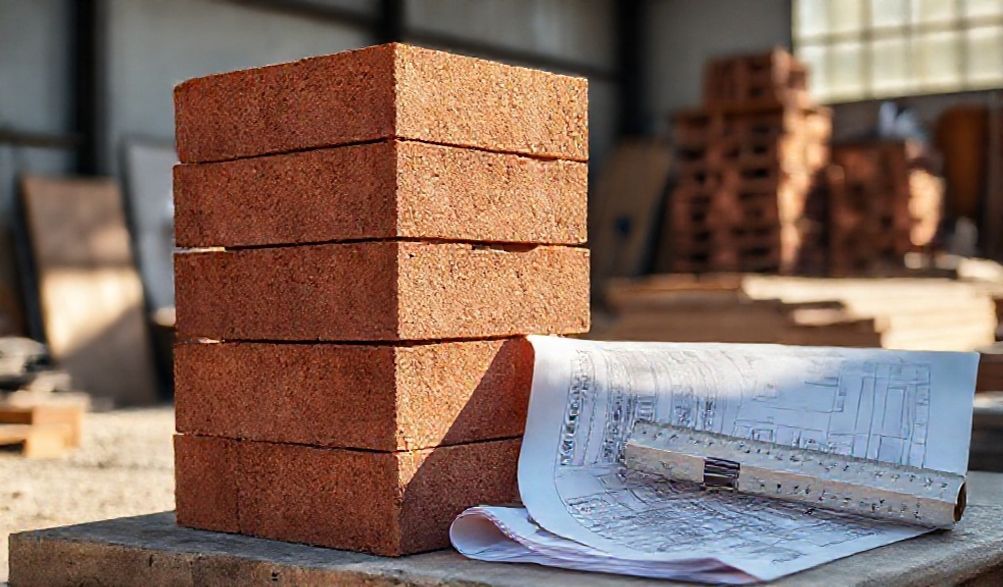
Compressed Earth Blocks for Sale: Your Complete Guide to Sourcing & Benefits
Inleiding
The modern builder, architect, and homeowner face a critical challenge: finding construction materials that are durable, affordable, and kind to the planet. As the demand for sustainable building solutions skyrockets, one ancient material, re-engineered for the modern era, is leading the charge—the Compressed Earth Block (CEB).
This comprehensive guide is crafted for anyone actively searching for “compressed earth blocks for sale.” Whether you’re a DIY enthusiast dreaming of a hands-on build, a contractor integrating sustainable practices, or an architect specifying materials for a high-performance home, you’re in the right place. Drawing from years of direct industry experience in sustainable construction and earth block technology, this post goes beyond a simple supplier list.
Our goal is to empower you to make a supremely informed purchasing decision. We’ll delve into the science, the economics, and the critical questions you need to ask, ensuring the compressed earth blocks you buy are perfectly suited for your project’s success. Let’s explore the world of sustainable building materials, earth block costs, and how to find reputable CEB suppliers.
What Are Compressed Earth Blocks? Understanding the Material
Before you start contacting suppliers, it’s essential to understand what you’re buying. Compressed Earth Blocks are not simply mud bricks. They are a precision-engineered masonry unit, marrying ancient wisdom with modern engineering.
The Science Behind CEBs: Soil Composition & Stabilization
The magic of a CEB lies in its recipe. A high-quality block starts with the right soil blend, typically containing:
* Klei: Acts as the natural binder.
* Sand Provides structural skeleton and reduces shrinkage.
* Slyk: Fills voids for a denser block.
The “secret sauce” is often a stabilizer. While some blocks are “raw” (unstabilized), most for commercial sale are stabilized for enhanced performance.
* Cement Stabilization (5-10%): The most common method. It significantly increases compressive strength and water resistance, making blocks suitable for diverse climates.
* Kalkstabilisering: A more breathable and flexible option, ideal for historic restoration or projects prioritizing vapor permeability.
How Compressed Earth Blocks Are Made: From Soil to Block
The process is mechanical and precise:
1. Sifting & Meng Soil is screened to remove debris, then mixed with the stabilizer and optimal moisture.
2. Kompression: The damp mix is fed into a press. Using immense pressure (often 500 to 2,000+ PSI), a hydraulic or mechanical ram compacts the soil into a dense, coherent block.
3. Kuuring: Blocks are stacked and kept moist for a period (often 28 days for cement-stabilized blocks) to gain full strength through hydration, not firing.
This lack of firing is what gives CEBs their stellar environmental credentials.
Key Characteristics: Strength, Thermal Mass, and Sustainability
- Krag: Properly made, cement-stabilized CEBs can achieve compressive strengths of 600 to 1,200+ PSI, rivaling or exceeding conventional concrete masonry units (CMUs).
- Termiese Massa: This is their superpower. CEBs absorb heat during the day and release it slowly at night, naturally regulating indoor temperatures and slashing heating and cooling costs.
- Volhoubaarheid: With near-zero embodied energy (no kiln firing) and locally sourced materials, CEBs have an exceptionally low carbon footprint. They are non-toxic, recyclable, and promote healthy indoor air quality.
Why Choose Compressed Earth Blocks? Advantages for Your Project
Choosing CEBs isn’t just an ecological statement; it’s a practical, economic, and aesthetic decision with tangible benefits.
Unmatched Sustainability and Environmental Benefits
- Local & Low-Impact: You can often source soil on-site or nearby, drastically cutting transportation emissions.
- Healthy Living: Walls are vapor-permeable, regulating humidity and avoiding the off-gassing found in synthetic materials.
- Zero Waste: At the end of a building’s life, the blocks can return to the earth or be crushed and reused.
Cost-Effectiveness and Economic Advantages
- Lower Material Cost: When soil is locally available, the base material cost is minimal. Even purchased blocks are often cheaper than fired brick or stone.
- Verminderde Arbeid: Uniform block size and shape can lead to faster laying times compared to irregular natural stone.
- Long-Term Energy Savings: The high thermal mass translates to significantly lower utility bills for decades, a powerful return on investment.
Durability, Fire Resistance, and Design Flexibility
- Built to Last: Properly stabilized and protected CEB structures have lifespans measured in centuries, as evidenced by ancient earth buildings worldwide.
- Inherently Fireproof: Earth does not burn. CEB walls provide excellent fire resistance ratings.
- Architectural Freedom: Available in various sizes and modular shapes. They can be used for straight walls, graceful curves, and accept a wide range of beautiful natural plasters.
Key Considerations Before You Buy Compressed Earth Blocks
A successful project starts with honest assessment. Not every site or design is ideal for CEBs, and not all blocks are created equal.
Assessing Your Project’s Suitability for CEBs
- Klimaat: CEBs excel in arid and temperate climates. For high-rainfall or freeze-thaw regions, meticulous detailing (large roof overhangs, proper foundations, breathable yet protective plasters) is non-negotiable.
- Strukturele Ontwerp: Engage an engineer or architect experienced with earth masonry. Load-bearing designs require specific strength ratings and detailing.
- Local Building Codes: Proactively discuss CEBs with your local building department. Having supplier-provided test reports is crucial for approval.
Critical Specifications to Ask Suppliers About
Never buy on price alone. Always request and verify these specs:
* Compressive Strength (PSI/MPa): What is the minimum guaranteed strength? 800+ PSI is common for load-bearing applications.
* Stabilizer Type & Percentage: Is it cement or lime stabilized? What is the exact percentage by weight?
* Block Dimensions & Tolerance: What are the exact L x W x H dimensions? What is the dimensional tolerance (+/-)? Consistency is key for efficient building.
* Absorpsietempo: A lower absorption rate indicates better water resistance. Ask for ASTM C67 or similar test results.
Understanding the True Cost: Beyond Price Per Block
The block price is just one line item. Consider the full picture:
* Blocks: The per-block cost (often $2.50 – $4.50 each, but varies widely).
* Delivery: Freight costs can be substantial for non-local suppliers.
* Mortar & Labor: Specialized soil-cement slurry or mortar, and masons familiar with earth block techniques.
* The Quality Premium: Investing in well-made, high-spec blocks from a reputable supplier prevents costly failures and ensures code compliance.
How to Find and Evaluate Compressed Earth Block Suppliers
Finding the right partner is as important as choosing the material itself.
Sourcing Options: Local Manufacturers, National Distributors, and DIY Kits
- Local Manufacturers:Dieideal choice. Reduces carbon miles, supports the local economy, and allows for easier site visits. Search “[Your State/Region] compressed earth blocks.”
- National Distributors: Offer reliability and standardized products but with higher shipping costs.
- DIY Press Kits: For the ultimate hands-on project. Requires sourcing your own soil, testing, and significant labor.
Vetting a Supplier: Essential Questions to Ask
Treat initial conversations like an interview. Ask for:
1. Material Test Reports: For compressive strength, absorption, and stabilization.
2. Project Portfolio & References: Speak to past clients, especially those in similar climates.
3. Tegniese Ondersteuning: Will they advise on mortar mixes, wall systems, or plaster compatibility?
4. Lead Time & Capacity: Can they supply the volume you need within your timeline?
Red Flags and Green Flags in a CEB Supplier
| Red Flags 🚩 | Green Flags 🍀 |
| :— | :— |
| Vague or unwilling to provide test data. | Proactively offers technical data sheets and ASTM reports. |
| Has no photos or references from past projects. | Maintains a robust portfolio and connects you with past clients. |
| Dismisses questions about stabilization or climate. | Discusses your specific project details and climate challenges. |
| Only talks about price, not performance. | Offers guidance on building codes, foundations, and plaster systems. |
Next Steps After Purchase: Delivery, Storage, and Building Basics
Your blocks are ordered. Now, prepare for their arrival and the build.
Planning for Delivery and On-Site Storage
- Site Access: Ensure a semi-truck or large delivery vehicle can access your site and have space to maneuver.
- Storage Location: Choose a flat, well-drained area. Pallets must be placed on level ground.
- Protection: While cured blocks are weather-resistant, keep them covered with tarps to protect from direct, driving rain and dirt before use.
An Overview of the CEB Building Process
- Foundation: A reinforced concrete stem wall is standard, lifting the earth blocks well above grade.
- Mortar: A soil-cement slurry (using the same soil mix as the blocks) is common and creates a monolithic wall. Standard mortar is also an option.
- Lê. Similar to bricklaying, with attention to leveling and plumbing. Courses are typically dry-stacked or use thin mortar joints.
- Bond Beam: A reinforced concrete beam is poured at the top of the wall to tie everything together and support the roof.
Protecting Your Investment: Plastering and Maintenance
The longevity of an earth block wall depends on its “hat and boots.”
* The Boots: A high foundation and proper site drainage keep the base dry.
* The Hat: A generous roof overhang (often 24+ inches) is critical to shield walls from rain.
* The Coat: Apply a breathable plaster—like earth, lime, or mineral-based finishes—that allows moisture vapor to escape while providing a protective layer.
Frequently Asked Questions About Buying Compressed Earth Blocks
FAQ 1: How much do compressed earth blocks cost compared to traditional bricks?
While prices vary, CEBs are often 20-40% less expensive than high-quality fired clay bricks. The significant savings, however, are realized in long-term energy efficiency and potential lower labor costs.
FAQ 2: Can I use CEBs in wet or cold climates?
Yes, but with careful design. Cement stabilization is essential. Design must include large overhangs, capillary breaks at the foundation, and a breathable yet water-shedding exterior plaster system approved for your climate.
FAQ 3: Do I need a special foundation for an earth block home?
You need a solid, reinforced concrete foundation (stem wall) that keeps the blocks a minimum of 6-12 inches above finished grade to prevent moisture wicking. This is standard for many masonry types.
FAQ 4: How long do compressed earth blocks last?
Centuries. Historical examples of earth construction abound globally. The key determinants are the quality of the original blocks and the effectiveness of the protective plaster and roof details.
FAQ 5: Are compressed earth blocks load-bearing?
Absolutely. When produced to sufficient compressive strength (typically 800+ PSI) and used in a properly engineered design, CEBs are an excellent load-bearing material for walls and piers.
FAQ 6: Can I make my own compressed earth blocks instead of buying them?
You can, by purchasing or renting a mechanical press. This requires a major commitment of time, labor, and soil testing to ensure consistency and strength. For most projects, buying from a professional manufacturer is more reliable and efficient.
Conclusion
Compressed Earth Blocks represent a powerful convergence of sustainability, durability, and economic sense. They offer a path to buildings that are not only healthy to live in but also gentle on the environment and your long-term budget.
As you begin your search for compressed earth blocks for sale, use this guide as your checklist. Let it empower you to ask the right questions, demand the right specifications, and see beyond the simple price-per-block. Remember the most crucial piece of expert advice: in sustainable construction, prioritizing quality and proven performance always outweighs chasing the lowest initial cost.
Ready to take the next step? [Download our free, detailed CEB Project Planning Checklist] to organize your sourcing, specifications, and build phases, ensuring your earth block project is a resounding success from the ground up.
<