
The Ultimate Guide to Interlocking Brick Machines: Types, Benefits & How to Choose
Inleiding
The global construction industry is at a crossroads. With a staggering need for an estimated 96,000 new affordable homes every day to house the world’s growing urban population, coupled with the urgent demand to reduce the sector’s 40% share of global carbon emissions, innovation is no longer a luxury—it’s a necessity. Enter the interlocking brick machine, a technology quietly revolutionizing how we build.
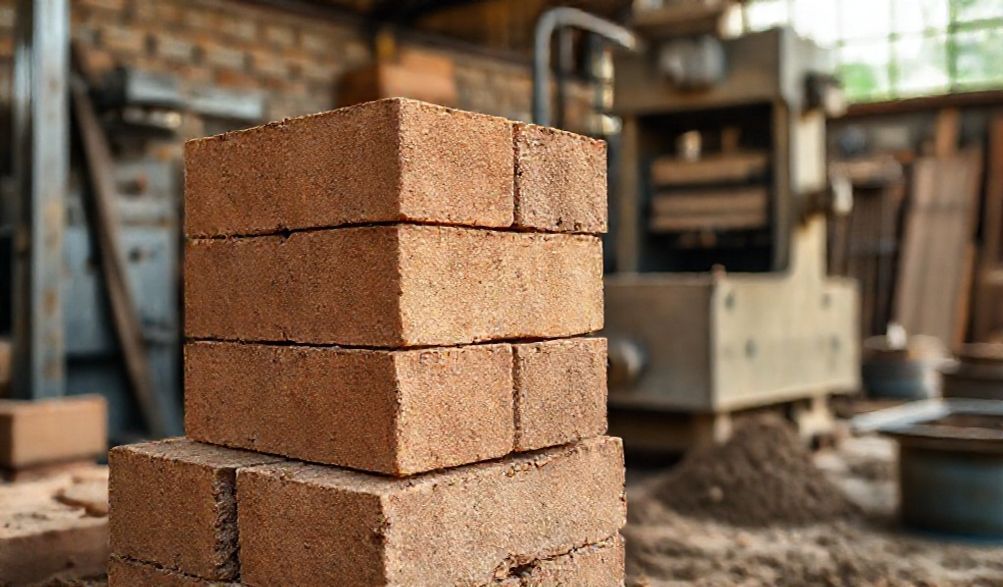
An interlocking brick machine is a specialized device that compresses raw materials—like soil, sand, or cement—into bricks designed with a tongue-and-groove or puzzle-like edge. These bricks lock together seamlessly, creating sturdy walls without the need for mortar. This simple yet profound shift in methodology is gaining massive traction among self-builders, entrepreneurs, and eco-conscious developers worldwide.
Why? The answer lies in a powerful combination of radical cost savings, remarkable construction speed, and genuine environmental benefits. This guide is built on industry expertise, technical data, and practical insights to help you navigate this promising field. We’ll demystify how these machines work, break down their tangible advantages, explore the different types available, and provide a clear, actionable checklist to help you choose the perfect machine for your project.
What is an Interlocking Brick Machine? Revolutionizing Construction
At its core, an interlocking brick machine replaces the age-old process of kiln-firing and mortar-laying with smart engineering and compression. It’s a tool for empowerment, enabling the production of high-quality building blocks on-site, from locally sourced materials.
Core Working Principle: Compression and Interlock Design
The magic happens in two stages:
- Hoëdruk-kompressie: Whether powered by a manual lever, an electric motor, or a hydraulic pump, the machine exerts immense pressure (measured in tons or PSI) on a prepared mix of raw material placed in a mold. This compression eliminates air pockets, creating a dense, compact brick with high structural integrity.
- The Interlocking Mold: The defining feature is the mold itself. Unlike a standard brick mold, it is engineered to form precise protrusions and recesses on the top, bottom, and sides of the brick. When stacked, these edges interlock, like pieces of a 3D puzzle. This mechanical bond provides stability and distributes loads evenly across the wall.
Raw Materials: What Can You Use?
The versatility of raw materials is a key strength. Most machines can work with:
- Soil: The most common material, but not just any dirt. The ideal soil has a balanced mix of clay (for cohesion), silt, and sand (for strength and reduced shrinkage). A simple sediment jar test can determine your soil’s suitability.
- Cement-Stabilized Soil (CSEB): Adding a small percentage (typically 5-10%) of cement to soil dramatically increases its compressive strength and water resistance. This is the standard for permanent, code-compliant structures.
- Industriële Neweprodukte: Fly ash (from coal plants) or slag can be used, turning waste into a resource.
- Crushed Stone & Sand: These can be mixed with a stabilizer to create very strong bricks.
The ability to use locally available, often free, materials is a game-changer for cost reduction and sustainable building practices.
Key Benefits of Using an Interlocking Brick Machine
The advantages of this technology extend far beyond the initial purchase of the machine, impacting the entire construction lifecycle.
Significant Cost Reduction
- Material Costs Slashed: By utilizing on-site or locally quarried soil as the primary ingredient, the cost per brick plummets. Cement use is minimal (for stabilization) or eliminated entirely.
- Labor Costs Minimized: The dry-stack, interlocking system is intuitive and fast. It requires less skilled labor than traditional bricklaying, and the absence of mortar mixing and application speeds up the process significantly.
Unmatched Construction Speed & Simplicity
A wall built with interlocking bricks can rise up to three times faster than a conventional brick-and-mortar wall. There’s no waiting for mortar to cure before adding the next layer. The interlocking design acts as a built-in guide, making alignment simple and reducing errors, even for novice builders.
Environmental and Sustainability Advantages
This is where the technology truly shines.
- Low Carbon Footprint: Traditional fired bricks require immense energy from burning fossil fuels. Interlocking bricks are compressed, not fired, eliminating this carbon source. Using less cement also reduces the carbon footprint associated with its production.
- Localized, Circular Economy: It promotes the use of local materials, cutting transportation emissions. It can also incorporate recycled materials.
- Minimal Waste: Bricks are made on-demand, reducing breakage and waste common with transported materials. Any failed bricks can be crushed and reprocessed.
Duursaamheid en Strukturele Integriteit
Don’t let the simplicity fool you. A properly made compressed stabilized earth block (CSEB) can achieve a compressive strength of 5-10 MPa or more, which is more than sufficient for one and two-story residential construction. Critically, the interlocking design provides exceptional seismic resistance. During an earthquake, the interlocked bricks move as a monolithic unit, flexing and dissipating energy rather than crumbling, unlike rigid mortar joints that can fail.
Types of Interlocking Brick Machines: Find Your Perfect Match
Choosing the right machine hinges on understanding your production needs and budget. The market offers three primary categories.
Manual Interlocking Brick Machines
- Voordele: They are the most affordable entry point, completely portable (no power needed), and perfect for small-scale, DIY projects like garden walls, sheds, or single-room additions. Operating costs are virtually zero.
- Nadele: Output is low (typically 50-200 bricks per day), and it is highly labor-intensive. Brick quality can vary based on the operator’s consistent strength and technique.
Semi-Automatic Interlocking Brick Machines
- Voordele: This is the sweet spot for small businesses and serious homesteaders. An electric motor drives the compression mechanism, ensuring consistent pressure and brick quality. Production capacity jumps significantly (300-800 bricks per day), offering a great balance between investment and output.
- Nadele: Requires access to a reliable electricity source. The initial cost is higher than manual machines, and basic mechanical maintenance knowledge is beneficial.
Fully Automatic Interlocking Brick Machines
- Voordele: Designed for commercial production. These are often stationary plants with conveyor belts, automatic mixers, and feeders. They produce thousands of bricks per day with minimal manual intervention, ensuring supreme consistency. Ideal for a brick-making business supplying multiple construction sites.
- Nadele: The capital investment is substantial. They require significant space, a robust power supply, and more complex operational and maintenance expertise.
How to Choose the Right Interlocking Brick Machine: A Buyer’s Checklist
This decision is critical. Use this expert checklist to align your purchase with your real-world needs.
Assess Your Project Scale and Business Goals
Ask yourself:
* What is my daily brick requirement? Estimate based on your wall area.
* Is this for a one-off project or an ongoing business? A business justifies a higher-capacity machine.
* What is my realistic budget, including machine, stabilizer, and potential power setup?
Evaluate Critical Machine Specifications
Look beyond the sales pitch. Inspect:
* Produksiekapasiteit: Get the “bricks per hour” figure for the specific brick size you want.
* Brick Size & Design: Ensure the mold produces a brick design that is proven and desirable in your region.
* Motor Power & Pressure: A more powerful motor (in kW/HP) and higher hydraulic pressure (in tons) generally produce denser, stronger bricks.
* Bougehalte: The frame should be made of heavy-duty steel with clean, robust welding. Brand-name hydraulic components (pumps, cylinders) are a sign of reliability.
Consider Operational Factors
- Kragbron: Match the machine to your available infrastructure.
- Draagbaarheid: Will you move it? If so, weight and wheel options matter.
- After-Sales Support (The #1 Trust Factor): This is non-negotiable. A reputable supplier will offer:
- A clear warranty.
- Ready availability of spare parts (molds, wear plates, seals).
- Access to technical support, either remotely or in-person.
- Always ask for customer references.
Operating Your Machine: Tips for Success and High-Quality Bricks
Expertise in operation is what separates a successful project from a frustrating one.
Material Preparation is Key
90% of brick quality is determined before the material even enters the machine.
- Sieving: Always sieve your soil to remove stones larger than 5mm and organic matter (roots, leaves), which will decompose and weaken the brick.
- The Moisture “Drop Test”: The mix must be damp, not wet or dry. Grab a handful and squeeze it. It should form a firm ball that holds its shape. Drop the ball from waist height—it should crumble, not splatter or remain a hard ball. This is the ideal moisture content for compression.
- Presiese Meng: For stabilized bricks, measure cement and soil by volume using buckets for consistency. Mix the dry materials thoroughly before adding water gradually.
Machine Operation and Maintenance Best Practices
- Consistent Loading: Fill the mold chamber uniformly to avoid lopsided bricks.
- Daily Care: After each session, clean all parts of residual material. Lubricate moving parts (pivots, guide rods) as per the manual to prevent rust and wear.
- Simple Troubleshooting:
- Bricks sticking in mold: The mix is too wet, or the mold needs lubrication/cleaning.
- Bricks breaking easily: The mix is too dry, pressure is too low, or stabilization is insufficient.
- Inconsistent brick height: Inconsistent loading or a worn mold.
Frequently Asked Questions (FAQ) About Interlocking Brick Machines
Q: How strong are interlocking bricks compared to traditional fired bricks?
A: A well-made cement-stabilized interlocking brick (CSEB) typically has a compressive strength between 5 and 10 Megapascals (MPa). Standard fired clay bricks often range from 10-20 MPa. While fired bricks are generally stronger, CSEB strength is more than adequate for load-bearing walls in low-rise construction and meets many national building codes.
Q: Can I build a multi-story house with interlocking bricks?
A: Yes, but with critical engineering oversight. Two and even three-story homes are possible using interlocking bricks. However, this absolutely requires a proper structural design from a qualified engineer, the use of high-strength stabilized bricks, and the integration of reinforced concrete columns and ring beams. Never attempt a multi-story project without professional design.
Q: Do the walls need plastering or waterproofing?
A: While the bricks themselves are quite weather-resistant, external plastering (with a cement-lime mix or earthen plaster) is highly recommended. It provides a complete waterproof barrier, protects the bricks from direct, driving rain, and enhances longevity, especially in freeze-thaw cycles. The interior can be left exposed for a beautiful, natural aesthetic.
Q: What is the typical ROI (Return on Investment) for a commercial machine?
A: There is no one-size-fits-all figure. ROI depends on your local market price for bricks, your production volume, operational costs (power, labor, stabilizer), and your machine’s purchase price. A semi-automatic machine in an active market can often pay for itself within 12-18 months. Create a detailed business model factoring in these variables.
Q: Where can I get training on using these machines?
A: The best source is your machine supplier. Reputable companies offer comprehensive training, either at their facility or on-site. We also recommend seeking out workshops from sustainable building organizations or connecting with experienced practitioners in your area. While online videos are helpful, nothing replaces hands-on, supervised training.
Conclusion
Interlocking brick machine technology presents a compelling, sustainable, and economically smart solution for a wide spectrum of construction needs. From the DIY enthusiast to the aspiring entrepreneur, it offers a path to build durable structures with greater control, lower cost, and a lighter environmental footprint.
Remember, the “best” machine isn’t the most expensive or the highest-capacity one. It is the machine that aligns perfectly with your specific project scale, budget, and local material conditions. We encourage you to move from research to informed action.
Your next steps should be to:
1. Contact 2-3 reputable suppliers with your specific project details and request formal quotations.
2. Ask if they can test a sample of your local soil to recommend the right mix.
3. Make your final decision based not just on price, but on the supplier’s proven after-sales support and verifiable track record.
By embracing this technology, you’re not just choosing a machine—you’re investing in a more efficient, sustainable, and empowered approach to building the future.
<