
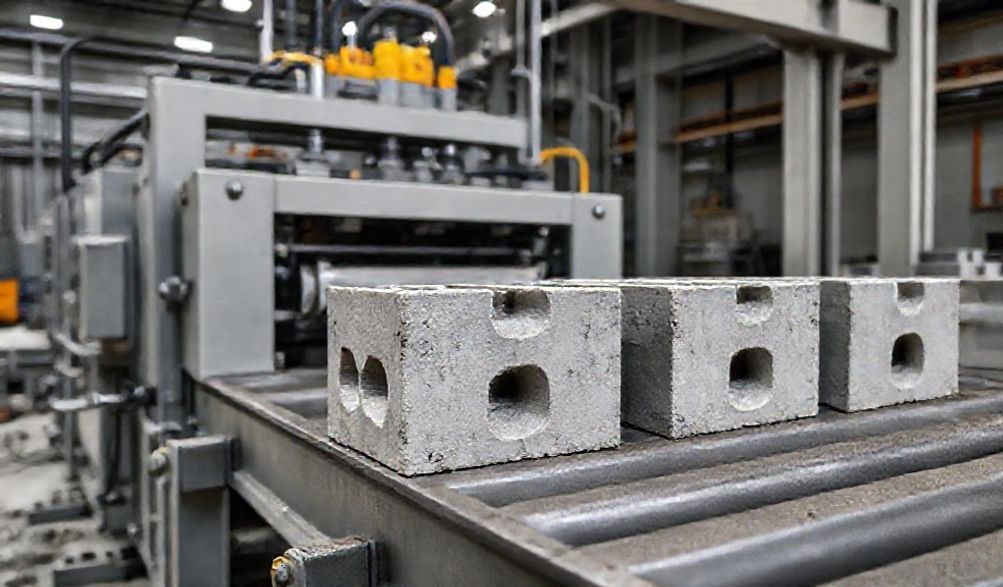
Block Machine Price: A 2024 Buyer’s Guide & Cost Breakdown
Finding the right block machine is crucial for your construction project or business, but navigating the wide range of prices can be confusing and overwhelming. You might see a manual press for a few thousand dollars and a fully automatic plant for half a million and wonder: what am I regtig paying for? This disparity isn’t random; it’s a direct reflection of capability, technology, and long-term value.
As a seasoned expert in construction equipment, I’ve written this guide to cut through the noise. My purpose is to provide you with a transparent, detailed breakdown of what drives block machine costs. By understanding the factors at play—from automation levels to hidden ownership expenses—you’ll be empowered to move beyond the initial sticker shock and make an investment that truly aligns with your production goals and budget. This guide will systematically break down costs by machine type, brand, and the often-overlooked ancillary expenses, culminating in actionable advice to ensure you get the best value for your money. Let’s demystify block machine price together and build a foundation for your success.
Understanding What Drives Block Machine Prices
The price tag on a block machine is not arbitrary. It’s a calculated sum derived from its engineering, components, and production potential. Viewing it as a simple commodity purchase is a common mistake. Instead, you’re investing in a production asset, and its cost is a function of specific, tangible factors that directly impact your output, product quality, and operational efficiency. Understanding these drivers is the first step to making an intelligent purchase.
Masjientipe & Uitsetvermoë
The most fundamental price determinant is the machine’s type and its designed output capacity. This is where your production needs directly meet cost.
-
Handblokmasjiene: These are the simplest and least expensive. Operation relies heavily on human labor for mixing, feeding, and block ejection.
- Price Correlation:Laagste voorafkoste.
- Uitset: Very low (e.g., 200-500 blocks per 8-hour shift).
- Ideaal Vir: Extremely small projects, DIY enthusiasts, or markets with very low labor costs.
-
Semi-Automatiese Blokmasjiene: This category offers a middle ground. The machine automates the critical compaction and vibration process via a hydraulic system, but blocks are still moved and stacked manually.
- Price Correlation: Moderate investment.
- Uitset: Medium (e.g., 1,000 – 3,000 blocks per 8-hour shift).
- Ideaal Vir: Small to medium businesses, startups, and contractors with periodic project needs.
-
Volledig Outomatiese Blokmasjiene: These are complete production systems. They integrate material feeding, compaction, molding, curing, and pallet stacking with minimal human intervention, often controlled by a Programmable Logic Controller (PLC).
- Price Correlation: Highest investment.
- Uitset: High to very high (e.g., 4,000 – 20,000+ blocks per 8-hour shift).
- Ideaal Vir: Medium to large-scale commercial production, where consistency, volume, and labor savings are critical.
Furthermore, the type of block you need to produce affects the price. Standard hollow or solid blocks are typical. However, machines equipped with molds for specialty products like pavers, interlocking blocks, or custom architectural shapes often command a higher price due to more complex mold design and machine adaptability.
Level of Automation & Technology
Within each category, the degree of automation and the quality of technology are significant price multipliers. This is where you pay for precision, reliability, and efficiency.
- Beheerstelsels: A basic relay system is cheaper than a touch-screen PLC. The PLC allows for precise control over vibration time, pressure, and cycle times, ensuring consistent block quality and easier troubleshooting.
- Hidrouliese Stelsels: The quality and sourcing of pumps, valves, and cylinders greatly affect price and longevity. Premium, brand-name hydraulic components reduce leakage and failure rates.
- Vibrasietegnologie: High-frequency, dual-vibration systems (on the mold head and table) ensure optimal compaction for dense, strong blocks. Superior vibration technology is a key differentiator in output quality.
- Robotic Handling: Integrated robotic arms or stackers that automatically transfer blocks to curing racks eliminate the most labor-intensive part of the process, significantly boosting output but also adding to the cost.
Brand Reputation & Country of Origin
Brand equity and manufacturing origin play a substantial role in block machine price.
- Established Global Brands: Manufacturers from Germany, Italy, the United States, and some well-known Turkish or Indian companies often carry a price premium. You are paying for decades of R&D, proven reliability, stringent quality control, and (ideally) a robust global network for after-sales service, training, and spare parts.
- Competitive Options from Emerging Hubs: Machines from certain manufacturing hubs can offer compelling initial prices. The critical trade-off often lies in long-term support. Questions to consider include: Is technical support readily available in your language? Can you get spare parts in 48 hours or 6 weeks? What is the true track record of the machine’s durability? A lower upfront cost can be eroded by prolonged downtime.
2024 Block Machine Price Ranges (By Category)
The following price brackets are estimates based on current market analysis. Prices vary significantly based on specific configuration, customization, region, shipping, and local dealer margins. Always contact multiple suppliers for detailed, formal quotations.
Manual & Semi-Automatic Block Machines
- Prysreeks: $1,000 – $25,000 USD.
- Ideaal Vir: Small-scale projects, business startups, NGOs, and low-volume production where labor cost is not the primary constraint.
- What You Get: In this range, you move from basic manual presses (lower end) to more robust semi-automatic machines with hydraulic compression and vibration. Features might include a single mold, basic hydraulic power pack, and a simple control panel. Output is directly tied to operator effort and speed.
Fully Automatic Stationary Block Machines
- Prysreeks: $25,000 – $100,000+ USD.
- Ideaal Vir: Established small-to-medium block-making businesses, industrial yards supplying local construction, and contractors with steady, high-volume contracts.
- What You Get: This is the core of commercial block production. Machines in this bracket are PLC-controlled, feature automatic material feeding and block ejection, and have multi-station pallet circulators. The price increases with features like:
- Number of mold cavities (e.g., 4-block vs. 10-block mold per cycle).
- Sophistication of the material feed system.
- Quality of components (e.g., Siemens PLC vs. generic).
- Inclusion of optional attachments like automatic color feeders or surface texturizers.
Fully Automatic Mobile Block Machines & Plants
- Prysreeks: $80,000 – $500,000+ USD.
- Ideaal Vir: Large-scale commercial plants, major infrastructure projects, and businesses aiming for maximum output with minimal direct labor.
- What You Get: This is the “plant” concept. It’s not just a machine; it’s an integrated system. A mobile block machine produces blocks directly on the ground, ideal for on-site production. A full plant includes:
- Automated batching and mixing system.
- Conveyor belts for material transport.
- The core block-making machine.
- Automated stackers/cranes and curing rack systems.
- Sophisticated control rooms managing the entire process. At this level, you are investing in a turnkey production facility.
Beyond the Sticker Price: The Total Cost of Ownership
A savvy buyer looks beyond the invoice. The true block machine price is the Total Cost of Ownership (TCO)—the sum of the purchase price and all costs associated with operating it over its lifespan. Ignoring these can turn a seemingly good deal into a financial burden.
Installation, Foundation, & Utilities
- Foundation: A heavy automatic machine requires a solid, level concrete foundation, which is a significant civil work cost.
- Utilities: Most automatic machines require robust 3-phase electrical power. Installation or upgrade of this service by a qualified electrician is costly. Compressed air systems for controls may also be needed.
- Ruimte: Factor in the cost of the factory or shed space needed not just for the machine, but for material storage, block curing, and finished product inventory.
Raw Material Handling & Ancillary Equipment
The block machine is the heart, but it needs a supporting ecosystem.
* Betonmenger: A pan mixer or twin-shaft mixer of appropriate capacity is essential.
* Materiaalhantering: Loaders, conveyors, or silos for aggregates and cement.
* Block Handling: Forklifts, pallet jacks, and transport racks for moving green and cured blocks.
* Curing Infrastructure: Racking systems and potentially sprinklers or steam curing chambers.
Maintenance, Spare Parts, & Downtime
This is where brand and quality decisions have long-term financial impact.
* Voorkomende Instandhouding: Budget for regular oil changes, filter replacements, and wear-part inspections.
* Onderdele: Hydraulic seals, vibration motors, and mold liners are consumables. What is their cost and availability? A cheap machine with expensive or unavailable parts is a liability.
* Afstandtydkoste: This is the hidden killer. If your machine is down for a week waiting for a $500 part, what is the cost of lost production and delayed projects? Reliable after-sales service is an insurance policy you pay for upfront.
Labor & Operational Training
- Labor Cost: A manual machine may have a low price but require 4-6 laborers to match the output of one automated machine run by 1-2 operators. Calculate the long-term wage savings of automation.
- Opleiding: Complex machines require proper training for operators and maintenance staff. Factor in the cost of training provided (or not provided) by the supplier.
How to Get the Best Value for Your Budget
Now that you understand the cost landscape, here’s how to navigate it to secure the best value—not just the lowest price.
Define Your Exact Needs First
Before you speak to a single salesperson, conduct a thorough self-assessment. Answer these questions:
* Daily/Weekly Output: How many blocks do I eintlik need to produce?
* Blok Tipes: What specific products (hollow, solid, paver) will I sell?
* Available Space & Power: What are the dimensions and electrical capacity of my site?
* Labor Reality: What is my local labor cost and availability? Can I afford/manage multiple workers?
* Budget Reality: What is my total investment budget, including machine, foundation, and ancillary equipment?
This clarity will prevent you from being upsold into an overly complex machine or buying an underpowered one that can’t meet demand.
Source Reputable Suppliers & Verify Claims
Due diligence is non-negotiable for a capital purchase.
* Check History: How long has the supplier/manufacturer been in business? Look for verifiable track records.
* Request References: Ask for contact information for 2-3 clients in a similar region who have used the machine for at least a year. Call them.
* Verify Certifications: Look for legitimate international standards like CE (for Europe) or ISO quality management certifications.
* Demand a Demonstration: Insist on a live video demo of the exact model you’re considering, producing the block type you need. If possible, visit a working installation.
The Critical Role of After-Sales Support
Your relationship with the supplier begins na payment. The quality of after-sales support is a core part of the machine’s value.
* Must-Ask Questions:
* “What is included in the warranty (parts, labor, duration)?”
* “Do you have a local technician or agent in my country/region?”
* “What is the typical lead time for critical spare parts, and do you stock them locally?”
* “Can you provide comprehensive operation and maintenance manuals in my language?”
* “Do you offer installation supervision and on-site operator training?”
Frequently Asked Questions (FAQ)
Q1: What is the cheapest type of block machine I can buy?
A1: Manual block machines have the lowest upfront purchase price. However, “cheapest” is relative. When factoring in high labor costs and very low output, a semi-automatic machine might offer a lower cost per block produced, providing better long-term value for even small businesses.
Q2: Are used block machines a good way to save money?
A2: They can be, but it requires extreme caution. It’s essential to conduct a thorough mechanical inspection, preferably by a qualified technician, and understand the machine’s full service history. Crucially, ensure that spare parts are still available from the manufacturer. For a business relying on consistent production, the warranty and reliability of a new machine often justify the higher initial investment.
Q3: How much does it cost to run a block machine per hour?
A3: There’s no single figure, but you can calculate it by adding: 1) Energy Cost (Machine & mixer kWh consumption x local electricity rate), 2) Labor Cost (Wages of operators / hours worked), 3) Raw Material Cost (Cement, aggregate per block), and 4) Maintenance Reserve (Annual maintenance cost / operating hours). For example, a semi-automatic machine might have higher labor cost per hour, while a fully automatic one has higher energy but far lower labor cost.
Q4: Besides the machine, what other major equipment do I need to start a block making business?
A4: A complete setup requires: a concrete mixer, raw material storage (bins/silos for sand, gravel, cement), a curing area with racks or pallets, material handling equipment (wheelbarrow, loader, or conveyor), finished product handling (forklift or pallet jack), and basic quality control tools (slump cone, measuring tape).
Conclusion
Navigating the block machine price spectrum is about understanding the direct link between cost and capability. The right choice is never just the cheapest or the most expensive option; it’s the machine that optimally balances your initial investment with your long-term requirements for productivity, reliability, and profitability. Remember to factor in the Total Cost of Ownership—those hidden installation, utility, and maintenance costs are real and impactful.
This guide was crafted to provide you with the trustworthy, expert-level information needed to support this major business decision. Use it as a checklist and a framework for your discussions with suppliers. Approach them with your defined needs and informed questions. By doing so, you’ll move from a position of uncertainty to one of confidence, ready to invest in the equipment that will build the foundation of your success for years to come.
<