
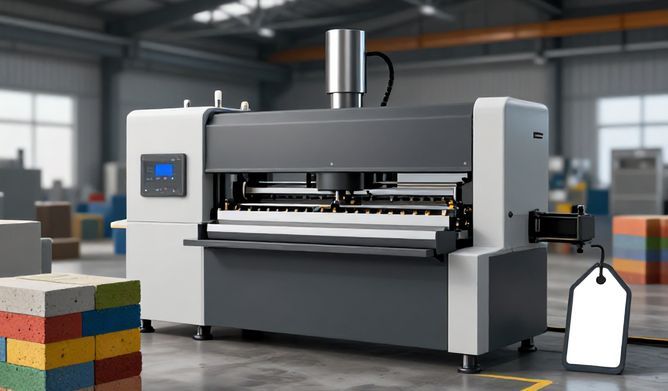
Block Making Machine Price Guide 2026: Costs, Types & Smart Buying Tips
Finding the right block making machine is crucial for your project’s success and budget, but navigating the vast price range—from a few hundred to several hundred thousand dollars—can be overwhelming. You’re not just buying a machine; you’re making a pivotal investment in the productivity and profitability of your construction or manufacturing venture.
Based on comprehensive industry analysis, direct manufacturer data, and years of construction machinery expertise, this guide is designed to demystify block making machine pricing. We’ll cut through the confusion to give you the clarity needed to make a confident decision.
By the end of this guide, you will have a clear breakdown of costs by machine type, a deep understanding of the key factors that influence price, and actionable strategies for making a cost-effective investment that aligns perfectly with your specific production needs and financial goals. Let’s dive into the essential details of block making machine price, koste structures, and Aankoopgids fundamentals.
Verstaan Blokmasjien Tipes & Hul Prysreekse
The single biggest determinant of a block making machine’s price is its type and level of automation. Choosing the right category is the first step to aligning your investment with your operational scale and output targets.
Handmatige Blokmaakmasjiene
- Beskrywing: These are the most fundamental, hand-operated machines. Production involves manually loading the raw concrete mix, applying leverage to compress it, and then ejecting the finished block. They are simple, robust, and require no electrical power.
- Tipiese Prysklas: $500 – $4,000. This range accounts for basic single-block models to more robust multi-block manual presses.
- Beste Vir: Individual entrepreneurs, DIY homestead projects, very low-volume production (e.g., for personal use or a hyper-local, tiny customer base), and markets where labor costs are extremely low and capital is scarce.
Semi-Automatiese Blokmaakmasjiene
- Beskrywing: This category strikes an optimal balance, automating the critical compression and vibration processes while often requiring manual feeding of raw material or removal of finished blocks. They are typically electrically powered and use hydraulic or mechanical vibration systems.
- Tipiese Prysklas: $4,500 – $25,000. The variance here is significant, driven by output capacity (blocks per hour), the number of molds, and build quality.
- Beste Vir: Growing small to medium-sized businesses, dedicated block-making yards supplying local construction, and medium-scale infrastructure projects. They offer a strong compromise between upfront cost and production efficiency.
Volledig Outomatiese Blokvervaardigingsmasjiene
- Beskrywing: These are high-output, computer-controlled production lines. They feature automatic material feeding, mixing (if integrated), molding, curing, stacking, and sometimes palletizing. Often controlled by Programmable Logic Controllers (PLCs), they require minimal human intervention.
- Tipiese Prysklas: $25,000 – $150,000+. Prices soar with increased automation, output speed (some produce thousands of blocks per hour), and integrated systems like robotic arms or complete curing racks.
- Beste Vir: Large-scale commercial block manufacturing plants, industrial production for regional or national supply, and businesses focused on export. The investment is justified by massive output, exceptional consistency, and low per-unit labor costs.
Mobiele Blokmaakmasjiene
- Beskrywing: Mounted on trailers or trucks, these portable units are designed for on-site production. The primary value proposition is the drastic reduction or elimination of block transportation costs, which can be a major project expense.
- Tipiese Prysklas: $15,000 – $50,000. They often fall into the semi-automatic or fully automatic categories but carry a premium for their mobility and compact, integrated design.
- Beste Vir: Large, remote construction sites (e.g., dams, remote housing projects), disaster relief housing construction, and projects where the building site is far from established block suppliers.
Key Factors That Influence Block Making Machine Price
Within each machine type, prices can vary dramatically. Understanding these core factors will help you decode a quote and compare apples to apples.
Produksiekapasiteit & Uitset
- The correlation between blokke per uur (BPH) and price is direct and exponential. A machine rated for 1,000 BPH will cost significantly more than one rated for 500 BPH, but not necessarily double.
- Cost-Benefit Analysis: You must weigh the higher initial investment against the potential revenue from increased output. A key question is: Can your market absorb the higher production? Overbuying capacity ties up capital unnecessarily, while underbuying limits growth.
Outomatiseringsvlak en Tegnologie
- The sophistication of the control system is a major cost driver. A basic relay system is cheaper than a touch-screen PLC with diagnostic capabilities.
- The type of vibration system (hydraulic vs. electromechanical) and the inclusion of features like automatic pallet changers or color feeders add cost.
- Langtermyn ROI: Advanced automation reduces labor dependency, minimizes human error for more consistent block quality, and can improve overall equipment efficiency. The higher upfront cost is an investment in lower operating expenses.
Machine Build Quality & Brand Reputation
- Steel Quality & Fabrication: Thicker steel frames and precision welding contribute to a machine that can withstand 24/7 operation for years, justifying a higher price.
- Component Brands: Machines using premium, globally recognized components (e.g., Siemens PLCs, Schneider electrics, Rexroth hydraulics) are more expensive but offer greater reliability and easier part sourcing.
- Handelsmerkwaarde Established manufacturers with decades of experience often command higher prices due to their proven track record, R&D investment, and tested machine designs. This reputation can mitigate risk.
Vormtipes & Aanpassing
- Standard molds for common blocks (hollow, solid, paver, interlocking) are relatively affordable. The cost increases for complex or custom mold designs (e.g., special textures, unique shapes).
- Machines capable of producing multiple block types by quickly changing molds are more versatile but also more expensive due to more complex mold locking and handling systems.
After-Sales Support & Warranty
- This is a critical part of the “true cost.” A machine with a low sticker price but no local technical support or warranty can become a very expensive paperweight if it breaks down.
- Evaluate the supplier’s offer: Is training included? Is there a local stock of spare parts? What is the response time for service? A comprehensive 12-24 month warranty on core parts is a sign of a confident manufacturer and protects your investment.
Beyond the Sticker Price: Calculating Your Total Investment
The purchase price is just the entry point. A smart buyer plans for the total cost of ownership.
Initial Purchase Price Breakdown
A detailed quote should itemize:
* Machine Cost: The base unit.
* Mold Costs: Specify which molds are included and the price of any additional ones.
* Shipping & Logistics: Often FOB (Free On Board) from the factory. Sea freight, insurance, and port fees can add 5-15%.
* Installasie & Inbedryfstelling: Fees for a technician to install, calibrate, and train your team on-site.
Operational & Hidden Costs
- Rou Materiaal: Calculate the cost of cement, aggregates, and water per block. This is your largest recurring variable cost.
- Utilities: Power consumption of the machine, mixer, and any curing systems.
- Arbeid: Wages for operators, maintenance staff, and material handlers.
- Maintenance: Budget for routine servicing, replacement wear parts (springs, seals, liners), and hydraulic fluids.
- Ruimte: Cost of the land, shed, or factory space required to house the operation.
How to Calculate Your Cost-Per-Block & ROI
To make an informed decision, you must project profitability.
Simple Cost-Per-Block Formula:
(Total Fixed Costs + Total Variable Costs) / Total Blocks Produced
- Fixed Costs: Machine depreciation, loan interest, rent for space, salaried labor.
- Variable Costs: Raw materials per block, direct labor per block, power per block.
Example ROI Comparison:
* Machine A (Semi-Auto): Costs $15,000. Produces 500 blocks/day with 3 workers. Lower output, higher per-block labor cost.
* Machine B (Fully Auto): Costs $60,000. Produces 2,500 blocks/day with 1 worker. Higher output, much lower per-block labor cost.
While Machine B has a 4x higher purchase price, its higher output and lower operating cost may allow it to pay for itself faster and generate significantly higher total profit in a high-demand market.
Smart Buying Tips: How to Get the Best Value for Your Budget
Armed with knowledge, use these practical steps to navigate the purchasing process.
Define Your Needs Clearly Before Shopping
Create a project specification checklist:
* Block Types Needed: List all required products (e.g., 4″, 6″, 8″ hollow blocks, pavers).
* Daily/Weekly Output Target: Be realistic about current and near-future demand.
* Available Space & Power: What are the dimensions and electrical supply (Voltage/Phase) at your site?
* Total Budget Ceiling: Include a 15-20% contingency for unexpected costs.
How to Vet Suppliers and Manufacturers
- Ask for Client References: Contact past buyers, especially those in your region, to ask about machine performance and after-sales service.
- Request Factory Audits/Videos: If you can’t visit in person, ask for a live video tour of the production facility.
- Scrutinize Technical Specifications: Compare motor power, vibration frequency, cycle time, and pressure ratings—not just the BPH claim.
- Check Certifications: Look for ISO certification and compliance with international machinery safety standards.
The Negotiation & Financing Guide
- What’s Negotiable: Shipping costs, inclusion of extra mold(s), extended warranty periods, and on-site training packages are often flexible.
- Financing Options: Explore manufacturer-backed financing, equipment leasing (which preserves capital), or local business loans. Compare interest rates and terms carefully.
New vs. Used Machines: A Risk/Reward Analysis
- New Machine Pros: Full warranty, latest technology, reliable performance, and manufacturer support. Nadele: Highest upfront cost.
- Used Machine Pros: Lower initial investment. Nadele: Potential hidden wear, outdated technology, limited or no warranty, possible difficulty sourcing spare parts.
- When Used Makes Sense: If you have in-house mechanical expertise for repairs and can thoroughly inspect the machine’s condition and maintenance history.
- Red Flags: Excessive rust/cracks in the frame, undocumented hours of use, unwillingness to demonstrate the machine under load, and no service history.
Frequently Asked Questions (FAQ) About Block Making Machine Prices
Q: What is the cheapest block making machine available?
A: Manual block making machines are the least expensive in terms of upfront purchase price, often starting under $1,000. However, it’s vital to understand that “cheapest” here refers only to acquisition cost. Their low output and high physical labor requirement typically result in a higher cost-per-block and limit profitability for commercial ventures.
Q: Can a block making machine be profitable for a small business?
A: Absolutely. Success hinges on careful planning. Start by conducting thorough market research to confirm local demand. Accurately calculate your all-in cost-per-block, including raw materials, labor, and machine depreciation. For most small businesses, a semi-automatic machine offers the best balance of affordable entry cost and sufficient, scalable output to build a profitable operation.
Q: How much does shipping and installation typically cost?
A: This varies widely but generally falls between 5% and 15% of the machine’s FOB price. Key factors include distance from the manufacturer, machine size/weight (container requirements), and local labor rates for installation at your site. Always insist on a detailed, written quote that includes all logistics, duties, and installation fees to avoid surprises.
Q: Are there significant price differences between manufacturers?
A: Yes, substantial differences exist. They are driven by the country of origin (machines from certain regions may have lower labor costs), brand prestige, and the quality of components used. The most important principle is to compare detailed technical specifications and the scope of after-sales support—never make a decision based on the price tag alone.
Q: What maintenance costs should I budget for annually?
A: As a general rule, budget 2% to 5% of the machine’s initial purchase price per year for routine maintenance. This covers replacement wear parts (like springs, seals, and filter elements), regular lubrication, hydraulic oil changes, and potential minor repairs. A well-maintained machine prevents costly major breakdowns and extends the equipment’s lifespan.
Conclusion
Navigating block making machine price options ultimately reveals a key insight: the “right” price is not the lowest one, but the one that delivers the best long-term value for your specific production goals and budget constraints.
Our final expert recommendation is to shift your focus from mere purchase price to Totale Eienaarskyskoste. This holistic view considers the initial investment, plus all operational costs, minus your projected return. A slightly more expensive machine with higher efficiency, lower labor needs, and robust support will almost always outperform a “bargain” machine that struggles with downtime and high operating costs.
Use this guide as your definitive checklist when engaging with suppliers. Ready to get specific quotes? Apply the factors outlined here to request and compare detailed, itemized proposals from 3-5 reputable manufacturers. A well-researched, strategic investment in a block making machine is more than an equipment purchase—it can be the profitable, productive cornerstone of your construction business for years to come.
<