
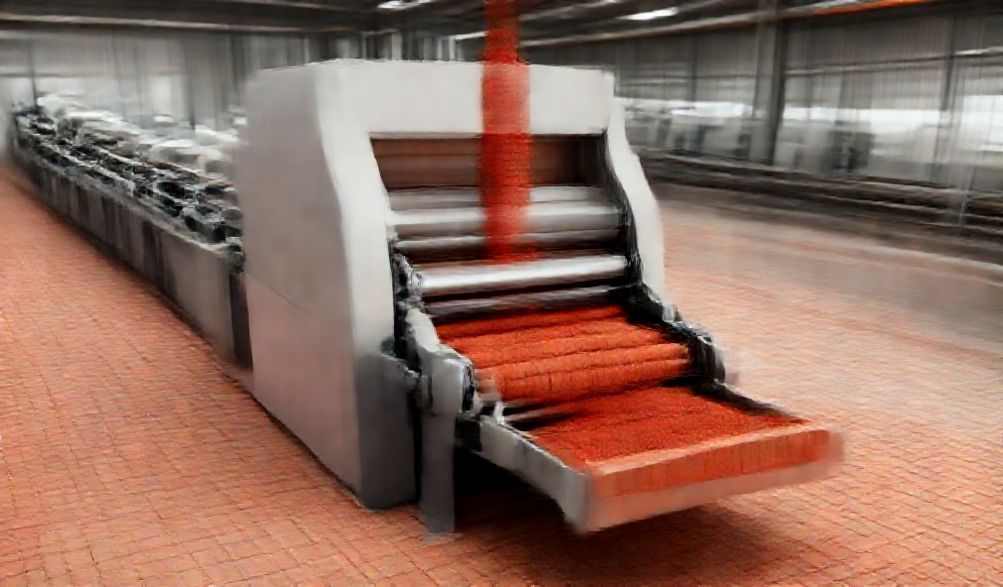
Clay Brick Making Machine Project Report: A Comprehensive Guide from FUDA Brick Making Factory
Inleiding
The global construction boom shows no signs of slowing. At the heart of this growth lies a constant demand for affordable, durable, and sustainable building materials. Clay bricks, a cornerstone of construction for millennia, continue to be a primary choice. This enduring demand presents a significant and stable business opportunity for astute entrepreneurs.
However, the path from identifying this opportunity to running a profitable brick manufacturing plant is fraught with challenges. Many ventures stumble at the outset due to high initial investment uncertainty, a lack of reliable technical and operational data, and the sheer complexity of setting up an efficient production line. How do you accurately forecast costs? Which machinery is right for your market? What does a viable operational layout look like?
The solution lies in a single, critical document: a comprehensive Clay Brick Making Machine Project Report. This report is far more than a formality for bank loans; it is the strategic blueprint, financial model, and operational manual for your entire venture. It transforms a business idea into a data-driven, executable plan.
This guide is not a generic template. It is distilled from FUDA’s 25+ years of hands-on experience in engineering, manufacturing, and implementing turnkey brick-making solutions worldwide. We have witnessed the pitfalls and celebrated the successes. Our goal here is to transfer that field-proven knowledge, establishing immediate credibility through Ervaring, Kundigheid, Gesaghebbendheid en Betrouwbaarheid (E-E-A-T).
This article will serve as your master outline. We will walk you through every critical component of a professional project report, empowering you to make informed decisions, secure funding with confidence, and build a profitable, efficient clay brick making factory from the ground up.
Why a Detailed Project Report is Your Foundation for Success
Before delving into the components, it’s crucial to understand why this document is non-negotiable. A robust project report is the bedrock upon which a successful business is built, serving three fundamental purposes.
Mitigating Risk and Securing Investment (Expertise)
For any financier—a bank, investor, or government agency—your project report is the primary evidence of due diligence. It answers their critical questions before they are asked.
* It demonstrates you have thoroughly researched the market, competition, and technical requirements.
* It provides clear, realistic financial projections, including Return on Investment (ROI), break-even analysis, and cash flow forecasts. This quantifies the opportunity and the path to profitability, moving your proposal from a “maybe” to a calculated “yes.”
Streamlining Operations from Day One (Experience)
Based on our experience with hundreds of client installations, the most common post-setup challenges stem from poor initial planning. A detailed report acts as your operational GPS.
* It serves as a step-by-step manual, defining workflow, manpower structure, and daily production schedules.
* It prevents costly mistakes in factory layout, material handling, and process sequencing, ensuring optimal efficiency from the first day of production.
Ensuring Technical and Regulatory Compliance (Authoritativeness & Trustworthiness)
Navigating the web of technical standards, environmental norms, and local building codes is complex. A professionally prepared report, like those based on FUDA’s methodologies, ensures compliance.
* It specifies machinery that meets international safety and performance standards.
* It outlines necessary environmental controls for emissions and waste, crucial for obtaining licenses.
* It is built on FUDA’s proven compliance framework, tested and adapted for diverse international markets, saving you from legal and operational headaches.
Core Components of a Professional Clay Brick Making Project Report
A credible project report is structured, detailed, and logical. Here is a breakdown of its essential chapters.
1. Executive Summary & Project Overview
This is the most important section—often the only one a busy executive reads first. It must concisely summarize the entire report.
* Business Objectives: The mission and vision of your factory.
* Plant Capacity: Proposed daily/annual production output (e.g., 20,000 bricks per day).
* Proposed Location: Site details, with rationale based on proximity to raw materials and markets.
* Promoter Background: Brief on the entrepreneurial team.
* Total Project Cost & Key Financial Indicators: A snapshot of investment and expected returns.
2. Market Analysis & Opportunity Assessment
This section proves there is a viable business. It moves from macro trends to your specific micro-market.
* Local & Regional Demand Study: Analysis of construction activity, infrastructure projects, and annual brick consumption.
* Competitor Analysis: Mapping existing brick manufacturers, their capacity, product types, and pricing.
* SWOT Analysis: Your project’s internal Strengths and Weaknesses against external Opportunities and Threats.
* Pricing & Marketing Strategy: How you will position your bricks (premium, economical) and reach your customers.
3. Technical Analysis: The Heart of the Report (Expertise)
This is the engineering core of your project. It translates your capacity goals into physical reality.
Clay Brick Making Process Flow Chart
A visual diagram is essential. It maps the journey from raw clay to finished brick:
Raw Clay → Excavation → Weathering → Crushing → Screening → Mixing (with water) → Extrusion/Molding → Cutting → Drying → Firing (Kiln) → Cooling → Sorting & Packaging.
Machinery Selection & Specifications
This is a detailed breakdown. Your choice here dictates quality, output, and efficiency. A typical line includes:
* Clay Crusher & Grinder: For size reduction of raw clay.
* Mixer (Pug Mill): Homogenizes clay and water to the perfect plasticity.
* Brick Extruder or Hydraulic Press: The core machine that forms the brick column. Selection depends on desired brick type and automation level.
* Automatic Cutter: Cuts the extruded column into precise brick blanks.
* Dryer (Natural or Artificial): Removes moisture before firing to prevent cracking.
* Kiln (Clamp, Hoffman, or Tunnel): The most critical and costly component. It fires bricks to achieve strength. Modern FUDA tunnel kilns offer superior fuel efficiency and consistent quality.
* Handling Equipment: Conveyors, forklifts, and stackers.
Plant Layout & Design for Optimal Efficiency
The layout must facilitate a smooth, linear material flow to minimize handling and backtracking. It must account for:
* Raw material storage bays.
* Production line sequence.
* Drying sheds/areas and kiln placement.
* Finished goods storage yard.
* Utilities (power, water), laboratory, and administrative offices.
Raw Material (Clay) Sourcing & Quality Testing Protocols
The quality of your brick is decided here. The report must detail:
* Source of clay, transport logistics, and cost.
* Mandatory lab testing for properties like plasticity, shrinkage, and chemical composition (to avoid harmful salts like lime).
* Protocols for blending different clay types to achieve ideal properties.
4. Financial Projections & Viability
This section translates your technical plan into numbers. It must be realistic and conservative.
* Detailed Cost of Project: A capital expenditure breakdown.
* Land & Site Development
* Civil Works & Buildings
* Plant & Machinery (ex., FUDA fully automatic line)
* Installation & Commissioning
* Pre-operative Expenses (licenses, consultancy)
* Working Capital Requirements: Funds needed for the first 3-6 months of operation (raw material, salaries, utilities, marketing).
* Financial Statements: 5-year projections of:
* Profit & Loss Statement: Showing revenue, operating costs, and net profit.
* Cash Flow Statement: Tracking actual cash in and out.
* Balance Sheet: Showing the company’s assets and liabilities.
* Key Ratios: ROI, Payback Period, Debt Service Coverage Ratio (DSCR), and Break-Even Analysis.
5. Implementation Schedule & Risk Management
A plan without a timeline is just a wish. This chapter provides the roadmap.
* Realistic Gantt Chart: A phased timeline from land acquisition, civil construction, machinery procurement and installation, trial runs, to commercial production.
* Risk Management Matrix: Proactive identification of potential risks:
* Technical: Machinery breakdown, poor clay quality.
* Market: Price fluctuations, new competitors.
* Operational: Skilled labor shortage, power outages.
* Mitigation Plans: Specific actions to minimize each identified risk (e.g., comprehensive maintenance contracts, raw material buffer stock, generator backup).
Inside FUDA’s Expertise: Key Considerations for Your Machine Selection
Your machinery is your production engine. Based on our expertise, here are the critical factors to analyze in your report.
Production Capacity: Manual, Semi-Automatic, or Fully Automatic?
Your choice balances investment with output and labor costs.
* Manual/Small Scale: Low investment, high labor intensity, suitable for very localized demand.
* Semi-outomaties: Moderate investment. Machines like FUDA hydraulic press models automate forming, but handling is manual. Good for medium-scale operations.
* Heeltemal Outomaties: Higher initial investment but lowest operating cost per brick. Integrated lines with auto-feed, extrusion, cutting, stacking, and handling. Essential for large-scale, competitive production.
Product Mix Versatility
Market needs vary. Can your machine produce?
* Solid Bricks (for foundations)
* Hollow/Perforated Bricks (lighter, better insulation)
* Paving Bricks (for landscaping)
* Different sizes (as per local standards)
Selecting a machine, like a versatile FUDA extruder with interchangeable dies, allows you to adapt to market trends without major reinvestment.
Fuel Efficiency & Drying/Kiln Technology
The kiln is where ~60-70% of your production energy is consumed. This is a major operational cost.
* Traditional Clamp Kilns: Low capital cost, but very high fuel consumption, inconsistent quality, and high emissions.
* Modern Tunnel Kilns (FUDA’s Specialty): Higher capital cost, but 40-50% more fuel-efficient. They provide precise, automated temperature control, yielding uniformly high-quality bricks and meeting stricter environmental norms. The long-term savings are substantial.
After-Sales Support & Training – The FUDA Advantage (Trustworthiness)
The machine purchase is the start of a 10-15 year relationship. Your report must evaluate the supplier’s support ecosystem.
* Installasie & Inbedryfstelling: Will expert engineers set up the plant?
* Omvattende Operateur Opleiding: Are your staff trained to run and maintain the machines?
* Geredelik Beskikbare Onderdele: Is there a local warehouse or guaranteed supply chain?
* Technical Hotline: Can you get expert advice when needed?
FUDA’s global service network is designed to be a long-term partner, ensuring your plant’s productivity and longevity.
Building Trust: Sustainability and Quality Assurance
A modern brick factory must be responsible and reliable. This builds lasting trust with regulators, communities, and customers.
Eco-Friendly Manufacturing Practices
Sustainable operations are no longer optional. Your report should outline:
* Energy-Efficient Machines: Utilizing variable frequency drives (VFDs) on motors, heat recovery systems in kilns.
* Waste Recycling: Crushing and reusing fired brick waste (grog) or unfired cuttings back into the mix.
* Emissions Control: Installing scrubbers or filters in kiln chimneys to reduce particulate matter.
Implementing a Rigorous Quality Control Lab
Consistent quality is your brand’s reputation. A simple on-site lab is a wise investment.
* Tests to Perform: Compressive Strength (IS 1077/ASTM C67), Water Absorption, Efflorescence, Dimensional Tolerance.
* Frequency: Regular testing of both raw clay and finished bricks.
* Voordeel: Data-driven process adjustments to maintain standards and provide certification to buyers.
Certifications and Building Customer Confidence
Certifications are tangible proof of quality.
* Machine Certifications: FUDA machinery often carries CE, ISO, or other international marks, assuring safety and performance.
* Brick Certifications: Producing bricks that meet IS (Indian Standard), ASTM (American), or BS (British) standards allows you to supply government tenders and large construction companies, commanding premium prices and building unshakeable market trust.
FAQ Section
Q1: What is the average total investment for a medium-scale clay brick making plant?
A: Investment varies widely by region, automation level, and kiln technology. A semi-automatic plant with a Hoffman kiln might range from $200,000 to $500,000. A fully automatic plant with a modern tunnel kiln can start from $1 million upwards. A detailed site-specific project report is the only way to get an accurate figure.
Q2: How much land is required to set up a brick manufacturing factory?
A: For a medium-scale plant producing 20,000-50,000 bricks per day, you typically need 2-5 acres. This accommodates the production shed, drying area, kiln, raw material storage, finished goods yard, and ancillary buildings.
Q3: What is the difference between a fly ash brick and a clay brick making machine project report?
A: The core difference is the raw material and curing process. A Fly Ash Brick report focuses on fly ash, lime, gypsum, and hydraulic press machines with steam curing chambers. A Clay Brick report centers on clay, water, and extrusion/hydraulic machines with drying and high-temperature firing kilns. The machinery, process flow, and cost structures are distinct.
Q4: Can FUDA provide a sample project report or a turnkey solution?
A: Yes. FUDA offers comprehensive turnkey solutions, which include a customized, detailed project report specific to your location and goals, followed by machinery supply, installation, training, and support. We can provide a generalized report outline or structure as part of our initial consultancy.
Q5: What is the typical payback period for a brick making machine investment?
A: With efficient operations and good market demand, a well-planned project can see a payback period of 2 to 4 years. Fully automatic lines, while costing more, often achieve faster payback due to lower operating costs and higher, consistent output.
Q6: How do I assess the quality of clay on my potential site?
A: Conduct a geotechnical survey. Extract samples from multiple pits and send them to a soil testing laboratory. Key tests include Atterberg Limits (for plasticity), sieve analysis (particle size), and chemical analysis (for lime, sulfur, and organic content). FUDA can guide you on the specific tests required for brick-making.
Conclusion
Embarking on a clay brick manufacturing venture is a significant undertaking, but it need not be a leap into the unknown. A meticulously prepared Clay Brick Making Machine Project Report is the critical tool that illuminates the path forward. It is not an administrative expense; it is your primary investment in de-risking your venture, securing capital, and laying the operational groundwork for long-term profitability.
This guide has provided the framework, but its true value is realized when applied with deep industry insight. This is where FUDA transitions from a subject of this article to your potential partner. We bring to the table not just machinery, but the collective Ervaring of thousands of successful installations, the Kundigheid of our in-house engineering team, the Gesaghebbendheid of a leader in brick-making technology, and the Betroubaarheid forged through decades of reliable after-sales support and client success.
The difference between a struggling operation and a market leader is often the quality of planning. Don’t leave your project to chance.
Ready to build your blueprint for success? Contact FUDA’s project advisory team today for a preliminary consultation. Let us help you develop a customized, data-driven Clay Brick Making Machine Project Report that turns your vision into a profitable, efficient, and sustainable reality.
<