
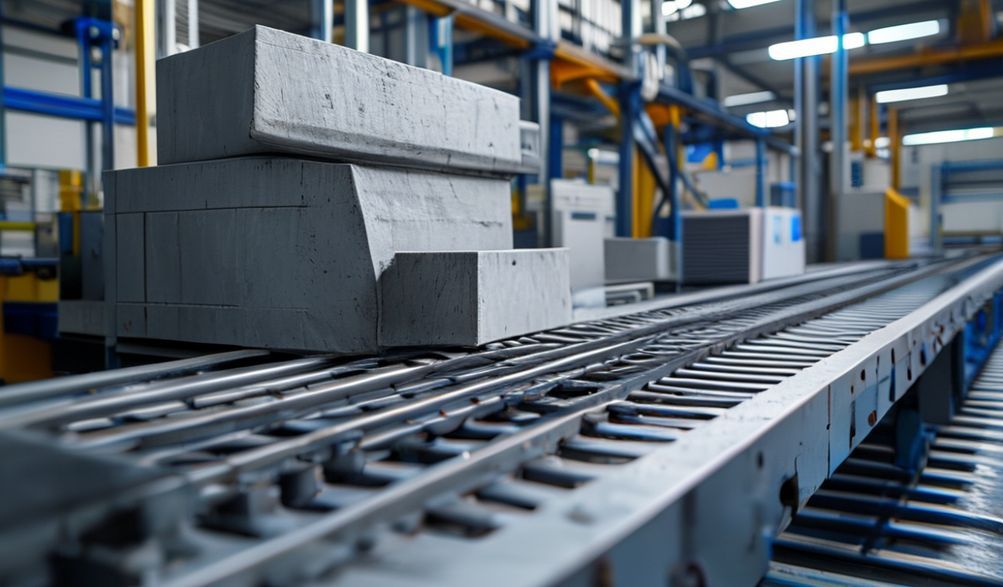
Holblokmasjienkoste: 'n 2026-Koper se Gids & Prysopbreek
Begroting vir 'n holblokmasjien kan oorweldigend voel. Met pryse wat wissel van 'n paar duisend tot meer as honderdduisend dollar, hoe weet jy wat reg is vir jou projek of besigheid? Jy koop nie net 'n stuk toerusting nie; jy maak 'n deurslaggewende belegging in jou konstruksieprojek of besigheidsonderneming.
Hierdie gids deurbreek die verwarring. Ons bied 'n deursigtige, kundige uiteensetting vanholblokmasjien kostegaan verder as die prysplakker om die totale belegging te verken. Ons sal prysfaktore ontleed, verborge uitgaves blootlê en die opbrengs op belegging (ROI) vir verschillende modelle ontleed. Teen die einde sal jy 'n duidelike begrip hê van die volledige koste-landskap—van masjientipes tot langtermyn bedryfsuitgawes—wat jou in staat stel om die beste waarde vir jou spesifieke behoeftes en begroting te kies.
Verstaan Wat Jy Betaal Vir: Tipes Holblokmasjiene
Die eerste stap om koste te ontraaksel, is om die kategorieë van beskikbare masjiene te verstaan. Die vlak van outomatisering en produksievermoë is die primêre dryfveer van prys. Om die regte tipe te kies, is deurslaggewend om te voorkom dat jy te min in 'n onbevoegde masjien belê of te veel in 'n oormatig komplekse een.
Hand- en Semi-outomatiese Masjiene (Toetree-vlak Investering)
Hierdie masjiene verteenwoordig die mees toeganklike toegangspunt tot blokproduksie, wat aansienlik staatmaak op menslike arbeid vir bedryf.
- Prysreeks: $1,500 – $15,000
- Ideaal Vir: Small-scale personal projects (e.g., building a home wall), very small startups with limited capital, NGOs in remote areas, or businesses with intermittent, low-volume production needs.
- Cost Drivers: The lower price reflects basic mechanical systems, limited or no automation, and lower output capacity. Operation involves manually feeding the concrete mix, activating the machine (often via a lever), and manually removing and stacking the cured blocks.
Volledig Outomatiese Stilstaande Masjiene (Middelklas Werkperde)
This category is the backbone of many successful small-to-medium block-making businesses. They automate the core processes of mixing, feeding, compacting, and ejecting blocks.
- Prysreeks: $15,000 – $50,000
- Ideaal Vir: Growing block-making businesses, suppliers for local construction, and projects requiring steady, reliable daily output. They offer a strong balance between automation and cost.
- Cost Drivers: The higher price buys you integrated systems like auto-measuring batching, conveyor feeding, and programmed vibration cycles. They feature more durable components (better hydraulics, stronger vibrators), significantly higher production capacity, and often include basic PLC (Programmable Logic Controller) panels for consistent operation.
Fully Automatic Mobile Machines (High-Capacity Investment)
These are the premium, high-output powerhouses of the industry. Often called “block-making plants on wheels,” they integrate all stages of production into a single, mobile unit.
- Prysreeks: $50,000 – $150,000+
- Ideaal Vir: Large-scale commercial production yards, major construction companies producing blocks on-site for large projects, and businesses aiming to dominate regional supply with very high daily output.
- Cost Drivers: You are paying for maximum efficiency and mobility. These machines are self-contained, featuring built-in mixers, conveyor systems, and automatic block stackers or pallet handlers. Their ability to produce and stack blocks directly onto the curing yard with minimal labor is a major value driver. They employ the most advanced PLC controls, high-wear-resistant components, and are engineered for continuous, heavy-duty operation.
The Real Cost Breakdown: Beyond the Sticker Price
A savvy buyer looks at the Totale Eienaarskoste (TEO), not just the purchase price. The initial machine cost is often just 50-70% of your total startup investment. Ignoring the ancillary costs is the fastest way to blow your budget.
1. The Machine Purchase Price
This is the core cost of the equipment unit itself, as outlined in the categories above. Remember, this price can vary widely even within a category based on brand reputation, build quality, and specific configuration (like the number of molds included).
2. Essential Auxiliary Equipment Costs
Rarely can you just plug in a hollow block machine and start production. Essential supporting equipment includes:
- Betonmenger: A must-have for consistent, homogenous raw material. A pan mixer or planetary mixer is typical. Koste: $1,000 – $10,000+.
- Block Stacker or Pallet Handler: For automatic lines, this device neatly stacks green blocks onto curing pallets or carts, saving immense labor. Koste: $3,000 – $20,000.
- Raw Material Bins & Conveyors: For automated feeding of sand, aggregate, and cement into the mixer or machine hopper. Koste: $2,000 – $15,000 for a basic setup.
- Molds for Different Blocks: The standard mold might make 4″ hollow blocks. Want to produce pavers, curbstones, or solid blocks? Each custom mold is an additional cost. Koste: $500 – $3,000 per mold set.
3. Shipping, Installation & Commissioning
Getting your machine to your site and making it work is a major line item.
- Shipping & Freight: For international purchases, this can be 5-15% of the machine cost. Consider sea freight vs. air, customs duties, and port handling fees.
- Installasie & Inbedryfstelling: Some suppliers include basic startup guidance; for complex automatic lines, you may need to pay for a technician to travel to your site for installation, calibration, and staff training. Koste: $1,000 – $5,000+.
4. Operating & Maintenance Costs
These are the recurring costs that determine your ongoing profitability.
- Kragverbruik: Fully automatic machines with multiple motors and hydraulic systems are power-hungry. Calculate your local electricity cost per kWh. Wenk: Inquire about energy-efficient motor options.
- Raw Materials (Cement, Aggregate, Sand): This is your largest ongoing expense. The cost is entirely location-dependent and fluctuates with market prices.
- Arbeid: A manual machine may require 4-6 workers. A fully automatic line might only need 1-2. Factor in local wage rates.
- Routine Maintenance & Spare Parts: Budget 2-5% of the machine’s purchase price annually for maintenance. Wear parts include:
- Mixer blades and liners
- Mold liners and wear plates
- Hydraulic seals and hoses
- Vibrator motors
Key Factors That Directly Influence Hollow Block Machine Price
Why does one “fully automatic” machine cost $25,000 and another $45,000? These core factors explain the difference.
Produksiekapasiteit (Blokke Per Uur)
This is the single biggest price determinant. A machine producing 1,000 standard blocks per 8-hour shift is in a different financial universe than one producing 5,000 blocks per shift. The engineering, motor power, structural strength, and speed required for higher output command a premium. Don’t overpay for capacity you’ll never use, but buying a machine that can’t meet demand is a fatal error.
Outomatiseringsvlak en Tegnologie
The spectrum from manual levers to touch-screen PLC panels has a direct cost correlation. Advanced PLC systems ensure consistent block density and quality, reduce human error, and can store programs for different products. Other tech upgrades like frequency converters (for smoother vibration) or IoT-enabled monitoring for predictive maintenance also add cost but deliver long-term value.
Bougehalte & Handelsmerk Reputasie
A machine built from standard-grade steel with generic hydraulics will cost less upfront than one constructed from reinforced, anti-corrosion steel with branded, high-precision hydraulic components (like Bosch Rexroth or Parker). A reputable brand with a decade of proven performance charges more for reliability and durability. Beware of “too good to be true” prices—they often signal poor welding, weak vibrators, and subpar electrical panels that lead to catastrophic downtime.
Customization & After-Sales Service
- Aanpassing: Need a special block shape or size? Custom mold design and fabrication add cost.
- Na-Verkope Diens: This is where E-E-A-T (Experience, Expertise, Authoritativeness, Trustworthiness) in a supplier is critical. A reliable warranty (e.g., 12 months on parts), a readily available spare parts inventory, and accessible technical support (via phone, video, or in-person) are part of the investment. A cheaper machine with no support can become your most expensive asset when it breaks down.
How to Determine the Right Machine for Your Budget & Needs
Now, let’s apply this knowledge to your specific situation with actionable, expert guidance.
Assess Your Real Production Needs
Be brutally honest. Ask:
* What is my current, verifiable daily or weekly block requirement?
* What is my projected growth in the next 2-3 years?
* What types of blocks do I need to produce? (Hollow, solid, paver, etc.)
* What is my available factory space and power supply? (3-phase power is often required for automatic machines).
Calculate Your Total Investment Budget
Use this simple formula to avoid surprises:
Total Startup Investment = Machine Price + Auxiliary Equipment + Shipping/Installation + 3-Month Operating Capital (Materials + Labor + Utilities)
This last part—operating capital—is often forgotten. You need cash to run the business until revenue from block sales starts flowing.
New vs. Used Machines: A Cost-Benefit Analysis
| Aspect | Used Machine | New Machine |
| :— | :— | :— |
| Upfront Cost | Pro: Significantly lower (30-50% less). | Con: Higher initial investment. |
| Reliability & Risk | Con: Unknown service history. Higher risk of unexpected breakdowns and downtime. | Pro: Full factory warranty. Predictable performance and lower immediate repair risk. |
| Technology | Con: May have outdated, less efficient controls and systems. | Pro: Latest technology, often with better energy efficiency and safety features. |
| After-Sales Support | Con: Little to no warranty. Spare parts may be difficult to source. | Pro: Comprehensive warranty and access to manufacturer’s technical support and parts network. |
Expert Advice: If you have deep mechanical expertise and can thoroughly inspect a used machine, it can be a viable path. For most, the security, warranty, and modern efficiency of a new machine from a reputable supplier offer better long-term value.
Maximizing Your Investment: Tips for Cost-Efficiency & ROI
Your goal isn’t just to buy a machine; it’s to run a profitable operation. Here’s how to protect and grow your investment.
Optimize Raw Material Mix Designs
The cost of cement is a major profit lever. Work with a local engineer or your supplier to test mix designs that use optimal ratios of cement, sand, and aggregate—or even incorporate approved fly ash—to achieve the required block strength at the lowest material cost. A 5% saving on cement translates directly to higher margins.
Implement Proactive Maintenance
Downtime is the enemy of ROI. Create and religiously follow a maintenance schedule:
* Daily: Clean the machine, check hydraulic oil levels, tighten loose bolts.
* Weekly: Inspect mold liners and mixer blades for wear, grease all bearings.
* Monthly: Check hydraulic hoses for leaks, inspect electrical connections.
* Annually: Replace hydraulic filters, conduct a full system check.
Plan for Efficient Factory Layout
Design your production floor for a linear, efficient workflow:
Raw Material Storage -> Mixing Station -> Block Machine -> Curing Area -> Finished Block Storage.
Minimize the distance materials and blocks need to be moved. A well-planned layout reduces labor, handling costs, and the risk of damaging green blocks.
Frequently Asked Questions (FAQ) About Hollow Block Machine Cost
Q1: What is the cheapest hollow block machine available?
A: Small, manual machines, often single-block presses, can be found for as low as $1,500 to $3,000. However, they have very low output (100-300 blocks per day) and are highly labor-intensive. They are only suitable for tiny, personal projects, not for commercial production.
Q2: Is a fully automatic machine worth the higher cost?
A: It depends entirely on your scale. For commercial production, the ROI is often compelling. Calculate: A fully automatic machine may save you 3-4 workers’ salaries. If those salaries total $2,000/month, the machine pays for that labor saving in a few years, while also giving you higher, more consistent output and better quality control.
Q3: What hidden costs should I watch out for?
A: The major hidden costs are: 1) Import duties and taxes for international shipments, 2) Expensive, proprietary spare parts from suppliers who lock you into their ecosystem, 3) High-power consumption from inefficient motors, and 4) Mandatory auxiliary equipment not included in the initial “machine” quote.
Q4: How much profit can I make from a hollow block machine?
A: Profit is market-dependent. A simplified example: If your cost to produce a standard 4″ hollow block (materials + labor + overhead) is $0.50 and you sell it for $0.80, your gross profit is $0.30 per block. A machine producing 2,000 blocks per day generates $600 in gross profit daily. Your net profit depends on your other business expenses.
Q5: How do I choose a reliable supplier?
A: Conduct due diligence: 1) Check company history – how long have they been in business? 2) Request customer references and actually contact them. 3) Verify quality certifications (ISO, CE, etc.). 4) Evaluate their after-sales plan – ask for their spare parts price list and warranty terms in writing. 5) Request a detailed, line-item quotation that includes all costs discussed in this guide.
Conclusion
Verstaanholblokmasjien koste is about seeing the complete picture: a combination of the initial purchase price, the essential auxiliary equipment, and the ongoing operational expenses. The most financially sound choice is rarely the absolute cheapest option. It is the machine that offers the optimal balance of upfront investment, long-term reliability, production efficiency, and robust supplier support.
Remember, a low-cost machine that suffers constant breakdowns and lacks technical support can quickly become your most expensive liability through lost production and repair costs. Use this guide as a framework to build your own detailed budget and supplier evaluation checklist. Approach multiple reputable manufacturers, ask the detailed questions outlined here, and insist on comprehensive quotations. Armed with this knowledge, you are now equipped to make a confident, informed investment that will build the foundation for your success.
<