
Foundational Principles and the Unit Cost Metric
At its core, production cost calculation aims to allocate all expenses incurred in the manufacturing process to each unit of output. The industry standard for measurement is cost per thousand bricks (or blocks), as individual unit costs are impractically small figures.
- The Total Cost Hierarchy
- Production costs are categorized into two fundamental types: Variable Costs (which change directly with production volume) and Fixed Costs (which remain constant regardless of output within a relevant range). The sum of these, divided by production volume, yields the unit cost. Understanding this distinction is vital for break-even analysis and scaling decisions.
- Establishing a Standard Production Volume
- Costs must be calculated based on a realistic, sustainable output level, not theoretical maximums. This is often an average monthly or annual production volume that accounts for machine efficiency, scheduled maintenance, and market demand cycles. Using an unrealistic high output will underestimate true costs.
Detailed Breakdown of Variable (Direct) Production Costs
These costs are directly tied to the production of each brick and form the baseline of the cost structure.
- Raw Material Consumption
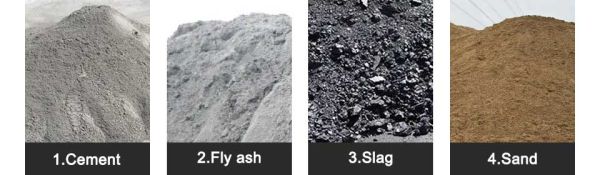
- This is typically the largest variable cost component. Calculation requires precise material mix design and current market prices.
- Formula:
(Quantity of Material per Brick * Cost per Unit of Material) - Example for a Cement Block:
(0.001 tons of cement per block * $120/ton) + (0.01 tons of sand * $15/ton) + (0.015 tons of aggregate * $12/ton) = $0.042 + $0.15 + $0.18 = $0.372 per block, or $372 per thousand blocks.
- Formula:
- Accuracy depends on a controlled mix design and minimal material waste during handling and mixing.
- This is typically the largest variable cost component. Calculation requires precise material mix design and current market prices.
- Direct Labor
- The cost of labor directly involved in the production process: machine operators, mixers, forklift drivers for handling green bricks, and curing yard attendants.
- Formula:
(Total Monthly Direct Labor Wages + Benefits) / (Monthly Brick Production in Thousands)
- Formula:
- This highlights how automation directly reduces this variable cost by increasing output per worker.
- The cost of labor directly involved in the production process: machine operators, mixers, forklift drivers for handling green bricks, and curing yard attendants.
- Power and Energy Consumption
- The cost of electricity to run the mixer, brick machine, conveyor systems, and lighting for the production shift.
- Formula:
(Total kWh consumed by production equipment per month * Cost per kWh) / (Monthly Production in Thousands)
- Formula:
- Machines with higher efficiency motors or optimized hydraulic systems will show a lower cost here.
- The cost of electricity to run the mixer, brick machine, conveyor systems, and lighting for the production shift.
- Consumable Tooling and Direct Maintenance
- These are wear items directly linked to production volume.
- Mold Liners and Wear Parts: Their lifespan is measured in number of cycles or bricks produced. Cost per brick =
(Cost of mold set) / (Estimated lifespan in thousands of bricks). - Pallette: Similar calculation based on pallet cost and lifespan.
- Lubricants and Immediate Repair Parts: Regular costs for grease, hydraulic oil, and small parts replaced during routine maintenance.
- Mold Liners and Wear Parts: Their lifespan is measured in number of cycles or bricks produced. Cost per brick =
- These are wear items directly linked to production volume.
Detailed Breakdown of Fixed (Indirect/Overhead) Costs
These costs are incurred regardless of whether the plant produces one brick or one million bricks in a given period. They must be allocated across production to determine full cost.
- Depreciation of Capital Equipment
- This is the systematic allocation of the machine’s, mixer’s, and other capital assets’ cost over their useful economic life. It is a non-cash expense but crucial for understanding true profitability.
- Straight-Line Method Formula:
((Total Equipment Purchase Cost - Estimated Salvage Value) / Useful Life in Years) / (Annual Production in Thousands).
- Straight-Line Method Formula:
- A higher-production machine will have a lower depreciation cost per thousand bricks, demonstrating the advantage of scaling.
- This is the systematic allocation of the machine’s, mixer’s, and other capital assets’ cost over their useful economic life. It is a non-cash expense but crucial for understanding true profitability.
- Facility and Administrative Overheads
- Rent or Mortgage for land and buildings.
- Salaries for Management, Sales, and Administrative staff.
- Insurance (property, liability, equipment).
- Property Taxes and Business Licenses.
- Marketing and Sales Expenses.
- Formula:
Total Monthly Overhead Costs / Monthly Production in Thousands.
- Formula:
- Financing Costs
- If the equipment was financed through a loan or lease, the interest expense is a fixed financial cost that must be included in the overhead allocation.
The Calculation Model: Building the Cost Sheet
A practical calculation follows a step-by-step model, best built on a monthly basis.
- Determine Monthly Production Volume (V): e.g., 500,000 bricks/month = 500 (thousand).
- Sum All Variable Costs (VC): Raw Materials + Direct Labor + Power + Consumables for the month.
- Calculate Variable Cost per Thousand (VCpK):
VC / V. - Sum All Fixed Costs (FC): Depreciation + Overhead + Financing for the month.
- Calculate Fixed Cost per Thousand (FCpK):
FC / V. - Calculate Total Cost per Thousand (TCpK):
VCpK + FCpK. - Calculate Unit Cost:
TCpK / 1000.
- The Critical Role of Capacity Utilization
- Fixed costs per unit are inversely related to production volume. If the plant operates at 50% capacity, the FCpK doubles, significantly increasing the TCpK. This is why maximizing machine uptime and achieving sales to match capacity is essential for profitability. The break-even point is the production volume where Total Revenue equals Total (Fixed + Variable) Costs.
Strategic Implications and Business Analysis
Understanding these numbers transforms operational data into strategic intelligence.
- Informing the Sales Price and Margin
- The TCpK is the absolute cost floor. The sales price must exceed this to generate a gross profit. The difference between the sales price per thousand and the TCpK is the gross profit margin, which must cover further unexpected expenses and net profit.
- Machinery Selection and Justification
- When comparing machines, a more expensive but faster, more reliable automatic machine may have a higher fixed cost (depreciation) but a significantly lower variable cost (labor, power efficiency) and higher capacity. The resulting TCpK at target volume may be lower than that of a cheaper, slower, labor-intensive machine. This is the core of the investment justification.
- Identifying Cost Optimization Levers
- The cost sheet reveals optimization targets:
- High Raw Material Cost: Source alternative aggregates or negotiate bulk prices.
- High Direct Labor: Evaluate automation for material handling or stacking.
- High Fixed Cost per Unit: Drive marketing to increase sales volume and better utilize capacity.
- The cost sheet reveals optimization targets:
Conclusion
Calculating the cost of brick production is not a one-time exercise but an ongoing discipline of financial management. It is the essential compass for navigating the business of manufacturing. For the equipment distributor, proficiency in this area is a powerful differentiator. By assisting clients—whether prospective or existing—in building accurate, realistic cost models, you provide more than machinery; you provide the analytical framework for business success.
This process begins even before the sale, by helping a prospect model the future profitability of their venture based on different machine options. It continues after installation, by showing how operational tweaks impact the bottom line. A distributor who can articulate how a specific machine’s efficiency lowers variable costs, or how its reliability improves capacity utilization to dilute fixed costs, moves the conversation from price to value. Ultimately, empowering clients with the knowledge and tools to master their production economics fosters stronger, more trusted, and more enduring partnerships in the building materials industry.
Frequently Asked Questions (FAQ)
Q1: How do I account for waste and rejected bricks in the cost calculation?
A: Production waste must be included, as it consumes materials and labor without generating saleable output. There are two methods:
- Adjust Material Usage: Increase the raw material quantity per good brick in your formula to account for an average waste percentage (e.g., 2-5%).
- Adjust Production Volume (V): Use the number of saleable bricks produced, not the number of bricks pressed. If you press 520,000 bricks to yield 500,000 saleable bricks, use V=500. The cost of the 20,000 rejected bricks is automatically absorbed into the cost of the good ones. The second method is more straightforward and recommended.
Q2: Is the cost of curing (water, space, covers) a variable or fixed cost?
A: It is typically a mixed cost, but for simplicity, it’s often split. The water used for spraying is a small variable cost. The space (rent/lease for the curing yard) is a fixed cost. The labor for stacking/unstacking and spraying is a direct variable labor cost. The curing covers are a consumable tooling cost (variable over their lifespan). Allocate each component to its appropriate category in your cost sheet.
Q3: How often should I re-calculate my production costs?
A: A full formal recalculation should be done quarterly. However, key variable inputs should be monitored monthly:
- Raw material price changes.
- Fluctuations in energy rates.
- Significant changes in production volume.
Any major change in these inputs warrants an immediate update to your pricing model to protect your margins.
Q4: What is a typical percentage breakdown between variable and fixed costs for a medium-sized automated plant?
A: While highly variable, a rough benchmark for a well-utilized plant might be:
- Variable Costs: 60-75% of Total Cost. (Raw Materials: 50-65%, Labor: 5-10%, Power/Consumables: 5%).
- Fixed Costs: 25-40% of Total Cost. (Depreciation: 10-20%, Overhead: 10-20%).
A plant running below capacity will see the fixed cost percentage rise dramatically, squeezing margins.
Q5: How can I use this cost calculation to price my bricks competitively?
A: Your TCpK is your cost anchor. Pricing strategy builds from there:
- Cost-Plus Pricing: TCpK + (TCpK * Desired Profit Margin %) = Target Price.
- Market-Based Pricing: Research competitors’ prices. If your TCpK is lower, you have a competitive advantage. If it’s higher, you must either justify a premium (superior quality, service) or find areas to reduce costs to match the market.
The calculation tells you if you can compete profitably at the prevailing market price, which is the ultimate test of your business and operational model.
