

Die vestiging van 'n blokvervaardigingsbesigheid vereis noukeurige beplanning en uitvoering oor verskeie onderling verbonde domeine. Die volgende raamwerk skets die sleutelfases van konsepsie tot eerste produksie.
1. Grondige Navorsing en Besigheidsbeplanning
Hierdie aanvanklike fase verminder risiko en verskaf rigting.
- Omvattende Markanalise:Doen deeglike navorsing oor die plaaslike en streekskonstruksiemark. Identifiseer huidige en geprojekteerde aanvraag vir verskillende bloktipes (standaard holblokke, soliede blokke, plaveisels). Ontleed mededingers—hul produkte, pryse, sterkpunte en swakpunte. Bepaal of daar 'n onvervulde behoefte is vir 'n spesifieke gehalte, produk tipe, of diensvlak.
- Definiëring van Jou Besigheidsmodel:Gebaseer op jou navorsing, besluit oor jou kernaanbod. Sal jy fokus op hoëvolume standaardblokke, spesialiseer in dekoratiewe plaveisels en landskapprodukte, of pasgemaakte mengsels aanbied? Jou model bepaal die skaal, toerusting en teikenkliënte.
- Skep 'n Gedetailleerde Besigheidsplan:Hierdie dokument is noodsaaklik vir die beveiliging van finansiering en die rig van jou bedrywighede. Dit moet insluit:
- Uitvoerende Opsomming
- Mark Analise en Strategie
- Bedryfsplan(terrein, masjinerie, prosesvloei)
- Bestuurstruktuur
- Finansiële Projekte: A realistic 3-5 year forecast including startup capital, detailed production cost calculations, pricing strategy, projected cash flow, and break-even analysis.
2. Financial and Legal Structuring
Formalizing the business foundation is a non-negotiable step.
- Securing Financing: Calculate the total capital required for land/lease, machinery, raw material inventory, working capital, and pre-operational expenses. Explore funding options: personal investment, bank loans, or investor capital. A solid business plan is crucial here.
- Legal Registration and Compliance: Register your business with the appropriate government authorities (e.g., as an LLC or equivalent for liability protection). Obtain all necessary permits and licenses, which typically include a factory operation license, environmental compliance certificate (if applicable), and tax registration. Consult with a local business attorney to ensure full compliance.
3. Operational Setup and Sourcing
This phase involves transforming plans into physical reality.
- Plekkeuse en Voorbereiding: Choose a location with adequate space for production, raw material storage, curing, and finished goods inventory. Key considerations include proximity to target markets and raw material suppliers, access to reliable transportation routes, availability of stable three-phase electrical power, and a reliable water source. The site must allow for a solid, level concrete foundation for the machinery.
- Strategic Equipment Procurement: This is your core capital investment. Based on your business model and financial plan, select machinery that matches your target output and product mix. Partner with a knowledgeable supplier (distributor/dealer) who can provide not just the machine, but also guidance on auxiliary equipment (mixer, conveyors, pallets), offer comprehensive operator training, and guarantee reliable after-sales service and spare parts availability.
- Establishing Supply Chains: Identify and contract reliable suppliers for key raw materials: cement, aggregates (sand and stone), and water. Consistency in material quality is paramount for producing consistent, high-quality blocks. Negotiate terms for bulk purchase to improve cost efficiency.
4. Launch and Growth Strategies
Going live requires focus on quality and market penetration.
- Production Trials and Quality Control: Before commercial sales, run extensive production trials to fine-tune your mix design and machine settings. Establish a rigorous quality control protocol to test block dimensions, compressive strength, and absorption rates. Consistent quality is your primary brand builder.
- Marketing and Sales Development: Create a professional product catalog and price list. Develop a sales strategy that may include direct outreach to builders, contractors, masonry suppliers, hardware stores, and government tender programs. Consider offering samples to key potential clients.
- Building a Skilled Team: Hire and train reliable personnel for machine operation, mixing, yard management, and quality checks. Empower them with clear standard operating procedures (SOPs).
Conclusion: Building a Business, Not Just a Factory
Starting a block making business is a significant undertaking that synthesizes industrial production with entrepreneurial strategy. Success depends on the seamless integration of a viable market opportunity, sound financial planning, robust equipment, and operational excellence. For the equipment distributor, your role transcends sales. By providing this comprehensive roadmap and ongoing technical and business advice, you become an integral part of your client’s success story. A well-planned, efficiently run block yard is a resilient asset that contributes to local infrastructure development and generates sustainable profits, ensuring a mutually beneficial partnership for years to come.
Frequently Asked Questions (FAQ)
Q1: What is the most common mistake new entrants make in this business?
A: The most critical mistake is underestimating the importance of market research and a financial plan. Purchasing equipment before confirming viable demand and calculating all costs (including working capital) often leads to failure. Another major error is prioritizing the cheapest machine over a reliable, serviceable one, which leads to high downtime and lost credibility.
Q2: How much land space is typically required for a small-scale block yard?
A: For a semi-automatic operation, a minimum of 5,000 to 10,000 square feet (approx. 500 to 1,000 sq. meters) is generally recommended. This should accommodate the production shed, raw material storage bays (for sand, aggregate), a curing area, space for finished goods inventory, and vehicle access for loading/unloading.
Q3: Is technical experience required to operate this business?
A: While prior experience in construction or manufacturing is highly beneficial, it is not an absolute barrier. The key is a commitment to learning. Reputable equipment suppliers provide essential machine operation training. A proactive owner must also educate themselves on concrete technology, basic machinery maintenance, and principles of quality control.
Q4: How do I determine the right price for my blocks?
A: Pricing should be based on a detailed cost-plus-margin analysis. Accurately calculate your total production cost per block (including all direct and allocated indirect costs). Then, add a target profit margin (e.g., 15-25%). Finally, validate this price against prevailing market rates to ensure competitiveness. Never sell below your calculated cost for sustained periods.
Q5: What are the key factors for maintaining consistent block quality?
A: Consistency is achieved through strict control of three variables:
- Rou Materiaal: Use consistent, quality-grade cement and well-graded, clean aggregates.
- Mix Design: Adhere precisely to your established water-cement ratio and mixing time.
- Machine Operation: Follow standardized procedures for vibration time, compaction pressure, and curing. Regular machine maintenance is also essential to prevent variations in output.
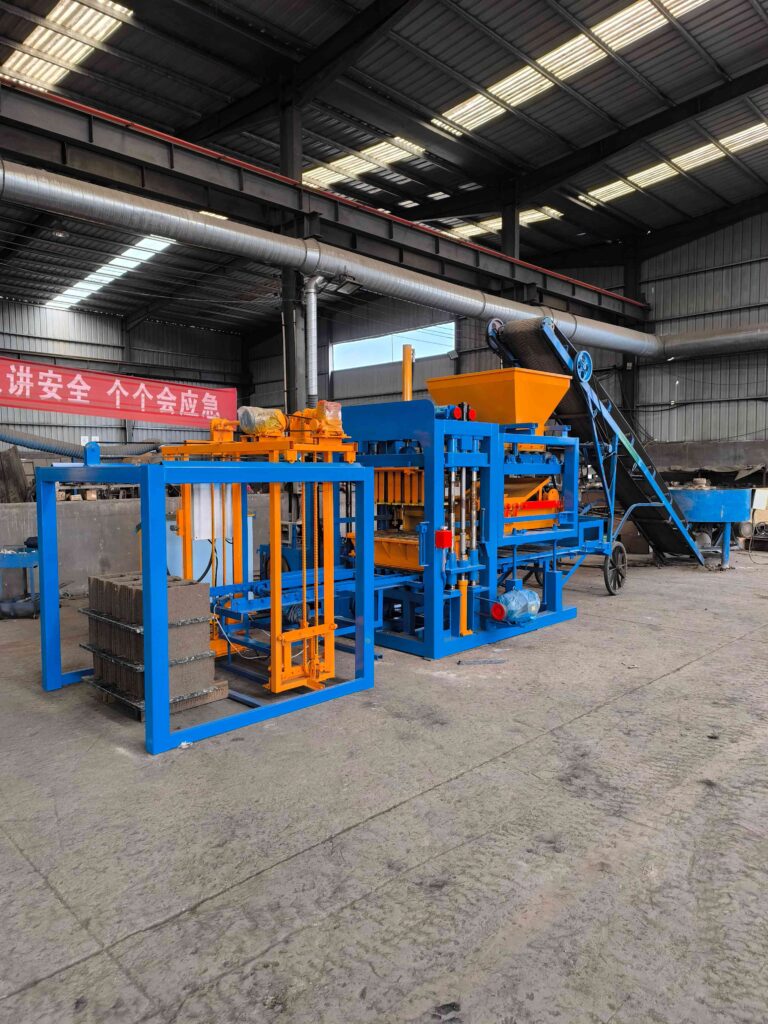
- outomatiese blokmaakmasjien7 products
- kleiblokmasjien4 products
- beweegende blok maak masjien4 products
- anderer konstruksie-toerusting5 products
- semi-outomatiese blokmasjien4 products